
Why Lindsay Shiver's murder-for-hire trial keeps stalling
The Lindsay Shiver murder-for-hire trial faces a potentially case-dispositive delay as her defense challenges Bahamian jurisdiction, arguing she was in Georgia when she sent the alleged WhatsApp message. The July 31 hearing before Senior Justice Cheryl Grant-Thompson will determine whether the conspiracy charge can proceed, with broader implications for digital-communication prosecutions.
- Jurisdiction
- Bahamas
- Court
- Supreme Court of the Bahamas
- Judge
- Cheryl Grant-Thompson
- AI tool named
- No AI tool
- Ruling date
- Jul 31, 2026
- Source document
- View primary court order ↗
- Last verified
- Jul 27, 2026
Lex Machina Review is an independent risk-tracking and reference resource. Nothing on this site is legal advice, and using it does not create an attorney-client relationship. Every record is reviewed against primary sources but may not reflect the most current status of a matter — always verify directly against the cited court order, rule text, or a licensed attorney before relying on it.
Companion explanation — secondary to the source document above
The next meaningful date in the Lindsay Shiver murder-for-hire trial delay is not a trial date. It is a reported July 31, 2026 dismissal hearing before Senior Justice Cheryl Grant-Thompson, where the defense will ask a Bahamian court to decide whether the conspiracy charge can proceed at all. Fox News and the New York Post both reported the hearing date on July 26, 2026; as of this writing, that date should be treated as reported but not independently docket-confirmed because the relevant Bahamas court material has not been publicly retrieved here. Shiver is also reported to be back in custody after bail was revoked, which gives the motion a practical urgency that ordinary continuance coverage tends to miss. [1][2]
The short answer to why the case keeps stalling is that the pending delay is tied to jurisdiction, not simply calendar congestion. The defense says prosecutors cannot prove Shiver was in the Bahamas on July 16, 2023, the date the indictment allegedly places the conspiracy, and argues that this defect is “legally fatal.” That phrase comes from defense lawyer Craig Shirley as reported in press coverage, so it should be read as advocacy language rather than a judicial finding. The underlying question, however, is a real one: if Shiver was physically in Georgia when the alleged WhatsApp message was sent, what exactly happened inside Bahamian territory? [2]
One more boundary belongs near the top because it prevents a different kind of confusion: this case does not involve AI-generated evidence. For readers coming from this site’s earlier coverage of the Shiver matter, including Robert Shiver murder case exposes two AI dangers, the issue here is adjacent risk, not an AI hook. The problem is old criminal law meeting ordinary digital communication across a national border.
| Current verification point | What is known from available reporting | What remains unconfirmed here |
|---|---|---|
| Next hearing | A July 31, 2026 dismissal hearing before Senior Justice Cheryl Grant-Thompson is reported by Fox News and the New York Post. [1][2] | A publicly accessible Bahamas docket entry or order confirming the setting has not been independently retrieved here. |
| Defense theory | The defense says Shiver was in Georgia on July 16, 2023 and that prosecutors cannot place her in the Bahamas on the charged conspiracy date. [2] | The actual dismissal motion has not been reviewed here. |
| Legal issue | Local reporting frames the dispute around Bahamian conspiracy law and whether the alleged conduct fits the statutory territorial requirement. [3] | The court’s construction of the statute remains pending. |
| AI evidence | No available source in this record indicates AI-generated evidence is part of the case. | Nothing in the jurisdictional issue depends on AI. |
The delay that matters is the one tied to territorial power
Most public accounts of the case begin with the alleged murder-for-hire plot: Lindsay Shiver, an American woman; Robert Shiver, her estranged husband and former football player; alleged co-conspirators in the Bahamas; and messages prosecutors say pointed toward a plan to kill him. That is enough background to identify the case. It is not enough to understand the current delay.
The procedural fight is narrower. The Bahamian prosecution has charged a conspiracy theory. The defense is not merely saying the evidence is weak or that the message was misunderstood. It is attacking the forum’s authority to prosecute Shiver on the indictment as framed. Shirley told the New York Post that the indictment is defective because Shiver was not in the Bahamas on July 16, 2023, and said the defense had evidence from “multiple independent sources” placing her in the United States that day. [2]
That is why calling the motion a delay tactic does not do much analytical work. Any defense motion filed before trial can delay a trial. The better question is whether the delay is attached to a point that could dispose of the charge. A jurisdictional defect, if accepted, is not a request for a better trial date. It is a request for the court to say the prosecution is in the wrong place.
Section 89(1) is doing the real work
OUR News Bahamas frames the prosecution’s position around Section 89(1) of the Bahamas Penal Code: conspiracy is complete once there is an agreement and an act in furtherance. The reported dispute is whether sending a message from Georgia to a co-conspirator in the Bahamas can count as the relevant act within Bahamian territory. [3]
That phrasing matters. The question is not whether WhatsApp messages can be evidence. They plainly can be evidence in many cases. The question is not whether a message can cross a border instantly. It can. The question is whether, under the charged Bahamian statute and this indictment, the alleged act occurred where the prosecution needs it to have occurred.
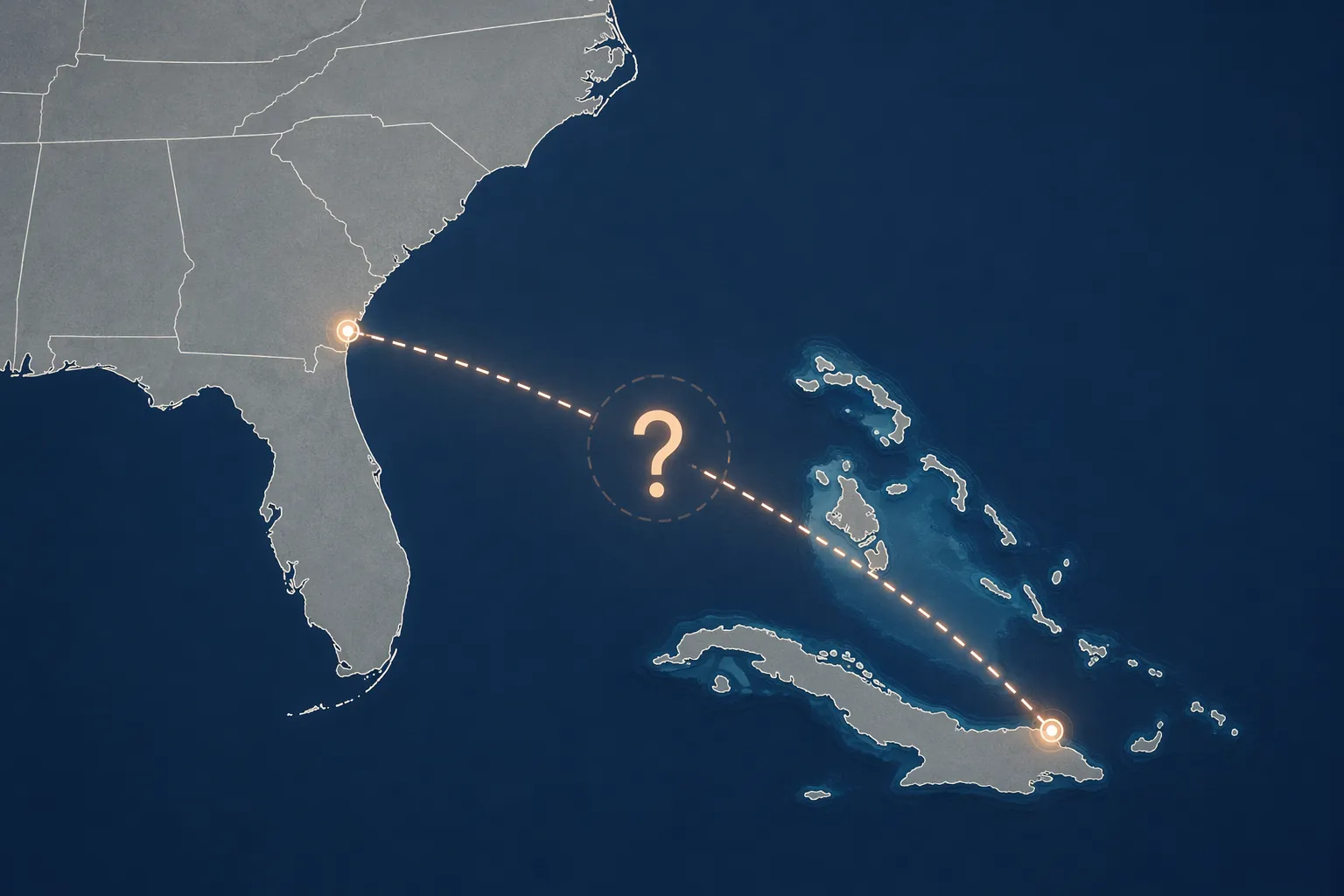
Ordinary intuition treats a phone message as if it happens everywhere it is read. Criminal jurisdiction is less elastic. If a person in Georgia presses send, the sender’s body, phone, and volitional act may all be outside the Bahamas. If a recipient in the Bahamas receives or reads the message, part of the communication event may be inside the Bahamas. The court has to decide which part matters under the conspiracy charge.
That distinction is the center of the Lindsay Shiver murder-for-hire trial delay. The defense wants the court to focus on the sender’s location and the indictment’s alleged date. The prosecution, as described in local reporting, appears to rely on the combination of agreement plus an act in furtherance, with the alleged digital communication reaching into the Bahamas. [3]
The defense position
The defense theory is direct: the indictment alleges the conspiracy occurred on July 16, 2023; Shiver was in Georgia on that date; and Bahamian prosecutors cannot establish the territorial act needed to charge her there. Shirley’s reported statement that the problem is “legally fatal” should not be treated as the court’s conclusion. It is still the kind of claim that, if supported by the motion record and accepted by the judge, would end the prosecution before a jury hears the disputed facts. [2]
The defense also appears to be forcing the prosecution to live with the date it charged. That is not a paperwork quibble if the date supplies the territorial link. A conspiracy count can sometimes absorb imprecision about planning, communication, and sequence. But when jurisdiction turns on where an act occurred, the calendar entry becomes a boundary marker.
The prosecution position
The prosecution’s reported answer is that Section 89(1) does not require the entire alleged plan to unfold in the Bahamas. On that view, the conspiracy is complete when agreement and an act in furtherance exist, and the alleged WhatsApp communication supplies enough territorial contact because it was directed to a co-conspirator in the Bahamas. OUR News Bahamas reports the issue in precisely that statutory frame. [3]
There is an obvious practical appeal to that position. A contrary rule could make cross-border plotting difficult to charge where participants deliberately separate themselves by geography. But practical appeal is not the same as statutory power. The court still has to identify the act, locate it, and decide whether that location satisfies Bahamian law as charged.
Why this is not just another continuance
A routine delay preserves the case. This motion could remove it. That is the procedural difference that matters for lawyers watching the Shiver case as a risk signal rather than as a celebrity-crime story.
Custody status sharpens the point. Shiver is reported to be back in custody after Senior Justice Grant-Thompson revoked bail. A defendant waiting in custody for a court to decide whether the forum has power to prosecute is in a different posture from a defendant using motion practice to postpone a scheduled trial while released. [1]
There is also a downstream civil-risk angle, though it should be kept in its proper box. A Moms and Mysteries update cites Daily Mail reporting that Shiver’s legal team has signaled a possible wrongful-arrest lawsuit against the Royal Bahamas Police Force if the dismissal motion succeeds. That point is second-hand in the available research record and has not been independently verified here. It is still relevant because it shows why the jurisdictional ruling could matter beyond the criminal docket. [4]
If the court rejects the motion, the delay may become just that: a delay before the case moves closer to trial. If the court grants it, the ruling could mark a meaningful limit on how far Bahamian prosecutors can reach when the alleged in-forum act is a digital message sent from outside the country.
The digital-message problem should stay narrow
It would be easy to inflate this into a broad claim about digital crime loopholes. That would get ahead of the record. The available materials support a narrower and more useful proposition: where a conspiracy statute requires an agreement and an act in furtherance, and where the alleged act is a message sent by a person physically outside the forum, the court may have to decide whether receipt inside the forum is enough.
That question can arise without encryption, artificial intelligence, deepfakes, or platform misconduct. A standard messaging app is enough. The legal pressure comes from the mismatch between communications geography and territorial criminal law. The sender experiences one act. The network produces a cross-border effect. The recipient may experience the communication in another country. A prosecutor then has to translate that sequence into statutory verbs.
For cross-border risk analysis, the Shiver motion is therefore more useful than its tabloids-and-true-crime packaging. It asks whether a state can prosecute an alleged conspiracy when the most important act by the foreign defendant may have occurred outside its borders. It also asks how much weight a court should give to the destination of a message when the sender’s conduct occurred elsewhere.
What to watch on July 31
The July 31 hearing, if it proceeds as reported, should clarify three points. First, whether the defense can substantiate its claim that Shiver was in Georgia on July 16, 2023. Second, whether the prosecution can identify an act in furtherance that occurred in the Bahamas, rather than only a message received there. Third, whether Senior Justice Grant-Thompson treats the problem as a pleading defect, an evidentiary dispute for trial, or a true territorial bar. [1][2][3]
Those are different outcomes. A pleading ruling could invite amendment or a narrower prosecution theory. An evidentiary ruling could push the issue toward trial. A territorial ruling could end the case against Shiver in the Bahamas on the current charge and become persuasive authority in later digital-communication conspiracy disputes.
The safest judgment before the hearing is not that dismissal is inevitable. It is that the motion is colorable and potentially case-dispositive. That makes the current Lindsay Shiver murder-for-hire trial delay more consequential than the usual “defense tactic” label allows. After July 31, either the prosecution moves closer to putting its murder-for-hire theory before a jury, or the court draws a boundary around cross-border prosecution based on a digital message.
References
- “Lindsay Shiver's attorney argues for Bahamas to drop murder-for-hire charges” — Fox News, July 26, 2026
- “Beauty queen Lindsay Shiver's attorney claims 'legally fatal' evidence issues debunk murder plot against ex-NFLer husband” — NY Post, July 26, 2026
- “American Housewife Accused Of Murder-For-Hire Wants Charges Dropped” — OUR News Bahamas
- “Lindsay Shiver Trial Update 2026: Murder-for-Hire Plot in the Bahamas” — Moms and Mysteries
Related records
Tool profile
How Meta's AI Spending Reshapes Law Firm ProfitabilityGoverning regulation
Browse the obligations tracker →Preventive workflow
Browse verification workflows →
Report a correction or tip
Spotted an outdated figure, a misstated fact, or a ruling this case record should reflect? Public comments are disabled for this content given the professional cost of a misreported case outcome, penalty amount, or rule text — use the structured correction channel instead.
Report a correction or tip for this record →