
Lockerbie bombing: What the Netflix series gets right and wrong
The Netflix series The Bombing of Pan Am 103 tracks the Lockerbie investigation with unusual accuracy, but its dramatic structure reorders verdicts, compresses timelines, and omits contested evidence and appellate history. This article compares each key claim against the Camp Zeist judgment and subsequent appeals, showing what the record supports and where drama diverges.
- Jurisdiction
- Scotland
- Court
- High Court of Justiciary at Camp Zeist
- AI tool named
- No AI tool named
- Ruling date
- Jan 31, 2001
- Source document
- View primary court order ↗
- Last verified
- Aug 2, 2026
Lex Machina Review is an independent risk-tracking and reference resource. Nothing on this site is legal advice, and using it does not create an attorney-client relationship. Every record is reviewed against primary sources but may not reflect the most current status of a matter — always verify directly against the cited court order, rule text, or a licensed attorney before relying on it.
Companion explanation — secondary to the source document above
Last verified: August 2, 2026. This is a record-style comparison of the BBC/Netflix drama The Bombing of Pan Am 103 against the Lockerbie bombing Pan Am 103 legal case. It is not a review of the Sky/Peacock Jim Swire drama, not a recap of the BBC documentary, and not a certification that any television version is “the accurate one.” The series premiered on BBC One on May 18, 2025, and reached Netflix worldwide on July 30, 2026.[1]
The useful question is not whether the drama is broadly sympathetic to the official investigation. It plainly is, and Netflix’s own production account says the writers worked from hundreds of hours of interviews with investigators Richard Marquise, Bill Turman, Bill McCusker, and explosives expert Tom Thurman.[2] The harder question is accurate to what: the investigative theory, the Camp Zeist findings, the appeal record, or the unresolved disputes that survived the first verdict.
On that standard, the series earns credit for doing more documentary work than many prestige true-crime dramas. It follows the investigation’s main route closely enough that viewers are not being handed a fictional conspiracy in place of the Lockerbie case. But its compression and ordering still matter. A sequence can be fact-adjacent and legally misleading at the same time if it makes a contested inference feel like a courtroom certainty.
The record in one frame
| Issue | What the legal record supports | Where drama can shift the meaning |
|---|---|---|
| Trial posture | The Camp Zeist proceeding was a 36-week bench trial under Scots law, running from May 3, 2000 to January 31, 2001, with 84 court days, 230 witnesses, 10,232 pages of transcript, and an estimated £60 million trial cost.[3] | A six-part drama cannot reproduce that procedural weight. The risk is not compression itself; it is compression that makes the case look like it turned on one clean evidentiary reveal. |
| Verdicts | Abdelbaset al-Megrahi was convicted on 270 counts of murder, while co-accused Lamin Khalifah Fhimah was acquitted.[3] | If the acquittal is treated as an emotional sidebar, viewers miss the central legal fact that the same court accepted part of the prosecution theory while rejecting it as to the other accused. |
| Appeals and SCCRC referrals | Megrahi’s conviction was upheld on appeal in 2002. Later SCCRC referrals raised grounds of concern, including unreasonable verdict and non-disclosure issues, but the conviction was again upheld after later appellate proceedings.[3][4][5] | Leaving appellate history to an afterword changes the audience’s sense of finality. The appeals are part of the legal record, not postscript material. |
| Tony Gauci and Malta clothing | The prosecution case relied on clothing traced to Tony Gauci’s shop in Malta, but Gauci’s identification evidence contained major weaknesses reported in later coverage and appeal-related criticism.[5] | A drama can accurately show the shop, the clothing, and the Malta lead while still overstating the certainty of the identification. |
| MST-13 timer fragment | The timer-fragment theory connected a small circuit-board fragment to an MST-13 timer type associated with Mebo AG and Libya.[2][3] | Television naturally treats a fragment as the object that “unlocks” the case. The legal question is more exacting: what chain of inferences the court accepted, and what later critics disputed. |
| Malta–Frankfurt–Heathrow suitcase route | The prosecution theory placed an unaccompanied suitcase on a route from Malta to Frankfurt to Heathrow before Pan Am 103.[3] | This is one of the easiest places for drama to turn an inference about routing and baggage records into something that feels like a direct sighting. |
What the series gets unusually right
The drama’s strongest choice is that it takes the investigation seriously as work. It does not begin with a solved case and then decorate the path backward. Its attention to debris recovery, forensic sorting, interviews, and inter-agency handoffs reflects the kind of labor that is easy to flatten once a case becomes a symbol.
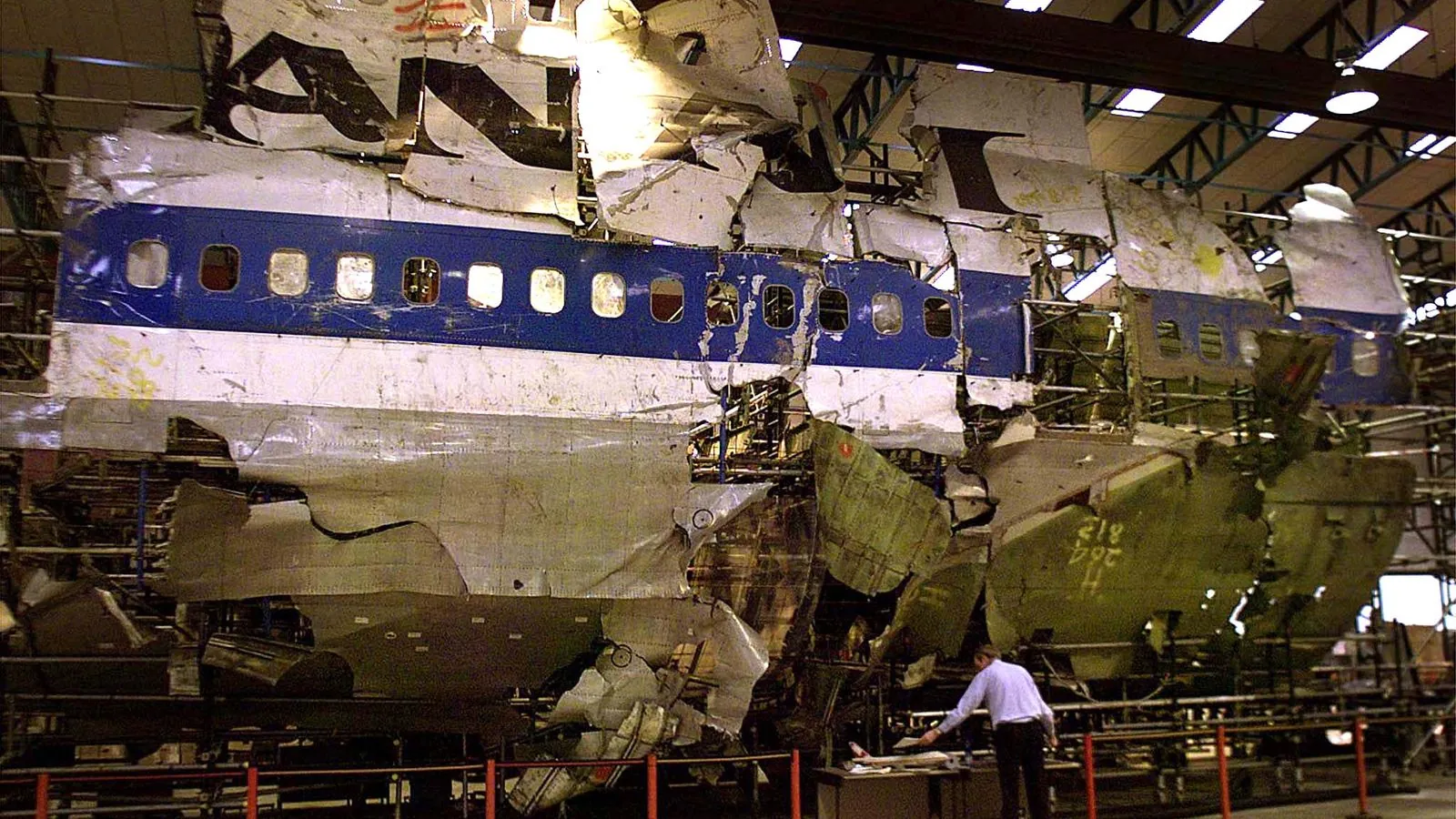
Netflix’s Tudum explainer says the debris field covered roughly 850 square miles and describes a fingertip-sized circuit-board fragment as the break that helped investigators move the case forward.[2] That framing is defensible as a production description of the investigative narrative. It should not be mistaken for a complete statement of what the court later had to decide.
The series also keeps the main evidentiary geography recognizable: Malta, Frankfurt, Heathrow, the clothing purchase, the timer fragment, and the eventual focus on Libyan suspects. That matters. Many dramatizations of old prosecutions get the legal memory wrong before they reach the courtroom, because they rearrange the investigation into a cleaner story than the file can bear. Here, the broad route is much closer to the official case.
The problem begins when a viewer asks what each piece of evidence proved. The series is best read as a dramatization of how investigators came to believe the case fit together, not as a substitute for the Camp Zeist judgment or the appeal record.
The three evidentiary pillars need slower handling than television gives them
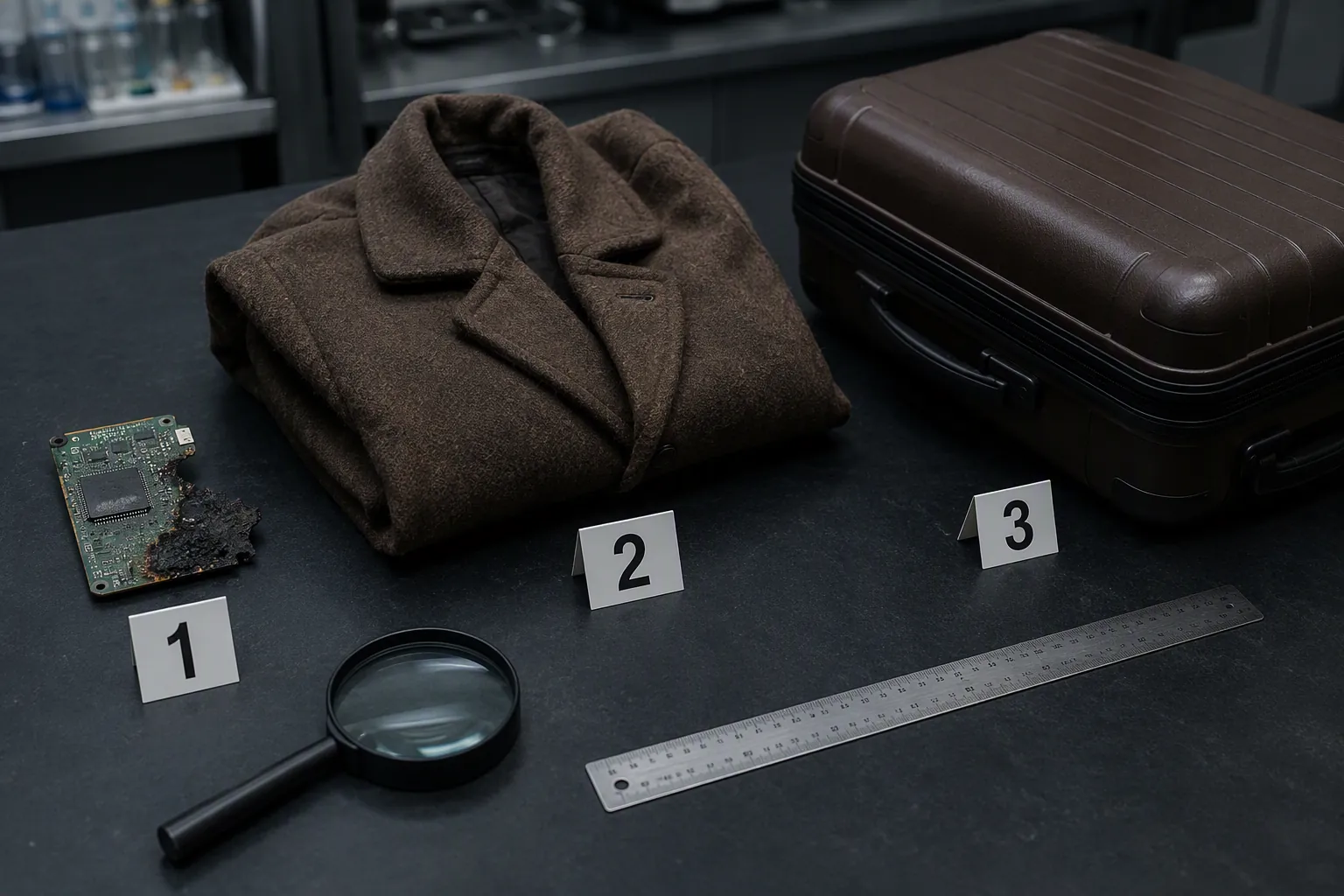
The case most viewers remember is built around three linked points: the MST-13 timer fragment, the Malta clothing evidence, and the alleged unaccompanied suitcase route from Malta through Frankfurt and Heathrow. The series is not wrong to make these central. The Camp Zeist case made them central too. But each point had a different legal character, and television tends to smooth those differences into one forward-moving proof chain.
The MST-13 timer fragment
The timer fragment is a legitimate center of gravity for the drama. The production account presents the small circuit-board fragment as the clue that helped investigators identify a timer type and connect the inquiry to Libya.[2] The trial record likewise treated the timer evidence as part of the prosecution’s Libya theory.[3]
Where the drama has to be watched carefully is in the word “unlock.” In television, a fragment can look like a key: once found, the door opens. In a legal record, the fragment sits inside a chain of custody, expert interpretation, manufacturing history, and competing challenges. The distinction is not pedantic. A forensic object may be powerful and still not do all the work the audience feels it doing on screen.
Tony Gauci and the Malta clothing evidence
The Gauci evidence is the place where a drama can be most broadly faithful and still most legally distorting. The prosecution case relied on clothing bought from Tony Gauci’s shop in Malta and later linked to the suitcase theory. That is not invented for television. The problem is the identification.
BBC reporting on later criticism of the Lockerbie dramas summarized some of the identification problems: Gauci had failed to identify Megrahi in 19 pre-trial statements; in court, after the prosecutor pointed to Megrahi, Gauci said that he “resembles him”; and Gauci’s description of the buyer as over six feet tall and over 50 did not match Megrahi, who was reported as 5 feet 8 inches and 36 at the relevant time.[5]
Those details do not erase the Malta clothing evidence from the record. They change what kind of evidence it is. On screen, a shopkeeper identification can behave like recognition. In the file, it was a contested identification nested inside other circumstantial evidence. If a viewer comes away thinking Gauci simply pointed out the bomber, the drama has altered the legal weight of the evidence even if the clothing-shop storyline is present.
The unaccompanied suitcase route
The Malta–Frankfurt–Heathrow route is the third pillar and the one most vulnerable to visual overstatement. The prosecution theory alleged that an unaccompanied suitcase traveled from Malta to Frankfurt, then onward to Heathrow, before the bomb exploded aboard Pan Am 103.[3]
A court can accept an inference from baggage records, airport procedures, timing, and surrounding evidence. A drama has to show something. That necessity creates a quiet danger: the viewer may experience the route as observed fact rather than reconstructed inference. The legal distinction matters because the route was not a decorative travel itinerary. It was part of how the prosecution connected Malta, the clothing, the accused, and the device.
The verdicts do not support a simple prosecution-vindicated story
Camp Zeist produced a split result. Megrahi was convicted on 270 murder counts; Fhimah was acquitted.[3] That is not a minor courtroom beat. It is the court’s own warning against treating the prosecution case as an undifferentiated block.
The scale of the proceeding also resists neatness. A 36-week bench trial, 84 court days, 230 witnesses, and more than 10,000 transcript pages describe a case built through accumulation, not one revelation.[3] Dramas are entitled to compress that scale. They are not entitled to make the resulting certainty look larger than the court’s reasoning.
This is also why the order and handling of the verdicts matter. BBC reporting on the separate Sky/Peacock drama Lockerbie: A Search for Truth noted criticism that it reordered the verdict moment: in reality, the judges announced Fhimah’s acquittal first and Jim Swire fainted, while the drama structured the scene differently.[5] That is a useful warning here even though it concerns a different production. Verdict sequencing is not mere staging when it changes what the audience believes the court had already resolved.
Appeals and SCCRC referrals are part of the case, not an afterword
Megrahi’s conviction survived appeal in 2002.[3][4] That fact should be stated plainly, because some public accounts of Lockerbie lean so hard into doubt that they leave the impression of a conviction legally undone. It was not.
The other half of the record should be stated just as plainly. The Scottish Criminal Cases Review Commission later found grounds for concern, including unreasonable-verdict and non-disclosure issues, and made referrals in 2007 and 2020; the conviction was nevertheless upheld after later appellate proceedings, including a January 15, 2021 decision by five judges.[3][5]
That combination is the part television least likes: upheld conviction, serious review concerns, no simple exoneration, no clean institutional confession of error. A drama that emphasizes only the conviction makes the record too tidy. A drama that emphasizes only doubt makes the appellate history disappear. The legal case contains both.
The victims’ families have had to live inside that split memory for decades. That does not require a viewer to choose between grief and procedure. It requires the series to be judged against the record it invokes. When a production borrows the authority of investigators, files, forensic exhibits, and courtroom outcomes, it also borrows the obligation not to make unsettled parts look settled.
Keep the three 2025–2026 Lockerbie productions separate
A surprising amount of confusion comes from collapsing different Lockerbie programs into one public memory. The BBC/Netflix series discussed here is The Bombing of Pan Am 103. The Sky/Peacock drama is Lockerbie: A Search for Truth, centered on Jim Swire. The BBC documentary is a separate factual program. They overlap in subject, but they are not interchangeable sources.
The distinction matters because criticism aimed at one production does not automatically prove a flaw in another. The Swire drama, for example, drew criticism from the Victims of Pan Am Flight 103 group for omitting that Megrahi’s conviction had been upheld twice on appeal.[5] That is not a finding about every Lockerbie program. It is a reminder to check which legal events a production includes, excludes, or relocates.
So what does the Netflix series get right and wrong?
It gets right the seriousness and direction of the investigation. It gives the debris work, forensic sorting, Malta lead, timer fragment, and Libya focus the weight they had in the official case. Its use of real investigators as major production sources is not cosmetic; it shows in the structure of the story.[2]
It becomes less reliable if watched as a map of legal certainty. The Camp Zeist record did not operate like a sequence of dramatic locks clicking open. The court convicted one accused and acquitted the other. The prosecution’s central route depended on interlocking circumstantial findings. The Gauci identification evidence was weaker and more contested than a conventional recognition scene can easily convey. The timer fragment was important, but not magic.
The narrow, useful judgment is this: The Bombing of Pan Am 103 tracks the Lockerbie investigation unusually closely for a prestige drama, but its compression, ordering, and omissions can change how viewers understand the strength and contestability of the legal case.
Where the record remains open
The legal story has not ended with the television release. The U.S. prosecution of Abu Agila Masud in the District of Columbia remains the live case to watch. As of this verification date, the DOJ case page for United States v. Masud, No. 22-cr-392-DLF, showed active pretrial materials through at least July 21, 2026, and no verdict entry on the cited case page.[6]
For the current docket posture rather than a television comparison, use Where the Pan Am 103 Prosecution Stands Before Trial. The line is there: the drama has reached Netflix, the Camp Zeist record remains checkable, and the Masud prosecution belongs to the docket, not to a closing montage.
References
- The Bombing of Pan Am 103 — Wikipedia.
- The True Story Behind The Bombing of Pan Am 103 — Netflix Tudum.
- Pan Am Flight 103 bombing trial — Wikipedia.
- Lockerbie bombing: Timeline — BBC News.
- The new Lockerbie drama provoking fierce criticism from victims' families — BBC News.
- Pan Am Flight 103 — U.S. Attorney’s Office for the District of Columbia.
Related records
Tool profile
How Meta's AI Spending Reshapes Law Firm ProfitabilityGoverning regulation
Browse the obligations tracker →Preventive workflow
Browse verification workflows →
Report a correction or tip
Spotted an outdated figure, a misstated fact, or a ruling this case record should reflect? Public comments are disabled for this content given the professional cost of a misreported case outcome, penalty amount, or rule text — use the structured correction channel instead.
Report a correction or tip for this record →