
Mackenzie Shirilla's Appeal Barred by One-Day-Late Filing
Mackenzie Shirilla's postconviction appeal was barred before any Ohio court reached her claims: the petition landed on day 366 of the 365-day statutory window, and Ohio courts treat that deadline as jurisdictional. This verified record documents the ruling sequence, the leap-year day-count behind the one-day bar, and the pending reconsideration motion filed July 7, 2026.
- Jurisdiction
- Ohio, USA
- Court
- Ohio Eighth District Court of Appeals
- AI tool named
- No AI tool implicated
- Ruling date
- Mar 12, 2026
- Source document
- View primary court order ↗
- Last verified
- Aug 2, 2026
Lex Machina Review is an independent risk-tracking and reference resource. Nothing on this site is legal advice, and using it does not create an attorney-client relationship. Every record is reviewed against primary sources but may not reflect the most current status of a matter — always verify directly against the cited court order, rule text, or a licensed attorney before relying on it.
Companion explanation — secondary to the source document above
This Risk Digest record is an exceptional non-AI entry. Its risk signal is not a model output, an e-discovery process, or a hallucinated citation. It is a court deadline: Mackenzie Shirilla’s postconviction petition was treated as one day late, and Ohio courts treated that lateness as jurisdictional.
Last verified: Aug. 2, 2026, UTC. The unresolved item is the reconsideration motion filed July 7, 2026 in Ohio Supreme Court Case No. 2026-0519; the docket posture remains pending as of this verification date.[1][2] The Ohio Supreme Court declined jurisdiction on June 23, 2026, with Justice R. Patrick DeWine dissenting.[3] The decision left in place is the March 12, 2026 opinion of the Ohio Eighth District Court of Appeals — not the “Eighth Circuit” — in State v. Shirilla, 2026-Ohio-830.[4]
For readers arriving through searches for “Mackenzie Shirilla murder conviction appeal,” the first correction matters: no Ohio court has reviewed her postconviction ineffective-assistance claim, her POTS/blackout medical-evidence claim, or the expert-testimony theory on the merits in this track. The petition stopped at the threshold because the courts said they had no authority to hear it.

The one-day ruling
The load-bearing fact in the postconviction record is not that the petition was filed “about a year later.” It is that Ohio’s postconviction statute measures the deadline in days. R.C. 2953.21(A)(2)(a) requires a petition to be filed “no later than three hundred sixty-five days after the date on which the trial transcript is filed in the court of appeals in the direct appeal.”[5]
The Eighth District used Oct. 24, 2023 as the transcript-filing date. Counting 365 elapsed days from that date produced an Oct. 23, 2024 deadline. Shirilla filed the postconviction petition on Oct. 24, 2024. The court treated that as day 366.[4]
| Date or count | What the record treated it as |
|---|---|
| Oct. 24, 2023 | Trial transcript filed in the court of appeals for the direct appeal.[4] |
| Feb. 29, 2024 | Leap-year day falls inside the 365-day count. |
| Oct. 23, 2024 | Day 365; statutory filing period expired.[4][5] |
| Oct. 24, 2024 | Day 366; postconviction petition filed one day late.[4] |
That is the point at which casual deadline language becomes dangerous. “One year later” would point many readers to Oct. 24, 2024. The statute did not say one calendar year. It said 365 days. Because 2024 included Feb. 29, the anniversary date was not the last day of the statutory period in this record.

Why the late filing ended the merits inquiry
The Ohio courts did not describe the late filing as a harmless calendaring problem that could be excused in the trial court’s discretion. The Eighth District treated the R.C. 2953.21 filing period as jurisdictional. Once the petition was untimely, the trial court lacked authority to consider it unless Shirilla satisfied the separate untimely-petition requirements in R.C. 2953.23.[4][6]
That statute is the narrow escape hatch. In broad terms, an untimely petitioner must fit within limited categories such as facts the petitioner was unavoidably prevented from discovering or a new retroactive federal or state right, combined with a demanding showing that no reasonable factfinder would have found guilt but for the alleged constitutional error; the statute also contains DNA-test provisions. The Eighth District held Shirilla did not meet the statutory exceptions.[4][6]
That posture is easy to misreport. An “appeal rejected” headline can sound as if judges weighed the new medical theory and found it weak. That is not what the postconviction record shows. The claims were pleaded, but the court’s authority to review them was blocked before the merits stage.
The ruling sequence, without skipping the procedural step that matters
The sequence matters because the direct appeal and the postconviction petition did different work. The direct appeal challenged the conviction through ordinary appellate review. The later postconviction petition attempted to bring collateral claims, including ineffective assistance and medical evidence. The deadline ruling belongs to the second track.
| Date | Procedural event | What it decided |
|---|---|---|
| Aug. 14, 2023 | Bench verdict on four counts of murder, four counts of felonious assault, and two counts of aggravated vehicular homicide.[7] | Guilt after trial. |
| Sept. 26, 2024 | Ohio Eighth District Court of Appeals affirmed the convictions on direct appeal in State v. Shirilla, 2024-Ohio-4674.[8] | Direct-appeal issues, including sufficiency and manifest weight. |
| April 2025 | Ohio Supreme Court declined review of the direct appeal.[9] | No further direct-review merits ruling from the state high court. |
| Oct. 24, 2024 | Postconviction petition filed.[4] | Filed on day 366 under the Eighth District’s count. |
| May 1, 2025 | Trial court dismissed the postconviction petition as untimely.[4] | No merits review of the postconviction claims. |
| Mar. 12, 2026 | Eighth District affirmed the postconviction dismissal in State v. Shirilla, 2026-Ohio-830.[4] | Deadline treated as jurisdictional; R.C. 2953.23 exceptions not satisfied. |
| June 23, 2026 | Ohio Supreme Court declined jurisdiction in Case No. 2026-0519; Justice DeWine dissented.[3] | No discretionary review granted. |
| July 7, 2026 | Reconsideration motion filed.[1][2] | Pending as of Aug. 2, 2026. |
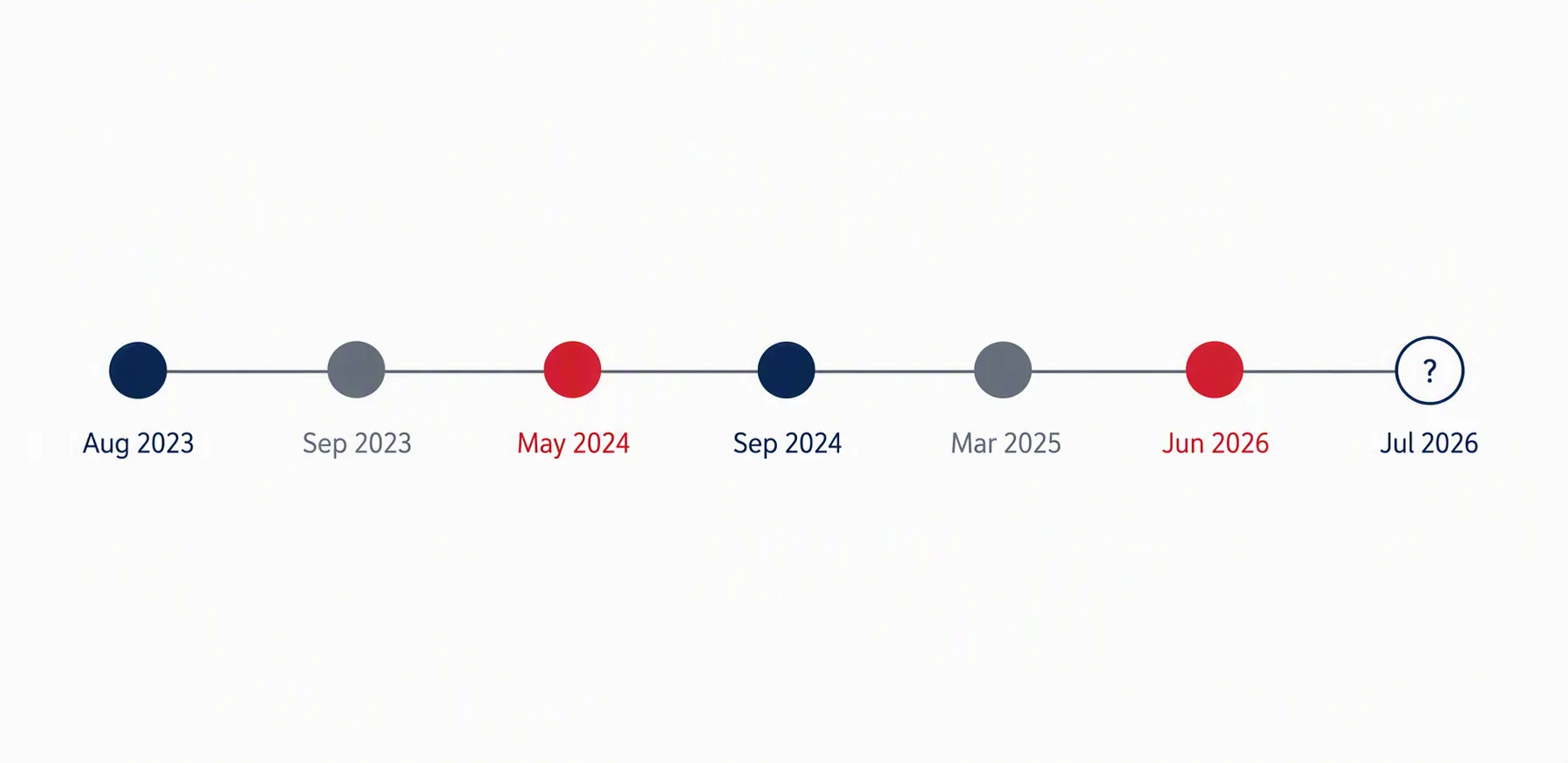
Justice DeWine’s dissent from the jurisdiction-declined entry is the reason the June 23 order should not be flattened into “case over” shorthand. It did not produce a merits opinion, and it did not change the Eighth District’s judgment. It does, however, mark that at least one justice would not have disposed of the matter in the same way at that stage.[3]
The underlying criminal case, in only the amount needed to identify the record
The public attention around the case comes from the July 31, 2022 Strongsville crash that killed Dominic Russo and Davion Flanagan. The Cuyahoga County Prosecutor’s Office reported that Shirilla drove at approximately 100 mph, that the vehicle’s event data recorder showed full throttle and no brake application, and that the trial judge described her actions as “controlled, methodical, deliberate, intentional and purposeful.”[7]
After the bench verdict, Shirilla received a life sentence.[7] The direct appeal later affirmed the convictions, but that affirmance is not the same procedural event as the postconviction deadline ruling. Confusing the two tracks is how readers end up thinking a court has already decided medical-causation or trial-counsel questions that, in this postconviction record, were never reached.
The blackout and ineffective-assistance claims were pleaded, not adjudicated
Shirilla’s postconviction petition alleged ineffective assistance of trial counsel. The theory included claims that trial counsel failed to investigate a POTS/blackout medical condition and failed to obtain expert testimony connected to that condition.[4]
Those allegations may be the part of the case that draws the most attention outside the courthouse. They are not the part the Ohio courts reached in the postconviction track. The Eighth District’s analysis did not become a ruling that the blackout theory was false, that the medical evidence was insufficient, or that trial counsel performed adequately. Its ruling was that the petition was untimely and that the statutory exceptions for hearing an untimely petition were unavailable.[4][6]
What remains legally alive as of Aug. 2, 2026
The only unresolved item in the record is the July 7, 2026 reconsideration motion in Ohio Supreme Court Case No. 2026-0519. The motion asks the Ohio Supreme Court to reconsider its June 23, 2026 decision declining jurisdiction.[1][2][3]
That is the current posture, not a forecast. The documented record is a deadline-risk record: a leap-year 365-day count made the Oct. 24, 2024 petition one day late; Ohio courts treated that lateness as jurisdictional; and no court has reviewed the postconviction ineffective-assistance or blackout-medical-evidence claims on their merits.
References
- Ohio Supreme Court docket, Case No. 2026-0519 — Ohio Supreme Court
- Mackenzie Shirilla’s lawyers ask Ohio Supreme Court to reconsider appeal — WOIO Cleveland 19, Jul. 7, 2026
- State v. Shirilla, 2026-Ohio-2301 — Ohio Supreme Court, Jun. 23, 2026
- State v. Shirilla, 2026-Ohio-830 — Ohio Eighth District Court of Appeals, Mar. 12, 2026
- Ohio R.C. § 2953.21 — Ohio Revised Code
- Ohio R.C. § 2953.23 — Ohio Revised Code
- Strongsville Woman Sentenced to Life in Prison for Crash That Killed Two — Cuyahoga County Prosecutor’s Office, Aug. 21, 2023
- State v. Shirilla, 2024-Ohio-4674 — Ohio Eighth District Court of Appeals, Sep. 26, 2024
- Ohio Supreme Court Declines Mackenzie Shirilla Appeal Over One-Day Filing Delay — Law Commentary, Jun. 26, 2026
Related records
Tool profile
How Meta's AI Spending Reshapes Law Firm ProfitabilityGoverning regulation
Browse the obligations tracker →Preventive workflow
Browse verification workflows →
Report a correction or tip
Spotted an outdated figure, a misstated fact, or a ruling this case record should reflect? Public comments are disabled for this content given the professional cost of a misreported case outcome, penalty amount, or rule text — use the structured correction channel instead.
Report a correction or tip for this record →