
Why a data-free cyber attack still carries legal risk for Maine ISPs
The July 2026 Tidewater Telecom DDoS disrupted internet across 23 Maine towns but did not exfiltrate customer data. This article examines the remaining legal exposure under Maine's broadband reasonable-measures duty, FTC enforcement authority, and potential business interruption claims, as well as the gap in state breach notification law that pure service-disruption attacks expose.
- Jurisdiction
- Maine
- Court
- No court
- AI tool named
- No AI tool
- Ruling date
- Jul 19, 2026
- Source document
- View primary court order ↗
- Last verified
- Jul 25, 2026
Lex Machina Review is an independent risk-tracking and reference resource. Nothing on this site is legal advice, and using it does not create an attorney-client relationship. Every record is reviewed against primary sources but may not reflect the most current status of a matter — always verify directly against the cited court order, rule text, or a licensed attorney before relying on it.
Companion explanation — secondary to the source document above
Tidewater Telecom’s most legally important sentence may also be the one that sounded most calming: customer data was safe. If the legal analysis of the July 2026 Maine cyber attack stopped at breach notice, that assurance would do most of the work. It does not.
The public record, as of July 25, 2026, is narrower than the legal anxiety around the incident. Tidewater service was disrupted from July 19 to July 21 across more than 20 midcoast Maine towns, with reporting identifying 23 affected communities in Lincoln and Knox counties, including towns from Damariscotta to Waldoboro.[1][2] News reports described “malicious traffic clogging the network,” language consistent with a flood or distributed denial-of-service-style event, but Tidewater had not publicly released an independent forensic report or a formal technical attribution.[1] Tidewater’s director of marketing and sales told News Center Maine that subscriber data was safe.[1]

That combination matters. No confirmed data acquisition narrows Maine breach-notification exposure. It does not erase questions about whether a broadband provider used reasonable safeguards, whether public-facing security statements matched actual defenses, or whether businesses and municipal offices can plead recoverable loss from an outage that left ordinary service unavailable.
What The Incident Record Actually Supports
The confirmed facts are operationally modest and legally consequential. Local reporting described town offices, businesses, and residential customers losing internet access during the two-day disruption.[2] StateScoop reported that municipal internet service was affected, and DysruptionHub reported practical effects on businesses, including card-payment problems and cash-only workarounds.[3][4]
Those facts do not prove negligence. They do not prove a statutory violation. They also do not disappear because the incident was not, on the available record, a data-theft event. For a regional ISP, availability is not a soft customer-service concept. It is the service customers bought, the dependency town offices built around, and the failure point that would later become the subject of insurance notices, regulator questions, preservation letters, or a complaint.
Two caveats should stay attached to every legal conclusion here. First, no lawsuit against Tidewater had been publicly reported as of July 25, 2026. Second, the public record does not include an independent forensic confirmation of the attack vector or of the no-exfiltration conclusion. The working posture is risk classification, not a verdict.
No Breach Notice Is Not The Same As No Legal Event
Maine’s general breach-notification statute is built around acquisition. Title 10, Section 1348 requires notice after a “breach of the security of the system,” and defines that breach around unauthorized acquisition of computerized data that compromises the security, confidentiality, or integrity of personal information maintained by the covered person.[5] A pure service-disruption attack, without access to or acquisition of personal information, likely sits outside that trigger.
That is why Tidewater’s “subscriber data was safe” statement matters. If accurate, it makes the incident look unlike the credential, account, or database cases that drive ordinary state breach-notification analysis. Readers comparing that framework with more conventional state notification disputes may find the site’s prior discussion of multi-state breach notification obligations useful precisely because the contrast is so sharp: credential or personal-information acquisition pulls one statutory lever; service unavailability may not.
But Maine also has a broadband-specific statute. Title 35-A, Section 9301 applies to broadband internet access service providers and includes a requirement that providers take reasonable measures to protect customer personal information from unauthorized use, disclosure, or access.[6] Pierce Atwood’s analysis of Maine’s internet privacy law likewise treats the statute as imposing operational obligations on ISPs beyond ordinary after-the-fact breach notice.[7]
That difference is the center of the Tidewater problem. A network-flooding event may not be an “unauthorized acquisition” of personal information. Yet the same event can still invite scrutiny of whether a broadband ISP’s safeguards, monitoring, escalation paths, upstream mitigation arrangements, and incident response were reasonable for the risks it faced. The question is not whether attackers read a customer database. The question is whether the provider’s measures were reasonable in the face of malicious traffic that reportedly disabled service across a multi-town footprint.
| Legal framework | Trigger that matters | Effect on the Tidewater analysis |
|---|---|---|
| Maine breach notification, 10 M.R.S. §1348 | Unauthorized acquisition of covered personal information | A data-free outage likely falls outside the core notice trigger if no personal information was acquired. |
| Maine ISP privacy duty, 35-A M.R.S. §9301(5) | Reasonable measures to protect customer personal information from unauthorized use, disclosure, or access | The outage can still raise questions about the reasonableness of ISP security practices and incident response. |
| FTC Section 5 | Unfair or deceptive cybersecurity practices | Exposure depends on representations, actual practices, customer injury, and the agency’s assessment of unfairness or deception. |
| Common-law claims | Duty, breach, causation, and recoverable damages | Businesses and municipalities may have plausible theories, but economic-loss and duty limits remain substantial hurdles. |
The Reasonable-Measures Question Is Fact-Heavy
Reasonableness is rarely resolved by the label attached to the incident. Calling the event a cyber attack does not establish liability. Calling it a data-free outage does not establish compliance. A regulator, claimant, insurer, or opposing counsel would ask what traffic was observed, when alarms fired, who escalated the incident, whether upstream filtering was available, how long mitigation took, and whether public communications fairly described the risk.
For a small regional ISP, that inquiry should not be distorted into a requirement to possess the same infrastructure as a national carrier. Maine’s statute uses a reasonableness concept, not a strict-liability outage rule.[6] Size, resources, foreseeable traffic risks, vendor relationships, prior incidents, and the provider’s own representations would all matter. The hard question is whether the July 19-21 outage reflects an unavoidable overload despite reasonable preparation or a preventable availability failure.
That is also where Tidewater’s voluntary report to CISA has two possible readings. It can show responsible escalation by a provider trying to get federal visibility on a malicious network event. It can also create a record that later frames the event as serious enough to merit federal cyber reporting attention. Neither reading proves a statutory violation.
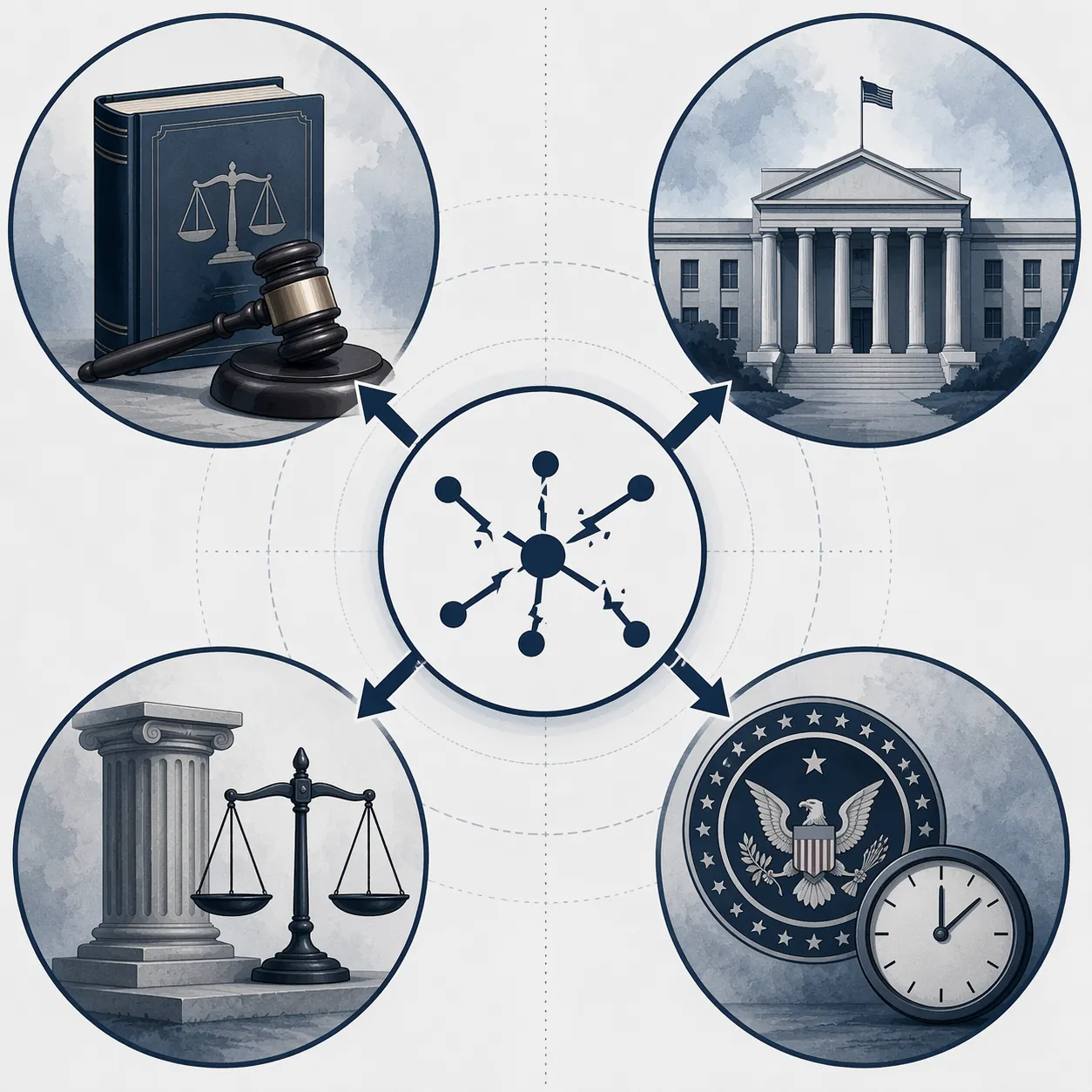
FTC Exposure Turns On Representations And Injury
The Federal Trade Commission does not need a stolen customer database to ask whether cybersecurity practices were unfair or deceptive. The more realistic FTC theory would not be “an outage happened, therefore Section 5 was violated.” It would be narrower: did the provider make express or implied security, reliability, monitoring, or privacy representations that materially diverged from its actual practices?
That distinction matters for counsel. A public assurance that subscriber data was safe is useful, but it is also a representation that must be supportable. If the basis for that assurance was preliminary, the risk is not only technical accuracy; it is whether later facts show the statement was too broad for what the company knew at the time. The absence of a published independent forensic report does not make the statement false. It simply leaves less public material to test it.
For an ISP, Section 5 analysis would likely examine the full communications record: website promises, privacy notices, customer terms, outage updates, security claims, and internal incident notes. Availability harm also matters. A two-day loss of internet service across municipal and commercial users is not the same injury as identity theft, but it is not trivial customer inconvenience either.
Business And Municipal Claims Face A Damages Problem
The affected businesses and town offices are the part of the incident most easily flattened by the phrase “no data breached.” If a local merchant could not process cards, if a town office could not conduct routine online work, or if staff spent two days fielding explanations instead of performing ordinary services, the harm was operational rather than theoretical. DysruptionHub’s account of cash-only impacts captures the kind of loss that later becomes a spreadsheet, a sworn statement, or a business-interruption claim.[4]
Turning that harm into recoverable damages is harder. A negligence plaintiff would still need duty, breach, causation, and legally cognizable damages. Maine’s economic-loss doctrine can be a serious obstacle when the claimed injury is lost revenue or business interruption unaccompanied by personal injury or property damage. Contract terms, service limitations, force-majeure language, outage credits, tariff-like provisions, and disclaimers may do as much work as tort doctrine.
The evidentiary burden also gets practical quickly. A claimant would need to separate outage-caused loss from normal seasonal variation, staffing limits, weather, inventory, and customer behavior. Cyber business-interruption analysis commonly focuses on documenting the timeline of disruption, affected systems, mitigation steps, lost revenue, extra expenses, and the period of restoration.[8] For a small business, that may be more work than the claim is worth unless losses were concentrated and well documented.
Municipal claims add another layer. A town may be able to document staff time, delayed transactions, emergency workarounds, and resident-facing disruption. But public entities also have procurement terms, service agreements, immunity questions, and political incentives that may point toward remediation rather than litigation. The legal exposure exists; recovery is not automatic.
CIRCIA Shows Why Availability Incidents Are Moving Into Reporting Law
CIRCIA is not a shortcut to present liability. The final rule was still expected later in 2026, with Federal News Network reporting on July 7, 2026 that CIRCIA and other major cyber rules were expected to be finalized in the fall.[9] Tidewater’s voluntary CISA report therefore should not be described as compliance with a final mandatory reporting duty that had already attached.
It is still a preview. Proposed critical-infrastructure reporting frameworks are concerned with substantial loss of service availability, not only data theft. A two-day outage affecting government, business, and residential customers across 23 towns is exactly the kind of fact pattern that exposes the limits of traditional breach-notification architecture. The public wants to know why service failed. State breach law may ask only whether personal information was acquired. Critical-infrastructure reporting rules are being built closer to the service-continuity problem.
The Practical Risk Classification
As of Q3 2026, the Tidewater incident is best classified as a data-free cyber outage with live legal risk, not as a confirmed data breach and not as obvious liability. The strongest immediate statutory distinction is that Maine’s 10 M.R.S. §1348 likely does not require breach notice for a pure service-disruption event without unauthorized acquisition of personal information.[5] The more durable legal question sits under Maine’s ISP-specific reasonable-measures duty, where the fact of no exfiltration does not end the inquiry.[6]
The FTC path is conditional: it depends on what Tidewater represented, what it knew, and whether its security and availability practices can be squared with those representations. The civil-claims path is plausible but difficult: businesses and municipalities can describe real disruption, but they still face duty, causation, contract, and economic-loss barriers. CIRCIA is forward-looking, but it shows why service-availability incidents are becoming too important to leave entirely outside mandatory cyber reporting.
The legal significance of the Tidewater outage is therefore not that every cyber attack becomes a breach case. It is that Maine law can scrutinize acquisition of personal information more readily than a network failure that temporarily immobilizes public offices and local commerce. A provider can be right that no customer data was breached and still face investigable, pleadable, and insurable questions about whether ordinary service failed in a way the law recognizes.
References
- Cyber attack causes internet outage, disrupting town offices, businesses in more than 20 Maine towns — News Center Maine
- Tidewater Telecom Restores Internet After Cyber Attack-Induced Outages — LCN
- Cyberattack against Maine telecom disrupted municipal internet service — StateScoop
- Tidewater cyberattack disrupts internet across coastal Maine — DysruptionHub
- Title 10, §1348 — Maine Legislature
- Title 35-A, §9301(5) — Maine Legislature
- Maine's New Internet Privacy Law: What You Need to Know — Pierce Atwood
- Cyber Business Interruption Playbook — J.S. Held
- CIRCIA, other big cyber rules expected to get finalized this fall — Federal News Network, July 7, 2026
Related records
Tool profile
How Meta's AI Spending Reshapes Law Firm ProfitabilityGoverning regulation
Browse the obligations tracker →Preventive workflow
Browse verification workflows →
Report a correction or tip
Spotted an outdated figure, a misstated fact, or a ruling this case record should reflect? Public comments are disabled for this content given the professional cost of a misreported case outcome, penalty amount, or rule text — use the structured correction channel instead.
Report a correction or tip for this record →