
What led to Manju Verma's Begusarai Arms Act jail sentence?
A source-tied timeline of Manju Verma's Begusarai Arms Act case, from the 2018 CBI raid to the 2026 jail sentence, with each step flagged confirmed or reported.
- Jurisdiction
- India
- Court
- Begusarai MP/MLA Court
- Judge
- Brajesh Kumar Singh
- AI tool named
- None
- Ruling date
- Aug 1, 2026
- Source document
- View primary court order ↗
- Last verified
- Aug 3, 2026
Lex Machina Review is an independent risk-tracking and reference resource. Nothing on this site is legal advice, and using it does not create an attorney-client relationship. Every record is reviewed against primary sources but may not reflect the most current status of a matter — always verify directly against the cited court order, rule text, or a licensed attorney before relying on it.
Companion explanation — secondary to the source document above
Last checked against available sources on August 3, 2026 (UTC), this Risk Digest companion timeline treats the Begusarai Arms Act case against Manju Verma and Chandrashekhar Verma as a record to verify before it treats it as a sentencing story. The public trial judgment has not been located in the available materials reviewed for this article, so the 2026 conviction and sentence details below are marked as reported unless a primary record is identified.
The destination is clear enough, but not self-explanatory: on August 1, 2026, Manju Verma and her husband Chandrashekhar Verma were reported convicted and sentenced by the Begusarai MP/MLA court in an Arms Act case, with the principal punishment reported as seven years’ rigorous imprisonment. IANS, Hindustan Times, The Times of India, PTI via The Telegraph, and The Indian Express all reported the conviction-and-sentence outcome, while differing on some particulars that matter for anyone preparing a briefing note or filing [1][2][3][4][5].
The short answer to what led to the jail sentence is not “the Muzaffarpur shelter-home case.” That case explains why the Central Bureau of Investigation searched the premises in 2018 and why the matter carried unusual political attention. The jail sentence came through a separate Arms Act chain: a CBI search, a local FIR over live cartridges allegedly found at the residence, absconder and bail proceedings, trial, and then the reported 2026 conviction.
The procedural chain at a glance
| Date / period | Event | Source status |
|---|---|---|
| August 16, 2018 | CBI searched the Verma residence at Shripur Arjun Tola during the Muzaffarpur shelter-home probe; reports say 50 live cartridges were recovered from a steel trunk. | Reported in contemporaneous and later coverage [6][1]. |
| 2018, after the search | FIR Case No. 143/2018 was registered at Cheria Bariyarpur police station on the complaint attributed in reports to CBI DSP Umesh Kumar, under Arms Act Sections 25(1-B)(a), 26 and 35. | Reported; the FIR-era sections should not be merged with the later reported conviction provisions [6][1]. |
| October 9, 2018 | Patna High Court dismissed Manju Verma’s anticipatory bail plea; reports also refer to absconder declaration and property-attachment steps. | Reported through contemporaneous background coverage [6][7]. |
| November 20, 2018 | Manju Verma surrendered in a Begusarai court and was jailed. | Reported by The Hindu and NDTV [6][7]. |
| March 2019 | Patna High Court granted her regular bail; reports say Chandrashekhar Verma remained in custody. | Reported; The Hindu names Justice Dinesh Kumar Singh in the bail coverage [6][7]. |
| Trial period before August 2026 | The case proceeded to trial before the Begusarai MP/MLA court; available reports conflict on whether the prosecution examined seven or eight witnesses. | Reported; no public trial judgment has been located in the reviewed materials [1][4]. |
| August 1, 2026 | The Begusarai court reportedly convicted both accused and imposed concurrent imprisonment terms, with the principal sentence reported as seven years’ rigorous imprisonment. | Reported; sentence components and judge designation vary by outlet [1][2][3][4][5]. |
Where the Arms Act case legally began
The Arms Act case began with the August 16, 2018 CBI search of the Verma residence at Shripur Arjun Tola in Begusarai district. The Hindu reported in its 2019 bail coverage that the search took place during the CBI’s Muzaffarpur shelter-home investigation, and that 50 live cartridges were found in a steel trunk: 15 cartridges of .32 bore, 10 of 8mm, 19 of 7.62mm, and 6 of .303 bore [6]. IANS repeated the same cartridge total and category breakdown in its 2026 sentencing report [1].
That detail is the hinge of the Begusarai Arms Act case. The Muzaffarpur shelter-home investigation is the search context; the alleged recovery of ammunition is the Arms Act foundation. The same distinction is important when reading later reports that describe the case as “linked to” the shelter-home matter. Linked by search history and political chronology is not the same as legally convicted for the shelter-home offences.
The FIR was reported as Case No. 143/2018 at Cheria Bariyarpur police station. The complaint is attributed in the available coverage to CBI DSP Umesh Kumar, and the FIR-era provisions are reported as Sections 25(1-B)(a), 26 and 35 of the Arms Act [6][1]. Because the public trial judgment is not available in the reviewed materials, Umesh Kumar’s exact trial-record designation and role should still be checked against the FIR or certified court record before being used as a court-confirmed fact.
Manju Verma’s political position explains the visibility of the case. She was then a JD(U) MLA and Bihar’s social welfare minister; The Hindu reported that she resigned after the Muzaffarpur shelter-home scandal and was later suspended by the JD(U) [6]. Those facts belong in the background, not in the elements of the Arms Act conviction.
Absconding, surrender and bail: the continuity between raid and trial
The 2018–2019 bail history is not a side issue. It shows how the ammunition case stayed procedurally alive after the search and before the later trial. The available reports say Manju Verma was declared an absconder, property-attachment steps followed, and the Patna High Court dismissed her anticipatory bail plea on October 9, 2018 [6][7].
On November 20, 2018, she surrendered before a Begusarai court and was sent to jail [6][7]. In March 2019, she was granted regular bail by the Patna High Court. The Hindu identified the single-judge bench as Justice Dinesh Kumar Singh and reported that Chandrashekhar Verma remained in jail at that stage [6]. NDTV also reported the bail outcome and described the Arms Act case as connected to the wider Bihar shelter-home investigation [7].
Reports from that bail period also referred to phone-call records allegedly linking Chandrashekhar Verma with Brajesh Thakur, the principal accused in the shelter-home case [6][7]. That allegation helps explain why investigators were looking closely at the Verma household. It should not be used as a substitute for the Arms Act proof: the 2026 sentence, as reported, rests on the ammunition case.
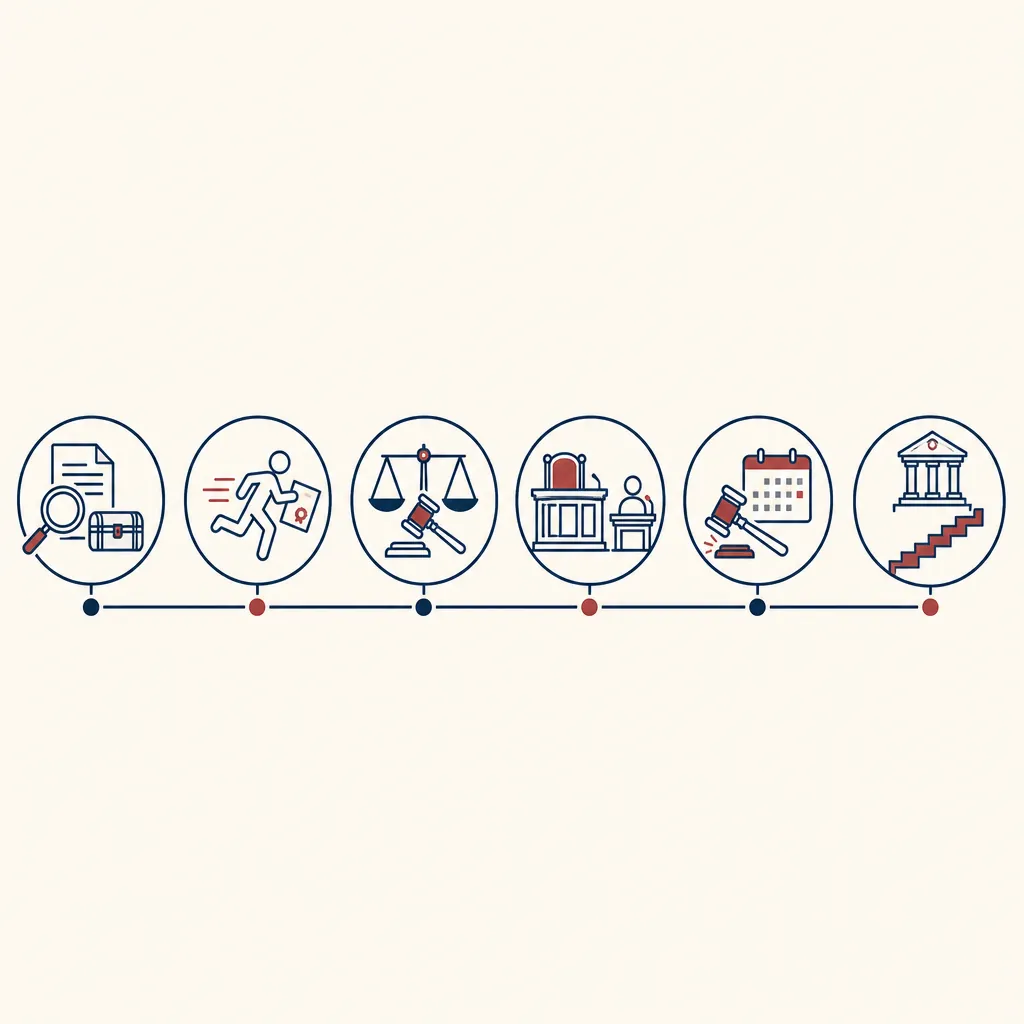
The 2026 conviction: what the reports agree on, and what they do not
The reported August 1, 2026 outcome has a common core: both Manju Verma and Chandrashekhar Verma were convicted in the Begusarai Arms Act case and were ordered to serve a seven-year jail term [1][2][3][4][5]. The more precise one tries to be after that, the more the sources need to remain visible.
IANS reported that Special Judge Brajesh Kumar Singh convicted the couple under Section 25(1-A) read with Section 35, imposing seven years’ rigorous imprisonment and a Rs 50,000 fine, with one additional year in default of payment. IANS also reported a separate five-year rigorous-imprisonment term and Rs 40,000 fine under Section 26, with ten additional months in default, and said the sentences would run concurrently [1].
Hindustan Times and The Times of India reported the seven-year term and Rs 50,000 fine, but did not set out the additional concurrent five-year Section 26 component in the same way IANS did [2][3]. The distinction is not cosmetic. For a legal note, “seven years with Rs 50,000 fine” is a safer short description of the reported headline sentence; the fuller sentence architecture should be attributed to IANS unless the trial judgment or certified order is obtained.
The reported statutory path also changed from the FIR-era description. The FIR was reported under Sections 25(1-B)(a), 26 and 35 [6][1]. The conviction, according to IANS, was under Section 25(1-A) read with Section 35 and under Section 26 [1]. Until the judgment is available, that should be written as a difference between reported FIR sections and reported conviction provisions, not as a confident account of how charges were framed, altered, proved or acquitted.
Judge designation and witness count
The judge is named across the sentencing coverage as Brajesh Kumar Singh, but the designation is not uniform. IANS described him as District and Sessions Judge-II-cum-Special Judge (MP-MLA) [1]. The Times of India used the formulation Additional District and Sessions Judge-II-cum-special MP-MLA court Judge [3]. PTI’s report in The Telegraph described him as Special Judge of the MP/MLA court [4]. Those formulations likely point to the same Begusarai special court function, but they should not be silently blended into one official designation without the order.
The witness count also differs. IANS reported that eight witnesses were examined [1]. PTI via The Telegraph reported seven prosecution witnesses, including the then Deputy SP, CBI, Dhanbad [4]. The safer treatment is to preserve both numbers and attribute them. There is no need to choose a winner from secondary reports.
Custody, medical care and the ammunition description
IANS reported that after sentencing both convicts were sent to Begusarai Divisional Jail, and that the court directed jail authorities to provide medical care to Manju Verma because of her health condition [1]. That is a reported sentencing-order detail, not a directly verified order term in the materials reviewed here.
One technical point is worth keeping narrow. Hindustan Times used the phrase “3-0-3 rifle” in its account of the recovered ammunition [2]. The earlier and more specific cartridge breakdown in The Hindu and IANS refers to .303 bore cartridges [6][1]. Without the underlying seizure memo or trial judgment, “3-0-3” should be treated cautiously as a likely transcription or style artifact, not as a separate firearms category.
So what led to the jail sentence?
The safest reconstruction is this: a CBI search during the Muzaffarpur shelter-home investigation allegedly produced 50 live cartridges from a steel trunk at the Verma residence; a Cheria Bariyarpur police station FIR followed under Arms Act provisions; Manju Verma’s anticipatory bail failed, she surrendered, later obtained regular bail, and the case proceeded to trial; in August 2026, the Begusarai MP/MLA court reportedly convicted both accused and imposed concurrent imprisonment terms, with the principal punishment reported as seven years’ rigorous imprisonment [6][1][7][2][3][4][5].
That is also why a compact sentencing-only entry can be useful but incomplete. The site’s narrower Begusarai sentencing record is the place to check the outcome fields. This timeline is for the chain that made the outcome intelligible.
For anyone citing the case, three cautions should travel with that reconstruction.
- Do not write that the shelter-home case itself caused the Arms Act sentence. The shelter-home probe explains the search; the reported Arms Act conviction concerns ammunition.
- Do not collapse the FIR-era Arms Act provisions into the reported conviction provisions. The available sources support a distinction, not a full charging history.
- Do not treat the seven-or-eight witness issue, judge designation, default terms, or medical-care direction as primary-record confirmed until the judgment or certified sentencing order is obtained.
The appeal-stage AI risk is separate
Nothing in the reviewed materials documents AI use in the Begusarai trial, the conviction, or the sentencing order. The AI-citation issue enters only at the next procedural edge: if a Patna High Court appeal is filed or pursued, counsel and reviewers now work under the 2026 Supreme Court environment shaped by Pooja Ramesh Singh v. Jammu and Kashmir Bank Ltd., reported as 2026 INSC 668, where the Court condemned reliance on fake AI-generated precedents [8][9][10].
That point is a verification duty, not an allegation about this trial. For the broader rule, see the site’s India AI citation rule. For the underlying case timeline, the work remains more basic: keep the raid, FIR, bail history, trial reporting and sentence reporting in their own lanes until the public record catches up.
References
- Former Bihar minister Manju Verma, husband get 7-year RI in Arms Act case, Social News XYZ
- Former Bihar minister, husband to serve 7-year term in Arms Act case, Hindustan Times
- 7-year jail to ex-minister, husband in arms case, The Times of India
- Former Bihar minister Manju Verma, husband sentenced to seven years in Arms Act case, The Telegraph
- Begusarai court awards 7-year jail to ex-Bihar minister Manju Verma, husband, The Indian Express
- Ex-Minister Manju Verma granted bail by Patna HC, The Hindu
- Manju Verma Gets Bail In Arms Act Case Linked To Bihar Shelter Home Case, NDTV
- Reliance on AI-generated fake precedents — Pooja Ramesh Singh v. Jammu and Kashmir Bank Ltd., 2026 INSC 668, Supreme Court Observer
- Supreme Court declares zero tolerance to citing fake AI-generated judgments, asks BCI to frame norms, Bar and Bench
- 'Mercy vs Mankind' Never Existed: Supreme Court Slams AI-Generated Fake Judgments, LawBeat
Related records
Tool profile
Browse tool evaluations →Governing regulation
Browse the obligations tracker →Preventive workflow
Browse verification workflows →
Report a correction or tip
Spotted an outdated figure, a misstated fact, or a ruling this case record should reflect? Public comments are disabled for this content given the professional cost of a misreported case outcome, penalty amount, or rule text — use the structured correction channel instead.
Report a correction or tip for this record →