
Marin housing project environmental review lawsuit pending
A verified status record of the lawsuit challenging Marin County's June 2026 approval of the 337-unit Strawberry seminary redevelopment: the parties, the complaint's claim clusters, and the relief sought. Confirmed as of August 3, 2026, the case is pending at Marin County Superior Court — no ruling has issued and the county has not yet responded.
- Jurisdiction
- United States, California
- Court
- Marin County Superior Court
- AI tool named
- No AI tool named
- Source document
- View primary court order ↗
- Last verified
- Aug 3, 2026
Lex Machina Review is an independent risk-tracking and reference resource. Nothing on this site is legal advice, and using it does not create an attorney-client relationship. Every record is reviewed against primary sources but may not reflect the most current status of a matter — always verify directly against the cited court order, rule text, or a licensed attorney before relying on it.
Companion explanation — secondary to the source document above
Last verified August 3, 2026: the Marin County housing project environmental review lawsuit over the Strawberry seminary redevelopment is pending in Marin County Superior Court. The available materials confirm that Strawberry Residents for Sensible Development filed a petition on July 6, 2026, after the Marin County Board of Supervisors approved North Coast Land Holdings LLC’s redevelopment and certified the Final EIR on June 9, 2026.[1][2]
No docket number was located in the materials reviewed for this record. No ruling, CEQA merits order, or stay order has been confirmed. The county’s response was still pending in the public reporting available at verification, with county counsel described as reviewing the petition.[1] A circulating claim that a court had already found a CEQA violation and ordered new environmental review is not supported by the verified sources reviewed here and should not be repeated as case status.
Current litigation posture
| Record field | Verified status as of August 3, 2026 |
|---|---|
| Case | Strawberry Residents for Sensible Development challenge to Marin County approval of the North Coast Land Holdings seminary redevelopment |
| Court | Marin County Superior Court |
| Filing date | July 6, 2026, per Marin IJ reporting [1] |
| Government action challenged | June 9, 2026 Board of Supervisors approval, Final EIR certification, and Notice of Determination filing [2] |
| Confirmed ruling | None located in the reviewed materials |
| Confirmed stay order | None located in the reviewed materials |
| County response | Not yet filed or not yet reported in the reviewed materials; county counsel was reported as still reviewing the petition [1] |
| Docket number | Not located in available materials |
That posture matters more than the headline shorthand. A complaint can be specific, serious, and damaging to a project schedule without being a judicial finding. This record should therefore be cited as a pending challenge to an approved project, not as a court decision against Marin County.
The approval being challenged
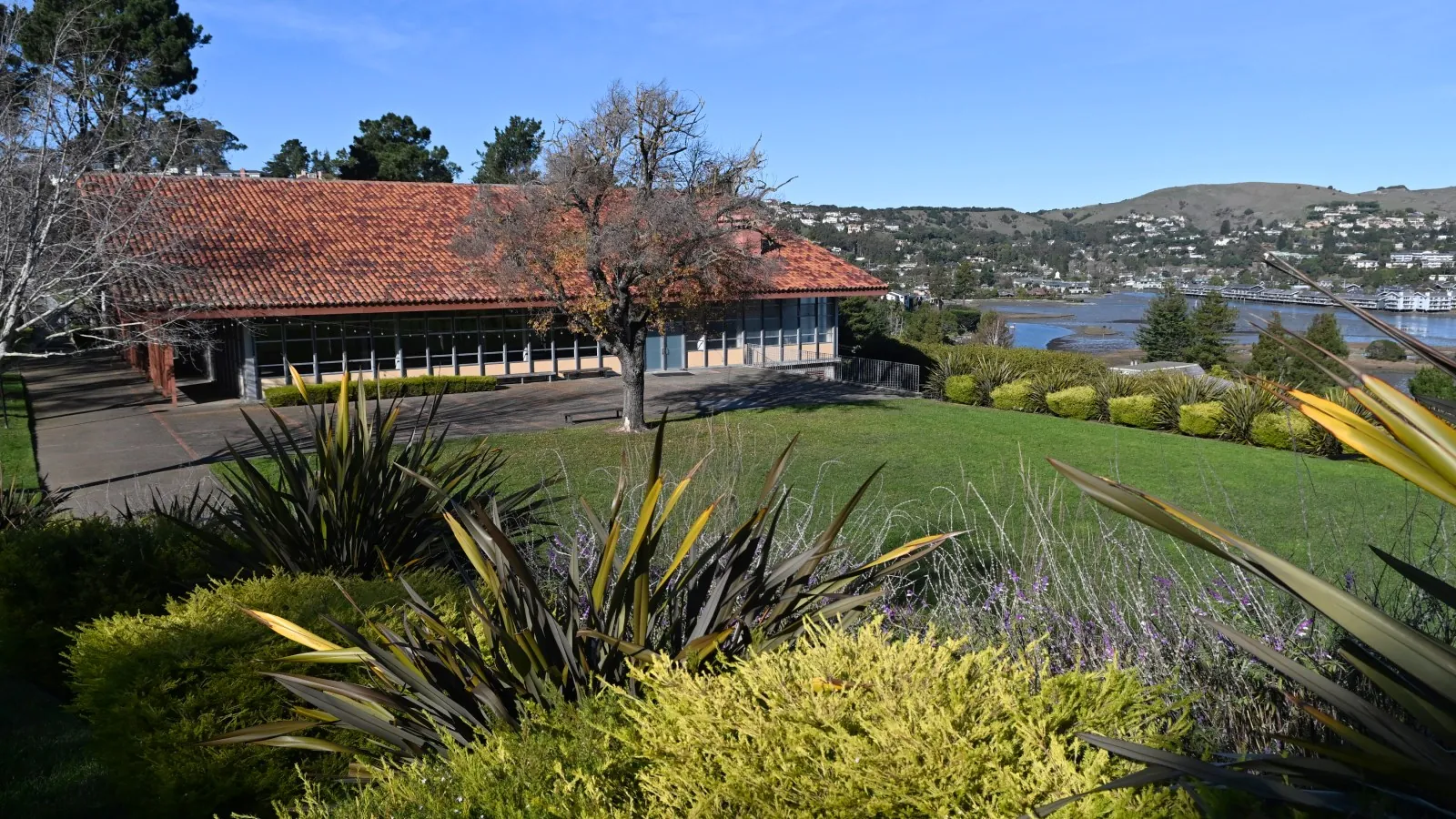
The challenged approval concerns the former Golden Gate Baptist Theological Seminary campus in Strawberry. The county EIR page identifies the North Coast Land Holdings LLC project and confirms that the Final EIR was certified and the Notice of Determination was filed on June 9, 2026.[2] Marin IJ reporting describes the parcel as 127 acres, consistent with the acreage used in the county-facing record materials reviewed here.[1][2]
The redevelopment approved by the county is large by Marin standards. Chronicle reporting, available through Yahoo’s syndicated text, describes 337 new residences, including 70 low-income units, a 150-unit residential care facility, daycare, a fitness center, 944 parking spaces, and demolition of 190 existing low-income dwellings.[3] Those project specifications explain why the suit is being watched beyond Strawberry: the petition does not challenge a marginal infill approval, but one of the county’s more consequential recent housing approvals.
The Board approval did not arrive in a quiet procedural vacuum. Local reporting had already tracked the supervisors’ June 2026 approval of the 337-home redevelopment.[4] Chronicle reporting also describes a March 2026 settlement with the Seminary Neighborhood Association that included a 325 commuter-student cap, a height reduction from six stories to three stories, and a 15-year pause.[3] Those facts are context for the litigation record, not substitutes for the petition. The plaintiff in the pending suit is Strawberry Residents for Sensible Development, and the target is the county’s approval and environmental review of the North Coast Land Holdings redevelopment.[1]
The complaint’s three main claim clusters

The reported petition is not a generalized objection to housing or a bare accusation that the EIR was inadequate. Marin IJ’s account identifies three concrete clusters: the Chapel Hill visual-landmark issue under the Strawberry Community Plan, density-bonus waiver and concession objections, and the Board’s treatment of EIR Alternative 4.[1] Each is worth separating, because each would affect a different part of the approval record if it gained traction.
Chapel Hill and the visual-landmark claim
The first cluster concerns Chapel Hill. Marin IJ reports that the petition invokes the Strawberry Community Plan’s treatment of Chapel Hill as a prominent visual landmark and challenges housing planned there as inconsistent with that plan provision.[1] The legal weight of that point, at this stage, is not that a court has agreed with the residents. It is that the petition ties the CEQA and land-use challenge to a named plan feature rather than to neighborhood preference alone.
Density-bonus waivers and concessions
The second cluster challenges how the county handled density-bonus waivers and concessions. Marin IJ reports that the petition claims the county allowed waivers or concessions beyond what the State Density Bonus Act permits.[1] This is a different question from whether the project includes affordable units. The Chronicle-reported project mix includes 70 low-income units, but the lawsuit’s density-bonus point concerns the legal mechanics used to approve departures from otherwise applicable rules.[3]
Alternative 4 and the EIR record
The third cluster is the one most likely to be flattened into a misleading CEQA headline. Marin IJ reports that the petition faults the Board for rejecting EIR Alternative 4, which would have relocated 40 Chapel Hill market-rate units to lower elevations, and for allegedly doing so without adequate reasoning despite the alternative being presented as environmentally superior and feasible.[1] That is an allegation about the adequacy of the agency’s environmental-review reasoning. It is not yet a court holding that Marin County violated CEQA.
The distinction is not clerical. A lawyer citing this matter as a decided CEQA loss would be overstating the record. A planner treating it as a live challenge to the sufficiency of the EIR alternatives analysis would be on firmer ground. The source trail supports the second statement, not the first.
Relief and practical exposure
The practical exposure is delay and possible approval vulnerability. If a court later credits the reported CEQA, plan-consistency, or density-bonus theories, the approval record could require correction before the project proceeds on the same footing. But nothing in the verified materials reviewed for this record confirms that such relief has been granted.
The risk is still real because the lawsuit attacks the administrative spine of the approval: environmental review, consistency with local planning constraints, and the statutory basis for density-bonus-related departures. It is still early because the defendant-side response and any court testing of those theories remain absent from the reviewed record.
The defense record is already part of the posture
A pending-risk record also needs the mounted defense. Chronicle reporting attributes to County Counsel Brandon Halter the county’s position that it complied with the law, and notes the developer’s contractual indemnification obligation.[3] That matters for litigation posture because the county’s exposure is not simply a bare petition sitting unanswered in the abstract; the public defense framework is already visible, even if the formal response was not yet located.
The developer’s side is sharper. North Coast attorney Andrew Giacomini called the suit “wholly without merit,” according to Chronicle reporting, and defended the approval after extensive review while emphasizing that the project density remained at a fraction of the state-law maximum.[3] Those statements do not decide the case. They do, however, make it inaccurate to describe the record as if only the petition’s theory exists.
There is also pre-lawsuit procedural history that may become relevant if the administrative record is litigated. The Planning Commission had previously rejected the developer’s community plan amendment requests, according to the reporting summarized in the available materials.[1] That fact does not prove the residents’ case. It helps explain why the petition focuses so closely on community-plan consistency and why the Chapel Hill issue is not merely decorative local color.
Citation cautions for briefs, memos, and coverage
The safest way to use this record is to keep source hierarchy visible. Use the county EIR page for the June 9 Final EIR certification and Notice of Determination filing.[2] Use Marin IJ for the reported complaint allegations, parties, filing date, and counsel status statements.[1] Use the Chronicle/Yahoo text for the project specifications, settlement context, and developer/county defense framing.[3] Use Local News Matters as secondary approval reporting, not as the cleaner source for acreage.[4]
Acreage is a small example of why that hierarchy matters. Marin IJ and the county-facing materials reviewed for this record point to 127 acres.[1][2] Local News Matters’ approval story describes the property as 101 acres.[4] This record does not reconcile that conflict by guessing. For legal-risk purposes, the county EIR page and the case-specific reporting should control until the underlying approval record or petition is pulled directly.
| Safer formulation | Avoid |
|---|---|
| “The July 2026 petition challenges Marin County’s June 2026 approval and EIR certification for the Strawberry seminary redevelopment.” | “The court ruled Marin County violated CEQA.” |
| “The complaint alleges defects involving Chapel Hill, density-bonus handling, and EIR Alternative 4.” | “The project was found inconsistent with the Strawberry Community Plan.” |
| “No ruling or stay order was confirmed in the materials reviewed as of August 3, 2026.” | “The approval has been stayed.” |
| “County and developer representatives have publicly disputed the suit.” | “The petition stands unrebutted as a matter of public posture.” |
The missing docket number is not a minor annoyance for anyone building a reusable litigation note. Without the docket sheet and petition text, quoted petition language should not be lifted from summaries and recast as if counsel had verified it against the court file. The claim clusters can be attributed to Marin IJ reporting; direct quotation from the petition should wait for the Marin County Superior Court record.
Status sentence suitable for reuse: as of August 3, 2026, the Strawberry seminary redevelopment challenge is pending-confirmed in Marin County Superior Court; no ruling or stay order has been confirmed, the county response remains pending in the reviewed materials, and the claim that a court already ordered new CEQA review is unverifiable from the available record.
References
- Lawsuit challenges Marin County approval of Strawberry development, Marin Independent Journal, August 1, 2026.
- North Coast Land Holdings LLC Environmental Impact Report, Marin County.
- One of Marin’s biggest new housing projects could get derailed by a lawsuit, SF Chronicle via Yahoo News.
- Marin County supervisors approve 337-home redevelopment of former seminary property, Local News Matters / Bay City News, June 10, 2026.
Related records
Tool profile
How Meta's AI Spending Reshapes Law Firm ProfitabilityGoverning regulation
Browse the obligations tracker →Preventive workflow
Browse verification workflows →
Report a correction or tip
Spotted an outdated figure, a misstated fact, or a ruling this case record should reflect? Public comments are disabled for this content given the professional cost of a misreported case outcome, penalty amount, or rule text — use the structured correction channel instead.
Report a correction or tip for this record →