
Michigan's AI SNAP Eligibility Screen Under the 2025 Changes
Michigan's AI case-reading tool now pre-screens SNAP eligibility payments under the 2025 rule changes, but its accuracy is unverified and a FOIA challenge from the ACLU of Michigan is pending. This record separates the state's self-reported figures from what remains unproven, with the MiDAS precedent — a 93% error rate and a $20M settlement in a similarly incentivized program — framing the reliability stakes.
- Jurisdiction
- US-Michigan
- Court
- MDHHS administrative proceeding
- AI tool named
- MDHHS AI case-reading tool
- Ruling date
- Jul 30, 2026
- Source document
- View primary court order ↗
- Last verified
- Aug 5, 2026
Lex Machina Review is an independent risk-tracking and reference resource. Nothing on this site is legal advice, and using it does not create an attorney-client relationship. Every record is reviewed against primary sources but may not reflect the most current status of a matter — always verify directly against the cited court order, rule text, or a licensed attorney before relying on it.
Companion explanation — secondary to the source document above
Last verified: Aug. 5, 2026.
The relevant SNAP benefits eligibility changes in 2025 did not begin with an algorithm. They began with a cost shift. The One Big Beautiful Bill Act, enacted July 4, 2025, created a new state financial exposure tied to SNAP payment error rates, with implementation running through the federal OBBBA SNAP process.[1] For a state agency already measured on whether households receive the correct amount, that change makes pre-payment error detection more than an administrative preference.
Michigan’s reported FY2025 SNAP payment error rate was about 9.89%.[2] CBPP’s analysis of USDA data places that rate in the 10% benefit-cost-share tier under the OBBBA framework beginning in October 2027.[3] That is the pressure point behind the current record: Michigan has not merely experimented with document automation in the abstract. Its health and human services agency has put an AI case-reading tool into the SNAP payment review stream at a moment when payment errors carry new fiscal consequences.

What the 2025 change makes newly consequential
SNAP eligibility is still governed by familiar household, income, resource, and state-administered program rules; the federal eligibility page remains the baseline reference for recipients and applicants.[4] This record is narrower. It concerns the use of an AI case-reading tool around eligibility and payment screening, before the household receives a final agency action or before an error is confirmed.
That position in the process matters. A tool that reads case files and flags likely payment problems may not itself terminate benefits, issue a fraud finding, or impose a debt. But a pre-screen can decide which household file gets pulled into additional review, which caseworker inherits a warning label, and which applicant experiences delay or suspicion before any formal adjudication occurs.
The state’s incentive is legible. USDA announced FY2025 state payment error rates in June 2026, and Michigan’s rate sits close to the 10% threshold that matters under the new cost-sharing design.[2][3] In that setting, a tool promising to find payment errors before certification is not just an efficiency device. It is a risk-transfer instrument: if it works, the state may reduce exposure; if it misfires, households and frontline staff may absorb the first round of consequences.

The state-reported deployment figures
The clearest public deployment statement comes from Michigan Department of Health and Human Services Chief Operating Officer David Knezek’s March 17, 2026 testimony. As reported by Michigan Public, Knezek said MDHHS had deployed an AI case-reading tool to scan SNAP cases before payment certification and to target likely fraud or payment errors.[5]
The numbers disclosed in that testimony are concrete but limited. In three months, the tool had performed about 17,500 pre-certification case reads. Roughly 1,500 of those reads were flagged, representing more than $150,000 in potential payment errors.[5] Michigan Independent also reported those figures in its coverage of the AI tool and concerns about false fraud claims.[6]
| Publicly documented point | Evidentiary status |
|---|---|
| MDHHS used an AI case-reading tool in the SNAP pre-certification process | On the record through state testimony reported by Michigan Public |
| About 17,500 case reads occurred over three months | State-reported figure; not an independently validated performance metric |
| Roughly 1,500 reads were flagged | State-reported figure; does not show how many flags were correct |
| More than $150,000 in potential payment errors were identified | State-reported potential amount; not proof of recovered funds or confirmed fraud |
| Published false-positive, false-negative, or accuracy rates | Not available in the cited public record |
The distinction between “flagged” and “correct” is not a technicality. A flagged case can be a true overpayment, a missing document, a misread file, a stale data match, or a reason for human review that ultimately changes nothing. The public record so far does not say how many of the roughly 1,500 flags were confirmed, how many were withdrawn, how many changed a household’s benefit amount, or how many led to a fraud referral.
Nor does the disclosed dollar figure answer the reliability question. “Potential payment errors” is a screening category, not an adjudicated result. It may be useful for internal triage. It is not, standing alone, evidence that the model accurately distinguishes ineligible payments from eligible ones.
The missing verification layer is now the subject of a FOIA demand
On July 30, 2026, the ACLU of Michigan announced that it had sent MDHHS a letter and Freedom of Information Act request seeking answers about the state’s use of AI to determine food benefits for low-income families.[7] The request is important less because it proves malfunction than because it asks for the materials that would let outsiders test the state’s claims.
The ACLU says it is seeking records showing whether the tool works, records concerning whether MDHHS complied with federal guidelines requiring disclosure of AI impact before adoption, and any records of inaccurate or fabricated output.[7] As of Aug. 5, 2026, the FOIA request remains pending; the available materials do not establish that MDHHS violated the asserted disclosure obligations or that the tool produced fabricated results.
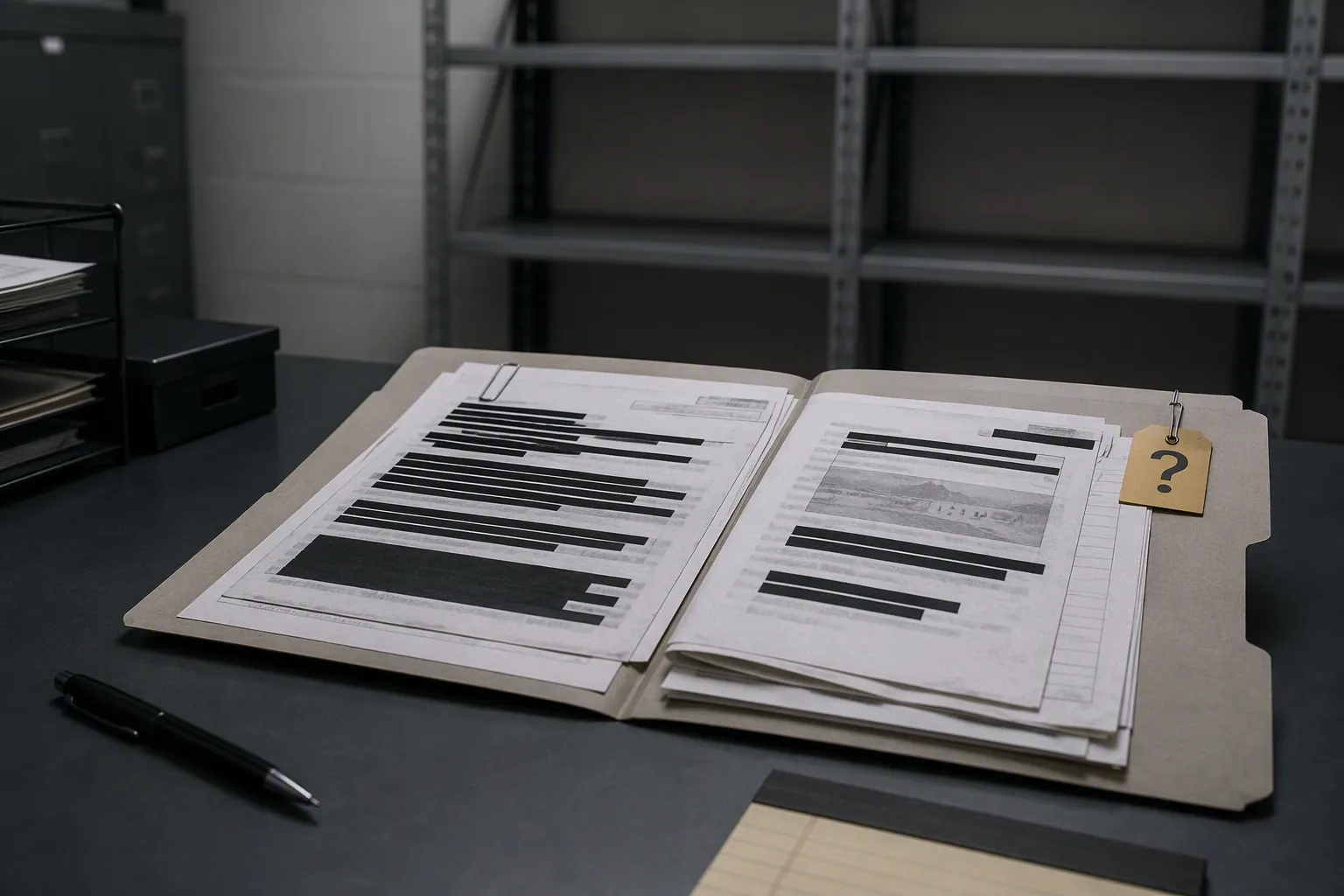
That pending status should discipline the record. The ACLU’s request is a formal challenge to the opacity of the deployment. It is not yet a finding of inaccuracy. The state’s testimony is a formal disclosure of use and scale. It is not yet a validation study. Between those two points sits the part of the system that matters most for legal risk: the unpublished evidence about how the tool behaves when it is wrong.
What a useful response would have to show
A meaningful verification record would not simply repeat the number of reads or the amount of possible payment error. It would show, at minimum, how MDHHS defines a correct flag, how often flagged cases are confirmed after human review, whether households receive notice tied to AI-generated concerns, whether caseworkers can override the tool without penalty, and whether flagged households differ systematically by county, race, disability, language access, household size, or benefit category.
The current public record does not contain those answers. That absence does not make the tool unlawful or defective. It does make any confident public claim about accuracy premature.
Why MiDAS belongs in the file, but not as proof
Michigan has a prior automated benefits-enforcement failure that cannot be ignored. The Michigan Integrated Data Automated System, known as MiDAS, was used in the unemployment insurance context and became associated with approximately 40,000 wrongful fraud accusations, a reported 93% error rate, a 400% penalty, more than 1,000 bankruptcies among falsely accused claimants, and a $20 million settlement finalized in 2024 covering 3,000 claimants.[6][5]

MiDAS is analogous in the way that matters for risk triage: an automated system was used in a public-benefits environment under pressure to identify fraud or improper payments, and the downstream harm of erroneous accusations was severe. A household benefits case is not just a data record. It is rent, food, transportation, medical compliance, and family stability compressed into an agency file.
But MiDAS is not evidence that the current SNAP case-reading tool has the same error rate, the same design, or the same legal defects. It involved unemployment insurance, not SNAP. It produced fraud determinations in a different program setting. The present record concerns a case-reading tool used for pre-certification screening, with no published accuracy data. Treating MiDAS as proof of current SNAP failure would overstate the evidence.
Its proper role is narrower and still serious. MiDAS shows why Michigan’s assurances about automated benefits review should be tested against records, not accepted on deployment numbers alone. It also shows why an upstream label can become consequential once agency staff, notices, debt collection, and appeal rights begin to move around it.
The affected system is large enough that small error rates matter
Michigan Independent, citing the Michigan League for Public Policy, reported that more than 1.4 million Michiganders participated in SNAP as of July 2025.[6] That scale changes how reliability should be read. A low percentage of mistaken flags can still mean many households. A high-performing triage tool can still cause concentrated harm if its mistakes cluster among people who have the least capacity to contest them.
Caseworkers are also part of the risk picture. When an automated reader adds flags to the queue, staff must decide whether to trust, investigate, override, or document around those flags. If the tool is accurate, it may help staff find genuine payment problems faster. If it is noisy, it may convert scarce administrative time into avoidable review work and push applicants into longer uncertainty.
The publicly reported figures do not yet tell us which version is happening. They show adoption. They show volume. They show claimed potential error detection. They do not show net benefit, fairness, accuracy, or household impact.
Record status as of Aug. 5, 2026
| Question | Current answer |
|---|---|
| Did Michigan deploy an AI case-reading tool in the SNAP pre-certification process? | Yes, according to state testimony reported by Michigan Public. |
| How much use has the state disclosed? | About 17,500 reads over three months, with roughly 1,500 flags and more than $150,000 in potential payment errors, as state-reported figures. |
| Has MDHHS published accuracy or false-positive rates? | Not in the cited public materials. |
| Has the ACLU of Michigan proved the tool is inaccurate? | No. Its July 30, 2026 FOIA request is pending and seeks verification records. |
| Does MiDAS prove the SNAP tool is failing? | No. MiDAS is a documented analog risk precedent from a different benefits program. |
| Why does the issue belong under the 2025 SNAP changes? | The OBBBA error-rate cost-shift creates a new fiscal incentive to reduce payment errors, and Michigan’s FY2025 error rate places it near the relevant cost-sharing threshold. |
The cleanest legal-risk label for this record is therefore not “AI wrongly denied SNAP benefits” and not “AI solved Michigan’s payment error problem.” The supportable label is narrower: Michigan has a documented AI eligibility and payment pre-screening system operating under the 2025 SNAP error-rate changes, with state-reported volume and potential-error figures, no published public accuracy metrics, and a pending FOIA challenge seeking the missing verification record.
The next evidentiary event is the response to the ACLU of Michigan’s FOIA request. Until those records are produced, withheld, or litigated, the reliability question remains open. MiDAS stays in the file as the warning precedent: not because it decides this case, but because it shows what can happen when automated benefits enforcement is trusted before the public can see how it fails.
References
- OBBBA implementation hub, USDA.
- USDA Announces FY 2025 State Payment Error Rates in SNAP, USDA, June 24, 2026.
- New Data Underscore SNAP Cost Shift's Harm to Low-Income Families and State Budgets, CBPP, July 23, 2026.
- SNAP Eligibility, USDA.
- ACLU of Michigan questions use of AI in assessing SNAP payments across the state, Michigan Public, Aug. 2, 2026.
- Experts warn use of AI to vet Michigan SNAP applications can lead to false fraud claims, Michigan Independent.
- ACLU Raises Concerns, Wants Answers About Michigan's Use of AI to Determine Food Benefits for Low-Income Families, ACLU of Michigan, July 30, 2026.
Related records
Tool profile
How Meta's AI Spending Reshapes Law Firm ProfitabilityGoverning regulation
Browse the obligations tracker →Preventive workflow
Browse verification workflows →
Report a correction or tip
Spotted an outdated figure, a misstated fact, or a ruling this case record should reflect? Public comments are disabled for this content given the professional cost of a misreported case outcome, penalty amount, or rule text — use the structured correction channel instead.
Report a correction or tip for this record →