
Which legal rules govern the Micron–China AI chip contest?
A source-linked record of the five legal layers in the Micron–China AI chip dispute — CAC finding, US HBM export controls, suspended minerals bans, stalled WTO case, pending MATCH Act — each with jurisdiction, status flag, and effective date as of August 2026.
- Jurisdiction
- China, United States
- Court
- WTO Dispute Settlement Body
- AI tool named
- No AI tool implicated
- Ruling date
- May 21, 2023
- Source document
- View primary court order ↗
- Last verified
- Aug 4, 2026
Lex Machina Review is an independent risk-tracking and reference resource. Nothing on this site is legal advice, and using it does not create an attorney-client relationship. Every record is reviewed against primary sources but may not reflect the most current status of a matter — always verify directly against the cited court order, rule text, or a licensed attorney before relying on it.
Companion explanation — secondary to the source document above
Non-advice banner: This record is a compliance research aid, not legal advice. It does not determine product classification, customer status, end use, license availability, Chinese procurement status, or the outcome of any regulator’s review for a specific transaction.
Last verified: August 4, 2026, 00:00 UTC. Legal-background review: Regulation & Ethics legal review desk.
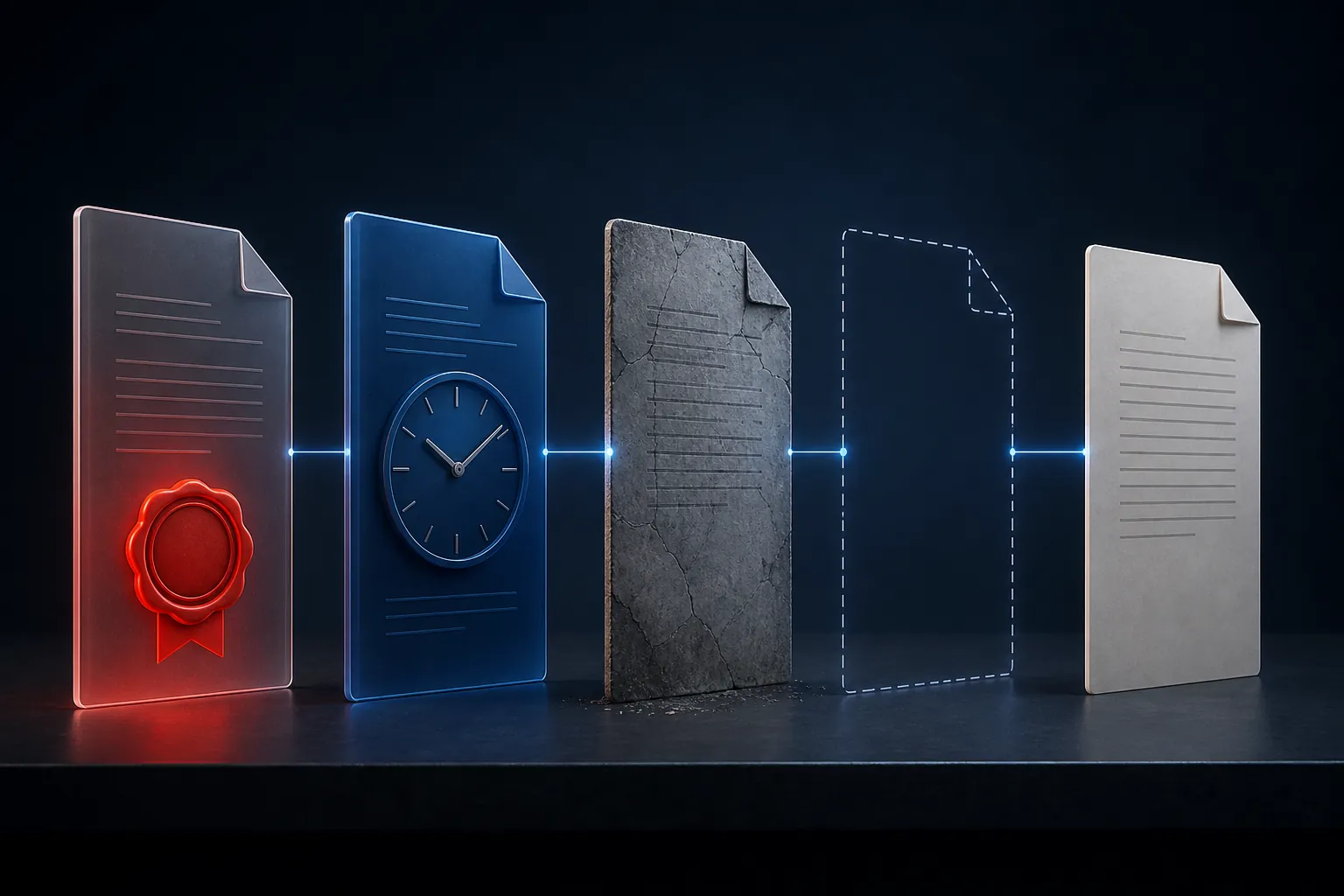
| Legal layer | Jurisdiction / issuing authority | Status flag as of Aug. 4, 2026 | Effective or operative date | Source trail | Counsel implication |
|---|---|---|---|---|---|
| China CAC cybersecurity finding on Micron | China; Cyberspace Administration of China cybersecurity review mechanism | In force. CAC found that Micron products failed cybersecurity review and said operators of critical information infrastructure in China should stop purchasing Micron products. | Review launched March 31, 2023; finding announced May 21, 2023. | Reuters finding report; WilmerHale and DigiChina legal-basis discussions [1][2][3] | Do not describe this as a global import ban. Verify whether the Chinese buyer is a critical information infrastructure operator, whether the product is within any non-public scope communicated to the customer, and whether any later CAC or sectoral instruction applies. |
| US advanced-computing and HBM export controls | United States; Bureau of Industry and Security under the Export Administration Regulations | In force. HBM is controlled under ECCN 3A090.c above the memory-bandwidth-density threshold; License Exception HBM has a separate lower-than-3.3 GB/s/mm² threshold and EAR §740.25 conditions. | Core advanced-computing controls began in October 2022; HBM and related December updates were issued Dec. 2/5, 2024; license-review policy revised Jan. 13, 2026. | BIS Dec. 2, 2024 release; ArentFox Schiff Dec. 5 controls summary; BIS Jan. 13, 2026 policy release [4][5][6] | Classify the item first. Do not merge the 3A090.c control threshold with the License Exception HBM threshold. Screen end users, Footnote 5 exposure, semiconductor manufacturing equipment rules, red flags, and license-review policy separately. |
| China minerals and Unreliable Entity List counter-controls | China; Ministry of Commerce and related Chinese authorities | Suspended in part. The Dec. 3, 2024 US-specific export prohibition on gallium, germanium, antimony, and superhard materials was suspended until Nov. 27, 2026. The Oct. 9, 2025 package was reported suspended for one year. A US military end-user prohibition was reportedly retained. | Dec. 3, 2024 prohibition; suspension reported Nov. 9, 2025 through Nov. 27, 2026; Oct. 9, 2025 package suspended for one year. | Reuters minerals ban report; Fastmarkets suspension report; Crowell & Moring Oct. 2025 package report [7][8][9] | Keep suspended measures in the obligations map with expiry dates. Procurement and sales teams should not treat suspension as repeal, and should separately test any military-end-user restriction reported as still active. |
| WTO DS615 | World Trade Organization dispute settlement; China as complainant against US semiconductor export-control measures | Procedural / stalled. Consultations were requested; no adjudicated ruling is identified in the source record. | Consultations requested Dec. 12, 2022. | WTO DS615 case page [10] | Do not cite DS615 as a ruling that invalidates or authorizes any shipment. It is a dispute posture, not an operating license or defense for a private party. |
| MATCH Act | United States; Congress | Pending legislation. The bill was committee-advanced in the House Foreign Affairs Committee on Apr. 22, 2026 and reported as a possible NDAA amendment path, but it is not present law. | Committee action reported Apr. 22, 2026; bill text available for HR 8170. | Reuters lobbying and committee report; Congress.gov HR 8170 text [11][12] | Track for policy and government-affairs purposes. Do not convert it into a contractual covenant, export classification note, or shipment hold unless and until enacted and implemented. |
The useful question in the Micron–China AI chip competition/export-controls file is not whether the relationship is hostile. It is whether a lawyer, export-classification lead, procurement manager, or sales team has a binding instruction today. The answer changes by layer. CAC’s Micron finding and the US HBM export-control regime are live compliance constraints. Some Chinese counter-controls are suspended but still need expiry-date tracking. DS615 is a WTO consultation record. The MATCH Act is pending legislation.
The CAC layer: live Chinese restriction, narrow public record
CAC announced the Micron cybersecurity review on March 31, 2023, and on May 21, 2023 said the products at issue had failed that review. Reuters reported CAC’s finding as identifying “serious network security risks” that affected China’s national security and stating that operators of critical information infrastructure in China should stop purchasing Micron products [1][2].
That is an operative restriction for Chinese critical information infrastructure purchasing. It is not, on the public record supplied here, a worldwide prohibition on Micron, a US export-control rule, a sanctions designation, or a court order. For a business team, those distinctions are not academic. They decide who is blocked, which transaction step is constrained, and which regulator’s text must be checked before action.
The stated legal basis matters because it shows the review was not a free-floating political announcement. The source trail identifies China’s 2015 National Security Law Article 59, 2016 Cybersecurity Law Article 35, and the 2021 revised Cybersecurity Review Measures, including Articles 2, 5, 7, 10, and 16, as the relevant cybersecurity-review framework [2][3]. Those provisions are the better starting point for a Chinese-law status check than a headline that says “China bans Micron.”
The same record has important silences. The public materials in the supplied source set do not disclose the technical evidence underlying CAC’s finding, and they do not provide a precise public product-by-product scope. That means counsel should resist two opposite shortcuts: assuming every Micron-related Chinese sale is prohibited, or assuming the restriction is harmless because the public record is incomplete. The correct task is narrower and more laborious: identify the Chinese buyer, test whether it is within the critical information infrastructure category or has received sectoral instruction, confirm the specific product and use, and then check for any later CAC, ministry, or customer-facing notice.
The Didi penalty belongs in the background of the review regime, not as a parallel outcome for Micron. DigiChina described the Didi action as an RMB 8.026 billion administrative fine and treated the Micron review as the first proactive cybersecurity review of a foreign company under this evolving mechanism [3]. That context helps explain why the Micron review drew attention. It does not establish that Micron faced the same penalty type, penalty amount, or enforcement path.
The US HBM layer: live export controls, separate thresholds
The US layer is not a mirror image of CAC’s finding. It is an Export Administration Regulations problem: classification, destination, end user, end use, foreign direct product exposure, license exception eligibility, Entity List status, red flags, and licensing policy.
BIS’s December 2024 semiconductor updates added high-bandwidth memory to the advanced-computing controls. The key control point identified in the source record is ECCN 3A090.c for HBM at memory bandwidth density above 2 GB/s/mm² [4][5]. That number is the classification/control threshold. It should not be rounded into a general “HBM is banned” rule, and it should not be confused with the license-exception threshold.
License Exception HBM, as summarized in the supplied Dec. 5 controls analysis, is available only below 3.3 GB/s/mm² and only under EAR §740.25 conditions [5]. The two figures do different work: one helps determine whether an item falls into the controlled ECCN bucket; the other is a condition for a particular license exception. Treating them as one cutoff can produce the wrong answer in both directions — a shipment held when an exception analysis is still required, or a shipment released when the exception conditions have not been met.
| US HBM question | What the source record supports | Compliance consequence |
|---|---|---|
| Is the memory controlled under ECCN 3A090.c? | HBM above 2 GB/s/mm² memory bandwidth density is identified as controlled under ECCN 3A090.c [4][5]. | Run classification before licensing assumptions. |
| Can License Exception HBM be used? | The license exception is described as limited to HBM below 3.3 GB/s/mm² and subject to EAR §740.25 conditions [5]. | Do not use the exception merely because the product is below, near, or described by a vendor as outside another threshold. |
| Do foreign direct product rules matter? | The December 2024 package included SME and Footnote 5 foreign direct product rules [4][5]. | Non-US production still needs EAR jurisdiction analysis. |
| Do parties and red flags matter after classification? | The package included 140 Entity List additions and eight red flags in the source record [4][5]. | Screen counterparties and facts suggesting prohibited diversion before relying on paper classification alone. |
| Did 2026 policy change the classification rule? | BIS announced a Jan. 13, 2026 case-by-case license-review policy for semiconductors exported to China, including H200 and MI325X context [6]. | Treat license-review policy as a licensing outcome factor, not a rewrite of the ECCN threshold. |
The practical sequence is unforgiving. First classify the item and technology. Then determine EAR jurisdiction, including any foreign direct product rule. Then screen the parties and end use. Then test license exception eligibility. Then look at the current license-review policy. A company that starts with the business label “AI memory” is starting too late in the analysis.
Chinese counter-controls: suspended is not repealed
China’s counter-control layer has to be tracked with dates visible on the same line as the status. Reuters reported that China announced a Dec. 3, 2024 prohibition on exports to the United States of gallium, germanium, antimony, and superhard materials, using the formulation that such exports “in principle” would not be permitted [7]. Fastmarkets later reported that China suspended the export prohibition on gallium, germanium, antimony, and superhard materials to the United States until Nov. 27, 2026 [8].
That suspension date should sit in the matter file, the procurement note, and the contract-risk tracker. A suspended prohibition can still matter for force-majeure drafting, supply continuity, customer notices, and renewal timing. It does not support a statement that the original control disappeared.
The Oct. 9, 2025 package is a separate entry. The supplied record identifies Announcements 55–62, 14 Unreliable Entity List designations, and MOFCOM Order No. 4 of 2020 as the UEL basis, with the package reported as suspended for one year [9]. Separately, the US military end-user prohibition is described in the source record as reportedly retained. The word “reportedly” has work to do here: it signals that counsel should verify the operative Chinese notice before clearing any transaction that touches a US military end user or a listed entity.
DS615 and the MATCH Act do not bind the same way
WTO DS615 is a dispute record, not a shipment instruction. The WTO page records China’s Dec. 12, 2022 request for consultations concerning US semiconductor measures, and the source record identifies the matter as still pending in consultations with the United States invoking a national-security defense [10]. That posture may matter for policy analysis, government-affairs messaging, or future retaliation risk. It does not make a private exporter’s license requirement vanish.
The MATCH Act sits in a different box: pending US legislation. Reuters reported on Apr. 22, 2026 that Micron pushed Congress to crack down on chip-tool sales to Chinese rivals, that the House Foreign Affairs Committee advanced the bill, and that there was a possible NDAA amendment path [11]. Congress.gov provides the HR 8170 text [12]. None of that makes the bill current law.
Micron’s reported lobbying is a relevant disclosure point because it tells readers that an interested company was advocating for restrictions that could affect competitors [11]. It still does not convert a committee-advanced bill into a binding export-control rule. A contract clause, compliance hold, or customer communication that treats pending legislation as enacted law is a drafting error with business consequences.
Business exposure can explain urgency, not legal status
Revenue exposure figures help explain why the Micron dispute drew board-level attention, but they should not be used to infer the scope of any legal instrument. WilmerHale’s April 2023 alert described Micron as generating approximately 10% of revenue from China [2]. Reuters, citing Jefferies, reported in May 2023 that Micron had $5.2 billion in China and Hong Kong revenue in 2022, or about 16% of total revenue [1]. CNBC later reported, based on a report citing two people briefed, that Micron would exit the server chips business in China after the ban, and stated that mainland China accounted for $3.4 billion, or 12%, of revenue in the last business year [13].
Those figures are not inconsistent simply because they differ; they use different periods, geographies, and source formulations. They also do not answer whether a given shipment is controlled, whether a Chinese buyer is covered by CAC’s instruction, or whether a suspended minerals control has reactivated. Market context should stay in the context field.
Verification rule before acting
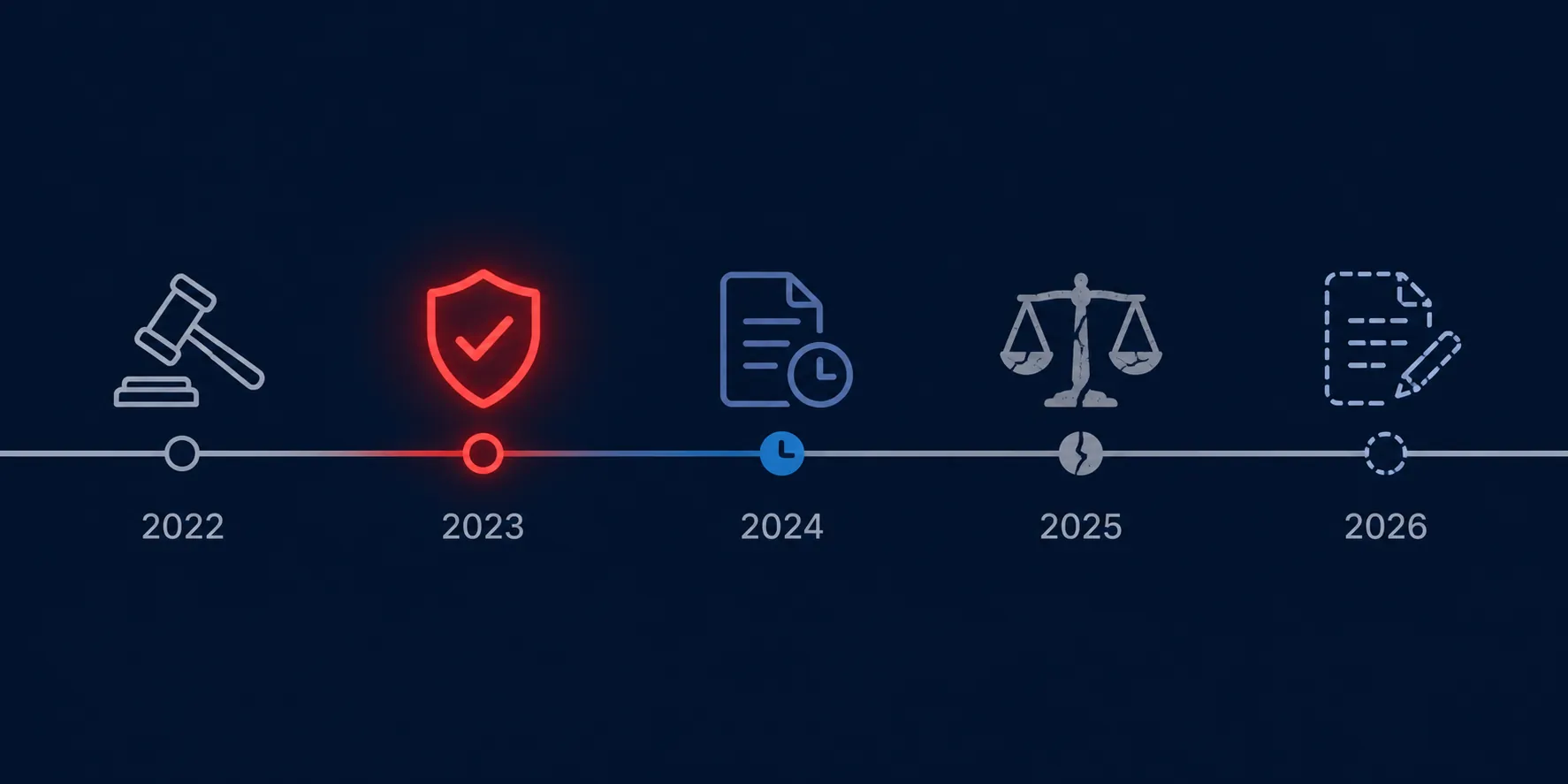
For the Micron–China AI chip file, no single “ban” label is safe enough for compliance work. The file has to be checked layer by layer: CAC for Chinese critical-infrastructure purchasing restrictions; BIS and the EAR for HBM classification, license exceptions, FDPR exposure, party screening, and license policy; MOFCOM and related Chinese notices for suspended counter-controls and any retained military-end-user prohibition; WTO for dispute posture only; and Congress.gov plus enacted-law updates for the MATCH Act.
As of August 4, 2026, two layers are in force, some Chinese countermeasures are suspended with expiry dates, one WTO dispute is procedurally stalled, and one US bill is pending. Before procurement, sales, lobbying, or public communications rely on the file, the live check should record jurisdiction, authority, operative verb, status, effective date, product scope, party scope, and source link. Anything less invites a geopolitical headline to do a lawyer’s job.
References
- China fails Micron’s products in security review, bars some purchases, Reuters, May 21, 2023
- China Launches Cybersecurity Review Against Micron, WilmerHale, Apr. 11, 2023
- Targeting U.S. Chip Firm Micron, China’s Cybersecurity Reviews Continue to Evolve, DigiChina / Stanford, Apr. 7, 2023
- Commerce Strengthens Export Controls to Restrict China’s Capability to Produce Advanced Semiconductors for Military Applications, Bureau of Industry and Security, Dec. 2, 2024
- Summary of BIS’s December 5, 2024, Chip Controls, ArentFox Schiff, Mar. 17, 2025
- Department of Commerce Revises License Review Policy for Semiconductors Exported to China, Bureau of Industry and Security, Jan. 13, 2026
- China bans export of critical minerals to US, Reuters, Dec. 3, 2024
- China suspends export prohibition on gallium, germanium, antimony, superhard materials to US, Fastmarkets, Nov. 2025
- China Expands Rare Earth Export Controls and Adds 14 Entities to the Unreliable Entity List, Crowell & Moring, Oct. 2025
- DS615: United States — Measures on Certain Semiconductor and other Products, and Related Services and Technologies, World Trade Organization
- Micron pushes US Congress to crack down on chip tool sales to Chinese rivals, Reuters, Apr. 22, 2026
- H.R.8170 — 119th Congress, Congress.gov
- Micron to exit server chips business in China after ban: report, CNBC, Oct. 17, 2025
Related records
Tool profile
How Meta's AI Spending Reshapes Law Firm ProfitabilityGoverning regulation
Browse the obligations tracker →Preventive workflow
Browse verification workflows →
Report a correction or tip
Spotted an outdated figure, a misstated fact, or a ruling this case record should reflect? Public comments are disabled for this content given the professional cost of a misreported case outcome, penalty amount, or rule text — use the structured correction channel instead.
Report a correction or tip for this record →