
Second Micron NY forever chemicals lawsuit targets permits
Neighbors for a Better Micron and Jobs to Move America filed a second lawsuit on July 31, 2026, in New York Supreme Court (Albany County), against NYSDEC, Micron, and Onondaga County, seeking to void the SPDES wastewater and Title V air permits on the theory that the state 'authorizes discharge first and regulation later' — enforceable PFAS limits for only PFOA/PFOS, monitoring-only for the other 38 of 40 listed PFAS. The new suit is pending with no argument date, running parallel to the January FEIS challenge set for oral argument Aug. 25, 2026.
- Jurisdiction
- US-New York
- Court
- New York Supreme Court, Albany County
- AI tool named
- No AI tool named
- Ruling date
- Jul 31, 2026
- Source document
- View primary court order ↗
- Last verified
- Aug 4, 2026
Lex Machina Review is an independent risk-tracking and reference resource. Nothing on this site is legal advice, and using it does not create an attorney-client relationship. Every record is reviewed against primary sources but may not reflect the most current status of a matter — always verify directly against the cited court order, rule text, or a licensed attorney before relying on it.
Companion explanation — secondary to the source document above
For anyone tracking the latest in the Micron New York forever-chemicals litigation, the new event is a filing, not a decision. Neighbors for a Better Micron and Jobs to Move America filed a second lawsuit on July 31, 2026, in New York Supreme Court, Albany County, against the New York State Department of Environmental Conservation, Micron, and Onondaga County, challenging the air and wastewater permits issued for the planned Clay semiconductor campus and seeking to void both permits.[1]
This is a litigation-status record for risk tracking, not legal advice. Last checked Aug. 4, 2026, UTC: the available reporting identifies no ruling in the new permit case, and no argument date has been reported for that case. The Aug. 25, 2026 oral argument date circulating in coverage belongs to a different lawsuit filed in January over the project’s environmental review.[2]
The permits now under attack are specific documents, not a generalized approval of the Micron project. NYSDEC’s Micron permit page lists the April 10, 2026 SPDES wastewater permit, NY0030317, tied to the Oak Orchard wastewater treatment plant expansion from 10 to 30.8 million gallons per day and effective May 1, 2026; it also lists a March 31, 2026 Title V air permit.[3]
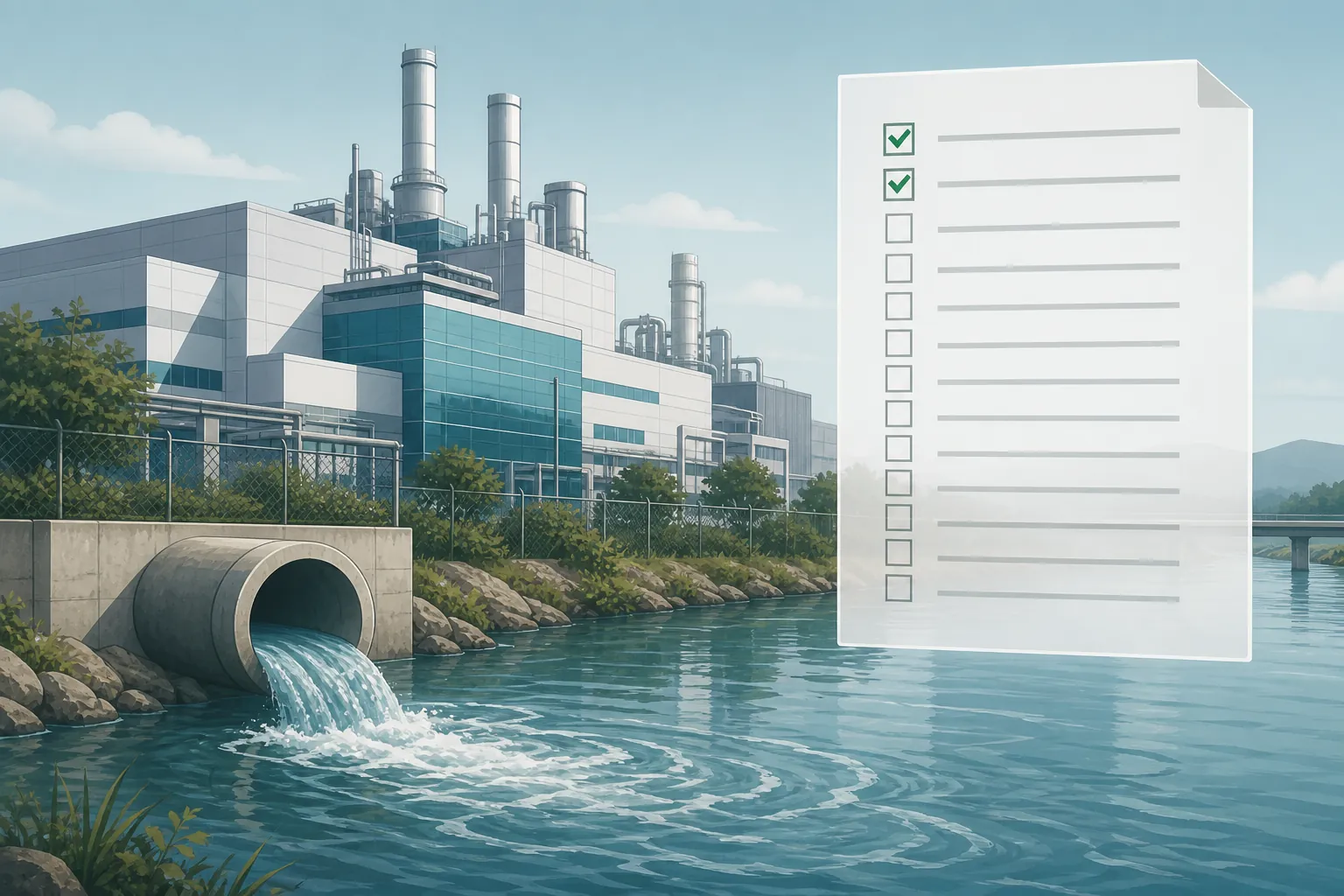
What the second lawsuit is actually challenging
The complaint’s central theory is procedural and practical at the same time: DEC allegedly approved operating permits that let wastewater discharge and air emissions begin before enforceable PFAS controls are fully fixed. The complaint phrase that will matter in motion practice is that the agency “authorizes discharge first and regulation later.” Another line puts the same point less gently, accusing the permitting structure of trying to “lock the barn door only after the horses have escaped.”[1]
That framing is easy to overread. The court has not accepted it. The defendants have not lost the permits. No merits ruling has been reported. The point, for now, is that the plaintiffs are attacking the permits themselves rather than waiting for the earlier environmental-review case to resolve everything.
| Permit | Agency date and status in the record | What the new complaint attacks |
|---|---|---|
| SPDES wastewater permit, NY0030317 | Issued April 10, 2026; effective May 1, 2026; tied to Oak Orchard WWTP expansion from 10 to 30.8 MGD.[3] | Alleged PFAS structure: numeric treatment only for PFOA/PFOS, with the remaining 38 of 40 listed PFAS treated as monitoring-only in the campaign’s permit analysis.[1][4] |
| Title V air permit | Issued March 31, 2026.[3] | Alleged approval of unrestricted PFAS emissions without a completed site-specific assessment, as the complaint is reported to frame it.[1] |
The plaintiffs also raise claims around a Climate Leadership and Community Protection Act “national security” exemption for Micron and the refusal to disclose chemical-usage information as proprietary business information. Those allegations matter, but the live center of the new lawsuit is narrower: whether the operating permits lawfully regulate PFAS before operations begin, or whether they mostly collect data for later agency action.[1]
The wastewater permit dispute turns on what counts as an enforceable PFAS limit
The wastewater-permit fight is the more developed of the two new permit challenges because it has a visible regulatory architecture. The complaint and campaign analysis focus on a list of 40 PFAS compounds. In that reading, only PFOA and PFOS receive numeric action levels or limits, while the other 38 listed PFAS are subject to monitoring rather than capped effluent restrictions.[4]
The complaint adds an awkward factual point: it says Micron has represented that it does not use PFOA or PFOS. If that allegation is credited, the two compounds with the clearest numeric treatment would be compounds the operator says are not part of its process, while the broader PFAS universe would be watched rather than bounded at the outfall.[1]
That is where the downstream consequence becomes concrete. Monitoring-only conditions do create data. They do not, by themselves, tell a person relying on the watershed what concentration must not be exceeded today. Tom’s Hardware’s account describes the plaintiffs’ concern that PFAS could move through wastewater pathways toward the Oneida River.[2] The complaint’s legal theory is built on that timing problem: once discharge begins, later review may be real, but it is no longer prevention in the ordinary sense.
The agency position is not absent from the record. DEC Region 7 Director Dereth Glance has stated that the permits contain enforceable PFAS limits, according to materials collected by Forever Chemicals NY.[4] But those same materials point to a July 3, 2026 DEC letter saying the department was “not required to establish enforceable effluent limitations for PFOA or PFOS.”[4] That tension is not a sidebar; it is one of the cleanest statements of what the court is being asked to sort out.
The source discipline matters here. Forever Chemicals NY is an advocacy campaign site, not a neutral agency docket. Its posted permit analysis is useful for finding the disputed documents and understanding the plaintiffs’ theory, but its conclusions should be treated as advocacy unless independently supported by the permits, agency correspondence, or court filings. The safer formulation is that the plaintiffs and campaign materials characterize the permit as monitoring-only for most listed PFAS; DEC’s own defense of the permit has not yet been tested in a reported ruling.
The air-permit claim is paired, but less document-rich
The Title V air permit challenge follows the same basic timing theory in a different medium. The complaint alleges that the air permit allows unrestricted PFAS emissions and was issued without a completed site-specific assessment.[1] That allegation should not be converted into a finding that Micron is emitting PFAS now, or that a court has found the permit defective. It is a permit challenge aimed at the conditions under which future emissions would be authorized.
Compared with the wastewater permit, the air-permit dispute currently has fewer publicly described moving parts in the available sources. The wastewater claim can be tracked through the 40-compound list, the PFOA/PFOS treatment, and the monitoring-only allegation for the other listed PFAS. The air claim, as presently reported, is more compact: the plaintiffs say DEC issued an air permit without the PFAS-specific assessment and restrictions they believe the law required.
Do not merge this case with the January FEIS lawsuit
There are now two related lawsuits, and their procedural tracks should be kept separate. The first case, filed Jan. 16, 2026, challenges the project’s environmental review rather than the final operating permits. Climate Case Chart identifies that matter as Neighbors for a Better Micron v. Onondaga County Industrial Development Agency, docket 900751-26.[5]
Micron moved on July 15, 2026, to dismiss the January FEIS case on standing and mootness grounds, according to the procedural context for that docket.[5] Oral argument in that January case is scheduled for Aug. 25, 2026.[2] That date does not belong to the July 31 permit lawsuit.
| Case | Filed | Main target | Current procedural point |
|---|---|---|---|
| January FEIS challenge, docket 900751-26 | Jan. 16, 2026.[5] | Environmental review for the Micron project. | Micron’s July 15 dismissal motion; oral argument scheduled Aug. 25, 2026.[2][5] |
| July permit challenge | July 31, 2026.[1] | April 10 SPDES wastewater permit and March 31 Title V air permit.[3] | Pending; no argument date reported in available sources as of Aug. 4, 2026.[2] |
A ruling in one case would not automatically retire the other. If the January case turns on standing, mootness, or the adequacy of the environmental impact review, that does not by itself decide whether the SPDES and Title V permits contain legally sufficient PFAS controls. Conversely, a permit ruling would not necessarily answer every claim about the earlier environmental-review process.
One docket detail remains unfinished in the public record reviewed here: the new permit case’s index number was not supplied in the available coverage or campaign materials. Anyone preparing a filing, client alert, or docket table should verify the Albany County NYSCEF entry directly before treating the case metadata as complete.
The narrow status as of Aug. 4, 2026
The latest Micron New York forever-chemicals development is a second, permit-specific lawsuit filed July 31, 2026. It asks a New York trial court to void the wastewater and air permits and presses the theory that DEC approved monitoring and later review where enforceable PFAS controls were required at the front end.[1]
Nothing in the available record establishes that the permits are unlawful. Nothing establishes that the plaintiffs’ PFAS theory has failed. The unresolved question is whether New York’s permits lawfully regulate PFAS now, or whether they leave most listed PFAS in a monitoring posture while discharge and emissions authority begins.
References
- Lawsuit challenges Micron's air, wastewater permits granted by NY, syracuse.com, Aug. 1, 2026.
- New Micron lawsuit reignites fight over New York fab, Tom's Hardware.
- Micron, New York State Department of Environmental Conservation.
- Forever Chemicals NY, Forever Chemicals NY.
- Neighbors for a Better Micron v. Onondaga County Industrial Development Agency, Climate Case Chart.
Related records
Tool profile
How Meta's AI Spending Reshapes Law Firm ProfitabilityGoverning regulation
Browse the obligations tracker →Preventive workflow
Browse verification workflows →
Report a correction or tip
Spotted an outdated figure, a misstated fact, or a ruling this case record should reflect? Public comments are disabled for this content given the professional cost of a misreported case outcome, penalty amount, or rule text — use the structured correction channel instead.
Report a correction or tip for this record →