
Milo Yiannopoulos's Deportation Case Remains Unverified
Every case-specific fact in the Milo Yiannopoulos removal proceedings traces to DHS statements relayed by media — no EOIR case number, immigration judge, hearing date, or order PDF was identified in the reviewed material as of late August 2026. This record flags the case as reported-only and provides the verification steps to run before relying on the deportation coverage.
- Jurisdiction
- US federal
- Court
- EOIR immigration court
- AI tool named
- No AI tool named
- Ruling date
- Jul 22, 2026
- Source document
- View primary court order ↗
- Last verified
- Aug 30, 2026
Lex Machina Review is an independent risk-tracking and reference resource. Nothing on this site is legal advice, and using it does not create an attorney-client relationship. Every record is reviewed against primary sources but may not reflect the most current status of a matter — always verify directly against the cited court order, rule text, or a licensed attorney before relying on it.
Companion explanation — secondary to the source document above
Status as of late August 2026: Milo Yiannopoulos’s reported deportation case remains unverified. The reviewed material identifies no EOIR case number, named immigration judge, hearing date, primary removal-order PDF, or docket URL. The chronology can be preserved as an account attributed to the Department of Homeland Security, but it cannot yet be recorded as a primary-source-confirmed immigration court case.

That distinction matters for anyone searching for a Milo Yiannopoulos deportation or immigration court hearing record. A government statement can establish what DHS says happened. It does not, by itself, supply the underlying EOIR record or establish every legal detail that a later summary may attach to the account.
What the reported timeline says
The reported sequence begins with Yiannopoulos entering the United States legally on May 14, 2019. DHS, as quoted by The Hill, said that he later overstayed his authorized period and that an immigration judge issued a final order of removal on July 22, 2026. The same account places his arrest at Louis Armstrong New Orleans International Airport on August 27. These are specific claims, but in the reviewed material they all trace back to DHS’s account as relayed by news coverage, rather than to a published court order or EOIR docket entry. [1]
ABC News adds a further DHS-attributed detail: the July 22 order reportedly followed Yiannopoulos’s failure to appear at an immigration hearing. [2] That wording does not resolve whether the order was entered in absentia or after a hearing on the merits. The reviewed materials do not provide the hearing date, the immigration judge’s name, the notice or service record, or the order itself. A reader should therefore preserve “DHS said the order followed a failure to appear” as the supported proposition, rather than convert it into a more specific procedural conclusion.
KCRA, citing the Associated Press and DHS, reported that Yiannopoulos had been returned to the United Kingdom on Friday, August 28, 2026. [3] That is the strongest available support for the reported return, not an independently located removal record. No departure record, order PDF, or publicly identified immigration-court entry was included in the reviewed material.
The August 28 custody wording creates a timing problem
The coverage does not present a clean, internally consistent account of the final event. KCRA/AP reported that DHS said Yiannopoulos had already been returned to the UK on August 28. Yet Courthouse News used wording that he “will remain in custody until deported.” [4] Those statements can describe different publication times or an account that changed during the day, but the reviewed material does not establish which explanation is correct. It is unsafe to cite both as though they jointly prove a completed deportation and continuing U.S. custody.
The cautious record is narrower: DHS was reported as saying that Yiannopoulos had been returned to the UK, while another August 28 report described him as remaining in custody until deportation. Until a primary record or a clearer contemporaneous account resolves the timing, “deported” should be treated as reported language, not as a fully verified conclusion about the August 28 event.

Repeated coverage is not the same as a primary record
Several outlets circulated substantially the same account. That increases the number of reports, not the number of independent case records. When each report relies on the same DHS statement, the outlets may corroborate that DHS made the statement and may clarify how the statement was characterized. They do not independently confirm the existence, contents, or procedural basis of the immigration judge’s order.
CBS News reported that agency records existed, but the material reviewed there did not provide a docket reference. [5] Deadline also relayed a DHS statement, including the agency’s public communication, without supplying a case number or order URL. [6] Those sources are useful for documenting the government’s position. They do not fill the missing EOIR fields.
The same limit applies to broader commentary about immigration appeals or judicial review. General materials from the Brennan Center and Democracy Forward may help explain how appellate or review questions can arise in immigration cases, but they do not corroborate Yiannopoulos’s alleged order, hearing, custody status, or removal. Nor does the reviewed material document a BIA or federal appeal in this case. The appeal-window status therefore remains unverified.
What to check before relying on the case
A reliable verification pass should separate finding a government-reported narrative from finding the proceeding that supposedly produced it. The following checks can be run without assuming that a result must be publicly available:
- Search the EOIR Automated Case Information System using the available identifying information. Record whether the search produces a case number, court location, hearing information, decision status, or no usable match.
- Request the underlying removal order and related records through FOIA if the order is not available through a public search. The request should seek the document itself and the identifying information needed to distinguish it from agency summaries.
- Determine whether a public docket or order can actually be located. Do not describe the record as sealed merely because it was not found; the reviewed material does not establish whether any docket is public, restricted, or unavailable for another reason.
- Check BIA and federal court dockets for an appeal or related review proceeding. Treat the absence of a located appeal as an unverified search result, not proof that no appeal exists.
- Keep two dates in the record: the dates of the events reported by the media and the date on which the underlying documents were last verified. They are not interchangeable.
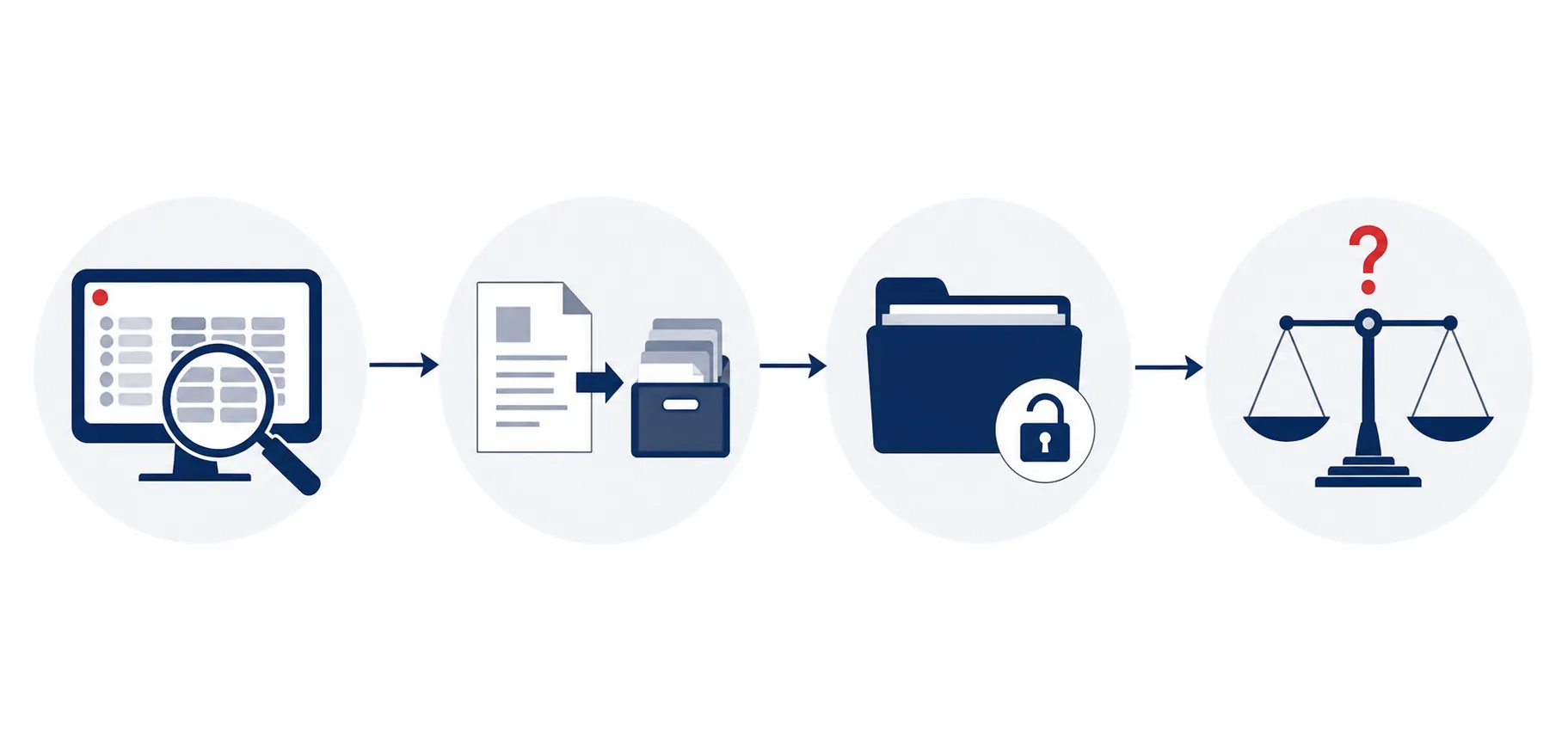
As of late August 2026, the defensible entry is a dated, reported-status record. The reviewed material does not independently confirm the EOIR proceeding, the order’s precise basis, the hearing details, or the final timing of the removal. Until those items are located, the case should be cited as reported—not confirmed.
References
- Milo Yiannopoulos detained by ICE after allegedly overstaying visa — The Hill
- Milo Yiannopoulos, British commentator, detained by ICE — ABC News
- Milo Yiannopoulos deported after immigration arrest — KCRA / Associated Press
- Milo Yiannopoulos, cheerleader of mass deportations, detained by ICE — Courthouse News Service
- Milo Yiannopoulos in ICE custody, agency records show — CBS News
- Milo Yiannopoulos detained by ICE — Deadline
- Milo Yiannopoulos arrested after overstaying U.S. visa — NPR
- EOIR Automated Case Information System — Executive Office for Immigration Review
Related records
Tool profile
How Meta's AI Spending Reshapes Law Firm ProfitabilityGoverning regulation
Browse the obligations tracker →Preventive workflow
Browse verification workflows →
Report a correction or tip
Spotted an outdated figure, a misstated fact, or a ruling this case record should reflect? Public comments are disabled for this content given the professional cost of a misreported case outcome, penalty amount, or rule text — use the structured correction channel instead.
Report a correction or tip for this record →