
How Nairo Quintana's Tramadol Ban Reshaped Sports Law
This article explains how the Nairo Quintana case established that sports federations can unilaterally ban substances under medical rules outside the WADA framework, creating a separate enforcement track that athletes and counsel must navigate with distinct procedural and sanction risks.
- Jurisdiction
- International
- Court
- Court of Arbitration for Sport (CAS)
- AI tool named
- No AI tool
- Penalty amount
- CHF 5,000
- Ruling date
- Nov 3, 2022
- Source document
- View primary court order ↗
- Last verified
- Jul 26, 2026
Lex Machina Review is an independent risk-tracking and reference resource. Nothing on this site is legal advice, and using it does not create an attorney-client relationship. Every record is reviewed against primary sources but may not reflect the most current status of a matter — always verify directly against the cited court order, rule text, or a licensed attorney before relying on it.
Companion explanation — secondary to the source document above
Nairo Quintana’s tramadol case looks contradictory only if it is forced into the ordinary anti-doping template. Two dried-blood-spot samples taken during the 2022 Tour de France, on stages 7 and 11, dated 8 and 13 July 2022, tested positive for tramadol. The UCI disqualified him from that Tour and imposed a CHF 5,000 fine. Yet it did not impose a period of ineligibility, and the case was not treated as an anti-doping rule violation. The CAS press summary later described the infringement as established under a strict-liability rule, “without consideration of the rider’s intent, fault or negligence.”[1]
That is the legal hinge. If tramadol was not on the WADA Prohibited List at the time, and if the consequence was not a doping suspension, what exactly had Quintana violated?

The UCI Medical Rules supplied the answer
The UCI announced the sanction on 17 August 2022. It stated that Quintana had been disqualified from the 2022 Tour de France after the presence of tramadol was detected in two samples, and that he was fined CHF 5,000. The same statement made the part often lost in shorthand accounts plain: this was a first offense under the UCI Medical Rules, so Quintana was not declared ineligible and could continue competing.[2]
That distinction is not cosmetic. In the 2022 version of the case, the legal consequence depended on tramadol being regulated as a medical-safety matter within cycling, rather than as a prohibited substance under the World Anti-Doping Code. The UCI had banned tramadol in competition from 1 March 2019 under Part XIII of its Medical Rules. WADA, by contrast, had monitored tramadol since 2012 but did not add it to the Prohibited List until 1 January 2024.[3][4]
For a lawyer advising an athlete, those dates matter more than the label “ban.” In 2022, tramadol sat in a regulatory gap: not permitted by the cycling federation during competition, but not yet prohibited by WADA. The Quintana proceeding tested whether the federation could enforce that gap as its own medical rule.
Why CAS accepted the federation’s track
CAS dismissed Quintana’s appeal on 3 November 2022. The public press summary is short, but it identifies the essential holding: the panel accepted that the UCI’s tramadol ban was “for medical rather than doping reasons” and was “within the UCI’s power and jurisdiction.”[1]
That phrasing does most of the work. The panel did not need WADA to have listed tramadol if the rule being enforced was not an anti-doping rule. Nor did the UCI need to show that tramadol was banned across sport. It needed to show that cycling’s own rules validly addressed rider health and race safety, and that Quintana’s samples met the rule’s evidentiary threshold.
The medical rationale did not come from nowhere. USADA, citing WADA Monitoring Program data for 2012 through 2015, reported that 71% to 82% of detected tramadol use was in cycling. That statistic does not prove impairment in an individual rider, and it should not be read as a finding that cycling use was uniformly abusive. It does, however, explain why cycling regulators had a sport-specific concern before WADA converted tramadol from a monitored substance into a prohibited one.[3]
The point is jurisdictional before it is moral. Federations regulate more than doping. They regulate equipment, concussion protocols, medical certificates, field-of-play safety, and event eligibility. CAS’s acceptance of the UCI’s framing placed tramadol in that non-WADA medical-regulation space. Once placed there, the case ran on a different procedural rail.
Medical-rule violation versus anti-doping rule violation
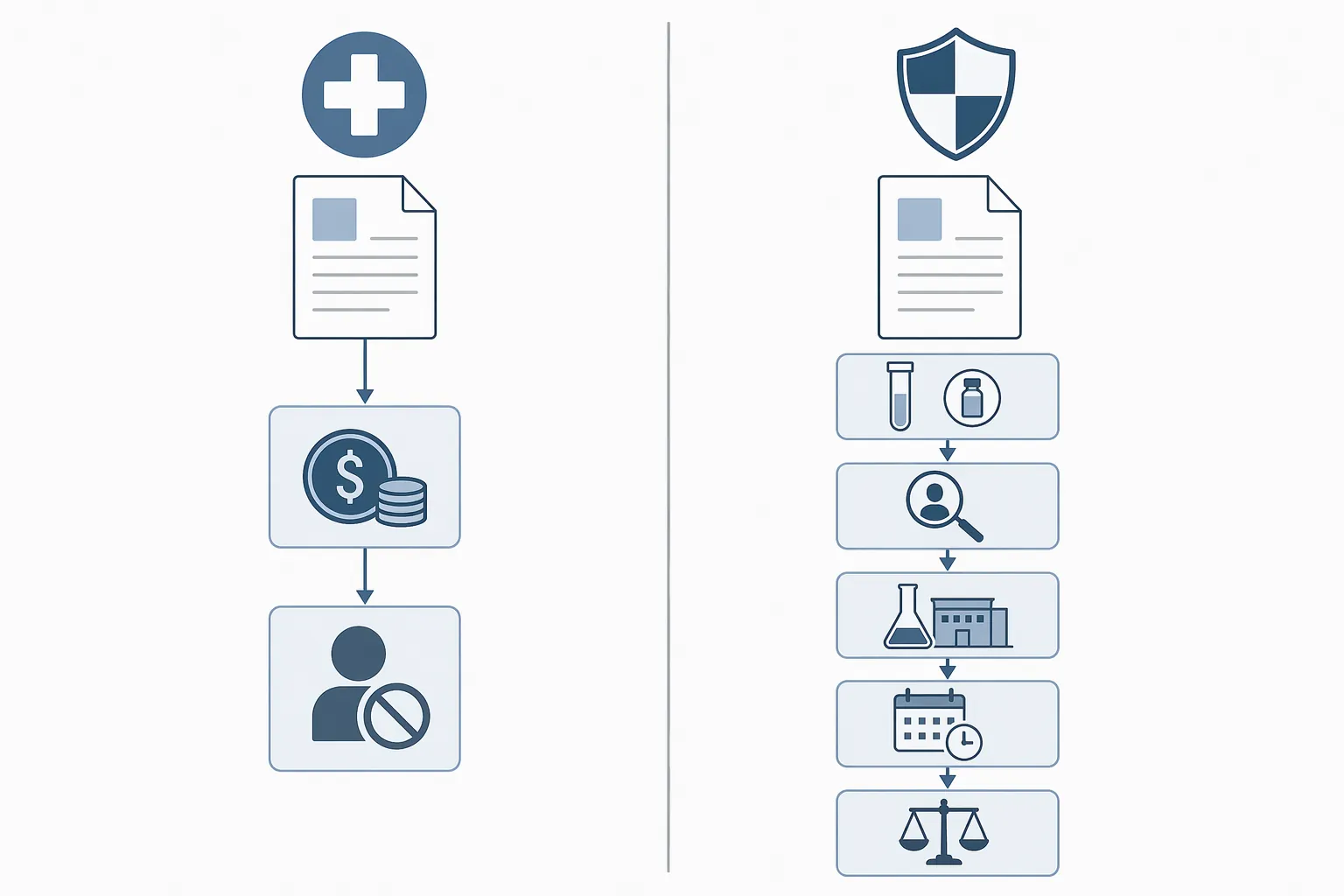
The easiest way to misread the Quintana matter is to import anti-doping assumptions into a rule set that was designed not to be anti-doping. A WADA-code anti-doping rule violation brings familiar expectations: WADA-accredited laboratory analysis, A- and B-sample architecture, results management under anti-doping rules, fault and intent arguments where relevant, and a sanction range that may include a period of ineligibility.
The UCI tramadol process in 2022 did not automatically carry those protections or consequences. Reporting on the rule architecture describes the UCI dried-blood-spot protocol as using Geneva University’s Laboratory of Clinical Pharmacology and Toxicology, rather than a WADA-accredited anti-doping laboratory; collecting no B sample; and providing a 10-day CAS appeal window under UCI rule 13.3.068.[5][6]
Those details should make counsel slow down. A rider accustomed to anti-doping procedure might look for a B-sample confirmation pathway that the medical rule does not provide. A lawyer used to the standard 21-day CAS appeal window in anti-doping cases might assume more time than the tramadol rule affords. A team compliance officer might describe the risk internally as “doping” and thereby miss the very procedural features that decide how the case must be defended.
| Issue | UCI Medical Rules track in Quintana’s 2022 case | WADA anti-doping track after tramadol listing |
|---|---|---|
| Legal character | Medical-rule infringement, not an ADRV | Anti-doping rule violation if the Code conditions are met |
| Substance status | Banned by UCI in competition from 1 March 2019 | On WADA Prohibited List from 1 January 2024 |
| Sample and lab expectations | DBS protocol reported through a clinical pharmacology laboratory, with no B-sample structure | WADA-accredited anti-doping laboratory and sample procedures apply |
| Fault or intent | Strict liability under the UCI Medical Rules as described by CAS | Fault, intent, and applicable reductions may affect sanction under anti-doping rules |
| Sanction consequence | Disqualification from the event and CHF 5,000 fine for Quintana’s first offense; no ineligibility | Potential ineligibility of up to two years plus results consequences |
The sanction difference is not an afterthought. It is proof of the channel. Quintana lost his 2022 Tour result and paid a fine, but he was not suspended. After tramadol’s WADA listing, the same substance can trigger materially different consequences: the International Testing Agency describes tramadol as prohibited in competition from 1 January 2024 with a 24-hour washout period, and later commentary has described possible anti-doping consequences including up to two years of ineligibility plus disqualification of results.[4][7]
The procedural objections did not carry the public holding
Quintana’s side challenged the process, and his lawyer Andrés Charria later described objections to aspects of the procedure. But the public reporting indicates that CAS did not have to resolve those objections because it considered the medical-rule violation established on the scientific evidence alone.[5]
That point should be handled carefully. It does not mean procedural objections are irrelevant in future medical-rule cases. It means the publicly available account of this CAS decision does not give practitioners a broad procedural merits ruling to quote. The narrower lesson is more uncomfortable: if a federation’s medical rule is valid, and if the testing record satisfies that rule, an athlete may lose before familiar anti-doping procedural arguments ever receive much oxygen.
This is where the two dried-blood-spot positives matter. A single contested sample might have put more pressure on process. The reported record included two positives from different Tour stages. CAS’s press summary treated the presence of tramadol in those samples as enough to establish the infringement under the strict-liability medical rule.[1]
What counsel should see first in the Quintana precedent
The case does not license a loose “anything called medical will survive” approach. CAS’s public reasoning, as summarized, rests on the UCI’s authority over medical regulation in cycling and on the classification of the tramadol rule as medical rather than anti-doping. A federation trying to create a parallel punishment system while borrowing anti-doping language, aims, and sanctions would present a different problem.
For athletes and counsel, the practical work starts earlier than litigation. The first question is not simply whether a substance appears on the WADA Prohibited List. It is whether the athlete’s federation, league, event organizer, or team medical rules impose an additional competition-specific restriction. In Quintana’s case, the answer was yes, and that separate restriction had its own detection method, appeal window, and sanction ladder.
- Check both lists: the WADA Prohibited List and the governing body’s medical, health, race-safety, or event regulations.
- Identify the legal character of the rule before advising on rights; ADRV assumptions may not apply.
- Confirm the sample protocol, laboratory authority, confirmation process, and deadline to appeal.
- Separate sanction exposure into event consequences, fines, eligibility consequences, and reputational effects.
- Preserve objections quickly, even if the compressed procedure gives little time to develop them.
A hypothetical example shows the advisory problem without stretching the Quintana facts. Suppose an athlete checks only the WADA list and receives clearance under anti-doping rules. If the athlete’s federation separately prohibits the same medication on race-safety grounds, that WADA clearance does not answer the federation-rule question. The athlete may still face event disqualification or a fine, even where no anti-doping suspension is available. The lawyer who notices the separate rule late may be litigating a jurisdictional issue after the appeal clock has nearly expired.
The 2024 WADA listing clarifies rather than erases the precedent
Tramadol’s later movement onto the WADA Prohibited List can make the Quintana case seem like a transitional anomaly. It was transitional, but not legally empty. WADA’s 2024 listing means future tramadol cases now sit inside the anti-doping framework in a way Quintana’s 2022 Tour case did not.[4]
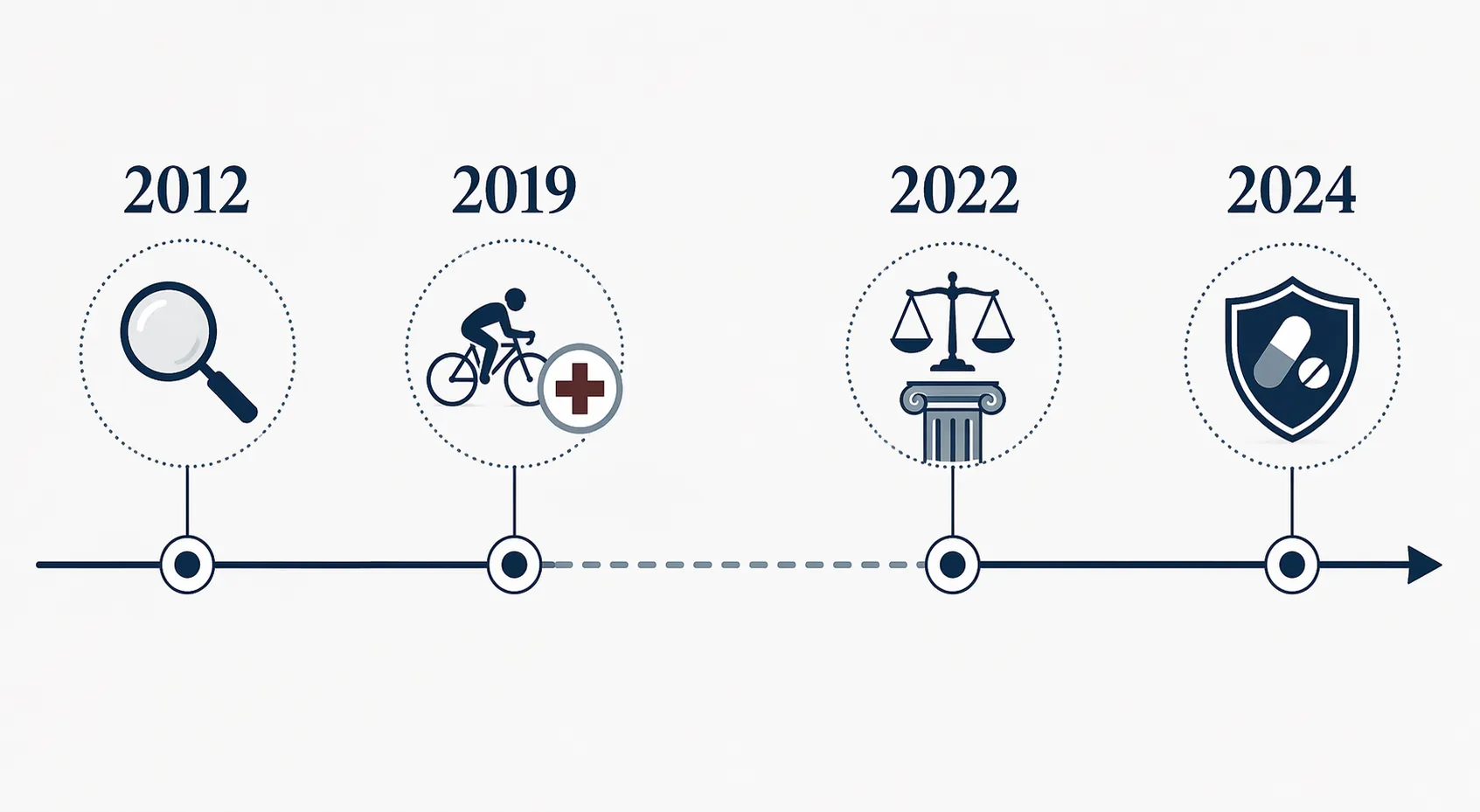
The chronology is the point. WADA monitored tramadol from 2012. The UCI banned it in competition from 2019. Quintana’s samples were collected and litigated in 2022. WADA’s prohibited-list treatment arrived in 2024. The CAS decision therefore answered a question that would not be answered merely by reading the current WADA list: whether a federation could act before WADA, and outside WADA, when it framed the rule as medical regulation.[3][4]
After 2024, tramadol cases may be simpler in one respect and harsher in another. Simpler, because the WADA-list status supplies the ordinary anti-doping pathway. Harsher, because the sanction exposure now includes ineligibility consequences that Quintana did not receive for his first UCI Medical Rules offense. The earlier case remains relevant because other substances, methods, or health-related restrictions may still sit outside the WADA list while appearing in federation-specific rules.
The narrow rule to take from Quintana
Quintana does not prove that federations have unlimited authority to create shadow anti-doping regimes. It supports a narrower proposition: CAS will uphold a federation’s unilateral substance ban outside the WADA framework where the rule is grounded and framed as medical regulation within that federation’s authority. The consequence is a separate enforcement channel, not a decorative footnote to the anti-doping code.
That separate channel changes the lawyer’s task. It changes which lab questions matter, whether a B-sample right exists, how quickly an appeal must be filed, whether intent arguments matter, and what sanction actually follows. Calling the Quintana matter a “doping ban” may be convenient shorthand, but it obscures the legal mechanism that decided the case.
There is also an evidentiary boundary worth keeping visible. The full CAS award in Quintana v. UCI has not been publicly available in the CAS database as reflected in the materials reviewed here. The strongest public footing remains the CAS press summary, corroborated by consistent reporting and secondary analysis. Specific UCI Medical Rules citations, including the reported 10-day appeal provision, should be checked against the official UCI rule text before they are used in pleadings or compliance advice.[1][6]
References
- CAS dismisses the appeal filed by Nairo Quintana against the decision taken by the Union Cycliste Internationale, Court of Arbitration for Sport, 3 November 2022, link
- UCI statement concerning Nairo Quintana, Union Cycliste Internationale, 17 August 2022, link
- Tramadol Added to WADA Prohibited List for 2024, U.S. Anti-Doping Agency, link
- Tramadol: The new substance on the Prohibited List, International Testing Agency, link
- Nairo Quintana lawyer says CAS did not consider procedural arguments in tramadol case, Cyclingnews, link
- The Tramadol Case, The Inner Ring, link
- Tramadol added to the WADA Prohibited List from 1 January 2024: what athletes and support personnel need to know, LawInSport, link
Related records
Tool profile
How Meta's AI Spending Reshapes Law Firm ProfitabilityGoverning regulation
Browse the obligations tracker →Preventive workflow
Browse verification workflows →
Report a correction or tip
Spotted an outdated figure, a misstated fact, or a ruling this case record should reflect? Public comments are disabled for this content given the professional cost of a misreported case outcome, penalty amount, or rule text — use the structured correction channel instead.
Report a correction or tip for this record →