
National Guard Settlement Sets the Facebook Moderation Rule
An agency Facebook page opened to public comment is a government public forum: viewpoint-based blocking or deletion is near-certain First Amendment exposure under §1983, while viewpoint-neutral removal of threats, obscenity, or harassment remains lawful. The North Carolina National Guard settlement's adopted moderation sentence gives agency counsel court-accepted policy language to adopt before the next blocking decision.
- Jurisdiction
- US-NC (4th Cir.)
- Court
- U.S. District Court (North Carolina)
- AI tool named
- Ruling date
- Jul 23, 2026
- Source document
- View primary court order ↗
- Last verified
- Aug 2, 2026
Lex Machina Review is an independent risk-tracking and reference resource. Nothing on this site is legal advice, and using it does not create an attorney-client relationship. Every record is reviewed against primary sources but may not reflect the most current status of a matter — always verify directly against the cited court order, rule text, or a licensed attorney before relying on it.
Companion explanation — secondary to the source document above
The next moderation decision is where the First Amendment problem begins. An official agency Facebook page is open for public comments. A critic posts something harsh about leadership. A staff member can hide it, delete it, or block the user in seconds. If the reason is the viewpoint expressed, that small action can become a 42 U.S.C. §1983 claim.
The usable rule from the North Carolina National Guard settlement over Facebook criticism is short enough to put directly into a moderation policy: “Posts will not be removed, hidden, or deleted, and users will not be banned or blocked, based on the viewpoint expressed in any comments.” The settlement agreement also shows why the wording matters: it replaced a looser rule that allowed deletion “at the sole discretion of the Department of Defense.”[1]
That sentence does not make an agency helpless against threats, obscenity, incitement, targeted harassment, or other conduct-based violations of a neutral comment policy. It does something narrower and more important: it removes staff discretion to punish criticism because it is criticism. For the verified case chronology, use the Stanhope Risk Digest record. The workflow question is what an agency should do before the next ugly comment appears.
Start with the forum, not the critic’s tone
On an official agency page opened to public comment, the agency has invited members of the public into an interactive space. The government does not have to create that space. Once it does, the interactive portion is not just a bulletin board for approved praise.
Davison v. Randall is the useful public-forum reference point. The Fourth Circuit treated the interactive portion of a public official’s Facebook page as a public forum and held that blocking a critic from that space was unconstitutional viewpoint discrimination.[2] For agencies in the Fourth Circuit’s orbit, that is not an abstract civics lesson. It tells counsel where the risk concentrates: not in whether the agency may run a page, but in whether it opens comment threads and then excludes a speaker because the speaker disapproves of the government.
The official-page point should not be blurred with Lindke v. Freed. Lindke supplies a two-part state-action test for public officials’ personal social media accounts: the official must have actual authority to speak for the state, and the official must have purported to exercise that authority in the challenged social media conduct.[3] That test matters when the page belongs to a mayor, manager, sheriff, commander, or other official who mixes public business with personal posting.
An official agency Facebook page is different. The page itself is governmental. If it is opened to public comment, the harder question is usually not state action; it is whether the agency’s deletion, hiding, or blocking decision respected the public-forum limits that come with inviting public participation.
The settlement sentence is a moderation control, not a slogan
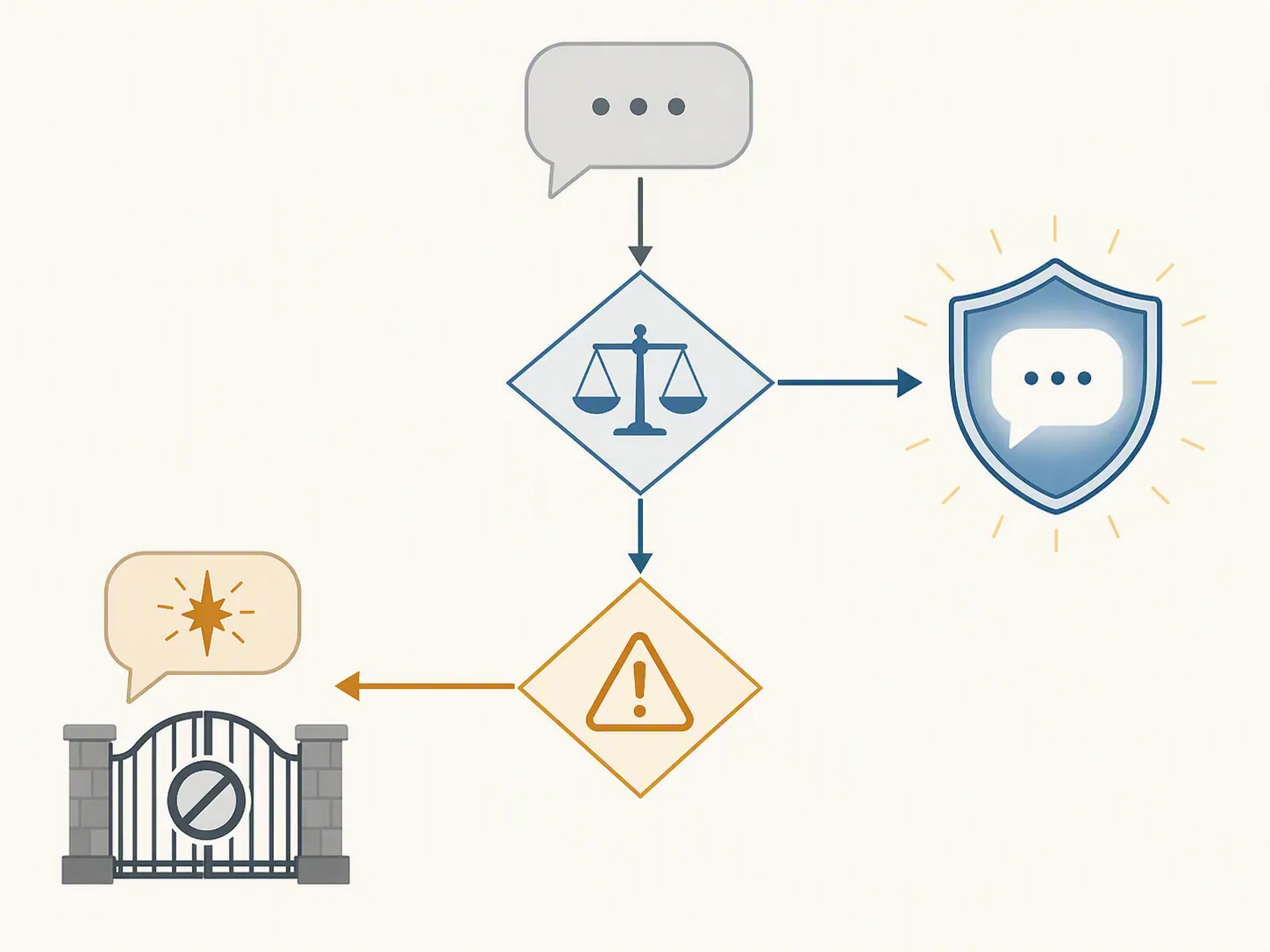
The North Carolina language works because it names the action and the forbidden reason in the same sentence. Staff may not remove, hide, delete, ban, or block “based on the viewpoint expressed.”[1] That wording is stronger than a broad promise to “respect free speech,” and it is safer than a discretionary reservation that lets the agency decide, after the fact, that a damaging comment was simply not welcome.
It also aligns with an earlier military social media settlement. After Rynearson v. Bass, the Air Force adopted structurally similar language for the Chief Master Sergeant of the Air Force page: “Posts will not be removed, and users will not be banned, based on the viewpoint expressed in any comments.” That settlement was reached on August 3, 2022, and the Georgetown Free Speech Project tracker reports that it included no financial award.[4]
The comparison is useful for policy drafting. It does not mean that the North Carolina settlement created a statute, a regulation of general applicability, or a national rule binding every public agency. It means that nearly identical viewpoint-discrimination language has now appeared in two litigated military social media disputes and has been accepted as a practical way to draw the constitutional line.
What the moderator should decide before touching the comment
The question is not whether the comment is unfair, embarrassing, repetitive, angry, or inconvenient. Government pages receive comments from people who are upset with the government. A policy that turns on those reactions is a poor record for later review.
| Moderation checkpoint | Question to answer | Why it matters |
|---|---|---|
| Account identity | Is this an official agency page or a personal account used by an official? | Official agency pages are state action by their nature; personal-account cases require the Lindke analysis. |
| Comment space | Has the agency opened the post or page to public comments? | An interactive comment area can become a government-created forum. |
| Reason for action | Is the proposed deletion or block based on viewpoint, or on a neutral conduct rule? | Viewpoint-based exclusion is the danger zone; conduct-based enforcement can be lawful if the rule is neutral and consistently applied. |
| Policy match | Which written rule does the comment violate? | A record tied to threats, obscenity, incitement, harassment, or similar categories is more defensible than a record tied to annoyance or criticism. |
| Recordkeeping | Can the agency preserve the comment, rule, action, reviewer, and reason? | A later §1983 dispute will examine the actual reason for the action, not just the agency’s preferred description of it. |
A workable moderation file should be boring. It should show the original comment, the applicable policy text, the category invoked, the action taken, and who approved it. The point is not to produce litigation theater. It is to make the neutral reason visible before memories harden into affidavits.
Viewpoint is not the same thing as misconduct
A comment saying agency leadership is incompetent, corrupt, dishonest, politically captured, or failing the public is viewpoint. It may be severe. It may be wrong. It may be demoralizing to staff. Those facts do not turn criticism into a removable category.
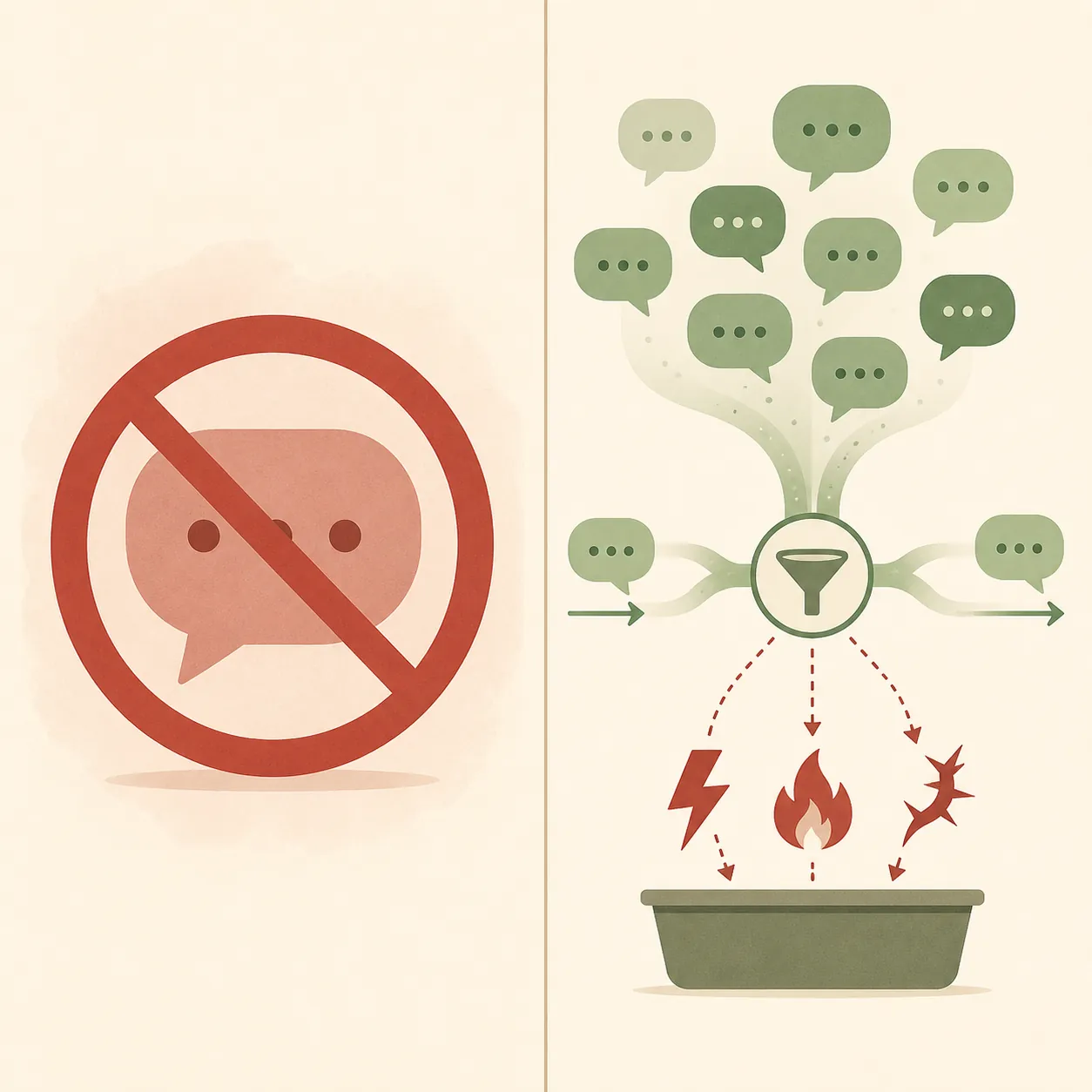
A different comment may use the same subject matter but add a true threat, obscene material, incitement, targeted harassment, or epithets covered by a neutral rule. The agency’s authority to enforce that rule does not disappear because the user also criticizes leadership. The record must show that the action was taken because of the removable conduct, not because of the adverse viewpoint.
A hypothetical illustrates the distinction. If a user writes, “The department’s leadership should resign because this policy is a disgrace,” deletion would look viewpoint-based unless some neutral rule is actually implicated. If a user attaches the same criticism to a specific threat against an employee, the agency can address the threat under a neutral safety rule. The criticism does not immunize the threat, and the threat does not justify a broader purge of criticism.
Why “sole discretion” is the wrong tool
A “sole discretion” clause may feel administratively convenient, especially for a page that attracts hostile comments. In a public-forum dispute, it is also the clause that invites the worst inference: that the government kept for itself the power to decide which viewpoints could remain visible.
The Stanhope settlement’s substitution matters because it changes the staff instruction. The old formulation emphasized who had power. The new formulation limits why that power may be used. That is the difference between “we can delete what we decide to delete” and “we cannot delete because we disagree with the viewpoint.”[1]
That is also why the Center for Individual Rights’ public description of the dispute lands on the right operational point. CIR attorney Michelle Scott said that when a government agency opens a page to public comment, it “cannot treat that page as a one-way bulletin board where praise is welcome but criticism is censored.”[5] The quote is advocacy, but the compliance lesson is sound: a comment-enabled government page needs rules for public participation, not just tools for message control.
What the settlement does not prove
The North Carolina agreement should not be overstated. It was a settlement. The Guard did not pay monetary relief, and the agreement contained no explicit admission or judicial finding that every challenged act violated the First Amendment.[1] The case was later dismissed with prejudice on July 23, 2026, with two years of retained enforcement jurisdiction, but that final posture still leaves the language as negotiated policy language rather than a statute.
That limitation is not a reason to ignore it. Settlement language can be especially useful to agency counsel when it is precise, public, litigated, and consistent with forum doctrine. The danger is treating it as magic words. The sentence works only if the agency has correctly identified the page as official, treated the comment area as a forum, and trained staff to separate viewpoint from conduct before taking action.
Nor should Lindke be used to muddy the official-page analysis. Lindke helps decide whether a public official’s personal account conduct is fairly attributable to the state.[3] It does not give an agency a personal-account escape hatch for a page branded, operated, and used as the agency’s own public communication channel.
A defensible policy before the next deletion
For an agency page that permits public comments, the policy should say the quiet part plainly: comments and users will not be removed, hidden, deleted, banned, or blocked based on viewpoint. Then it should list the neutral categories that may lead to moderation, such as threats, obscenity, incitement, harassment, or other clearly defined conduct rules.
The staff instruction should be equally direct. If the comment is criticism, leave it up. If the comment violates a neutral conduct rule, document the rule and act only to the extent necessary. If the page manager cannot identify the rule before deleting or blocking, the decision should wait for review.
The North Carolina sentence is now a strong benchmark for agency social media policies because it gives moderators a line they can apply under pressure. Its force comes from the official-page public-forum analysis around it, not from the settlement alone. Agencies that invite public comment should adopt viewpoint-neutral language before the next lunch-hour deletion decision, not after the complaint is filed.
References
- Settlement Agreement
- Court Rules Public Officials Can’t Block Critics on Facebook — ACLU
- Lindke v. Freed, 601 U.S. 187 (2024) — Supreme Court of the United States, March 15, 2024
- Air Force Changes Social Media Speech Policy to Resolve Lawsuit with Veteran — Georgetown Free Speech Project
- Victory for Free Speech: North Carolina National Guard Restores Voice to Veteran Silenced for Criticizing Leadership — Center for Individual Rights
Related records
Tool profile
Browse tool evaluations →Governing regulation
Browse the obligations tracker →Preventive workflow
Browse verification workflows →
Report a correction or tip
Spotted an outdated figure, a misstated fact, or a ruling this case record should reflect? Public comments are disabled for this content given the professional cost of a misreported case outcome, penalty amount, or rule text — use the structured correction channel instead.
Report a correction or tip for this record →