
What the Timothy Stanhope National Guard Settlement Says
A verified record of the July 2026 Stanhope v. Hunt settlement: the North Carolina National Guard restored Timothy Stanhope's Facebook access, unhid prior comments, and replaced its "sole discretion" deletion clause with viewpoint-neutral language, with no monetary relief. Terms confirmed from the docket and Settlement Agreement are separated from press-reported claims, including the unresolved question of whether the Guard admitted liability.
- Jurisdiction
- US federal (Eastern District of North Carolina)
- Court
- U.S. District Court for the Eastern District of North Carolina
- Judge
- Louise Wood Flanagan
- AI tool named
- None named
- Ruling date
- Jul 23, 2026
- Source document
- View primary court order ↗
- Last verified
- Aug 2, 2026
Lex Machina Review is an independent risk-tracking and reference resource. Nothing on this site is legal advice, and using it does not create an attorney-client relationship. Every record is reviewed against primary sources but may not reflect the most current status of a matter — always verify directly against the cited court order, rule text, or a licensed attorney before relying on it.
Companion explanation — secondary to the source document above
Risk Digest record
Category slug: risk-digest. Last verified: 2026-08-02 00:00 UTC. Case: Stanhope v. Hunt et al., No. 5:25-cv-00132, in the U.S. District Court for the Eastern District of North Carolina, before Judge Louise Wood Flanagan. PacerMonitor lists the matter as a civil-rights case, nature of suit 440, filed 03/10/2025 and terminated 07/23/2026.[1]
The answer to the settlement-details question is narrow and verifiable: the July 2026 settlement was court-approved, the case was dismissed with prejudice on 07/23/2026, the court retained jurisdiction for two years to enforce the settlement, and the confirmed relief was non-monetary. The operative terms are in the Settlement Agreement filed as Exhibit A to docket entry 41; Military.com also reported that no money changed hands.[1][2][3]
| Field | Verified record |
|---|---|
| Case | Stanhope v. Hunt et al. |
| Docket | No. 5:25-cv-00132 |
| Court | U.S. District Court for the Eastern District of North Carolina |
| Judge | Louise Wood Flanagan |
| Nature of suit | 440 civil rights / 28 U.S.C. § 1983 |
| Filed | 03/10/2025 |
| Terminated | 07/23/2026 |
| Key docket entries | Entry 41: Joint Motion to Dismiss with Settlement Agreement Exhibit A; Entry 42: order approving dismissal with prejudice and retaining two years of enforcement jurisdiction |
| Defendants identified in the docket materials | Maj. Gen. Tom Hunt, Capt. Timmy R. Marshburn, Ellis Parks, and the NC National Guard Social Media Manager |
| Legal-background reviewer | No named legal-background reviewer was supplied with the materials reviewed for this record; no reviewer name is asserted here |
The settlement terms confirmed from Exhibit A
Docket entry 41 supplies the settlement agreement; docket entry 42 supplies the court’s approval and enforcement hook. That order matters because the settlement was not left as an informal press-release promise: the dismissal was with prejudice, and the court retained jurisdiction for two years to enforce the agreement.[1][2]
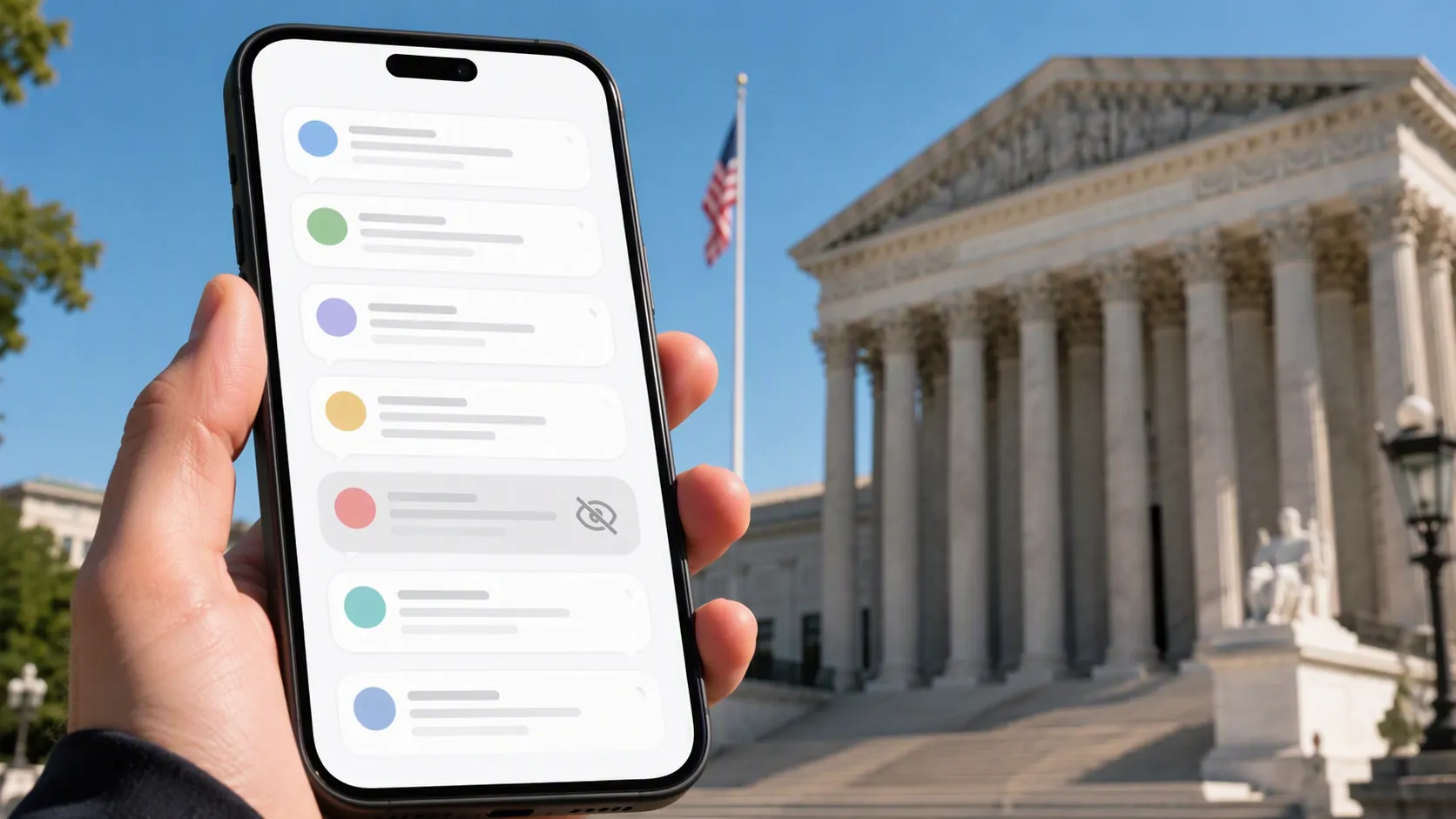
- Restored access: the Guard agreed to restore Timothy Stanhope’s access to the North Carolina National Guard Facebook page.[2]
- Unhidden prior comments: the Guard agreed to unhide comments by Stanhope that had previously been hidden.[2]
- No viewpoint-based moderation against him: the agreement addressed banning, blocking, filtering, hiding, and deletion based on viewpoint.[2]
- Replacement moderation clause: the old “sole discretion” deletion language was replaced with: “Posts will not be removed, hidden, or deleted, and users will not be banned or blocked, based on the viewpoint expressed in any comments.”[2]
Restored access is the user-specific remedy. It reverses the exclusion that made the lawsuit concrete for Stanhope, without turning the settlement into a damages award or a general declaration about every moderation choice the Guard might make in the future.
Unhiding prior comments is a separate term, and it should not be collapsed into restored access. A user can be allowed back into a page while earlier comments remain invisible to the public. Exhibit A required more than future access; it required the Guard to address already-hidden speech.[2]
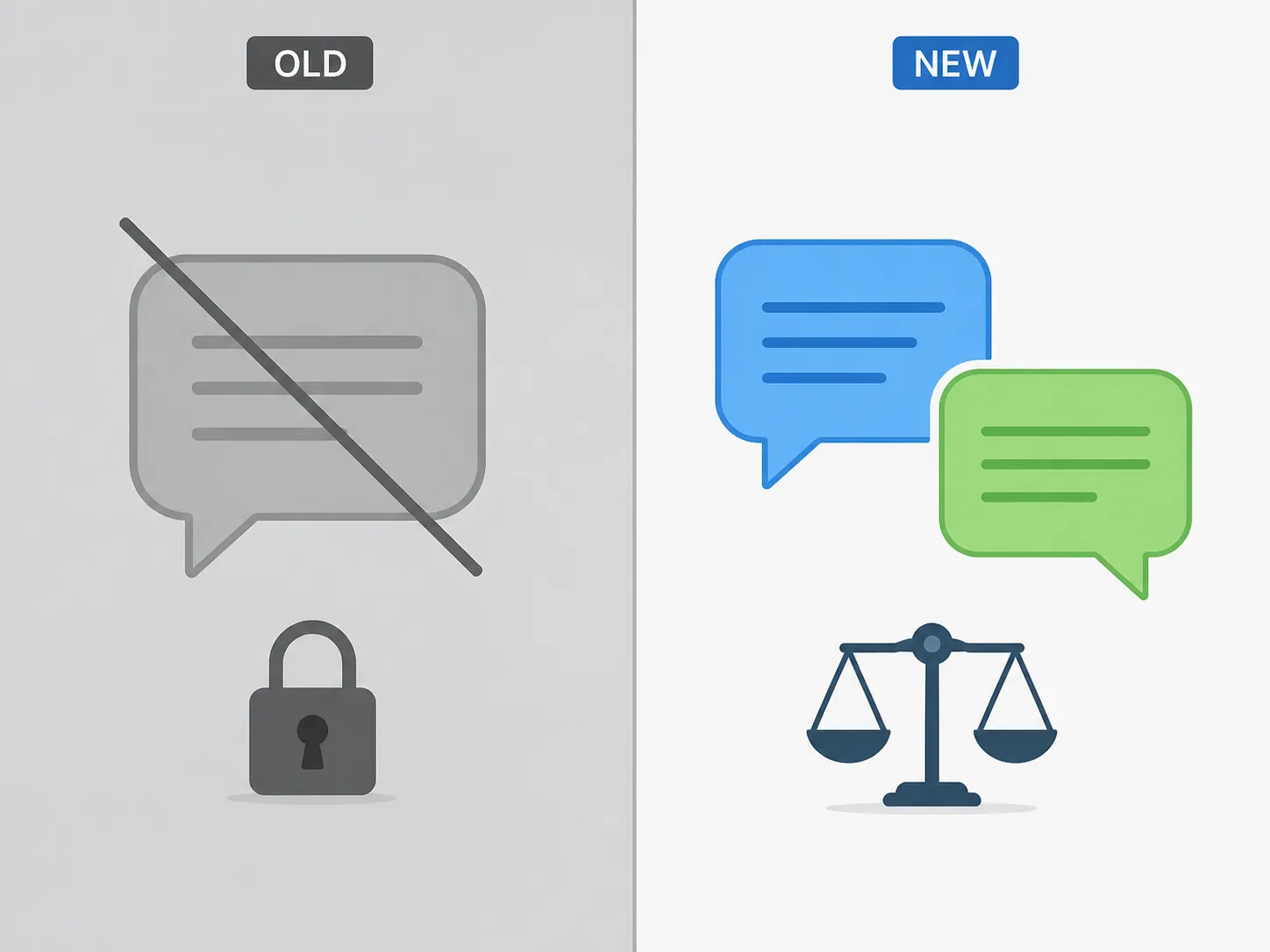
The rewritten clause is the policy term with the largest practical carryover. “Sole discretion” language gives a public-agency page administrator room to remove comments without stating a viewpoint-neutral boundary. The replacement sentence does not say the page must host everything. It says removal, hiding, deletion, banning, and blocking may not turn on the viewpoint expressed in comments.[2]
No monetary relief is confirmed
The confirmed settlement details do not include damages, a fee award, or any other payment. Military.com reported that no money changed hands, and the operative relief described in Exhibit A is access restoration, unhidden comments, and moderation-policy language.[2][3]
That distinction is not cosmetic. A docket note saying a civil-rights case settled does not, by itself, justify writing that a government defendant paid damages or fees. Here, the safe formulation is that the settlement was non-monetary and policy-focused.
Confirmed facts, reported facts, and the admission problem
The only material factual point that should remain flagged is liability admission. Military.com reported that the settlement included an admission that the Guard violated Stanhope’s First Amendment rights.[3] Carolina Public Press, republished by WFAE, quoted CIR counsel Michelle Scott saying there was no explicit admission.[4][5]
Those statements cannot both be treated as the same level of proof. The Settlement Agreement is the tie-breaker for what the parties actually agreed to. Unless the text contains an explicit admission, the record should not state as a confirmed term that the Guard admitted liability. The most accurate formulation is narrower: press accounts diverge on admission language, and the primary settlement documents reviewed for this record do not require treating an admission as a confirmed settlement term.[2][3][4][5]
| Point | Status for reuse | Support |
|---|---|---|
| Dismissal with prejudice on 07/23/2026 | Confirmed | Docket entry 42 / PacerMonitor [1] |
| Two years of retained enforcement jurisdiction | Confirmed | Docket entry 42 / PacerMonitor [1] |
| Restored Facebook access | Confirmed settlement term | Settlement Agreement Exhibit A [2] |
| Prior comments unhidden | Confirmed settlement term | Settlement Agreement Exhibit A [2] |
| Viewpoint-neutral replacement language | Confirmed settlement term; quote the clause rather than paraphrasing loosely | Settlement Agreement Exhibit A [2] |
| Money changed hands | Not confirmed; available record supports zero-dollar relief | Settlement Agreement Exhibit A and Military.com [2][3] |
| Admission of liability | Unresolved as a reported-fact conflict; do not state as confirmed unless the agreement text expressly says it | Military.com versus CPP/WFAE [3][4][5] |
Procedural timeline
- 03/10/2025: Stanhope filed the civil-rights action in the Eastern District of North Carolina.[1]
- 07/07/2026: the parties filed a joint motion to dismiss, docket entry 41, with the Settlement Agreement as Exhibit A.[1][2]
- 07/23/2026: the court entered the dismissal order, docket entry 42, dismissed the case with prejudice, and retained jurisdiction for two years to enforce the settlement.[1]
Earlier coverage that described the agreement as proposed or pending should be read in that sequence. The Raleigh News & Observer’s proposed-settlement framing predated the final order; the docket later shows approval, termination, and retained enforcement jurisdiction.[1][6]
Use this record for moderation-risk checks, not AI-risk framing
This is a First Amendment and § 1983 government-social-media record. The docket and settlement materials reviewed here do not name an AI moderation tool, a ranking system, or an automated deletion algorithm.[1][2]
For a related First Amendment viewpoint-discrimination record, compare CITR v. Rubio. For another structured settlement record, compare DOE clean energy grants reinstated after 2025 cuts. The useful takeaway here is limited but firm: the Stanhope settlement is verifiable, non-monetary, and focused on restoring access and rewriting a government Facebook moderation rule. The unsettled point is not what relief was ordered; it is whether any party admitted liability.
References
- Stanhope v. Hunt et al, 5:25-cv-00132 — PacerMonitor
- Settlement Agreement Exhibit A — Center for Individual Rights
- Veteran Guardsman Reaches Settlement in First Amendment Lawsuit over Social Media Posts — Military.com — July 31, 2026
- NC National Guard settles case over free speech rights — Carolina Public Press
- NC National Guard settles case over free speech rights — WFAE — July 29, 2026
- Raleigh News & Observer report on Stanhope proposed settlement — Raleigh News & Observer
Related records
Tool profile
Browse tool evaluations →Governing regulation
Browse the obligations tracker →Preventive workflow
Browse verification workflows →
Report a correction or tip
Spotted an outdated figure, a misstated fact, or a ruling this case record should reflect? Public comments are disabled for this content given the professional cost of a misreported case outcome, penalty amount, or rule text — use the structured correction channel instead.
Report a correction or tip for this record →