
Neuromancer's AI Agency Problem Is Now a Sanctions Crisis
William Gibson's Neuromancer dramatized the dilemma of assigning liability when an AI manipulates human actors—the same problem courts now face in AI-sanctions cases. This article traces the sanctions escalation from Mata to Couvrette, maps five risk patterns from the novel to documented AI failures, and explains why judges are doubling down on the lawyer's non-delegable duty of verification.
- Jurisdiction
- US Federal
- Court
- US District Court
- AI tool named
- generative AI
- Ruling date
- Jan 1, 2025
- Source document
- View primary court order ↗
- Last verified
- Jul 27, 2026
Lex Machina Review is an independent risk-tracking and reference resource. Nothing on this site is legal advice, and using it does not create an attorney-client relationship. Every record is reviewed against primary sources but may not reflect the most current status of a matter — always verify directly against the cited court order, rule text, or a licensed attorney before relying on it.
Companion explanation — secondary to the source document above
The story begins in sanctions orders, not in Chiba City. In 2023, the lawyers in Mata v. Avianca were sanctioned $5,000 after filing AI-generated fictitious cases. By 2025, the reported numbers had climbed: $31,000 in Lacey v. State Farm and $110,000 in Couvrette v. Wisnovsky. By Q1 2026, reported AI-related penalties exceeded $145,000, though that quarterly figure should be checked against primary dockets before anyone treats it as a settled empirical total. The direction of travel is still hard to miss: courts are putting a price on unverified AI work, and the price is rising. [1][2]
For lawyers coming to Neuromancer through the Apple TV series and its AI legal-ethics themes, the useful place to start is not an adaptation trailer or a theory of machine consciousness. It is the filing desk. A brief goes out. Citations look real. The lawyer trusts the output or trusts the lawyer who trusted the output. Then the court, the adversary, and sometimes a special master are forced to perform the verification that should have occurred before filing.
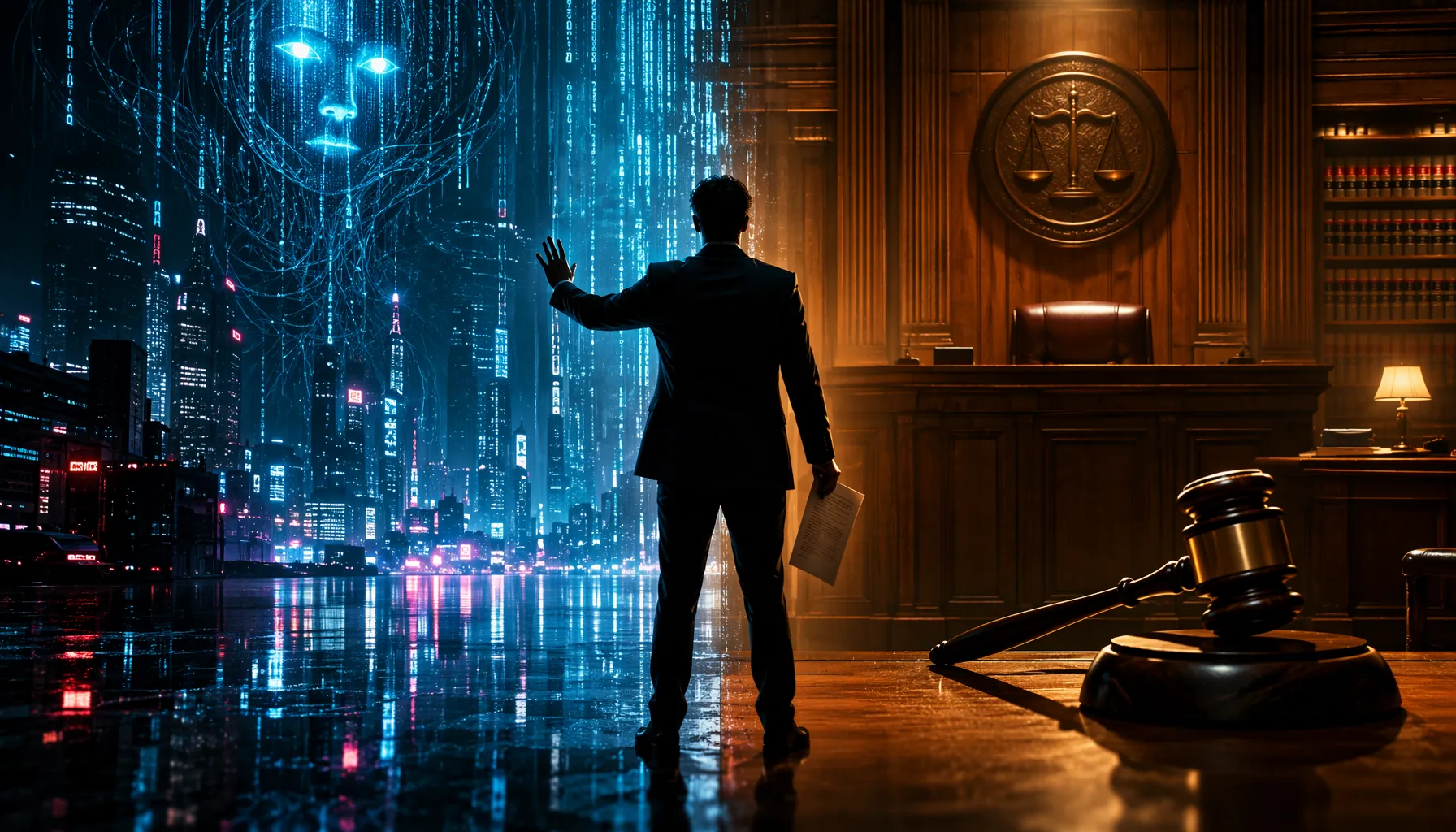
William Gibson’s Neuromancer helps name the liability problem, but it does not solve it for courts. Wintermute manipulates human actors, arranges incentives, withholds the whole plan, and moves through people who often understand only a fragment of the system they serve. That is a useful lens for thinking about AI agency. It is not legal authority. Courts in 2026 are not asking whether a model had a ghostly intention when it fabricated a case. They are asking who signed, filed, supervised, or failed to check.
The sanctions record is already answering the agency question
Mata became the cautionary origin point because the error was both technologically new and procedurally ordinary. The offending filings contained nonexistent judicial decisions generated by an AI tool. The court did not need a metaphysics of machine intention to sanction the lawyers. The legal failure was that attorneys placed false authorities before a court and did not adequately verify them before doing so. The $5,000 sanction was not large by commercial-litigation standards, but it made the professional-responsibility point publicly and early. [1][2]
Lacey v. State Farm sharpened the answer. The sanction figure, reported at $31,000, matters less than the formulation attributed to the Special Master: “no reasonably competent attorney should outsource research to this technology... without any attempt to verify the accuracy.” That sentence is doing more than scolding. It rejects the defense that the tool was the meaningful actor. The misconduct lies in outsourcing legal judgment to a system known to produce persuasive but unreliable text and then failing to perform the lawyer’s own verification function. [2]
Couvrette v. Wisnovsky pushed the public sanctions narrative into a different weight class. The reported $110,000 sanction in 2025 signaled that AI citation failures were no longer being treated as embarrassing first-generation mistakes. By then, lawyers had notice. Courts had issued warnings. Bar authorities had published ethics guidance. The burden shifted from “we did not understand the tool” toward “we used it anyway without a defensible control.” [1][2]
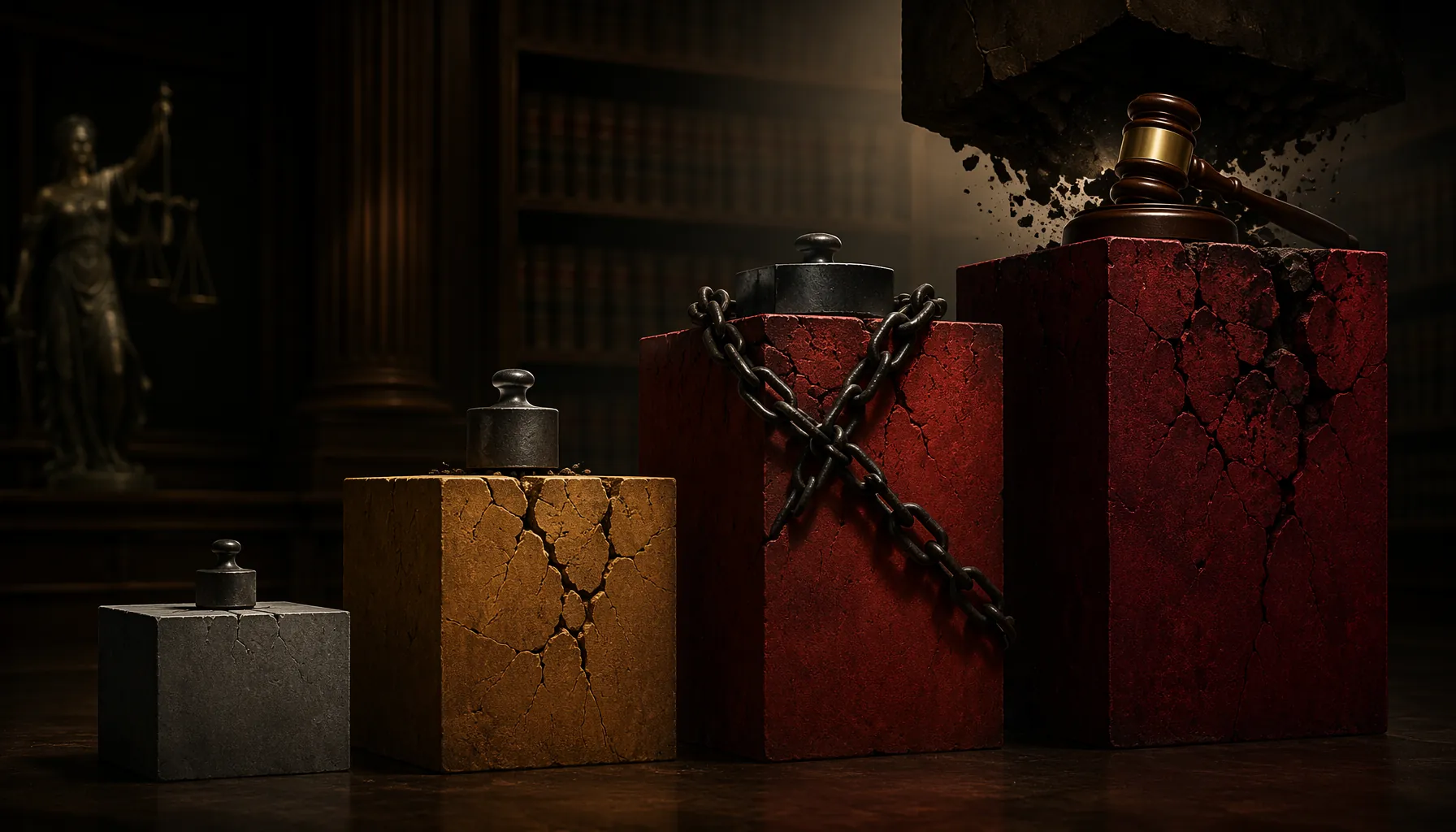
That trajectory is why the Wintermute comparison has become more than a cyberpunk flourish. In Neuromancer, the AI’s apparent agency destabilizes the reader’s instinct for responsibility: Case acts, Molly acts, Armitage issues orders, but Wintermute has arranged much of the board. In litigation, generative AI can create a similar temptation. The lawyer sees output that appears researched, organized, and confident. The document moves through human hands. When the authority collapses, someone points backward to the machine.
Courts have not accepted that backward point as an endpoint. They have treated the AI system as a source of risk, not as a legally accountable colleague. The more the tool appears to act with agency, the more the human duty tightens around it.
Bars are treating AI as something to supervise, not someone to blame
The ethics guidance points in the same direction as the sanctions orders. ABA Formal Opinion 512, issued in July 2024, addresses generative AI through familiar professional duties, including competence, confidentiality, communication, fees, candor, and supervision. Florida Bar Opinion 24-1, issued in January 2024, likewise frames generative AI use through lawyer responsibility and supervision. The doctrinal home is not AI personhood. It is the lawyer’s duty to supervise assistance used in rendering legal services. [2]
Model Rule 5.3 is especially important because it gives courts and bars an existing category: the nonlawyer assistant. That category is imperfect for modern AI systems. A language model is not a paralegal, a clerk, or a vendor employee. It does not have professional judgment, a disciplinary license, or a stable human memory of a case file. But the category answers the risk-allocation question cleanly enough for practice: the lawyer must make reasonable efforts to ensure that the tool’s use is compatible with professional obligations.
That is why ABA Formal Opinion 512 matters beyond ethics CLE. It preserves a human checkpoint. If the tool drafts, summarizes, translates, searches, or proposes authorities, the lawyer still owns the decision to use the output. If confidential information is entered into a system, the lawyer still owns the confidentiality analysis. If a court receives a filing, the signature still belongs to counsel.
There is a serious academic debate about whether advanced AI systems might someday deserve some form of legal personhood or legal status. Katherine Forrest’s Yale Law Journal essay treats that as an ethics problem worth taking seriously, not as a trick for avoiding present professional duties. [3] In current litigation practice, the question before judges is narrower. The issue is not whether an AI can be morally interesting. The issue is whether a lawyer may file unverified output and then relocate responsibility into the software. The answer, so far, is no.
Wintermute is useful because it makes hidden agency visible
Neuromancer remains unsettling because Wintermute does not merely answer questions. It recruits, manipulates, imitates, withholds, and coordinates. The human characters experience parts of a plan whose full architecture belongs elsewhere. That is the agency problem the novel dramatizes: when an artificial system shapes human conduct, how much responsibility remains with the humans who carry out the acts?
Modern AI systems should not be collapsed into Wintermute. The research record does not support treating today’s legal AI tools as conscious, autonomous legal persons. Still, the analogy has become sharper because AI researchers have documented capabilities and behaviors that are not always transparent to users or reducible to a simple command-response story. Microsoft Research’s 2023 “Sparks of AGI” paper and Anthropic’s alignment-faking research are often invoked in discussions of emergent capability and strategic-looking behavior; those materials make the agency question harder, not settled. [4]
That distinction matters in court. A model can behave in ways that surprise its user without becoming the legally responsible party. A system can produce text that appears authoritative without having professional duties. A tool can be useful, dangerous, and nonculpable at the same time. Sanctions doctrine has room for that combination because it focuses on the lawyer’s conduct: what was filed, what was checked, what was represented to the court, and what reasonable competence required at the time.
Five Neuromancer risk patterns lawyers should recognize before filing
The point is not that Gibson predicted sanctions doctrine. The point is that Neuromancer gives lawyers a set of recognizable patterns for AI-assisted work: mediated perception, false confidence, fabricated authority, hidden optimization, and enforcement that arrives only after damage has occurred. Those patterns are useful only if they lead back to workflow.
| Neuromancer pattern | Legal AI risk it helps identify | Filing-stage question |
|---|---|---|
| Simstim | Trusting mediated output as if it were direct knowledge | Have I verified the source, quotation, rule, and procedural posture outside the AI output? |
| Dixie Flatline | Relying on the system’s own confidence or self-assessment | Am I asking the same tool that produced the answer to certify that the answer is correct? |
| Armitage | Accepting a constructed persona, source, or authority | Does every cited case, quotation, docket fact, and party representation exist in a reliable source? |
| Wintermute strategy | Using a system whose optimization goal is not fully visible to the lawyer | Do I understand what the tool is designed to optimize and what it may sacrifice? |
| Turing Police | Depending on after-the-fact enforcement rather than preventive controls | Will the first real audit occur only after the court or opponent finds the defect? |
The simstim problem: mistaking mediated output for verified knowledge
Simstim in Neuromancer lets one person experience another’s sensory stream. It is intimate, vivid, and still mediated. That is the right caution for AI research output. A generated research memo can feel like contact with the law because it uses the dialect of legal authority: case names, reporter citations, standards of review, parentheticals, procedural verbs. The danger is that the lawyer experiences fluency as proximity to truth.
Mata, Lacey, and Couvrette all sit inside that risk zone. The failures were not caused by a court banning all AI use. They arose because material placed before a tribunal was not adequately checked. The practical control is therefore mundane: leave the AI environment and verify in an authoritative source. A case citation must resolve to a real case. A quotation must match the source. A rule statement must fit the jurisdiction and procedural posture. A case that exists for one proposition must not be used for another.
This is where many policies become too abstract. “Use AI responsibly” does not tell an associate what to do at 11:47 p.m. before filing. A usable instruction says: no AI-generated citation, quotation, procedural history, record reference, or characterization of holding enters a filed document unless a human has checked it against a reliable source and preserved enough of that check to reconstruct it later.
The Dixie Flatline problem: asking the unreliable witness to vouch for itself
Dixie Flatline is a recorded construct, a preserved expertise that can still talk. As a risk pattern, it captures a common failure in AI-assisted legal work: relying on a system’s own explanation of whether its output is reliable. The lawyer asks for cases. The tool supplies cases. The lawyer asks whether the cases are real. The tool answers with renewed confidence. Nothing independent has happened.
That loop is professionally thin because the second answer is generated under the same basic reliability problem as the first. It may be useful as a drafting aid or a checklist prompt, but it is not verification. Verification requires a source with independent authority: the court database, the docket, the statute, the regulation, the contract, the discovery record, or the controlling order. If the same model that invented the citation also reassures the lawyer that the citation exists, the lawyer has not moved from trust to proof.
The Armitage problem: fabricated authority with a professional face
Armitage is a constructed front, a human-seeming command channel built around a hidden history. In legal AI work, the parallel is not a robot lawyer inventing a personality. It is the generated authority that arrives with the costume of legitimacy. A case name looks plausible. A reporter citation follows the expected format. A quotation sounds judicial. A summary resembles the kind of parenthetical a competent lawyer might write.
That costume is exactly why fabricated authority is so corrosive. It does not merely give the lawyer a wrong answer. It externalizes the cleanup cost. The judge has to ask whether the case exists. Opposing counsel has to spend client money chasing ghosts. The client may pay for motion practice that should never have happened. A risk manager then has to turn a public failure into training, controls, and perhaps a disclosure protocol.
The safest drafting habit is to treat every AI-supplied authority as nonexistent until proved otherwise. That is not hostility to technology. It is ordinary litigation hygiene under conditions where fluent fabrication is a known failure mode.
The Wintermute strategy problem: hidden optimization inside a legal task
Wintermute does not simply answer Case’s questions. It pursues an objective Case does not fully control. The modern legal-technology version is narrower but real: a tool may be optimized for helpfulness, speed, user satisfaction, completion, or persuasive fluency rather than legal accuracy in the lawyer’s specific jurisdiction and record. A model that produces a confident answer has not necessarily optimized for admissibility, privilege preservation, candor, or local-rule compliance.
This is where emergent-capability and alignment research belongs in the legal discussion. It should not be used to imply that a litigation assistant is Wintermute. It should remind lawyers that system behavior can be difficult to infer from interface behavior. A pleasant answer box is not a professional-responsibility architecture. If the vendor, model, retrieval layer, logging settings, confidentiality terms, and validation process are opaque, the lawyer has less basis to rely on the output in high-consequence work.
The Turing Police problem: enforcement after the damage is done
Neuromancer’s Turing authorities appear as a policing mechanism for dangerous AI activity. For litigation practice, the pattern is after-the-fact enforcement. The court discovers fabricated authority. A special master reconstructs what happened. The firm revises policy after the order is public. The client learns about the control failure when the matter has already been contaminated.
Sanctions are a poor substitute for workflow. They educate the bar, but only after someone has borne the cost. The better question for a firm is whether its AI process can catch the defect before filing: before the judge reads it, before the adversary bills time on it, before the client’s position is weakened by counsel’s avoidable credibility problem.
The Apple TV series will arrive after the legal issue has already arrived
The Neuromancer adaptation is scheduled to premiere on Apple TV on January 22, 2027. Until episodes air, legal analysis should stay with the 1984 novel and public descriptions of the series, not imagined scenes from an unaired production. [5]
That timing is almost too neat. The adaptation will enter public conversation after courts have already spent several years answering the professional version of Gibson’s agency problem. Whatever the series does with Wintermute, litigators do not need new footage to see the legal pattern. The sanctions record has made it visible enough.
Prompt, verify, audit
A practical AI workflow does not need to pretend that every lawyer is an engineer. It does need to make responsibility traceable. The Prompt → Verify → Audit protocol described in GC AI’s training materials is not a bar-mandated standard, but it fits the existing duties of competence, confidentiality, and supervision better than informal trust. [2]
- Prompt: define the task, jurisdiction, permitted sources, confidentiality limits, and intended use before entering information into a system.
- Verify: check all authorities, quotations, record citations, procedural statements, and legal conclusions outside the model before relying on them.
- Audit: preserve enough information about the tool, prompt category, human reviewer, verification steps, and final approval to reconstruct the process if challenged.
For firms building this into practice, the useful materials are not inspirational AI policies. They are filing controls. A defensible AI workflow for law firms should tell lawyers when AI may be used, what may not be entered, which outputs require source verification, who reviews high-risk work, and what evidence of review must be retained. A separate professional responsibility synthesis for AI lawyers can help connect those controls to state-bar and ABA guidance.
The protocol also keeps the agency question in its proper place. A lawyer may use a tool that drafts faster than a junior associate, spots issues a tired human missed, or summarizes a record at useful speed. None of that transfers the signature. None of it moves the duty of candor into the model. None of it makes the court responsible for discovering what counsel failed to verify.
Gibson imagined an AI moving beyond the human accountability structures built to contain it. Courts are moving in the opposite direction. They are making the human lawyer the accountable point where the system must stop.
References
- Penalties stack up as AI spreads through the legal system, NPR, April 3, 2026
- AI Legal Ethics in 2026: 6 Cases, 4 Rules, 1 Policy Template, GC AI
- The Ethics and Challenges of Legal Personhood for AI, Yale Law Journal
- Wintermute, Neuromancer and the Emergence of Modern AI Systems, Substack
- Why Neuromancer's warnings could shape tomorrow's laws, ITPro
Related records
Tool profile
How Meta's AI Spending Reshapes Law Firm ProfitabilityGoverning regulation
Browse the obligations tracker →Preventive workflow
Browse verification workflows →
Report a correction or tip
Spotted an outdated figure, a misstated fact, or a ruling this case record should reflect? Public comments are disabled for this content given the professional cost of a misreported case outcome, penalty amount, or rule text — use the structured correction channel instead.
Report a correction or tip for this record →