
Nvidia CEO says AI automates legal tasks, not legal jobs
Nvidia CEO Jensen Huang argues AI automates tasks, not jobs, and uses lawyers as his example. This outlook tests that claim against 2026 legal market data and the court rulings that penalize unsupervised AI work — and shows where legal careers are actually growing.
- Jurisdiction
- United States
- Court
- U.S. federal and state courts
- AI tool named
- Generative AI
- Ruling date
- Aug 3, 2026
- Source document
- View primary court order ↗
- Last verified
- Aug 3, 2026
Lex Machina Review is an independent risk-tracking and reference resource. Nothing on this site is legal advice, and using it does not create an attorney-client relationship. Every record is reviewed against primary sources but may not reflect the most current status of a matter — always verify directly against the cited court order, rule text, or a licensed attorney before relying on it.
Companion explanation — secondary to the source document above
Jensen Huang’s most useful comment about legal AI was not the broad one about AI creating jobs. It was the narrower lawyer example. On the No Priors podcast, Nvidia’s CEO drew a line between legal tasks and legal purpose: reading contracts and drafting contracts are tasks; protecting a client, resolving disputes, and advancing a client’s interests are the job’s purpose.[1] That distinction is a better starting point for the legal career outlook than another round of “AI will replace lawyers” theater.
It is also only a starting point. Huang is the CEO of the company selling much of the infrastructure behind the AI boom, so his optimism should be read as a market actor’s argument, not neutral labor analysis. In law, the useful test is more concrete: if AI compresses research, drafting, contract review, and document production, do courts, ethics rules, and current market data show legal jobs disappearing, or being re-priced around supervision and accountability?
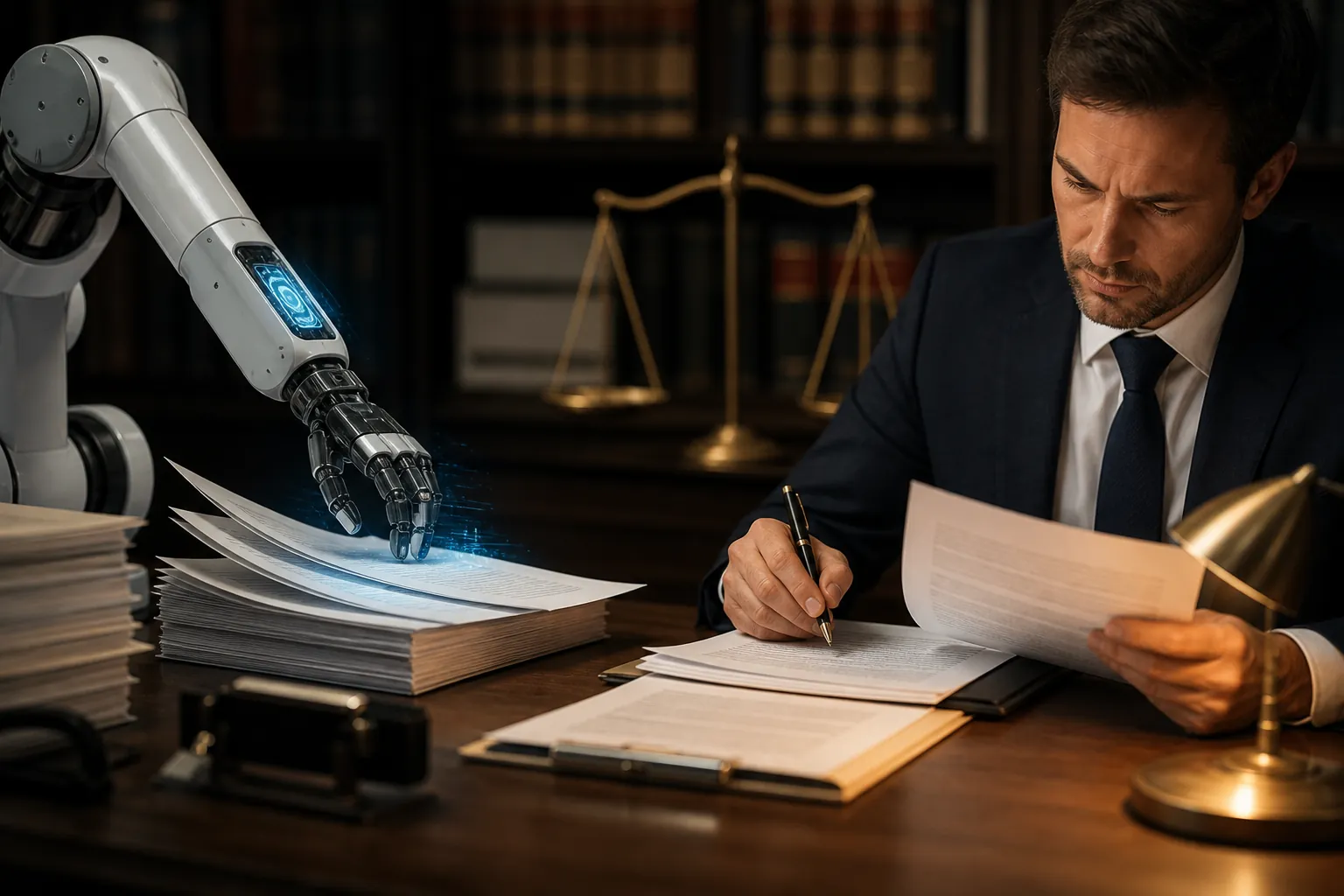
This is editorial analysis, not legal advice. The answer depends less on motivational claims about AI and more on dated labor-market evidence, professional-responsibility rules, and court orders showing what happens when a legal actor treats AI output as finished work.
Huang’s framework fits law better than the usual automation debate
Huang has been making a broader 2026 labor argument: that the narrative about AI destroying jobs is “exactly backwards” and that AI is “creating an enormous number of jobs, not taking it away.”[2] He has also repeated the now-familiar warning that workers are less likely to lose a job to AI than to someone who uses AI effectively.[3]
That broad claim can become too neat when it is detached from a profession’s accountability structure. In law, the reason Huang’s task-versus-purpose line has force is not that lawyers are magically protected from automation. It is that legal work has named responsibility. A brief, contract mark-up, discovery response, privilege call, or board memo may be AI-assisted, but someone with professional duties still has to decide whether it is accurate, adequate, and usable.
The distinction matters because much of junior legal work has historically been built from tasks Huang would place on the automatable side: first-pass research, document summaries, contract comparison, chronology building, issue spotting, cite pulls, and draft shells. If those tasks take fewer hours, the old training and staffing model is under pressure. But pressure on a task bundle is not the same thing as deletion of the profession.
The 2026 legal data says adoption is real, but quality is the bottleneck
The current legal-market evidence points to a profession moving past curiosity and into uneven use. Thomson Reuters’ 2026 Future of Professionals Report found that 80% of legal professionals expect AI to have a high or transformational impact within five years. GenAI adoption also rose sharply: 41% of law firms reported adoption in 2026, up from 28% in 2025, while corporate legal teams rose to 47% from 23% over the same period.[4]
Those numbers support part of Huang’s argument. AI is not sitting outside legal work as a speculative technology. It is already being pulled into the ordinary production layer of practice. The more interesting number, however, is not adoption. It is the quality gap.
In the same report, 78% of clients rated AI-enabled quality as important, while only 6% said providers were delivering it.[4] That is where the career signal sits. Clients are not merely asking firms to use AI. They are asking firms to use it without degrading judgment, confidentiality, accuracy, responsiveness, or defensibility. A firm that can produce faster but cannot prove review quality has not solved the legal-service problem; it has moved the risk downstream to the person who signs off.
The concern is visible inside the profession as well. Thomson Reuters reported that 48% of legal professionals were concerned about AI’s effect on the development of independent judgment.[4] That concern is not nostalgia for redwelds and late nights. It is a practical training problem. If AI handles the first pass, junior lawyers may see fewer messy intermediate steps—the false leads, bad cases, awkward clauses, and half-formed theories through which judgment used to develop.
| Signal | What it measures | Career implication |
|---|---|---|
| 80% expect high or transformational AI impact within five years | Expectation among legal professionals | AI literacy is no longer optional for many legal roles |
| 41% law-firm adoption and 47% corporate legal-team adoption in 2026 | Reported GenAI adoption, not proven effectiveness | Routine production workflows are being redesigned |
| 78% of clients rate AI-enabled quality important; 6% say providers deliver | Client demand compared with provider performance | Quality assurance, verification, and defensible process become valuable |
| 48% concerned about independent judgment | Professional concern about skill development | Training models need deliberate supervision, not silent delegation to tools |
Court orders turn the quality gap into an accountability problem
The strongest evidence for the legal career outlook does not come from surveys. It comes from court orders. In documented AI hallucination and sanction matters, the failure pattern is usually not exotic: a filing contains fake cases, inaccurate quotations, distorted procedural history, or unsupported propositions; the lawyer either did not check or did not check well enough; the court assigns responsibility to the human legal actor.
The site’s Risk Digest tracks more than 1,490 documented AI hallucination or sanction cases worldwide, including more than 1,000 in the United States. The database has been adding more than one new ruling per day, and Q1 2026 sanctions exceeded $145,000, with entries tied back to primary court orders and last-verified records.[5]
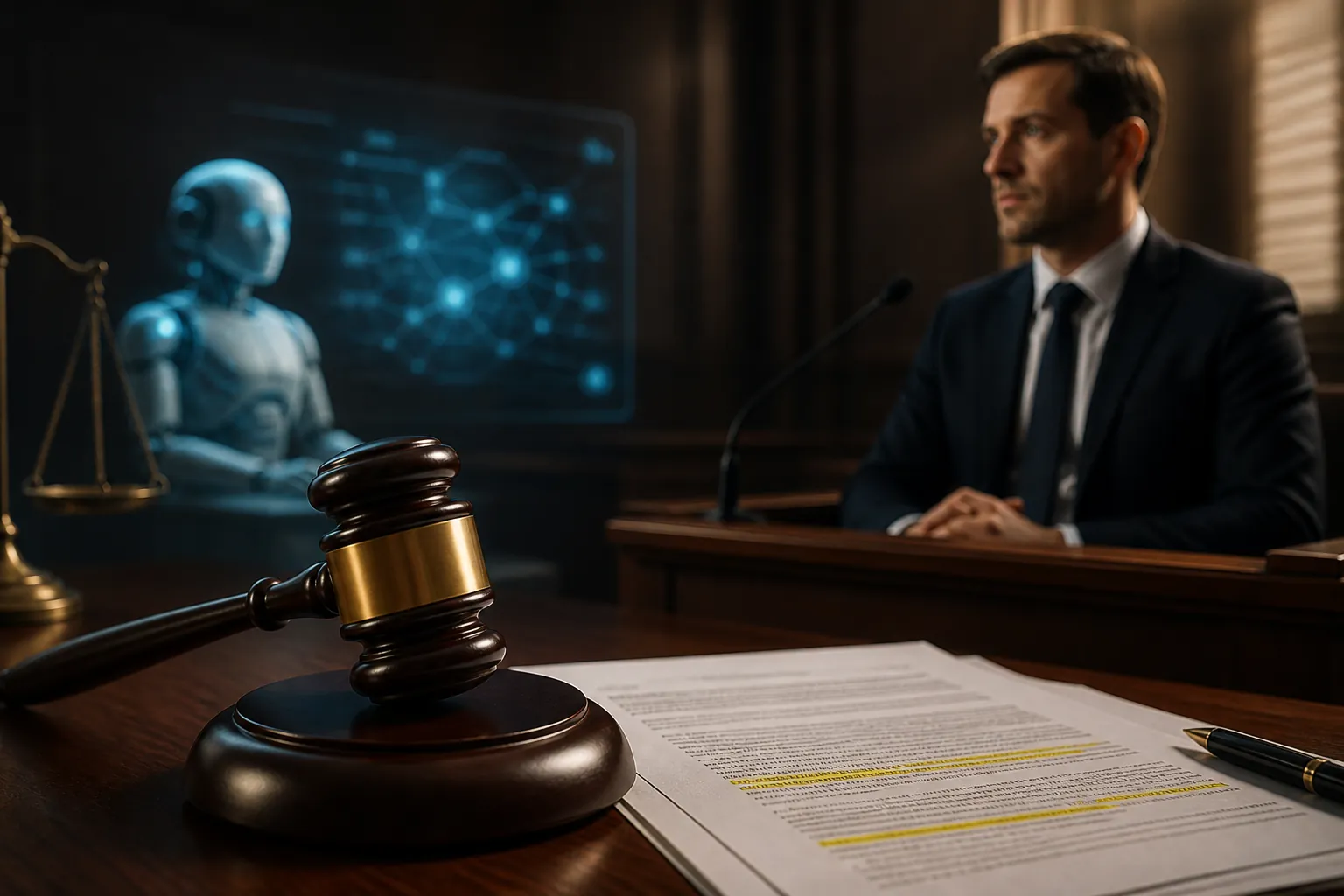
Those numbers do not prove that AI use is usually sanctionable. They prove something narrower and more important for legal staffing: when AI-assisted legal work fails in court, the penalty does not land on the model. It lands on the lawyer, firm, or legal representative who put the work into the system.
That is why Huang’s framework works differently in law than it might in a generic productivity slide. A tool can automate a cite search, a draft paragraph, or a contract summary. It cannot absorb Rule 11 exposure, judicial distrust, malpractice risk, client embarrassment, or disciplinary scrutiny. The task can move to software; the consequence stays with the person and organization responsible for the legal work.
Professional-responsibility guidance points in the same direction. ABA Formal Opinion 512 addresses lawyers’ use of generative AI and ties that use back to ordinary duties such as competence, confidentiality, communication, candor, supervisory responsibility, and reasonable fees.[6] State bar guidance has followed the same basic structure: lawyers may use AI, but they must understand, supervise, and verify it. The rules do not create a safe harbor for a hallucinated citation because the first draft came from a model.
For risk, knowledge-management, and litigation-support teams, that is the practical growth layer. The valuable work is not merely “prompting.” It is building a defensible chain between AI-assisted production and human review: source retrieval, citation validation, quotation checking, docket confirmation, privilege review, version control, escalation paths, and sign-off records. Readers building those controls can map them against the site’s Risk Digest and operationalize them through Verification Workflows.
The labor-market signal is mixed, not apocalyptic
The available hiring data does not support a simple collapse story. NALP’s Class of 2024 employment report, published in September 2025, found 93.4% employment and 84.3% employment in bar-required roles, both all-time highs for that class data.[7] That is 2025-vintage evidence, not a guarantee about 2026 or 2027, but it matters: the legal labor market had not cratered at the point those graduates entered employment.
The softer signals are just as important. Best Law Firms’ October 2025 report, based on a survey of about 5,000 firms, found that 70% of firms were only exploring or piloting GenAI, while 11% had fully implemented it. The same report described softening in-house hiring, especially for lawyers with fewer than five years of experience.[8]
Put together, those figures do not say junior lawyers are safe. They also do not say junior lawyers are doomed. They say the old bargain is being renegotiated. If a firm needs fewer hours for first-pass drafting and research, it may hire differently, train differently, or expect junior lawyers to reach review-level competence faster. If an in-house team can automate parts of contract intake or policy research, it may be slower to add early-career lawyers whose main value is production capacity.
That creates a harder entry-level market in some places and a better one in others. The legal worker who can only produce a plausible first draft is competing with a tool. The legal worker who can test that draft against governing law, local rules, client facts, privilege boundaries, and filing consequences is doing work the institution still has to own.
The skills being bid up are not all lawyer-only skills
Some of the growth will sit with attorneys. Some will sit with staff attorneys, paralegals, litigation-support professionals, legal operations teams, and knowledge-management lawyers. The common feature is not title. It is accountability work around AI-assisted output.
- Verification: checking citations, quotations, authorities, defined terms, exhibits, docket entries, and factual assertions against primary materials.
- Supervision: deciding which AI uses are permitted, who may use them, what review is required, and when a matter must be escalated.
- Workflow design: embedding AI into intake, research, review, and drafting without losing auditability.
- Training: teaching lawyers and staff what the model can accelerate, what it cannot know, and what must be verified before delivery.
- Client communication: explaining when AI is being used, what quality controls apply, and how fees reflect the changed production process.
None of that is a sentimental defense of headcount. It is a description of where legal institutions still need humans because the institution remains exposed.
The counterweight: AI displacement is not imaginary
Huang’s optimism should not be accepted as the whole labor story. Goldman Sachs figures cited by Fortune estimated roughly 11,000 net jobs eliminated per month in the most AI-affected industries and projected that about 9% of the U.S. workforce, roughly 15 million people, could be displaced over a decade.[2] Those are model estimates and forecasts, not observed legal-sector job losses, but they are a useful check on the “more jobs” claim.
Challenger, Gray & Christmas separately counted about 55,000 U.S. layoffs in 2025 citing AI.[9] That figure is also not a legal-industry headcount map. It does show that employers are already invoking AI in workforce reductions, and it would be careless to talk about task automation as if no jobs will be eliminated, consolidated, or moved.
The better conclusion is narrower. In law, AI is most likely to reduce the market value of unsupervised routine production before it reduces the value of legal judgment. Some roles built around volume drafting, basic review, or repetitive research will be compressed. Other roles will expand because somebody must make AI-assisted work fit professional duties, client expectations, and court tolerance.
Why the skilled-trades analogy only goes so far
Huang’s skilled-trades framing explains his larger labor thesis. In 2026 interviews, he argued that the AI build-out would increase demand for electricians, plumbers, carpenters, and other trades needed for data centers and related infrastructure.[10][11] That helps explain why he sees AI as job-creating: the technology does not just automate screens; it also requires physical build-out, energy, cooling, facilities, and maintenance.
For the legal career outlook, though, the analogy should stay in the background. Lawyers are not protected because they resemble electricians. They are protected, and pressured, because legal systems assign responsibility to human professionals and institutions. The build-out may create jobs in the economy. The legal question is who reviews the AI-generated clause, who verifies the cited case, who approves the filing, and who answers when the court asks where the authority came from.
What this means for legal careers in 2026
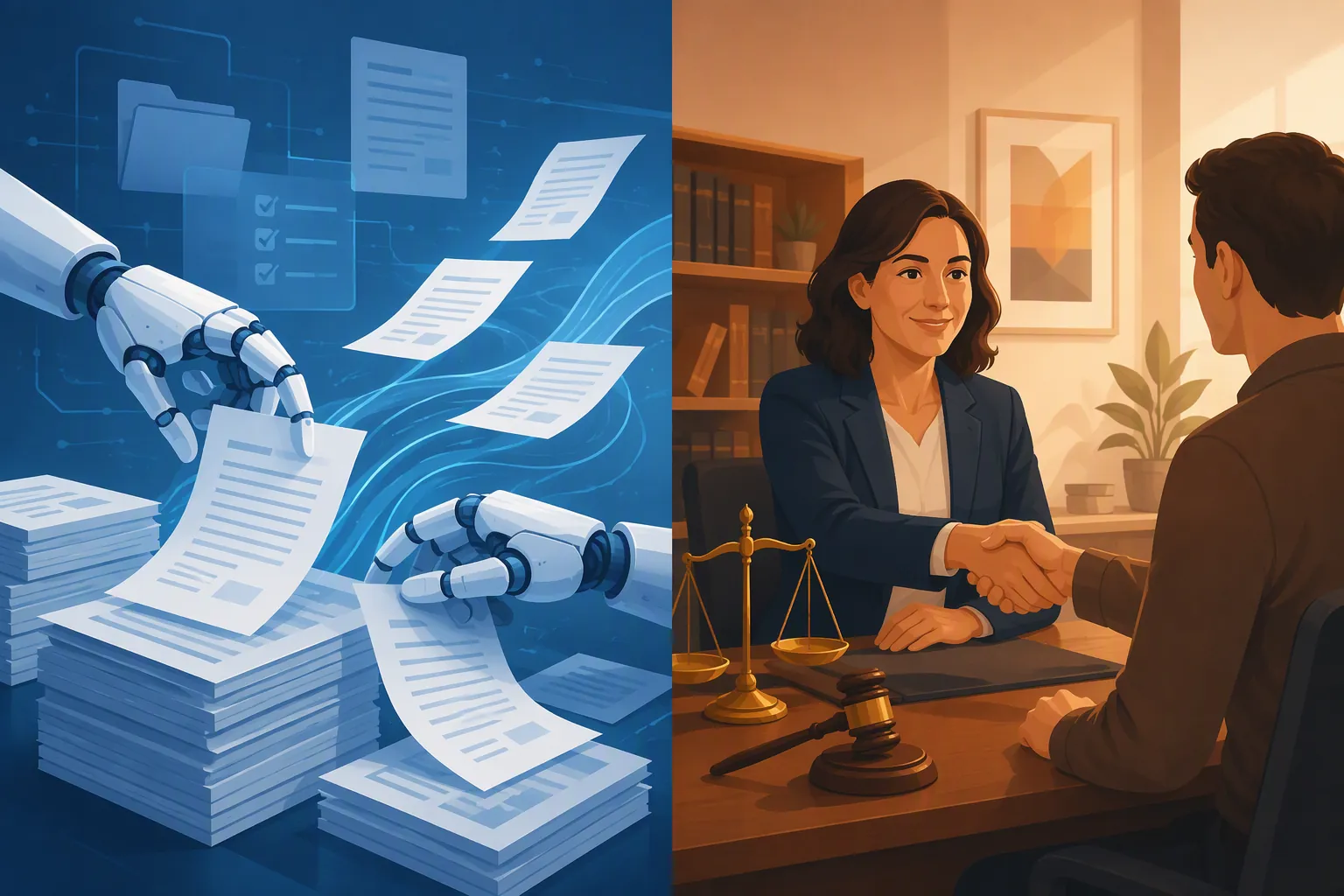
The legal career premium is shifting away from producing the first version of routine work and toward controlling the quality of AI-assisted work. That shift favors lawyers and legal professionals who can combine doctrinal competence with process discipline: not only spotting a wrong answer, but designing a workflow that makes wrong answers less likely to reach a client, counterparty, regulator, or court.
For associates, that means the fastest path to value is not pretending AI does not exist. It is learning how to verify faster than the tool can generate. For partners and general counsel, it means staffing AI review as real legal work, not invisible cleanup. For KM and legal-ops teams, it means AI policy cannot remain a PDF in a portal; it has to be tied to matter workflows, training records, review gates, and exception handling.
ABA Formal Opinion 512 and state bar guidance make that accountability structure explicit enough that firms should treat AI governance as a competence issue, not a procurement issue.[6] The site’s Regulation & Ethics tracker is the better place to monitor those duties as they develop.
Huang’s task-versus-purpose framework holds up in law because legal accountability prevents full task delegation from becoming clean job substitution. AI is compressing routine legal production. The durable career premium is moving toward the people who can supervise, verify, document, and exercise judgment over that production before someone else’s name goes on the filing.
References
- Nvidia CEO Jensen Huang’s No Priors comments on AI automating legal tasks, Business Insider, Jan. 16, 2026
- Nvidia CEO Jensen Huang says the narrative about AI destroying jobs is exactly backwards, Fortune, Jul. 28, 2026
- Nvidia CEO Jensen Huang says you will not lose your job to AI, but to someone who uses AI, CNBC Make It, May 28, 2025
- 2026 Future of Professionals Report, Thomson Reuters, 2026
- Risk Digest documented AI hallucination and sanction records, site database
- Formal Opinion 512: Generative Artificial Intelligence Tools, American Bar Association, 2024
- Class of 2024 Achieves Record Employment, NALP, Sept. 2025
- Law Job Market Faces AI Challenges, Economic Headwinds, Best Law Firms, Oct. 31, 2025
- Challenger, Gray & Christmas AI layoff data reported by CNBC, Dec. 2025
- Jensen Huang’s skilled-trades comments, CNBC, Jan. 22, 2026
- Jensen Huang’s skilled-trades and AI infrastructure comments, Fortune, May 11, 2026
Related records
Tool profile
How Meta's AI Spending Reshapes Law Firm ProfitabilityGoverning regulation
Browse the obligations tracker →Preventive workflow
Browse verification workflows →
Report a correction or tip
Spotted an outdated figure, a misstated fact, or a ruling this case record should reflect? Public comments are disabled for this content given the professional cost of a misreported case outcome, penalty amount, or rule text — use the structured correction channel instead.
Report a correction or tip for this record →