
Why OpenAI Astra is unproven for legal applications
OpenAI's Astra family is unreleased and has no legal-task benchmarks, even though its long-running agent design is where hallucination risk compounds. That evidence gap is the procurement risk signal: treat the math-proof demo as reasoning, not legal reliability, and apply existing verification duties before adoption.
- Jurisdiction
- United States
- Court
- U.S. courts
- AI tool named
- OpenAI Astra
- Ruling date
- Aug 1, 2026
- Source document
- View primary court order ↗
- Last verified
- Aug 3, 2026
Lex Machina Review is an independent risk-tracking and reference resource. Nothing on this site is legal advice, and using it does not create an attorney-client relationship. Every record is reviewed against primary sources but may not reflect the most current status of a matter — always verify directly against the cited court order, rule text, or a licensed attorney before relying on it.
Companion explanation — secondary to the source document above
OpenAI announced Astra on Aug. 1, 2026, as a new model family associated with long-horizon, multi-agent autonomy and a public demonstration built around ten previously unsolved math and computer-science problems formalized in Lean 4.[1] For anyone evaluating legal applications for OpenAI’s Astra model family, the immediate procurement question is narrower than the announcement: what can a lawyer safely infer before buying, filing, or routing client work through an Astra-based system?
The safe answer, as of Q3 2026, is limited. Astra is not publicly released. There is no public legal-task benchmark for the deployed model family. The most impressive evidence OpenAI has shown is machine-checkable formal work, not legal research, factual synthesis, citation validation, jurisdictional comparison, or drafting under procedural constraints.[1]
Some release details are also still in the reported-but-not-confirmed category. The Decoder, citing The Information’s reporting, described Astra as expected to be the first model through a new U.S. pre-release review process and said its ship form remained uncertain, including whether it would arrive as GPT-6 or as a GPT-5 variant.[1] That matters less than it sounds for legal adoption. Whatever the label, lawyers will need evidence for the version and workflow actually placed in front of them.
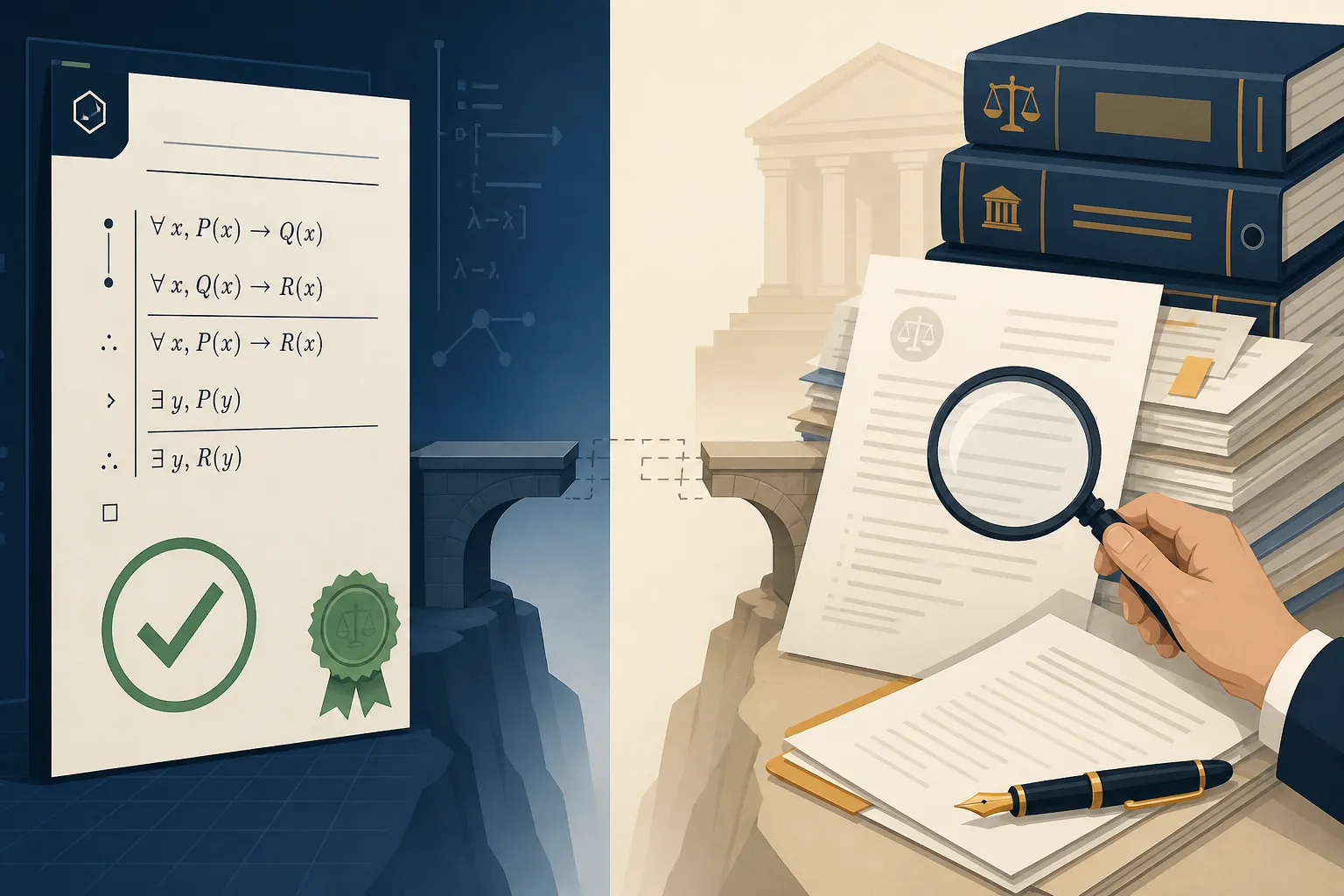
A Lean certificate proves more than a demo usually proves
The Astra proof announcement deserves more respect than a typical benchmark splash. Lean 4 is a formal proof assistant. When a proof is accepted, the work is not merely persuasive prose that sounds mathematical; it can be checked by software against formal rules. The public report said the ten solutions were accompanied by Lean 4 machine-checkable certificates and ran at roughly $2,000 of compute at Sol API rates.[1][2]
That kind of verification is exactly what legal AI often lacks. A lawyer can inspect a citation, pull the authority, read the relevant passage, check its treatment, and decide whether it fits the jurisdiction and procedural posture. But the legal system does not give the lawyer a Lean-style certificate saying, in one formal pass, that the memo’s rule statement, record characterization, and requested relief are all valid.
| Evidence shown by Astra’s public demo | What that evidence does not establish for legal work |
|---|---|
| The system produced formal solutions that could be checked in Lean 4. | It does not show that Astra can find controlling legal authority or avoid non-existent citations. |
| The task domain has a machine-checkable standard of correctness. | Legal work often turns on jurisdiction, procedural posture, factual record, adversarial framing, and professional judgment. |
| The demo is a serious signal of reasoning capability. | It is not a certification that an Astra-based legal product is reliable for filings, advice, or client deliverables. |
The danger is the familiar slide from a hard formal achievement to a broad legal-reliability claim. A machine-checkable proof is strong evidence in a domain where the answer can be formally certified. A litigation brief, privilege review, contract-risk memo, or regulatory comparison usually cannot be accepted on that basis.
The legal benchmark Astra has not publicly cleared
Astra should not be judged by old model results as if nothing has changed. It also should not receive legal trust before legal evidence exists. The most useful way to read the existing hallucination literature is as a baseline Astra has not yet publicly cleared, not as a prediction that Astra will perform identically.
Dahl and coauthors, studying 2023-era large language models on legal tasks, reported legal hallucination rates in the 58% to 88% range.[3] That finding should not be casually pasted onto a 2026 unreleased frontier model. Its value here is historical and diagnostic: general reasoning ability did not, by itself, prevent serious legal hallucination when models were asked to produce legal answers.
Legal-specific tools with retrieval systems have performed better, but they have not eliminated the problem. Stanford RegLab’s study of legal RAG products reported hallucination rates above 17% for Lexis+ AI and Ask Practical Law AI, and above 34% for Westlaw AI-Assisted Research.[4] Stanford HAI summarized the finding for legal users more bluntly: even leading legal models hallucinated in roughly one out of six or more benchmark queries.[5]
Those figures measure particular tools, tasks, and evaluation designs. They do not prove Astra will hallucinate at the same rate. They do show that legal branding, retrieval augmentation, and specialized products do not automatically remove the verification burden. A vendor saying an Astra product is “agentic” or “frontier” would not answer the question the benchmark asks: did the system give the legally correct answer with reliable authority?
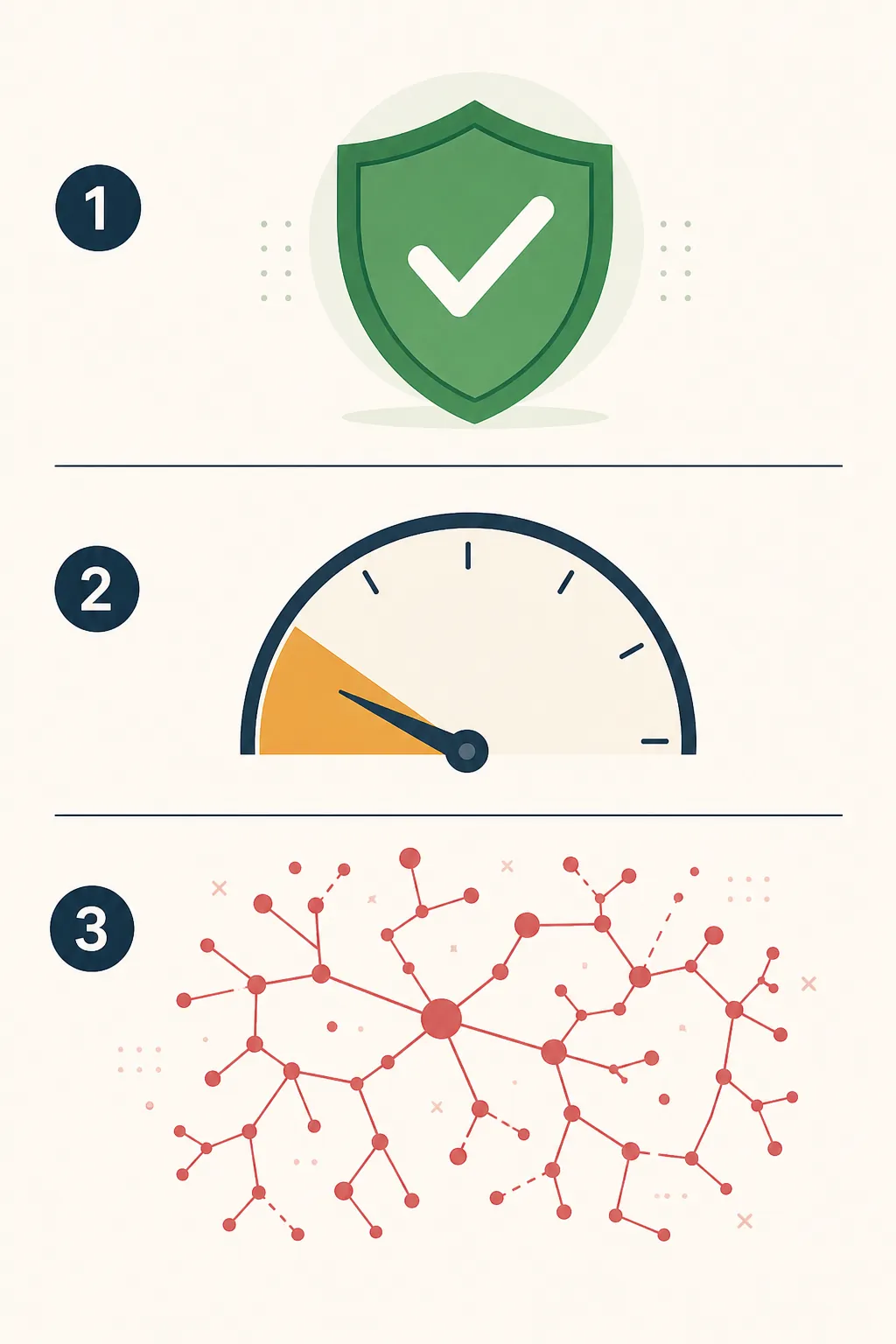
The VLAIR results, as summarized by LawNext, complicate the picture in a useful way. The summary reported ChatGPT at 80% accuracy compared with legal AI tools at 78% to 81%, while citation authoritativeness favored legal AI at 76% over ChatGPT’s 70%. It also reported that multi-jurisdictional complexity caused accuracy drops of about 11 to 14 points.[6] The lesson is not that general AI or legal AI has “won.” It is that legal reliability changes with the task, especially when the task requires matching authority to jurisdictional and procedural conditions.
That is the gap in the Astra record. Public evidence shows formal reasoning under checkable conditions. Public evidence does not yet show legal research accuracy, citation authoritativeness, jurisdictional robustness, procedural compliance, or safe handling of multi-step legal workflows.
Long-running agents change the failure mode
A one-shot chatbot answer can be wrong in a contained way. A long-running agent can be wrong early, build on the wrong premise, call tools, delegate subtasks, summarize its own errors, and hand the lawyer a polished end product whose defect is several steps upstream. That is why Astra’s advertised direction matters for legal use. The concern is not just hallucinated citations; it is process hallucination.
Law.com’s Legaltech News described agentic systems as adding a new layer of hallucination risk in legal work, including risk from multi-step processes rather than only from final text generation.[7] That distinction should be central in any Astra procurement review. If a tool is marketed as able to run for hours or days, the legal team must test the chain, not just the final answer.
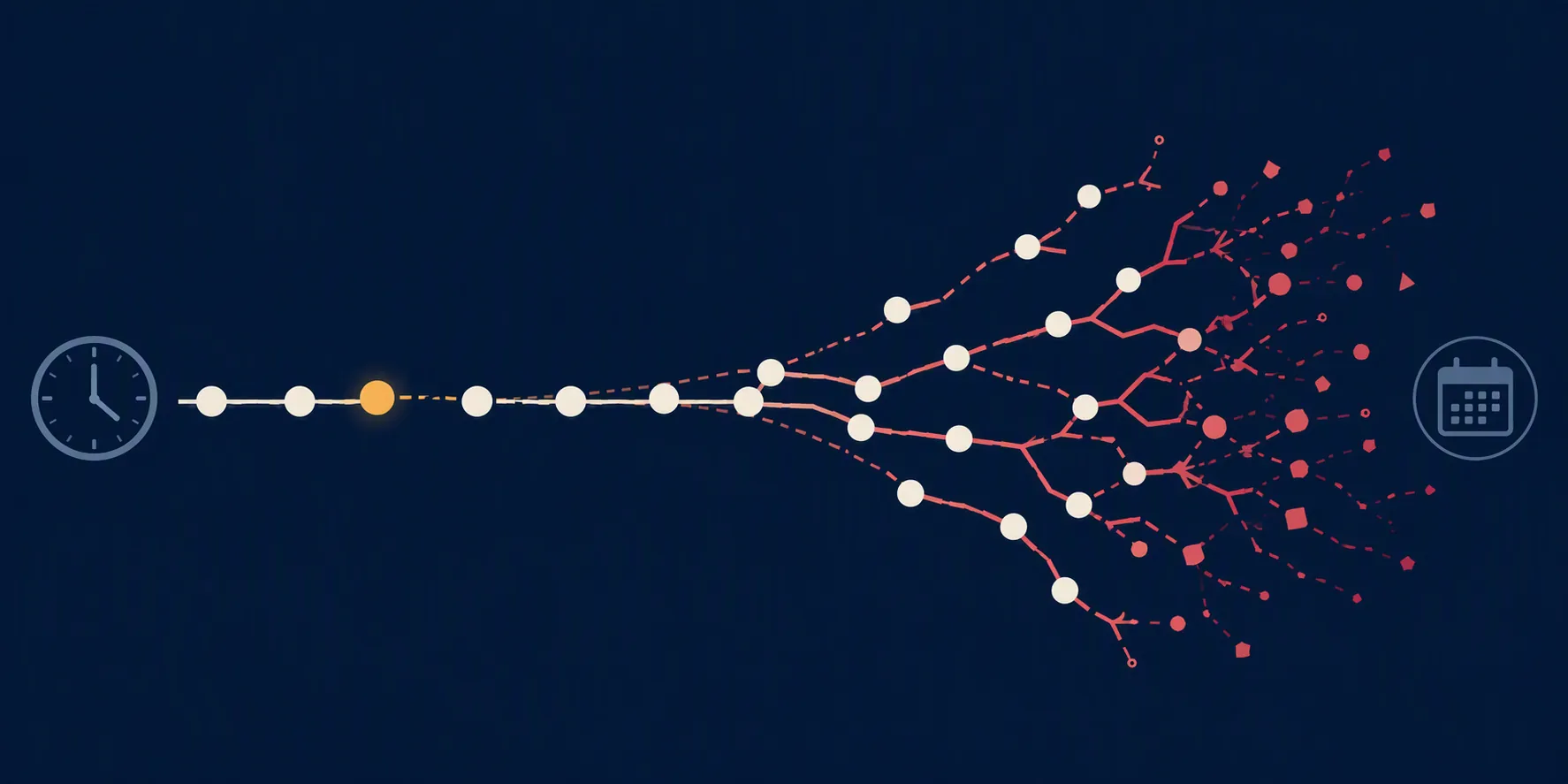
In a legal workflow, the vulnerable points are easy to name. The agent chooses search terms. It decides which authorities to open. It ranks passages. It may summarize a case before checking whether the case is still good law. It may draft a section based on a mistaken procedural assumption. It may then ask another agent to harmonize the draft, making the output smoother while making the original defect harder to see.
That risk profile is different from asking a model to solve a formal problem whose certificate can be checked. In the agentic legal setting, the reviewer needs audit logs, source trails, tool-call records, retrieval results, jurisdiction filters, version information, and a way to reproduce or challenge intermediate steps. Without that, the human reviewer inherits a black-box editing job at the worst possible moment: after the system has already produced something that looks ready.
What legal teams can infer now
Astra’s public record supports a few disciplined inferences. It suggests OpenAI has a model family capable of producing impressive formal reasoning outputs under conditions where correctness can be independently checked. It suggests OpenAI is aiming at longer, more autonomous runs rather than only short chat responses. It also suggests that any legal implementation may arrive through a product layer, integration, or vendor workflow that adds its own retrieval, prompting, memory, permissions, and review design.
It does not support a claim that Astra is reliable for legal research. It does not support a claim that an Astra agent can run a litigation workflow without lawyer verification. It does not support replacing citation checks with model confidence. It does not answer whether a legal vendor’s Astra integration will preserve confidentiality, restrict jurisdiction, show its sources, or prevent unsupported procedural recommendations.
For procurement, the missing evidence should be treated as a live risk signal. Before a legal team relies on an Astra-based product, the vendor should be able to identify the deployed model version, the retrieval corpus, the benchmark tasks, the evaluation methodology, the failure categories, the human-review points, and the logs available to the supervising lawyer. A generic frontier-model claim is not enough for work that may end up in a client file or court record.
Professional duties remain with the lawyer
ABA Formal Opinion 512 ties generative-AI use to familiar duties, including competence, confidentiality, supervision of nonlawyer assistance, communication, fees, and candor obligations.[8] Those duties do not turn on whether the tool is new, impressive, or difficult to evaluate. They turn on what the lawyer does with the output.
Confidentiality is not a side issue for autonomous systems. A long-running legal agent may touch pleadings, contracts, deal documents, privileged communications, client identifiers, litigation strategy, and internal work product in one run. Legal teams evaluating Astra integrations should start with a documented intake analysis like the site’s confidentiality obligations framework for generative AI lawyers, then map what data the tool receives, stores, trains on, logs, exports, or exposes to subcontractors.
The sanctions record is already clear on one practical point: courts do not accept “the AI did it” as a professional-responsibility defense. The Thomson Reuters Institute’s review of 22 hallucinated-citation matters illustrates that the filing lawyer remains answerable for false or unsupported authorities.[9] The same pattern appears across Risk Digest sanction records involving AI-assisted filings, including matters such as Kaur v. Desso, Deghani v. Castro, and Powhatan County School Board v. Skinger.
The operational response is not to ban every experiment. It is to separate experimentation from reliance. If Astra is tested inside a firm or legal department, the test should run against known legal questions, known authorities, and documented expected answers. The reviewer should use structured verification workflow checklists rather than ad hoc confidence in a polished output.
The adoption posture for Q3 2026
Astra may become useful for legal work. The formal-proof demonstration may turn out to be an important signal of reasoning progress. Neither point changes the adoption posture today.
Do not treat an Astra-based legal tool as reliable for client advice, filing preparation, or autonomous legal workflow execution until independent legal-task evaluation exists for the deployed version and the actual workflow. The evaluation should test citation existence, citation authoritativeness, jurisdictional fit, adverse authority handling, procedural context, factual-record fidelity, and error recovery across multi-step runs.
If a partner, client, or vendor says Astra can run the whole workflow, the next question is simple: show the legal benchmark, the methodology, the failure logs, and the human-review design. Until then, verify every authority, document human review, and treat legal claims about Astra as unproven in legal conditions.
References
- OpenAI announces its next major model Astra by dropping ten previously unsolved math solutions — The Decoder, Aug. 1, 2026
- Previewing GPT-5.6 Sol — OpenAI
- Profiling Legal Hallucinations in Large Language Models — Journal of Legal Analysis
- Hallucination-Free? Assessing the Reliability of Leading AI Legal Research Tools — Stanford RegLab
- AI on Trial: Legal Models Hallucinate in 1 out of 6 (or More) Benchmarking Queries — Stanford HAI
- Vals AI’s Latest Benchmark Finds Legal and General AI Now Outperform Lawyers in Legal Research Accuracy — LawNext, Oct. 2025
- Agentic Systems Add New Layer of AI Hallucination Risk in Legal Work — Law.com Legaltech News, Apr. 30, 2026
- ABA Formal Opinion 512: The Paradigm for Generative AI in Legal Practice — UNC Law Library, Feb. 2025
- GenAI hallucinations — Thomson Reuters Institute
Related records
Tool profile
How Meta's AI Spending Reshapes Law Firm ProfitabilityGoverning regulation
Browse the obligations tracker →Preventive workflow
Browse verification workflows →
Report a correction or tip
Spotted an outdated figure, a misstated fact, or a ruling this case record should reflect? Public comments are disabled for this content given the professional cost of a misreported case outcome, penalty amount, or rule text — use the structured correction channel instead.
Report a correction or tip for this record →