
Payne v. State: AI Hallucinations in a False Imprisonment Case
This article analyzes the Georgia Supreme Court's Payne v. State decision, the first high-court disciplinary action against a prosecutor for using AI to generate fabricated case citations in a false imprisonment and murder appeal, and clarifies why no single "Anthony Smith" AI false imprisonment case exists.
- Jurisdiction
- Georgia
- Court
- Georgia Supreme Court
- Judge
- Benjamin Land
- AI tool named
- Generative AI
- Ruling date
- May 5, 2026
- Source document
- View primary court order ↗
- Last verified
- Jul 30, 2026
Lex Machina Review is an independent risk-tracking and reference resource. Nothing on this site is legal advice, and using it does not create an attorney-client relationship. Every record is reviewed against primary sources but may not reflect the most current status of a matter — always verify directly against the cited court order, rule text, or a licensed attorney before relying on it.
Companion explanation — secondary to the source document above
There is no single “Anthony Smith false imprisonment case” in which a court sanctioned a lawyer for AI-generated citations. That search phrase folds together two different records: a newly reported Nebraska arrest involving Anthony Smith, with no AI issue established in the materials available here, and Payne v. State, No. S26A0459, the Georgia Supreme Court decision issued on May 5, 2026, involving a defendant convicted of murder and false imprisonment whose new-trial order was contaminated by fabricated AI authorities.[1]
The legal analysis belongs to Payne, not to a supposed Anthony Smith AI case. Hannah Payne had been convicted of murder and false imprisonment and sentenced to life plus 13 years. The AI problem arose later, when Assistant District Attorney Deborah Leslie used generative AI to help draft a proposed order denying Payne’s motion for new trial. That proposed order became court-facing language, and the Georgia Supreme Court found that it contained at least five nonexistent cases, more than five misattributed citations, and three fabricated quotations.[1]
| Record | What the materials support |
|---|---|
| Payne v. State, No. S26A0459 | Georgia Supreme Court decision dated May 5, 2026; court-confirmed AI citation incident in a murder and false-imprisonment case. |
| Hannah Payne | Defendant convicted of murder and false imprisonment; sentence reported as life plus 13 years. |
| Deborah Leslie | Assistant district attorney with 22 years of practice who used AI to draft a proposed new-trial order and did not independently verify the authorities. |
| Anthony Smith | Separate search strand; no primary court order or AI-sanction record is available in the supplied materials. |
That distinction matters because a bad search label can do its own damage. It turns a real disciplinary decision into a false case-object, then invites readers to analyze a record that does not exist. The verified record is narrower and more serious: a prosecutor’s AI-assisted draft helped produce an order denying a criminal defendant a new trial, and the state’s highest court had to unwind the result.
How the AI Draft Became a Court Problem
The important handoff was not the moment Leslie opened an AI tool. Courts can absorb drafting aids, templates, and research software when lawyers remain responsible for what they file or submit. The failure in Payne was that generated legal authority moved into a proposed order denying a motion for new trial without the verification that would have caught nonexistent cases, citations that did not support the propositions assigned to them, and quotations the sources never contained.[1]
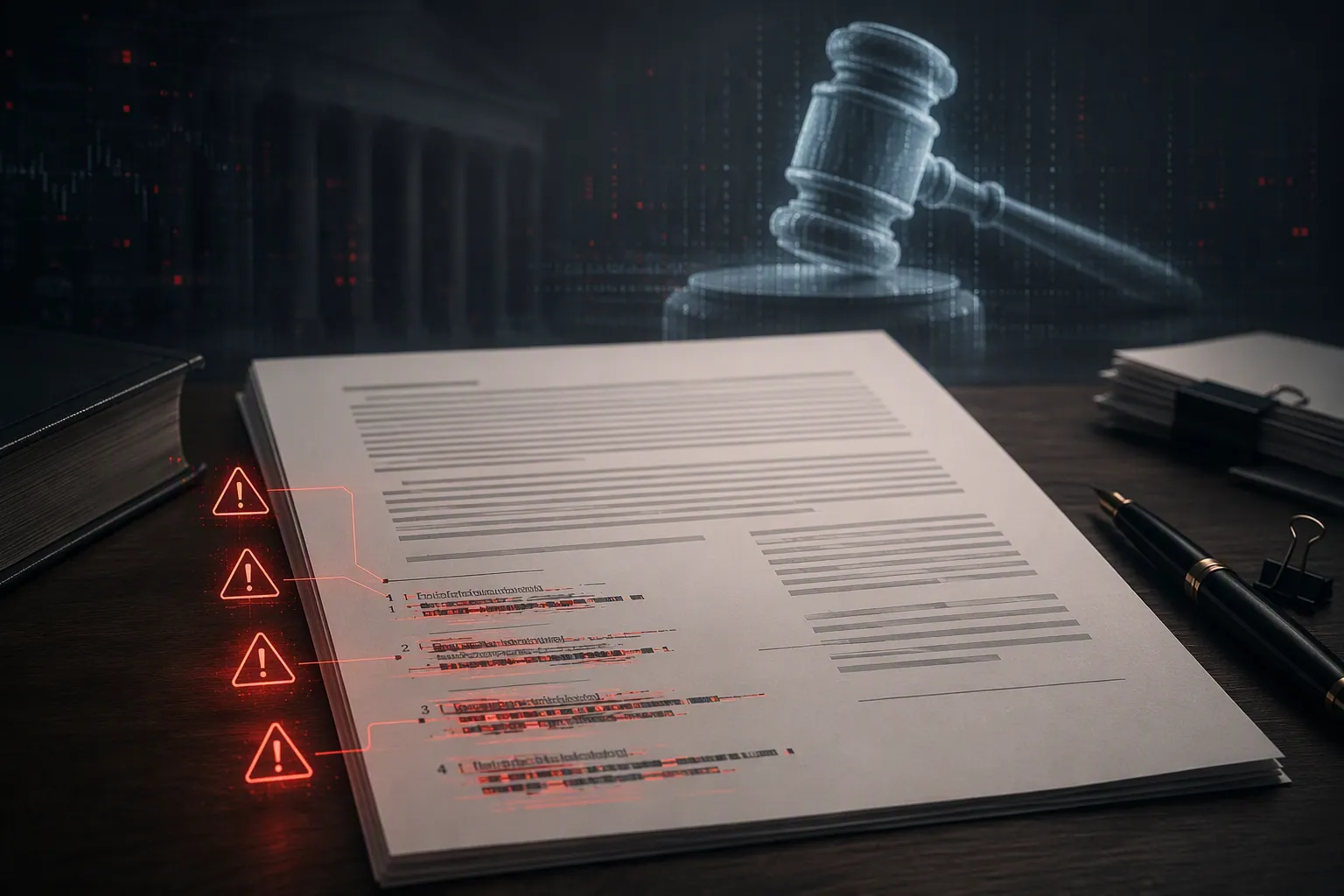
A proposed order is not just another draft. It is language offered for judicial adoption. When the winning side supplies that language, the court must still exercise independent judgment, but the practical burden shifts: someone has to detect whether the authorities are real before the language hardens into an order. In Payne, that burden reached the appellate court. During oral argument, Justice Peterson identified more than five fake cases in real time, a small scene with a large warning attached: appellate courts are no longer treating fabricated AI citations as exotic possibilities.[2]
The court’s rule violation was stated plainly. Justice Benjamin Land wrote that “citing cases that do not exist or do not support the proposition for which they are cited is a violation of this Court’s rules.”[1] That sentence is not an AI rule in disguise. It is a citation rule applied to a new drafting path. The technology explains how the bad authorities appeared; it does not excuse why they remained.
Leslie’s experience makes the lapse harder, not easier, to cabin as a training mishap. She had 22 years of practice.[1] A junior lawyer’s panic research and a veteran prosecutor’s proposed order are different institutional facts. The latter carries the state’s authority into a criminal case and asks a judge to act on it.
The Remedy Was Broader Than Discipline
The Georgia Supreme Court imposed a six-month suspension from practice before that court and required 12 additional hours of continuing legal education in ethics, brief writing, and proper AI use.[1] Those sanctions matter. They tell lawyers that AI-generated citations are not treated as harmless embarrassment once they enter a court record.
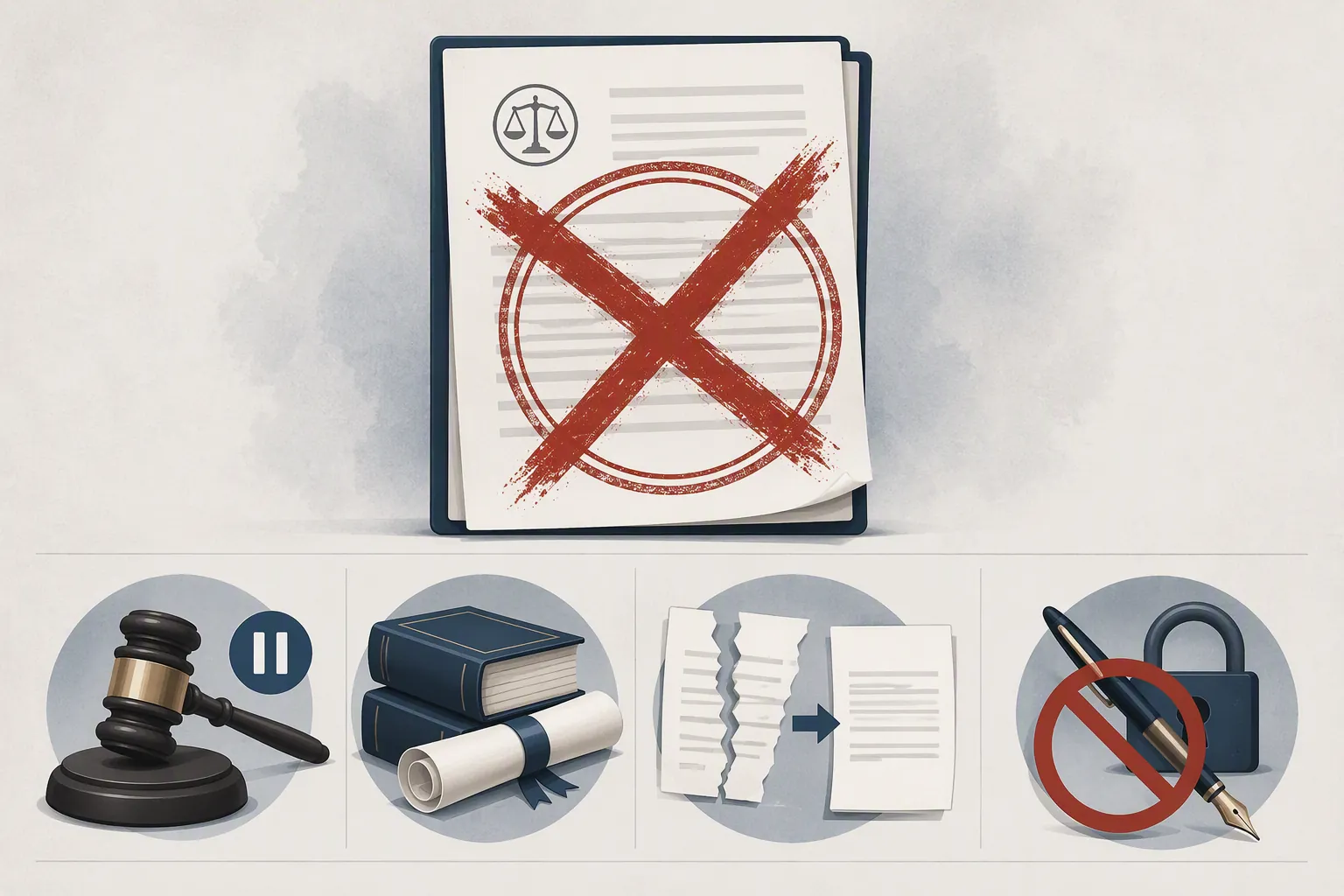
But the more revealing part of Payne is the procedural remedy. The court vacated the order denying Payne’s motion for new trial and remanded the case. It also instructed that no party’s counsel prepare the replacement order.[1] That last instruction is the tell. The court did not simply discipline the lawyer and tell the trial court to try again. It removed both parties’ counsel from the drafting of the next order.
That remedy reflects distrust of the process that produced the order, not only distrust of one citation string. Once a court cannot be confident that proposed findings and legal conclusions were independently verified, the safest cure is not a cleaner draft from the same adversarial channel. It is a replacement order that does not depend on counsel’s proposed language.
For Payne, that distinction had immediate consequence. The AI-contaminated order had denied her motion for new trial. Vacatur put that ruling back into play. In civil litigation, fabricated citations can waste judicial time and distort an opposing party’s response burden. In a criminal case, the same practice can alter the procedural posture of a person serving a life sentence.
What Prosecutors Should Take From Payne
Payne does not ban prosecutors from using AI. It does reject the softer premise that government lawyers should be forgiven when AI turns convenience into false authority. Prosecutors have the same baseline duty as civil practitioners to verify cases, quotations, and parentheticals before submitting them. Their additional problem is constitutional: the state’s filings can help deprive a defendant of liberty, and a court order built on invented law is not merely a messy work product.
The Georgia Supreme Court also warned that claims of ignorance will age badly. Justice Land wrote that AI-ignorance defenses “will be less credible, and likely less successful, as the dangers associated with the use of Generative AI systems become more widely known.”[1] That is a forward-looking notice to lawyers who might still frame hallucinated citations as a surprising product defect. By 2026, the risk is known enough that a verification failure can be treated as a professional failure.
The court’s instruction to trial judges is equally practical. Judges were charged to independently verify proposed orders for AI-generated content.[1] That does not relieve counsel of responsibility. It recognizes that the bench is now the last checkpoint when party-drafted language arrives with apparent citations and polished reasoning. A judge asked to sign a proposed order cannot assume that syntactic confidence is legal reliability.
- Verify every case name and reporter citation against a trusted legal database before filing or submitting a proposed order.
- Read the cited passage, not just the headnote or AI summary, before using a case for a proposition.
- Check quotations word for word against the source.
- Treat proposed orders as court-facing advocacy, not internal drafts.
- Document verification steps when AI has assisted with research or drafting.
Those steps are not elaborate. They are ordinary lawyering under conditions where a drafting tool can generate a plausible-looking authority faster than a lawyer can remember to doubt it.
Office Accountability and the Dissent
The institutional-accountability question did not go uncontested. Justice LaGrua, joined by Justice Colvin, “vehemently” declined to admonish the elected district attorney personally, taking the view that the court should focus on the individual prosecutor rather than expand blame to the office’s elected head.[3]
That disagreement is not a side drama. It marks the line between two ways of understanding AI failures in a prosecutor’s office. One treats the fabricated citations as an individual lawyer’s misconduct. The other asks whether office policies, supervision, and submission practices allowed unverified AI output to reach a judge. Payne’s remedy points toward the second concern even where discipline lands on the lawyer whose name is closest to the document.
The Clayton County District Attorney’s Office responded by immediately suspending Leslie, filing a grievance with the State Bar of Georgia, developing a performance plan, and expanding internet and AI-use policies.[4] Other prosecutor offices do not need to copy that package exactly, but it now functions as a benchmark. A court looking backward after the next hallucinated-citation incident will ask not only whether a lawyer checked the cases, but whether the office had a policy capable of making that check happen.
A Small Criminal-Case Cluster, Not a Universal Trend
Payne sits beside a small but growing set of criminal-case AI citation incidents reported in 2025 and 2026, including a Fifth Circuit show-cause order in December 2025 and a separate Georgia prosecutor suspension in April 2026.[2][5] That is enough to defeat the idea that criminal practice is insulated from AI hallucination problems. It is not enough to support a sweeping claim about frequency across all prosecutor offices.
The better reading is narrower. Criminal lawyers are now on notice that courts can spot fabricated authorities, sanction the lawyer, disturb the underlying order, and impose safeguards on the replacement process. The risk is not theoretical, and it is not limited to private civil litigants.
That is why the Anthony Smith framing should be corrected rather than indulged. The available record does not support an “Anthony Smith AI false-imprisonment case.” The case to study is Payne v. State: a Georgia murder and false-imprisonment appeal where fabricated AI citations entered a proposed order, the order was vacated, the prosecutor was suspended from practice before the state high court, and the replacement order was taken out of party counsel’s hands.
For prosecutors and criminal litigators, Payne’s rule is operational before it is philosophical. AI use is not forbidden. Unsupervised citation generation is now disciplinary risk, appellate risk, and, in criminal cases, potential due-process risk. In Georgia, once advocacy is AI-contaminated, the court may distrust not only the lawyer but the process that produced the order.
References
- Hannah Renee Payne v. The State, FindLaw.
- AI errors in US murder case lead to discipline for Georgia prosecutor, Reuters, 2026-05-05.
- Georgia High Court Admonishes D.A.'s Office, Over "Vehement" Dissent, for Role in AI Hallucinations in Court Order (Payne v. State), Reason/Volokh Conspiracy, 2026-05-15.
- Georgia Supreme Court orders redo in Hannah Payne case over AI citations, Atlanta News First, 2026-05-05.
- Ga. Prosecutor Suspended Over AI Errors In Murder Case, Law360.
Related records
Tool profile
How Meta's AI Spending Reshapes Law Firm ProfitabilityGoverning regulation
Browse the obligations tracker →Preventive workflow
Browse verification workflows →
Report a correction or tip
Spotted an outdated figure, a misstated fact, or a ruling this case record should reflect? Public comments are disabled for this content given the professional cost of a misreported case outcome, penalty amount, or rule text — use the structured correction channel instead.
Report a correction or tip for this record →