
The Presidio Border Wall Lawsuit Isn't Over Yet
A verified record of the Presidio border-wall lawsuit in D.D.C.: the parties, the Rivers and Harbors Act Section 408 claim, why Judge Walton denied the preliminary injunction on August 2, 2026, and what happens next — the government's answer is due August 21, 2026.
- Jurisdiction
- US federal (D.C. Circuit)
- Court
- U.S. District Court for the District of Columbia
- Judge
- Reggie B. Walton
- AI tool named
- No AI tool named
- Ruling date
- Aug 2, 2026
- Source document
- View primary court order ↗
- Last verified
- Aug 4, 2026
Lex Machina Review is an independent risk-tracking and reference resource. Nothing on this site is legal advice, and using it does not create an attorney-client relationship. Every record is reviewed against primary sources but may not reflect the most current status of a matter — always verify directly against the cited court order, rule text, or a licensed attorney before relying on it.
Companion explanation — secondary to the source document above
Verified case record
Last checked: August 4, 2026, UTC. This is a court-record companion, not legal advice. Legal-background reviewer: Marisol Vega.
| Item | Verified record |
|---|---|
| Case | Presidio Municipal Development District v. Department of Homeland Security |
| Docket | No. 1:26-cv-02146, U.S. District Court for the District of Columbia |
| Judge | Judge Reggie B. Walton |
| Filed | June 17, 2026 |
| Plaintiffs | Presidio Municipal Development District and the City of Presidio |
| Defendants | Department of Homeland Security, Secretary Markwayne Mullin, U.S. Customs and Border Protection, and Commissioner Rodney S. Scott |
| Claim at issue | Rivers and Harbors Act of 1899, Section 408, 33 U.S.C. 408, based on alleged alteration of the Presidio Flood Control Project without Army Corps approval |
| Ruling checked | Preliminary injunction denied on August 2, 2026 |
| Next verified deadline | Government answer due August 21, 2026 |
- Court docket: Presidio Municipal Development District v. Department of Homeland Security. [1]
- Complaint: PMDD v. DHS Complaint. [2]
- Preliminary-injunction brief: PI Brief. [3]
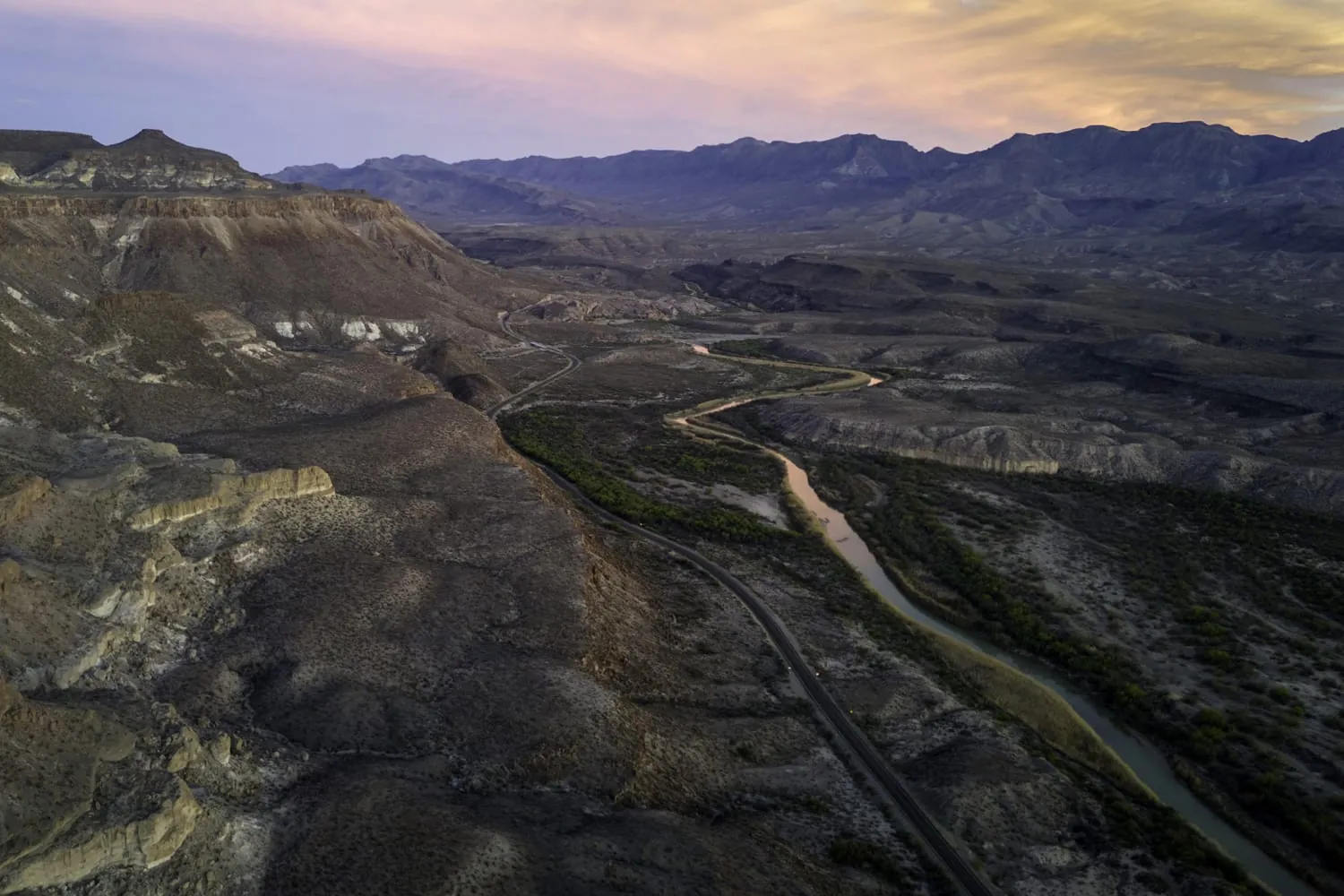
Denied does not mean over
For anyone searching the Presidio border wall lawsuit Texas record after the August 2 order, the first correction is procedural: Judge Walton denied a preliminary injunction. He did not dismiss the case, did not enter judgment for the government, and did not decide that work on the Presidio levee is lawful on the merits. The court retained jurisdiction, and the docket still has a live defendant response date: August 21, 2026. [1]
That distinction matters because preliminary relief is an emergency remedy. A plaintiff can lose that request and still continue litigating the underlying statutory claim. Here, the denial turned on the posture presented to the court in early August: the plaintiffs were asking for immediate judicial intervention before the challenged levee work had actually begun, while the government had invoked or amended waiver authority during the litigation. The order leaves the next pleading event on the calendar rather than closing the file. [1]
What PMDD and Presidio asked the court to stop
The plaintiffs are the Presidio Municipal Development District and the City of Presidio. Their complaint names DHS, Secretary Markwayne Mullin, CBP, and Commissioner Rodney S. Scott as defendants. The statutory hook is not a general objection to border-wall policy. It is Section 408 of the Rivers and Harbors Act of 1899, codified at 33 U.S.C. 408. The plaintiffs allege that the federal border-barrier work would alter the Presidio Flood Control Project without the Army Corps approval that Section 408 requires. [2]
That is why the levee is not scenery in this case. It is the object that makes the statutory theory work at all. If the challenged construction changes a federal flood-control project, the plaintiffs say Section 408 supplies an enforceable approval requirement. Their preliminary-injunction brief asked the court to stop the defendants from proceeding without that approval. [3]
The complaint also explains why the local plaintiffs care about the timing. They say Presidio and PMDD will be the parties living with flood-control consequences if the levee is compromised. That allegation is serious, but at the preliminary-injunction stage it remained an allegation tied to emergency relief, not a judicial finding that the planned work is unsafe. [2][3]
Why Judge Walton denied emergency relief
The August 2 order is easy to overread if the word “denied” is pulled out of the docket entry and treated as the whole case. The court was deciding whether to grant preliminary injunctive relief before the merits pleadings had fully developed. In that posture, timing did much of the work. The court noted that no work on the levee had begun, and that absence was fatal to the request for emergency relief as presented. [1]
The other major timing fact is the government’s waiver position. The plaintiffs’ case, as filed and briefed, depended on Section 408. During the litigation, the government relied on or amended waiver authority under IIRIRA Section 102(c). The court treated that waiver development as capable of defeating the plaintiffs’ only statutory claim for preliminary-injunction purposes. [1][3]
That is not the same thing as a final merits holding that Section 408 can never matter in a levee case, or that every safety concern has been answered. It means the plaintiffs did not obtain the extraordinary remedy they requested on the record and timing before the court. The order’s operative effect is narrower than the headline version: no injunction now, case still pending.
The Section 408 question remains live
Section 408 remains the legal hinge because it is the plaintiffs’ pleaded statutory theory. Their argument is that the planned border-barrier work would alter the Presidio Flood Control Project and therefore cannot proceed without Army Corps approval. The government’s waiver position presses in the opposite direction: if the waiver reaches the relevant statutory constraint, the plaintiffs’ claim may not survive. [2][3]
The court did not use the August 2 order to resolve that fight in final form. The docket instead moved to the government’s answer deadline. That matters because an answer is where defendants respond to the operative complaint’s allegations and defenses begin to take shape in the pleadings. It also matters because plaintiffs sometimes seek to amend after a waiver development changes the legal landscape; whether that happens here remains a docket question, not a fact already decided. [1]
This is the narrow but important remaining question: can PMDD and Presidio keep any statutory claim alive in this specific Presidio levee dispute after the government’s IIRIRA Section 102(c) waiver position, or does the waiver framework leave them without an enforceable Section 408 route? The August 2 order points toward a difficult path for the plaintiffs, but it does not itself enter final judgment on that path.
The next date is August 21
The next verified procedural event is the government’s answer, due August 21, 2026. The docket should show whether the defendants answer as scheduled, seek some other pleading relief, or whether the plaintiffs try to adjust their complaint after the waiver issue that shaped the preliminary-injunction ruling. [1]
There is also a practical construction calendar in the record. DOJ stated a construction window running from late August through October 2026. That window is why the denial of emergency relief has real-world weight even though it is not a final merits decision: without an injunction, the plaintiffs have not stopped the government from moving toward that schedule. [1]
So the clean docket reading is this: PMDD and the City of Presidio lost their preliminary-injunction motion; DHS and CBP still must respond to the complaint; and the unresolved legal question is whether any Section 408 claim can survive the waiver framework in this Presidio levee dispute. The case is not a victory lap for either side as of August 4. The next record entry to watch is August 21, 2026.
References
- Presidio Municipal Development District v. Department of Homeland Security, CourtListener.
- PMDD v. DHS Complaint, Democracy Forward, June 2026.
- PI Brief, Democracy Forward, June 2026.
Related records
Tool profile
How Meta's AI Spending Reshapes Law Firm ProfitabilityGoverning regulation
Browse the obligations tracker →Preventive workflow
Browse verification workflows →
Report a correction or tip
Spotted an outdated figure, a misstated fact, or a ruling this case record should reflect? Public comments are disabled for this content given the professional cost of a misreported case outcome, penalty amount, or rule text — use the structured correction channel instead.
Report a correction or tip for this record →