
Why Was Prince Harry's Privacy Lawsuit Dismissed?
A verified record of the 7 July 2026 King's Bench ruling that dismissed all 97 unlawful-information-gathering allegations and every claim of all seven claimants, including Prince Harry. It sets out the article-specific proof standard now required for historic press-intrusion claims and the joint-and-several costs exposure litigants and their funders face, with the costs decision still pending as of verification.
- Jurisdiction
- England and Wales
- Court
- King's Bench Division, High Court of Justice
- Judge
- Mr Justice Nicklin
- AI tool named
- No AI tool implicated
- Ruling date
- Jul 7, 2026
- Source document
- View primary court order ↗
- Last verified
- Aug 4, 2026
Lex Machina Review is an independent risk-tracking and reference resource. Nothing on this site is legal advice, and using it does not create an attorney-client relationship. Every record is reviewed against primary sources but may not reflect the most current status of a matter — always verify directly against the cited court order, rule text, or a licensed attorney before relying on it.
Companion explanation — secondary to the source document above
Lawrence & Ors v Associated Newspapers Ltd [2026] EWHC 1637 (KB) was dismissed because the seven claimants, including Prince Harry, did not prove article-specific unlawful information gathering where lawful sourcing routes remained realistic. On 7 July 2026, Mr Justice Nicklin dismissed every claim: all 97 unlawful-information-gathering allegations, the misuse-of-private-information claims, and Baroness Lawrence’s breach-of-confidence claim. The judgment did not make a finding of widespread or habitual unlawful information gathering by Associated Newspapers Ltd, and it did not find that Paul Dacre, Peter Wright, or Alan Hartley lied to the Leveson Inquiry. [1]
That is the safe starting point for the legal implications. This was not a ruling that rewrote privacy law. It was a proof ruling, applied at scale, after a long trial, against historic allegations that depended heavily on inference.
| Verified point | Record |
|---|---|
| Case | Lawrence & Ors v Associated Newspapers Ltd [2026] EWHC 1637 (KB) |
| Court | King’s Bench Division, High Court of Justice |
| Judge | Mr Justice Nicklin |
| Ruling date | 7 July 2026 |
| Trial | 46 days, from 19 January to 31 March 2026 |
| Judgment | 1,606 paragraphs with three appendices |
| Outcome | All claims by all seven claimants dismissed |
| Costs | Post-trial costs ruling not published as of 4 August 2026; reported figures are party positions or press-reported figures, not final judicial determinations |
The dismissal turned on proof, not celebrity status
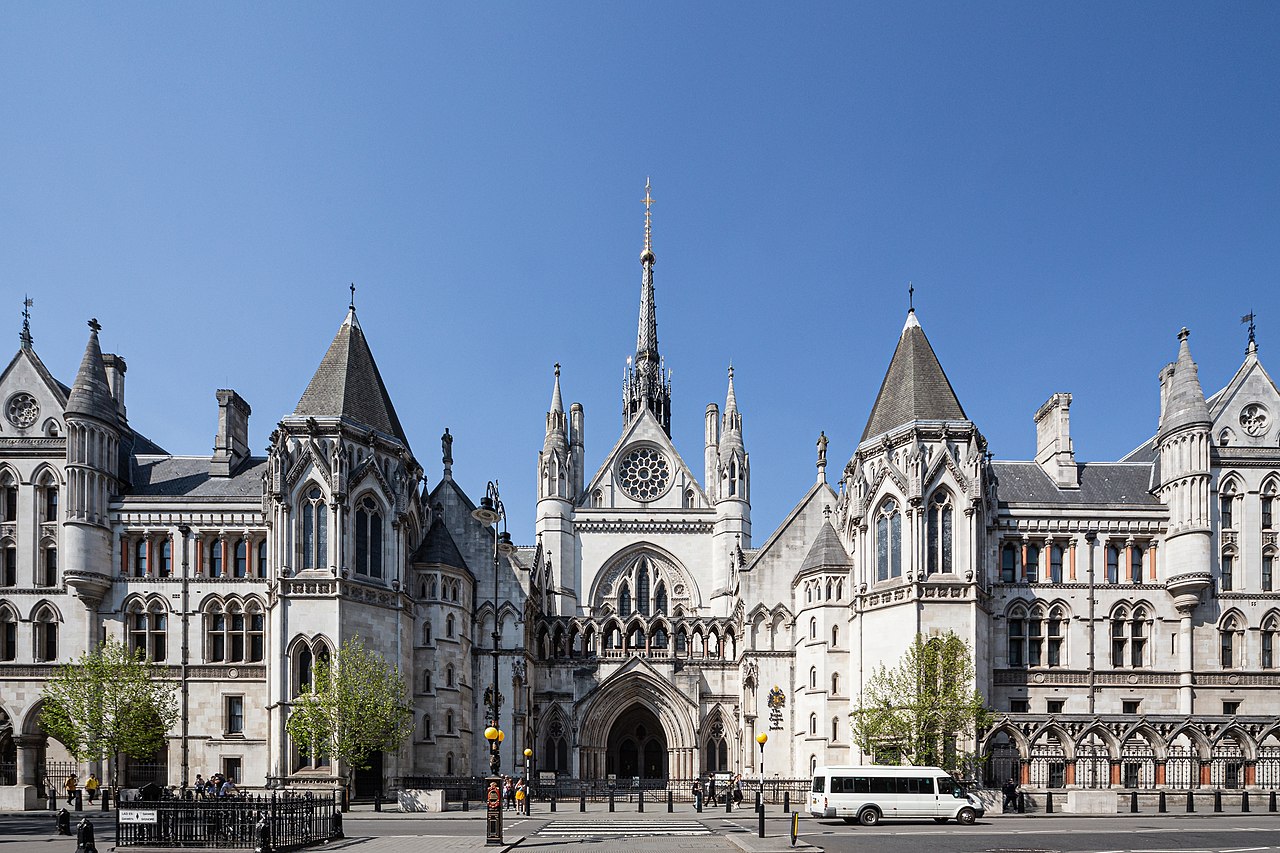
The claims were issued in October 2022 and tried over 46 days in Court 76 between 19 January and 31 March 2026. The resulting judgment ran to 1,606 paragraphs, plus three appendices. [2] Those details matter because this was not a strike-out headline or an interlocutory skirmish. The allegations were tried, and they failed.
The shorthand “phone hacking case” is not reliable for this ruling. The pleaded case was broader: unlawful information gathering, misuse of private information, and, for Baroness Lawrence, breach of confidence. The court’s task was not to decide whether the claimants had lived under media intrusion in any general sense. It was to decide whether particular articles or incidents were probably the product of unlawful acquisition rather than lawful journalism, public-domain material, ordinary contacts, agency copy, tip-offs, interviews, or other realistic sourcing routes.
That distinction explains the legal result. Private information appearing in a newspaper article may establish that the information was private, but it does not, by itself, prove how the information was obtained. The court held that serious allegations are still decided on the balance of probabilities, but they require more convincing evidence; it also accepted the proposition that privacy alone does not prove unlawful acquisition. [3]
Suspicion was not enough
The central passage for practitioners is the court’s insistence that “suspicion, even understandable suspicion, is not proof.” [1][3] That sentence is easy to quote and easier to overuse. It does not mean historic press-intrusion claims can never be proved. It means that the evidential bridge must reach the individual article or incident.

The claimants’ difficulty was that much of the case depended on inference from surrounding circumstances: the sensitivity of the information, the culture of parts of the press, historic dealings with investigators, and patterns that looked troubling when assembled as a mosaic. The court did not treat those matters as irrelevant. It treated them as insufficient where a lawful route remained a realistic explanation for the publication.
For a risk note, the point is practical rather than philosophical. A claimant pleading a legacy article now has to be ready for the article-by-article questions: who probably supplied this information, by what route, when, and why is the unlawful route more probable than the lawful one?
- A private or embarrassing subject matter does not prove unlawful acquisition.
- A history of press intrusion does not prove that a particular article was unlawfully sourced.
- A pattern of suspicious publications may assist an inference, but it will not carry the claim if a realistic lawful sourcing pathway remains.
- Serious allegations remain subject to the civil standard, but the court will expect evidence commensurate with the seriousness of the allegation.
That is why the ruling is best treated as an evidential gatekeeping decision. It does not lower the protection given to private information. It makes the acquisition route the decisive battleground in historic unlawful-information-gathering claims.
The Burrows evidence shows why a damaged witness chain is not a substitute for documents
The collapse of Gavin Burrows’ evidence was not a side episode. It helps explain why the broader evidential structure failed. Burrows, a former private investigator, was presented as a key witness, but he said that a signed statement attributed to him was a forgery. The judge found him “comprehensively undermined” and criticised the statement process, including what was described as a “serious error of professional judgment” by the signing solicitor. [4]
The important litigation lesson is not that one witness was unreliable. It is that historic unlawful-information-gathering cases often ask the court to reconstruct events many years after publication, using incomplete records, recollection, investigator material, payments data, and circumstantial patterns. If a key link in that chain breaks, the court is left with the article-specific question still unanswered.
A defective statement process also creates its own risk register entry. It can damage the claimant’s evidential case, distract from the pleaded issues, and invite scrutiny of the professional steps by which historic allegations were assembled. In a claim class already dependent on inference, that is not a tolerable weakness.
Limitation was a separate, narrower failure for two claimants
The limitation point should not be allowed to swallow the judgment. It was not the main reason every claim failed. But it matters for technical pleading and case selection.
For two claimants, Sadie Frost Law and Sir Simon Hughes, claims based on the Miskiw/Anderson emails issue were in any event statute-barred. The court dealt with the concealment analysis under section 32(1)(b) across paragraphs 1447 to 1604. [5] That conclusion sits alongside the broader evidential failure; it does not replace it.
Costs exposure was already structurally serious before judgment
The final post-trial costs order is not treated here as decided. As of 4 August 2026, the available material showed only that a costs hearing had taken place and that the parties were advancing sharply different positions. The financial risk, however, did not begin with the dismissal.
In January 2025, the court held that proposed budgets of just over £38.8 million were “manifestly excessive and therefore disproportionate” and approved £8,529,000. [6] Later in 2025, the court ordered that unsuccessful claimants would be jointly and severally liable for the defendant’s Common Costs, under CPR 3.1 and Stumm v Dixon, and directed the claimants to reassess their after-the-event insurance cover before trial. [7]
That joint-and-several structure is the uncomfortable part for group claimant litigation. It means a claimant is not simply pricing their own failed allegations. They may be exposed to a common-costs liability shared across the group, subject to the final costs decision and any applicable insurance or funding arrangements.
The reported post-trial figures should be handled carefully. Reuters reported that ANL sought an interim payment of £10 million after serving a bill of £34.5 million, and that the claimants offered £8 million by 28 August 2026. Reuters also reported ANL’s position that costs should be awarded on an indemnity basis. [8] The BBC reported that combined costs were above £50 million, that the claimants said ANL had exceeded approved budgets by £18.6 million, and that ATE cover stood at £16.2 million against ANL’s claimed bill. [9]
None of those numbers is a final judicial assessment of recoverable costs. They are exposure signals. The difference matters for client notes: a party submission is not an order, a press-reported total is not a taxation outcome, and an interim-payment request is not the final bill. Still, those signals sit on top of an already operative pre-trial costs architecture.
What the ruling does and does not imply for future privacy claims
The legal implications of Prince Harry’s dismissed privacy lawsuit are narrower than some commentary suggests and harsher than a purely doctrinal reading might admit.
Narrower, because the judgment did not abolish or dilute misuse of private information. It did not hold that newspapers may publish private information if the source cannot now be traced. It did not decide that historic unlawful-information-gathering claims are inherently abusive or impossible. And it did not establish a general finding that ANL had engaged in widespread or habitual unlawful information gathering. [1]
Harsher, because a viable claim now needs a much cleaner proof path. The claimant must be able to move from a particular publication or incident to a probable unlawful acquisition route. That usually means contemporaneous documents, payment records that actually connect to the article, reliable witness evidence, or other material that does more than make unlawful sourcing look possible.
For solicitors, funders, and insurers, the ruling changes the practical screening question. The first question is not whether the claimant’s privacy was plausibly invaded. It is whether each pleaded publication can survive the sourcing analysis if the defendant can point to a lawful route that remains realistic. If the answer is no, costs risk becomes the case.
This also affects how claims are budgeted. A case built across many articles may look stronger as a narrative, but it becomes more expensive and more fragile if each article still needs proof of acquisition. The mosaic may explain why a claimant suspects unlawful conduct; it does not relieve the claimant of proving the route for the pleaded allegation.
The safest classification is therefore modest and severe: Lawrence did not rewrite misuse-of-private-information doctrine, did not make the broader findings against ANL that some readers may assume, and did not decide the final recoverable costs bill. Its practical force is as a proof-and-costs gate for historic press-intrusion claims unless they are supported by direct, article-specific evidence.
References
- Lawrence & Ors v Associated Newspapers Ltd [2026] EWHC 1637 (KB), Judiciary of England and Wales, 7 July 2026.
- News: Lawrence and others v Associated Newspapers: Judge dismisses all claims of all seven claimants, Inforrm, 7 July 2026.
- High Court dismisses all seven phone hacking claims against Associated Newspapers, CMS.
- Why Prince Harry lost phone hacking case against Daily Mail publisher, The Conversation.
- High Court dismisses all claims against Associated Newspapers Ltd for unlawful information, Doughty Street Chambers.
- Baroness Lawrence of Clarendon & Ors v Associated Newspapers Ltd re Costs Management REV1 [2025] EWHC 106 (KB), 24 January 2025, PIC Legal, 24 January 2025.
- Joint & Several Costs Liability: Lawrence v ANL, TMC Legal.
- Daily Mail seeks interim $13 million payment after Prince Harry loses lawsuit, Reuters, 29 July 2026.
- Prince Harry and others face legal bill after Daily Mail court defeat, BBC.
Related records
Tool profile
How Meta's AI Spending Reshapes Law Firm ProfitabilityGoverning regulation
Browse the obligations tracker →Preventive workflow
Browse verification workflows →
Report a correction or tip
Spotted an outdated figure, a misstated fact, or a ruling this case record should reflect? Public comments are disabled for this content given the professional cost of a misreported case outcome, penalty amount, or rule text — use the structured correction channel instead.
Report a correction or tip for this record →