
Judge Quraishi's DOJ voter dismissal heads to Third Circuit
Judge Quraishi's dismissal of the DOJ's voter suit now heads to the Third Circuit on appeal, one of eight pending appellate fronts. With the Sixth Circuit having affirmed Benson and en banc review pending, the First and Ninth Circuit rulings will decide whether the district courts' unanimous Title III reading survives — with zero DOJ appellate wins so far.
- Jurisdiction
- New Jersey, US
- Court
- U.S. District Court for the District of New Jersey
- Judge
- Zahid Quraishi
- AI tool named
- No AI tool named
- Ruling date
- Jul 29, 2026
- Source document
- View primary court order ↗
- Last verified
- Aug 2, 2026
Lex Machina Review is an independent risk-tracking and reference resource. Nothing on this site is legal advice, and using it does not create an attorney-client relationship. Every record is reviewed against primary sources but may not reflect the most current status of a matter — always verify directly against the cited court order, rule text, or a licensed attorney before relying on it.
Companion explanation — secondary to the source document above
Judge Quraishi’s DOJ voter-lawsuit dismissal is now an appellate-risk item, not just a closed New Jersey district-court result. After Judge Zahid Quraishi dismissed DOJ’s Caldwell suit, DOJ reportedly said it “disagrees with the court’s decision and will appeal,” sending the next meaningful question to the Third Circuit. [1]
That posture matters more than another retelling of the July 29 order. The district-court ruling remains important because it joins the same Title III reading that has been carrying the lower-court consensus, but the practical question for briefing purposes has shifted: whether that consensus survives circuit review, and where the first fracture could appear.
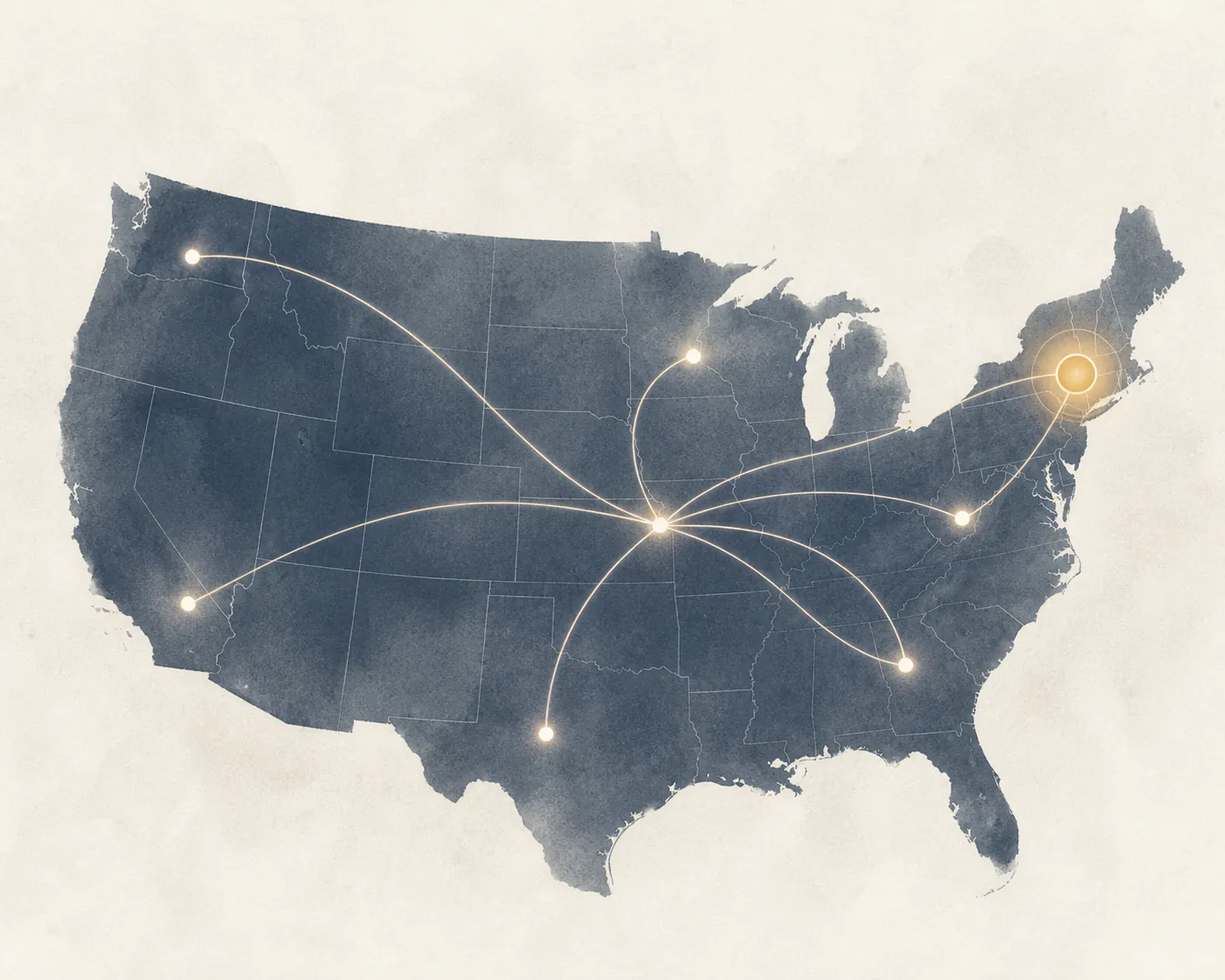
Caldwell now belongs on the circuit tracker
For anyone maintaining a partner-facing election-law tracker, Caldwell should move out of the “district-court disposition” column and into the Third Circuit queue. The change is not cosmetic. A district-court dismissal may be persuasive, especially when it aligns with a consistent body of trial-level rulings, but it does not set the same risk baseline as a court of appeals decision.
The wider map is already crowded. DOJ’s voter-roll litigation is now moving across eight appellate fronts, and DOJ has no appellate victories to point to so far. That makes the New Jersey appeal one part of a coordinated appellate wave rather than a standalone attempt to rescue one complaint.
| Front | Current posture | Why it matters |
|---|---|---|
| Third Circuit / Caldwell | Appeal expected after Judge Quraishi’s New Jersey dismissal | Adds the New Jersey Title III ruling to the appellate queue |
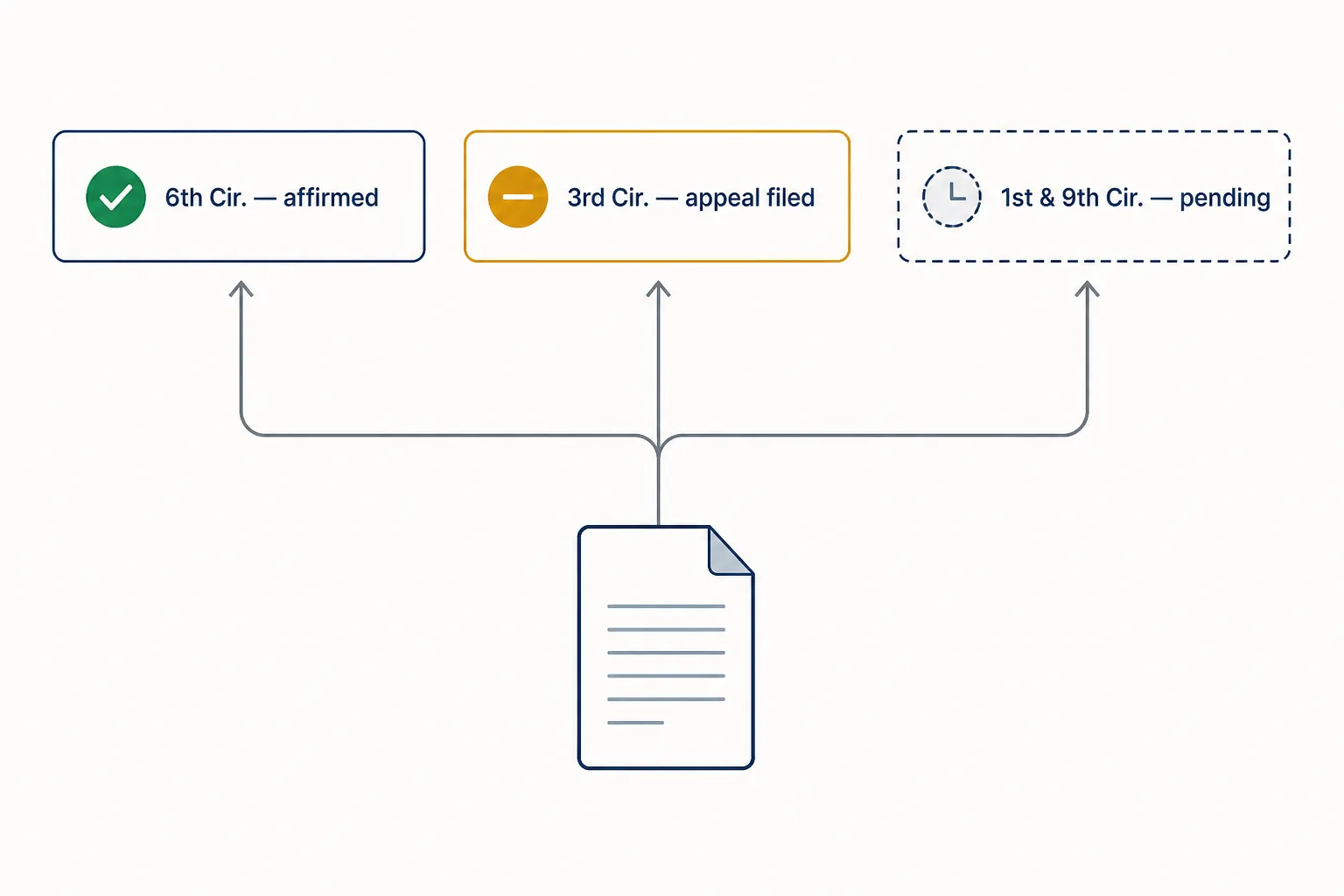
| Sixth Circuit / Benson | Affirmance issued; en banc petition pending | Only decided appellate terrain identified here, but not yet a clean endpoint while en banc review remains open |
| First Circuit | Near-term ruling expected | One of the next likely tests of whether the district-court Title III reading holds |
| Ninth Circuit | Near-term ruling expected | Another likely early signal on whether the consensus remains intact or begins to split |
| Other appellate fronts | Part of the eight-circuit wave | Relevant to volume and timing, but less immediate for the next baseline shift based on the current posture |
Why Benson carries more weight than another district-court dismissal
The Sixth Circuit’s Benson affirmance is the first place to look before over-reading Caldwell. The court of appeals affirmed in Benson, reported at 179 F.4th 470, on June 24, 2026. [2] That is qualitatively different from adding one more district-court entry to the same side of the ledger.
A district-court pattern can be operationally meaningful. It can support litigation positions, client alerts, and risk memos when no appellate court has gone the other way. But when a circuit court affirms, the analysis changes from “many judges have read the statute this way” to “at least one appellate court has now adopted that result.” That is the sort of development that changes how much caveat language a lawyer needs in a memo.
Benson still should not be described as ending the issue nationally. The en banc petition remains pending, so the Sixth Circuit’s posture is stronger than a district-court win for defendants but not yet a frozen endpoint. For tracking purposes, it is an affirmed DOJ appellate loss with a live internal-review question attached.
The First and Ninth Circuits are the next practical watchpoints
The near-term pressure is not mainly in New Jersey. Caldwell’s appeal to the Third Circuit matters because it expands the map, but the next baseline-setting signals are expected from the First and Ninth Circuits. If those courts follow the district-court Title III reading, DOJ’s appellate problem becomes harder to describe as merely early-stage. If either court breaks differently, the risk memo changes immediately.
That is why the phrase “DOJ is 0-for-18 in district court” has a short shelf life when used by itself. It is useful as a snapshot of trial-level outcomes, but the number that matters now is the appellate record: zero DOJ wins, with eight appellate fronts still in motion. A single circuit-level departure would do more to alter the legal-risk baseline than another district-court dismissal repeating the same Title III analysis.
The First and Ninth Circuit rulings will also be more portable in advice work. A district-court consensus can justify saying the government’s theory has been consistently rejected so far. Multiple appellate affirmances would support a stronger formulation. A split would require a different document altogether: one organized around geography, circuit-specific exposure, and preservation strategy.
How to state the risk without overstating the law
The safest formulation is provisional. Caldwell adds another district-court rejection of DOJ’s Title III theory and is now headed toward Third Circuit review. Benson gives defendants an appellate affirmance in the Sixth Circuit, but the pending en banc petition keeps that front live. The First and Ninth Circuits are the next courts most likely to determine whether the lower-court consensus remains intact or begins to fracture.
That framing leaves room for both realities. The government has not won at the appellate level. At the same time, the national question is not finally settled merely because the district courts have been consistent. Lawyers relying on the current baseline should be able to say that DOJ’s position has failed across the existing district-court record and has not yet produced an appellate victory, while still flagging the pending circuit decisions that could change the analysis.

The working baseline before the midterms
For election-cycle advice in Q3 2026, the operative baseline is clear enough to use but not final enough to oversell. DOJ has zero appellate victories, the district-court Title III consensus remains the working risk baseline, and Caldwell now adds a Third Circuit path to the existing appellate wave. The useful next update will not be another district-court recap. It will be the first circuit-level movement that either preserves that consensus or breaks it.
References
- Politico report on DOJ statement that it disagrees with Judge Quraishi’s Caldwell decision and will appeal, Politico.
- Benson, 179 F.4th 470, Sixth Circuit, June 24, 2026.
Related records
Tool profile
How Meta's AI Spending Reshapes Law Firm ProfitabilityGoverning regulation
Browse the obligations tracker →Preventive workflow
Browse verification workflows →
Report a correction or tip
Spotted an outdated figure, a misstated fact, or a ruling this case record should reflect? Public comments are disabled for this content given the professional cost of a misreported case outcome, penalty amount, or rule text — use the structured correction channel instead.
Report a correction or tip for this record →