
Unverified sources collapsed DOJ's Reflecting Pool case
The Justice Department moved to dismiss its felony case against former Olympian Davey Hearn after conceding it relied on unverified, incomplete agency reports and could not attribute the Reflecting Pool's damage to him beyond a reasonable doubt. The 42-day collapse is the same source-verification failure mode this site tracks in AI citation cases, and it yields a concrete checklist for counsel before relying on unverified material — agency-supplied or AI-generated.
- Jurisdiction
- District of Columbia
- Court
- D.C. Superior Court
- Judge
- Carmen McLean
- AI tool named
- No AI tool implicated
- Ruling date
- Jul 31, 2026
- Source document
- View primary court order ↗
- Last verified
- Aug 1, 2026
Lex Machina Review is an independent risk-tracking and reference resource. Nothing on this site is legal advice, and using it does not create an attorney-client relationship. Every record is reviewed against primary sources but may not reflect the most current status of a matter — always verify directly against the cited court order, rule text, or a licensed attorney before relying on it.
Companion explanation — secondary to the source document above
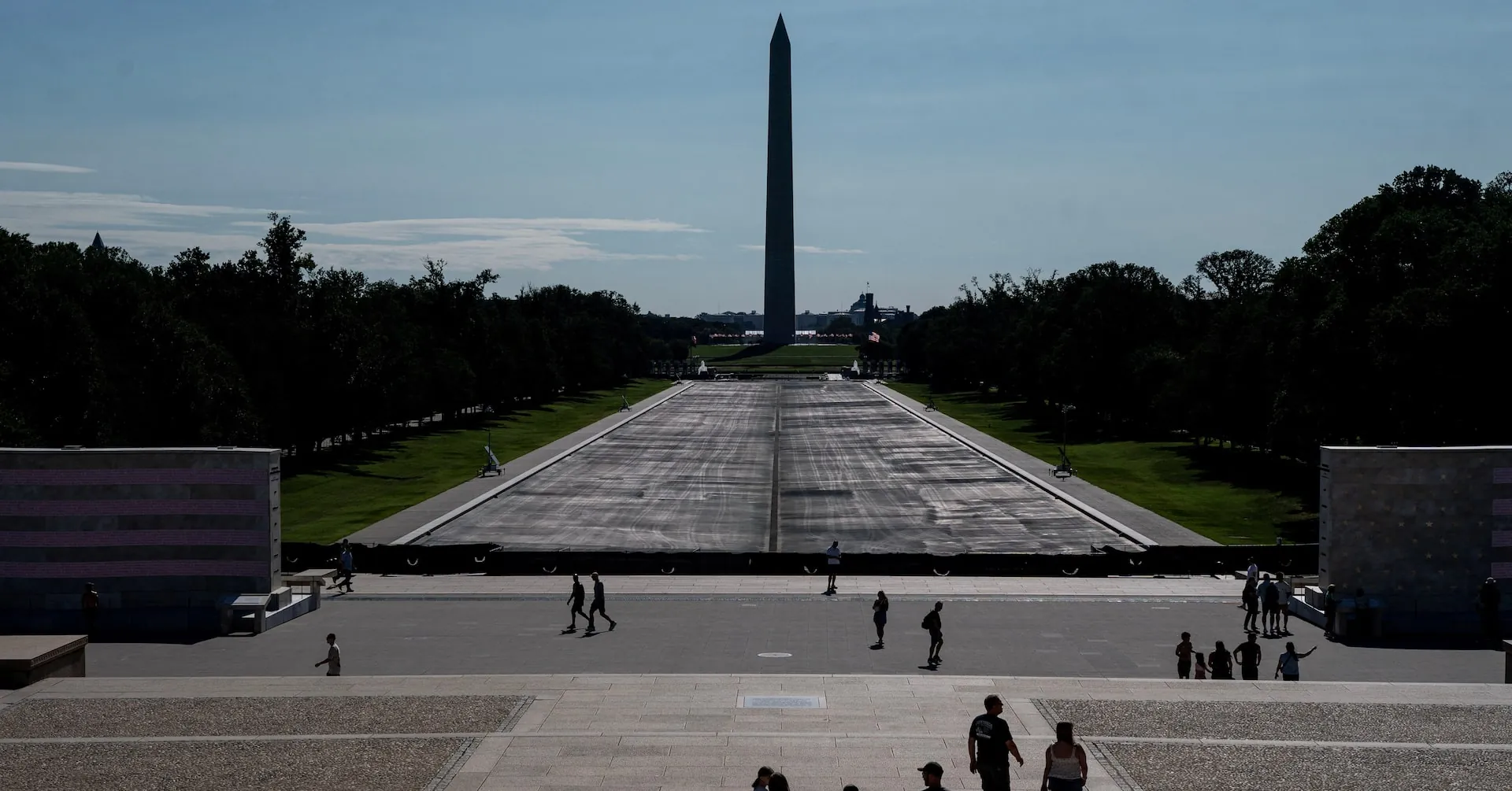
As of Aug. 1, 2026, the Justice Department has moved to dismiss USAO-DC v. Hearn, the felony destruction-of-property case against former Olympic canoeist David Carter “Davey” Hearn over damage to the Lincoln Memorial Reflecting Pool. The motion is not yet a verified final order: DOJ asked D.C. Superior Court Judge Carmen McLean to dismiss the indictment without prejudice, and the available record does not show that she has granted it. The reason DOJ gave matters more than the public spectacle around the pool. In its July 31 filing, the government said that after further review, “it is difficult to attribute the widespread damage to the Reflecting Pool to vandalism, let alone to establish that fact beyond a reasonable doubt.”[1]
That is the answer to the immediate question: the Justice Department did not drop the Reflecting Pool case against the former Olympian because a legal technicality appeared late. It moved to dismiss because its attribution theory could not survive the government’s own later-developed record. The filing says prosecutors initially relied on Interior Department and U.S. Park Police information; after indictment, they received and reviewed material showing preexisting liner failure, incomplete factual development, and damage that could not be tied to Hearn beyond a reasonable doubt.[1]
The case lasted 42 days before the record caught up
The sequence is short enough to fit on one page and long enough to show the professional failure. Hearn was arrested on June 19, 2026. A grand jury indicted him on July 2. He pleaded not guilty on July 9. DOJ says it first became aware of evidence about a flawed installation only after indictment, following “dozens and dozens” of document requests, according to Reuters’ account of the filing and proceedings. A post-drain inspection took place on July 17. DOJ filed its motion to dismiss on July 31.[1][2]
| Date | Event | Why it matters |
|---|---|---|
| June 11, 2026 | National Park Service engineer emails Interior Department colleagues about liner peeling around the pool perimeter | The pre-arrest record already contained evidence of the same kind of condition later attributed to vandalism |
| June 19, 2026 | Hearn is arrested | The charging path begins before prosecutors verify the full maintenance and installation record |
| July 2, 2026 | Grand jury indictment | DOJ later says key evidence about botched installation came to prosecutors only after indictment |
| July 9, 2026 | Hearn pleads not guilty | The defense is already litigating against a public accusation that the later record weakens |
| July 17, 2026 | Post-drain inspection | Damage is found throughout the pool, including areas not readily consistent with vandal peeling |
| July 31, 2026 | DOJ moves to dismiss without prejudice | The government says it cannot attribute the widespread damage to Hearn beyond a reasonable doubt |
The June 11 email is the kind of document that should make a charging lawyer stop. It was not an after-the-fact theory generated by the defense. It was an engineer’s pre-arrest communication inside the federal record path, sent more than a week before Hearn was arrested, describing liner peeling around the pool’s perimeter in the same area where Hearn was accused of ripping the liner.[1][2]
A public accusation can outrun that kind of document. A criminal case is not supposed to. The indictment and plea came before the government says it understood the installation evidence, and before the drained pool could be inspected in a way that tested whether the observed damage fit the vandalism theory.[1]
What DOJ says it relied on
The July 31 motion does not read like a routine exercise of mercy. It reads like a correction of source dependence. DOJ wrote that, before receiving additional documents and information, it “could only rely” on reports from the Interior Department and U.S. Park Police. That phrasing is doing more work than a casual reader may notice. It does not say those reports were deliberately false. It says the prosecution’s early record was derivative, incomplete, and not independently tested before the indictment carried the accusation forward.[1]
The motion also says additional information showed the Reflecting Pool liner had suffered from installation defects and preexisting damage. CNN reported DOJ’s admission that the renovation work was “hasty and botched,” and NBC likewise described the administration’s dismissal position as blaming the damage on a botched installation rather than on Hearn.[3][4]
Those reports are useful only if kept in their lane. They support the narrower point that DOJ’s dismissal position depended on later-discovered installation and preexisting-condition evidence. They do not prove every public claim made about the renovation, contract history, or total repair cost. Cost figures in public coverage have varied by outlet, and they are not necessary to the attribution question.

The government’s own witness made attribution harder
The most damaging material was not a defense press quote. It was the government’s own damages witness. NBC reported that the sole grand-jury witness on damages, a National Park Service official, conceded that the pool had substantial preexisting damage, that repairs would have been required regardless of Hearn’s conduct, and that he could not quantify any loss attributable to Hearn. The same witness put preexisting repair costs at $6,000 to $15,000.[5]
For a destruction-of-property case, that testimony does not merely soften the government’s proof. It goes to the joint where criminal attribution meets loss. If the liner already needed repair, if no witness can separate Hearn-caused loss from preexisting failure, and if the condition existed before the arrest, then the prosecution has more than a proof problem at sentencing. It has a proof problem at the point of fault.
That distinction matters because public vandalism narratives tend to compress several questions into one: Was there damage? Did someone touch the liner? Did that person cause the damage charged? What loss flowed from that conduct? A file can contain evidence relevant to one of those questions and still fail on another. The July 31 motion is important because it separates observed damage from provable attribution.[1]
The drained pool changed the inspection record, not the underlying facts
The post-drain inspection on July 17 supplied the kind of physical context that should have been obtained before the theory hardened. DOJ said the inspection revealed damage throughout the pool, including in the middle of the pool, “where a vandal would not likely attempt to peel the lining.”[1]
That does not establish that no vandalism occurred anywhere. It establishes the narrower and legally decisive point DOJ conceded: widespread damage could not be attributed to vandalism, let alone to Hearn, beyond a reasonable doubt. The filing does not need to vindicate every defense narrative to collapse the indictment. It only needs to show that the government can no longer prove the charged attribution standard.[1]
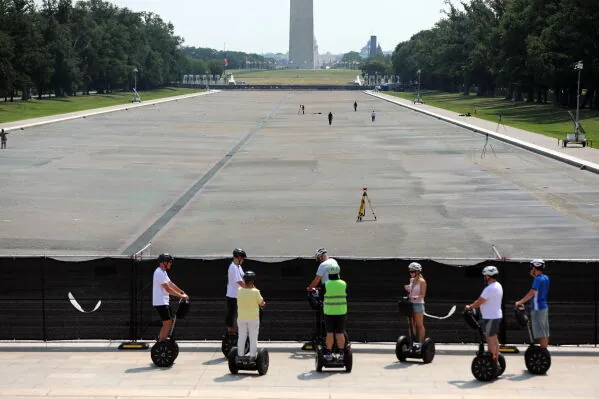
Defense counsel called the prosecution a “ready, fire, aim” case and demanded an apology after DOJ moved to dismiss. That characterization is advocacy, but it lands because the dates and source trail give it substance: indictment first, fuller document production later, physical inspection later still.[2]
The transferable failure is reliance before verification
This was not an AI citation case. There is no basis in the available record to say generative AI played any role in the Hearn prosecution. The useful comparison is more basic: a professional actor relied on source material before confirming provenance, completeness, and attribution. That failure mode looks familiar to anyone who has reviewed a brief with a hallucinated citation, a diligence memo that overreads a regulator’s summary, or a procurement recommendation built on a vendor’s unsupported description of its own system.
The source can be a Park Police report, an Interior Department summary, a litigation database extract, or an AI-generated case description. The verification duty is triggered by the proposed reliance, not by the technology that produced the material. If the next step is indictment, filing, board advice, client warning, disciplinary report, or public accusation, the source must be tested before the institution spends its credibility on it.
The Hearn filing is also a reminder that “official” does not mean “complete.” Agency records can be partial for ordinary reasons: one office has the arrest facts, another has maintenance history, another has contractor communications, and nobody has yet forced the pieces into the same chronology. That is not a conspiracy theory. It is a document-control problem. But once prosecutors or counsel convert that partial record into an accusation, the risk changes character.
A reliance checklist before the filing goes out
The operational lesson is modest and demanding. Before relying on a source that assigns fault, loss, or legal consequence, counsel should be able to answer the questions that the Hearn record answered too late.
- Identify the original source, not just the summary: who observed the condition, who wrote the report, and who transmitted it.
- Test completeness: ask what maintenance records, earlier emails, inspection notes, contractor files, or contrary documents have not yet been collected.
- Look for preexisting-condition evidence before assigning fault: the June 11 engineer email mattered because it preceded arrest and described the same type of problem.
- Separate observed facts from conclusions: visible damage is not the same as vandalism, and vandalism is not the same as provable loss caused by a named person.
- Confirm attribution before assigning loss: if no witness can quantify what the accused conduct caused, do not let a total repair narrative substitute for proof.
- Mark procedural status accurately: here, the dismissal request remains a motion pending verified court action, and it was filed without prejudice.
References
- USAO-DC motion to dismiss, July 31, 2026, https://d3i6fh83elv35t.cloudfront.net/static/2026/07/260731-hearn.pdf
- US Justice Department says “flawed” work led to Reflecting Pool peeling, Reuters, https://www.reuters.com/world/us-justice-department-drops-case-against-former-us-olympian-over-lincoln-2026-07-31/
- Justice Dept. admits Reflecting Pool renovation was “hasty and botched,” drops case against former Olympian, CNN Politics, https://www.cnn.com/2026/07/31/politics/doj-admits-reflecting-pool-renovation-flawed-drops-case-david-hearn
- Trump administration drops Reflecting Pool case, blaming damage on “botched” installation, NBC News, https://www.nbcnews.com/news/us-news/trump-administration-drops-reflecting-pool-case-blaming-damage-botched-rcna590303
- Reflecting Pool case: Witness conceded damage before Olympic canoeist Davey Hearn touched water, NBC News, https://www.nbcnews.com/politics/justice-department/reflecting-pool-case-witness-conceded-damage-olympic-canoeist-davey-he-rcna589510
Related records
Tool profile
How Meta's AI Spending Reshapes Law Firm ProfitabilityGoverning regulation
Browse the obligations tracker →Preventive workflow
Browse verification workflows →
Report a correction or tip
Spotted an outdated figure, a misstated fact, or a ruling this case record should reflect? Public comments are disabled for this content given the professional cost of a misreported case outcome, penalty amount, or rule text — use the structured correction channel instead.
Report a correction or tip for this record →