
Restaurant Dress Codes Under Gender Discrimination Law
Federal Title VII still permits sex-differentiated restaurant dress codes when the burdens on men and women are comparable, but state and local law from New Jersey to California has shifted toward gender-neutral standards. This risk record maps the split so multi-location operators can identify policies that are defensible in one jurisdiction yet expose them to consent orders or agency complaints in another.
- Jurisdiction
- New Jersey, United States
- Court
- New Jersey Office of the Attorney General
- AI tool named
- No AI tool named
- Ruling date
- Jun 28, 2024
- Source document
- View primary court order ↗
- Last verified
- Aug 5, 2026
Lex Machina Review is an independent risk-tracking and reference resource. Nothing on this site is legal advice, and using it does not create an attorney-client relationship. Every record is reviewed against primary sources but may not reflect the most current status of a matter — always verify directly against the cited court order, rule text, or a licensed attorney before relying on it.
Companion explanation — secondary to the source document above
Last verified against the supplied source record: August 5, 2026. This Regulation & Ethics record is informational and is not legal advice. Restaurant operators should have counsel verify the controlling state, city, and agency rules before rollout or enforcement.
The short answer for restaurant dress-code gender-discrimination law is uncomfortable but useful: federal Title VII still leaves room for sex-differentiated dress and grooming standards when the burdens are comparable and the rule is not enforcing sex stereotypes, but that is only the floor. New Jersey, California, New York City, DC, and jurisdictions with hair-discrimination protections can make the same inherited “men wear X, women wear Y” policy unsafe.
| Rule or source | What it does to a restaurant dress-code review |
|---|---|
| Title VII / Jespersen | Federal baseline: sex-differentiated grooming rules may survive when the employer does not impose an unequal burden on one sex; the Ninth Circuit upheld Harrah’s makeup rule in a 7-4 en banc decision on April 14, 2006. [1] |
| EEOC CM-619 Grooming Standards | Agency position is more aggressive than much circuit authority: the EEOC says different grooming standards can violate Title VII absent business necessity, while noting that courts had unanimously rejected Title VII challenges to sex-differentiated hair-length rules. [2] |
| New Jersey LAD / Brando’s Citi Cucina consent order | Restaurant-facing warning: a June 28, 2024 consent order required gender-neutral patron and employee dress codes, training, $5,000 to the complainant, and a $5,000 penalty. [3] |
| California | Employers may not refuse employees the right to wear pants under California Government Code § 12947.5, a narrow but practical drafting limit for skirt-or-dress requirements. [4] |
| New York City | NYC bars gender-differentiated appearance standards, making older “male server/female server” grooming charts poor templates for city locations. [4] |
| District of Columbia | DC prohibits appearance-based discrimination, adding another local-law reason not to rely only on federal Title VII analysis. [4] |
| CROWN Act and similar hair laws | GovDocs tracked 27 states plus DC with hair-discrimination laws as of July 2025; that count is time-sensitive and should be rechecked before acquisition diligence or policy rollout. [5] |
| January 2026 EEOC rescission | On January 22, 2026, the EEOC rescinded its 2024 harassment guidance in a 2-1 vote, reducing federal guidance clarity around gender-identity-related harassment issues without erasing Bostock or state fair-employment laws. [6] |
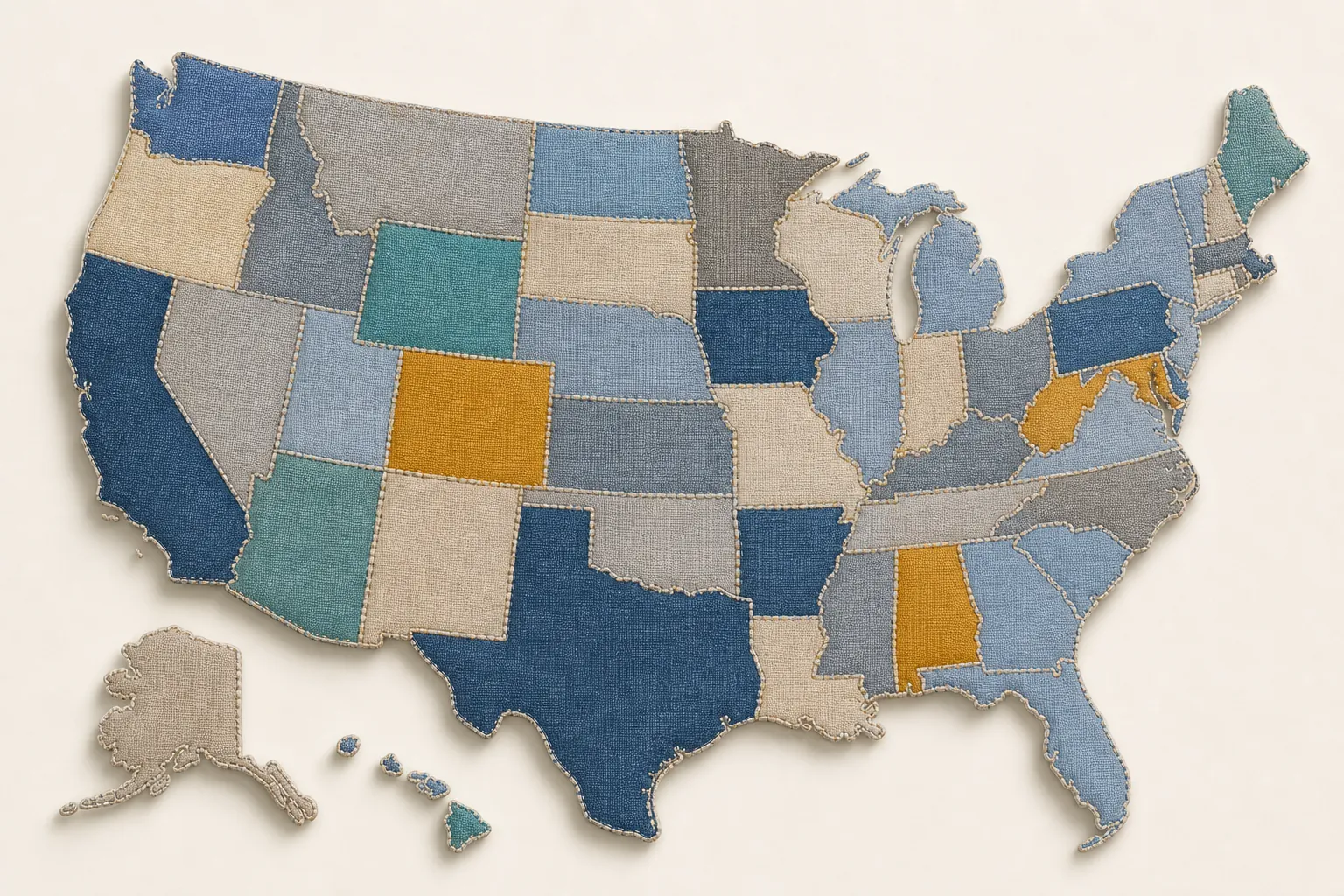
The federal floor still matters, but it is not the whole map
A restaurant can still begin its analysis with Title VII, because a federal charge is not imaginary. The mistake is ending there. Under the federal framework most often cited in dress and grooming disputes, different standards for men and women are not automatically unlawful. The employer’s problem becomes sharper when the policy places a materially heavier burden on one sex, or when the rule functions as a sex-stereotype requirement rather than a genuine appearance standard.
Jespersen is the reason that answer remains more qualified than many modern compliance summaries suggest. In that case, the Ninth Circuit, sitting en banc, upheld Harrah’s “Personal Best” policy requiring female beverage servers to wear makeup. The court treated the question as one of unequal burden: whether the overall grooming policy imposed heavier obligations on women than on men. The reported 7-4 result was not a broad blessing for every gendered appearance code; it was a holding that the plaintiff had not shown the makeup requirement created an unequal burden under Title VII on that record. [1]
That distinction is the part restaurant manuals often flatten. “Men must wear ties; women must wear scarves” is not analyzed the same way as “women must buy makeup, apply it daily, maintain a particular feminine presentation, and risk discipline for a subjective failure to look polished.” Federal law has historically tolerated some different-but-comparable standards. It has been less forgiving where the burden is uneven, where only one group pays extra time or money, or where managers use the policy to enforce conventional femininity or masculinity.
There is also a live agency-versus-court gap. EEOC Compliance Manual section 619 states that different grooming standards for men and women violate Title VII unless justified by business necessity. In the same guidance, the EEOC acknowledges that circuit courts had unanimously held that sex-differentiated hair-length rules did not violate Title VII. [2] For an operator, that is not an academic footnote. It means a policy may look defensible under older circuit cases and still draw agency scrutiny, especially if the facts include inconsistent enforcement or a gender-identity complaint.
Bostock did not turn every grooming rule into an automatic Title VII violation
Bostock changed federal employment law by holding that discrimination because of sexual orientation or gender identity is discrimination because of sex under Title VII. It did not answer every dress-code question a restaurant will face at host stand, bar, kitchen, or floor level. The hard questions still turn on the text of the policy, the reason for the rule, the burden imposed, the employee affected, and the jurisdiction enforcing the claim.
The January 2026 EEOC rescission makes that caution more important, not less. The EEOC rescinded its 2024 harassment guidance on January 22, 2026, including federal guidance that had addressed intentional misgendering in workplace harassment analysis. The rescission did not overrule Bostock, and it did not preempt state or local fair-employment laws. [6] It did, however, remove one recent federal guidance document that many employers had been using as a practical compliance reference.
So the operator’s federal question is narrower than the cultural argument around the policy. If a restaurant keeps a sex-differentiated code, the federal defense will usually need to show comparable burdens, non-stereotyped application, and consistent enforcement. That may be arguable in some jurisdictions. It is not the same as being safe across a restaurant group.
New Jersey shows what the risk looks like when it reaches a restaurant
The Brando’s Citi Cucina consent order is the useful proof point because it did not arise in a casino grooming program or a generic office dispute. It involved a restaurant. On June 28, 2024, the New Jersey Attorney General announced a consent order resolving allegations that Brando’s Citi Cucina discriminated on the basis of gender identity in violation of the New Jersey Law Against Discrimination. The order required gender-neutral dress codes for patrons and employees, anti-discrimination training, $5,000 to the complainant, and a $5,000 civil penalty. [3]
That is the compliance consequence managers remember after the slogans fade. The remedy was not simply “be more inclusive.” It was policy revision, training, payment, and a penalty. A restaurant that believed it was protecting atmosphere ended up with a state-enforced dress-code rewrite.
A hospitality-law analysis of the order read the New Jersey result broadly, warning that gender-specific dress codes are no longer permissible under the New Jersey LAD generally. [7] Operators should still distinguish a law firm’s reading from the text of a consent order and from a litigated appellate holding. But for anyone running locations in New Jersey, the practical drafting message is plain enough: a gender-neutral code is the safer baseline.
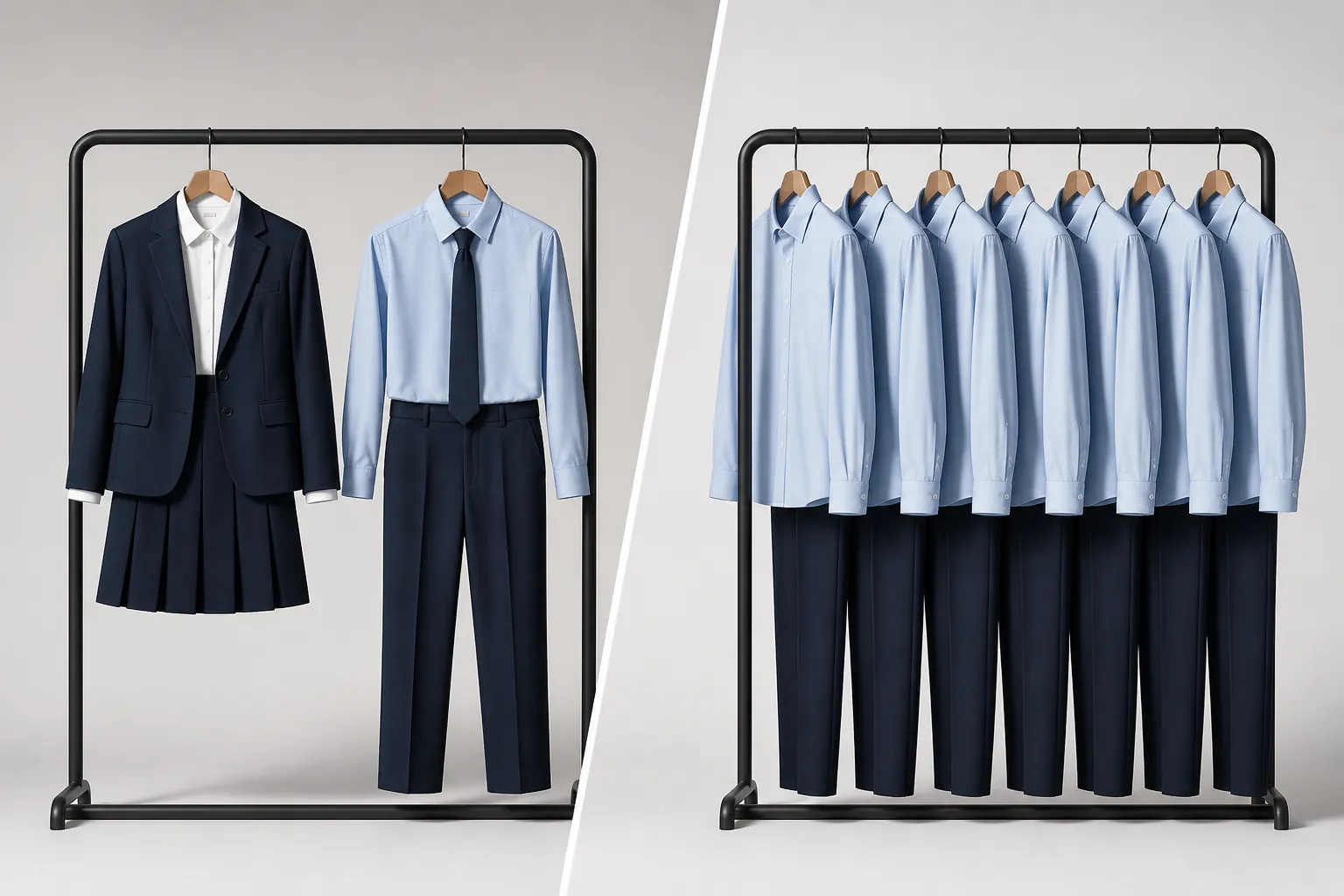
Strict jurisdictions change the drafting behavior
California’s rule is narrower than a complete ban on all appearance standards, but it matters because old restaurant policies often still assign skirts, dresses, or “feminine” attire to women. California Government Code § 12947.5 bars an employer from refusing employees the right to wear pants. [4] A brand standard that lets male servers wear trousers while requiring women to wear skirts is not just a stylistic choice in that jurisdiction.
New York City is more direct. Employer guidance summarized by Venable states that NYC bars gender-differentiated appearance standards. [4] That rule changes how a multi-location operator should write the base policy. A manual that says “men must” and “women must” may be repairable in a more permissive federal analysis, but it creates avoidable exposure where local law rejects the structure.
DC adds another layer by prohibiting appearance-based discrimination. [4] The immediate drafting lesson is not that every clean-uniform rule disappears. Restaurants may still regulate food-safety, sanitation, brand presentation, and role-specific clothing. The risk is a policy that ties those requirements to gender, gender expression, or subjective judgments about how a man or woman should look while performing the same job.
Hair rules need their own pass. GovDocs tracked 27 states plus DC with hair-discrimination laws as of July 2025, and noted that the federal CROWN Act had been reintroduced on February 26, 2025 as H.R. 1638 and S. 751. [5] Because that count is time-sensitive, it should not be treated as current for a specific location without rechecking the active state and local map. The operating point remains stable: bans on “extreme,” “unprofessional,” or “unkempt” hair can become a discrimination issue when they reach natural hair, protective hairstyles, or traits associated with race.
What a defensible restaurant code usually looks like now
The safest multi-state restaurant policy does not need to abandon appearance standards. It needs to detach them from gender. A restaurant can require clean clothing, closed-toe shoes where safety requires them, hair restraint for food handling, visible name tags, aprons, color palettes, and role-specific protective gear without telling men and women to present differently.
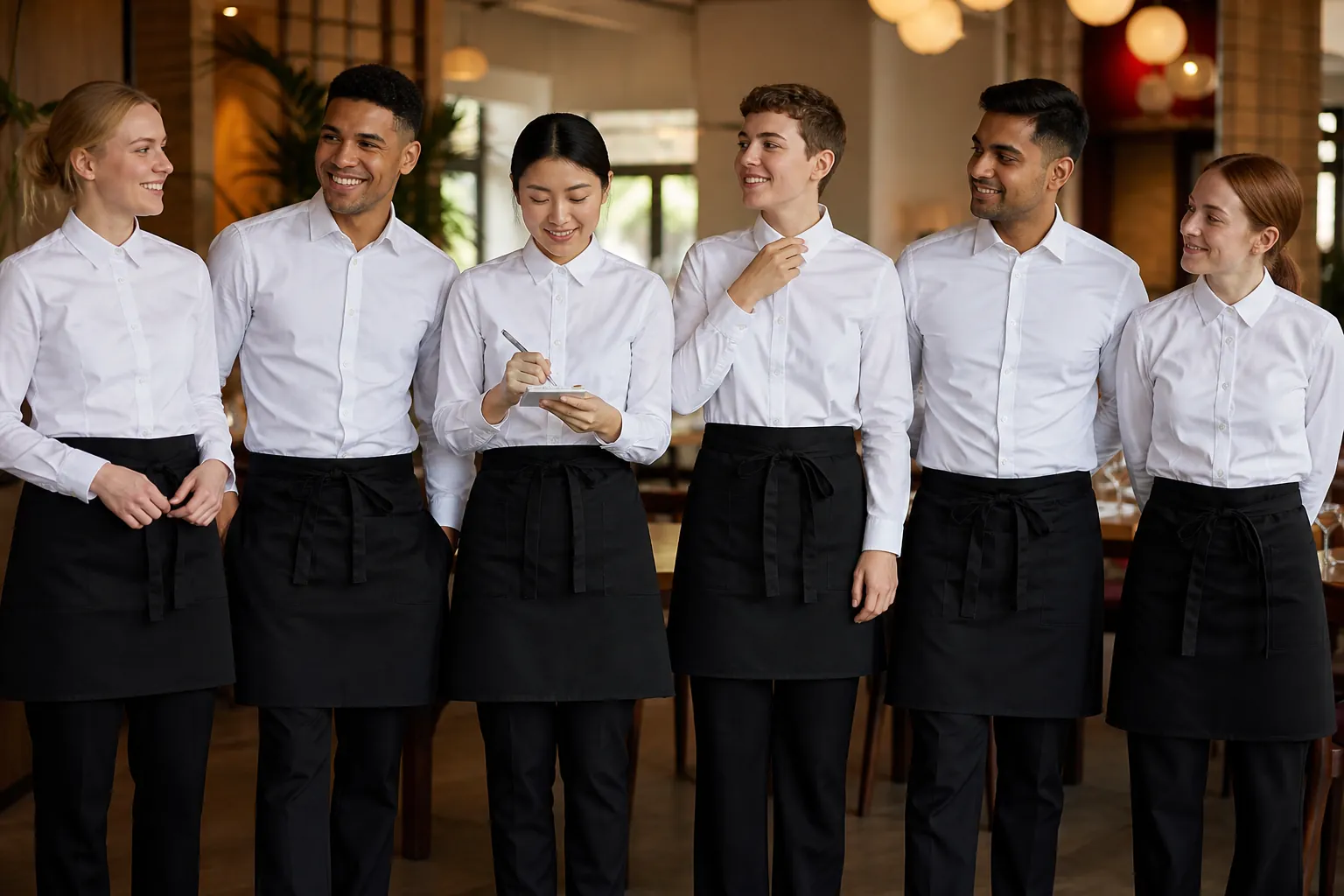
The better drafting unit is the job or safety function, not the employee’s sex. For example, a front-of-house rule can require a black shirt, black trousers or approved equivalent, non-slip shoes, and a clean apron. A bar rule can specify sleeve length, jewelry restrictions near equipment, and hair restraint. A kitchen rule can track sanitation and burn-risk controls. None of those rules need a male column and a female column.
| Older drafting habit | More defensible baseline |
|---|---|
| Men wear trousers; women wear skirts or dresses. | All employees in the role wear approved black trousers or another approved uniform bottom that meets safety and brand standards. |
| Women must wear makeup and appear feminine. | Employees must report in a clean, professional, camera- or guest-facing presentation consistent with the listed uniform items; no makeup requirement is assigned by sex. |
| Men must keep hair short; women may wear long hair if styled. | Hair must be clean and secured when required for sanitation or safety; the rule is reviewed against applicable CROWN Act and local hair-discrimination laws. |
| Managers may decide whether an employee looks polished. | Managers enforce listed, observable requirements and document deviations using the same checklist for all employees in the same role. |
Training matters because many dress-code claims are built from enforcement, not just the PDF. A written gender-neutral rule can still fail if a manager tells a transgender employee to use the “women’s version,” tells only female servers to buy cosmetic products, or applies “professional” to one hairstyle and “unprofessional” to the same standard worn by someone else. The regional manager who inherits the complaint will need more than brand intent; she will need evidence of consistent enforcement.
Single-location room is not the same as multi-state risk
There remains some legal room for a single-location employer in a jurisdiction that follows the older federal unequal-burden approach and has no stricter state or local rule. General employer summaries still describe the federal rule as allowing different dress codes for men and women if they do not impose an unequal burden and do not discriminate based on protected traits. [8] That is why it would be wrong to say all sex-differentiated dress codes are universally unlawful.
For a restaurant group, however, preserving every inch of that room rarely pays. The same chart that is federally arguable in one state may require revision in New Jersey, collide with New York City’s appearance-standard rule, create California pants-rule problems, or raise hair-discrimination issues in a CROWN-law jurisdiction. The operationally defensible baseline is a gender-neutral, burden-equivalent code drafted to the strictest applicable jurisdiction, with managers trained to enforce the written requirements rather than improvised ideas of how men and women should look.
References
- Ninth Circuit Upholds Makeup Requirement, Littler Mendelson, April 14, 2006
- CM-619 Grooming Standards, U.S. Equal Employment Opportunity Commission
- AG Platkin Announces Consent Order with Restaurant that Allegedly Discriminated on the Basis of Gender Identity in Violation of Law Against Discrimination, New Jersey Office of the Attorney General, June 28, 2024
- Dress Codes in the Modern Workplace: An Employer’s Guide to Avoiding Pitfalls, Venable, August 2021
- States with Hair Discrimination Laws, GovDocs
- EEOC Rescinds 2024 Harassment Guidance Addressing Gender Identity, Holland & Knight, January 2026
- New Jersey Mandates Gender-Neutral Dress Codes for Businesses, Mandelbaum Barrett
- Can an Employer Require Different Dress Codes for Men and Women?, Nolo, May 26, 2026
Related records
Tool profile
How Meta's AI Spending Reshapes Law Firm ProfitabilityGoverning regulation
Browse the obligations tracker →Preventive workflow
Browse verification workflows →
Report a correction or tip
Spotted an outdated figure, a misstated fact, or a ruling this case record should reflect? Public comments are disabled for this content given the professional cost of a misreported case outcome, penalty amount, or rule text — use the structured correction channel instead.
Report a correction or tip for this record →