
Who Was Charged in the Roberts Signature Forgery Case?
Federal charges in the 'Chief Justice Roberts signature forgery' reports name Joshua M. Culver as the defendant, not Roberts: a five-count N.D. Ind. indictment alleging four counts of impersonating a federal officer and one count of forging a judge's signature with a counterfeit Supreme Court seal. This record confirms who was actually charged, the case's pending status after Culver's August 21, 2026, arrest in Colorado, and links to the primary indictment and docket.
- Jurisdiction
- US federal
- Court
- U.S. District Court for the Northern District of Indiana
- AI tool named
- No AI tool named
- Ruling date
- Jul 1, 2026
- Source document
- View primary court order ↗
- Last verified
- Aug 28, 2026
Lex Machina Review is an independent risk-tracking and reference resource. Nothing on this site is legal advice, and using it does not create an attorney-client relationship. Every record is reviewed against primary sources but may not reflect the most current status of a matter — always verify directly against the cited court order, rule text, or a licensed attorney before relying on it.
Companion explanation — secondary to the source document above
The defendant was Joshua M. Culver, also identified as Maverick A. Young—not Chief Justice John Roberts. Roberts is identified in the indictment as the alleged victim whose signature was allegedly forged. Culver was charged in the U.S. District Court for the Northern District of Indiana in a five-count federal indictment: four counts under 18 U.S.C. § 912 for falsely impersonating a federal officer and one count under 18 U.S.C. § 505 for allegedly forging a judge’s signature and counterfeiting a court seal. [1]
Status: charged / pending. Charging court: Northern District of Indiana. Arrest matter: District of Colorado, No. 26-mj-00174. Culver was arrested in Colorado on August 21, 2026, assigned the Federal Public Defender’s Office in Denver, and scheduled for a detention hearing on August 25. The available record does not establish what happened at that hearing, so the case should not be described as resolved. Last verified: August 28, 2026, UTC.
Primary document: the indictment filed in the federal record. This article is legal information, not legal advice. No legal-background reviewer is identified; the filed indictment is treated as the controlling source for the count split and the alleged instrument.
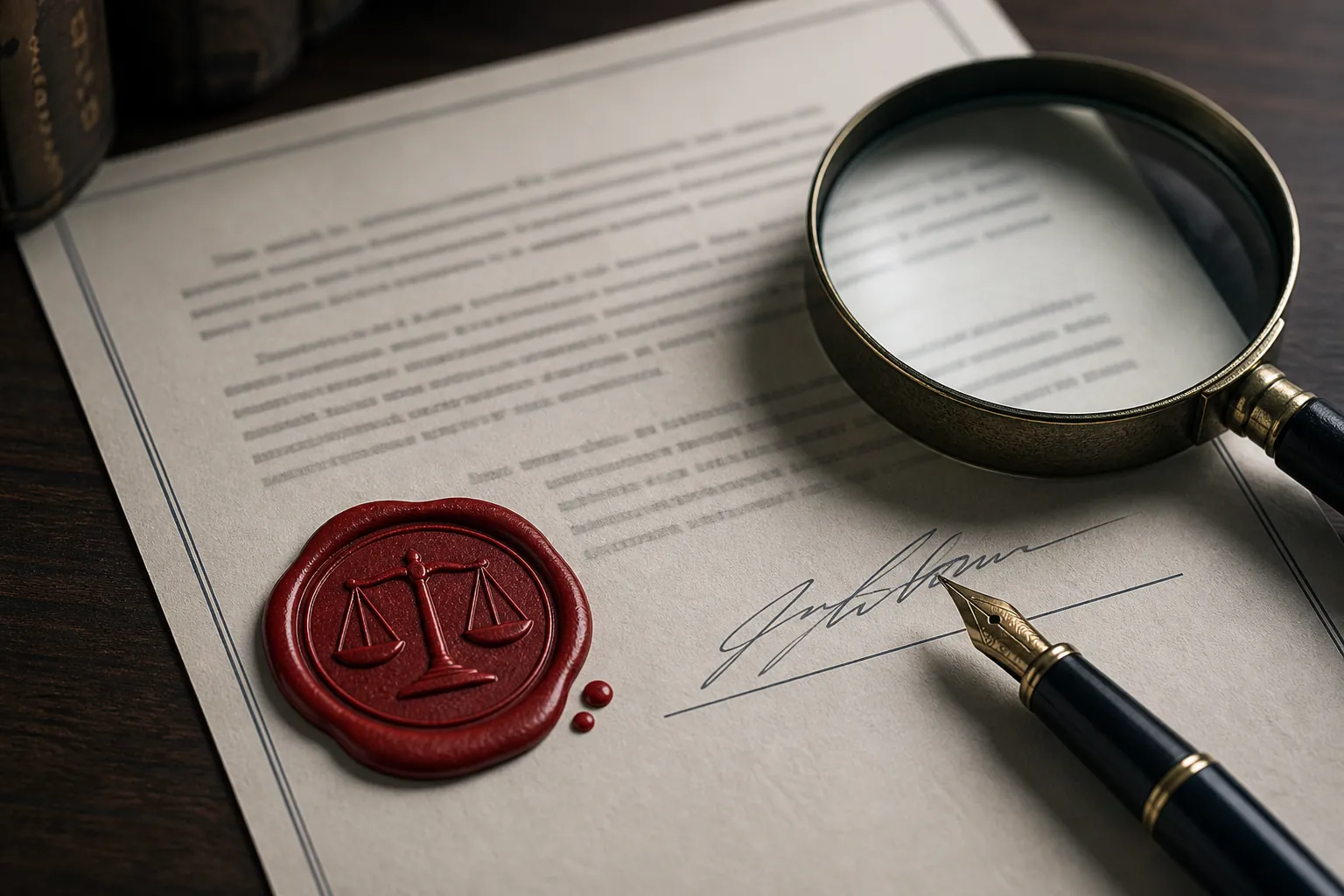
What the indictment alleges
The central allegation concerns a document presented as an exercise of Supreme Court authority. Prosecutors allege that Culver used a document bearing a forged signature attributed to Chief Justice Roberts and a counterfeit Supreme Court seal. The document purported to direct a Grant County, Indiana, court to dismiss theft charges against Culver with prejudice. Those allegations describe a fabricated judicial instrument aimed at a state proceeding; they do not describe charges against Roberts. [1]
The indictment controls the count description: four alleged violations of 18 U.S.C. § 912 and one alleged violation of 18 U.S.C. § 505. Some reporting described the Colorado arrest warrant as containing five impersonation counts and one forgery count, producing a six-count description. That discrepancy should not replace the five-count indictment-based account without a separate docket document establishing why the instruments differ. [1][2][3]
Why there are four impersonation counts
The other allegations provide context for the § 912 counts. Reporting describes an alleged appearance as an NSA agent at the Tippecanoe County Sheriff’s Office in September 2025. It also describes a later claim to a Lake County judge that Culver was a “Special Master enforcing orders of the United States Supreme Court.” These are allegations reported from the charging materials and coverage, not findings after trial. [3]
Section 912 covers falsely assuming or pretending to be an officer or employee acting under the authority of the United States. The statute provides for a fine and imprisonment of up to three years for each violation. Section 505 addresses forging a judge’s signature or counterfeiting a court seal, with a fine and imprisonment of up to five years. The statutory maximums are ceilings written into the statutes, not a prediction of a sentence in this case. [4][5]
Where the case stands
The prosecution and the arrest proceeding involve two federal districts. The indictment was returned in July 2026 in the Northern District of Indiana. After Culver’s August 21 arrest in Colorado, the District of Colorado docketed the arrest matter as No. 26-mj-00174 and assigned counsel through the Federal Public Defender’s Office in Denver. A detention hearing was scheduled for August 25. [1][2][3]
The outcome of that hearing is the next procedural fact requiring verification. Until the docket supplies it, the responsible status is charged and pending. An indictment establishes what the government alleges and what charges have been brought; it does not establish guilt.
A separate report also mentioned a January 2026 threatening-a-judge charge in Lake County, Indiana. That detail was relayed second-hand and is not treated here as a confirmed part of the federal case. [6]
What this record does—and does not—show
The phrase “Chief Justice John Roberts signature forgery charges” is therefore a dangerous compression of the record. It can make Roberts appear to be the accused when the federal case names Culver. The actual risk signal is the alleged fabrication of a court instrument, complete with a judicial signature and seal, for use against a state court proceeding.
That risk can be tracked alongside broader concerns about fabricated evidence and court materials. The National Center for State Courts has warned that AI-generated evidence can threaten public trust in courts, but no cited source identifies an AI tool in Culver’s alleged conduct. This case should not be labeled an AI hallucination incident. It is a pending prosecution involving allegedly fabricated federal authority, and its record should remain distinct until evidence supports a connection to a particular technology. [7]
References
- United States v. Culver, No. 26-mj-00174, Indictment — CourtListener
- Man charged with forging Chief Justice John Roberts's signature, impersonating NSA agent — The Hill, August 2026
- Man Accused of Impersonating Chief Justice Roberts, NSA Agent — Bloomberg Law, July 2026
- 18 U.S.C. § 505 — Cornell Legal Information Institute
- 18 U.S.C. § 912 — Cornell Legal Information Institute
- Man arrested for impersonating Chief Justice Roberts — ABA Journal
- AI-generated evidence is a threat to public trust in the courts — National Center for State Courts
Related records
Tool profile
How Meta's AI Spending Reshapes Law Firm ProfitabilityGoverning regulation
Browse the obligations tracker →Preventive workflow
Browse verification workflows →
Report a correction or tip
Spotted an outdated figure, a misstated fact, or a ruling this case record should reflect? Public comments are disabled for this content given the professional cost of a misreported case outcome, penalty amount, or rule text — use the structured correction channel instead.
Report a correction or tip for this record →