
Are Your Rohto Cooling Eye Drops on the FDA Recall List?
Check whether your Rohto Cooling Eye Drops carton is on the FDA recall list with a three-step verification tied to Enforcement Report Event 99440. If it matches, stop use, dispose of or return the product, and report reactions through FDA MedWatch.
- Jurisdiction
- US-Federal
- Court
- FDA
- AI tool named
- Rohto Cooling Eye Drops
- Ruling date
- Jul 23, 2026
- Source document
- View primary court order ↗
- Last verified
- Jul 31, 2026
Lex Machina Review is an independent risk-tracking and reference resource. Nothing on this site is legal advice, and using it does not create an attorney-client relationship. Every record is reviewed against primary sources but may not reflect the most current status of a matter — always verify directly against the cited court order, rule text, or a licensed attorney before relying on it.
Companion explanation — secondary to the source document above
Risk Digest record: FDA Enforcement Report Event 99440
Last verified: July 31, 2026, UTC. This is a product-safety verification record, not medical advice. The controlling source for checking whether a Rohto carton is on the FDA recall list is FDA Enforcement Report Event 99440. The record identifies a Class II recall initiated on July 14, 2026, and classified by FDA on July 23, 2026, for Rohto Cooling Eye Drops products recalled for “lack of assurance of sterility” [1].
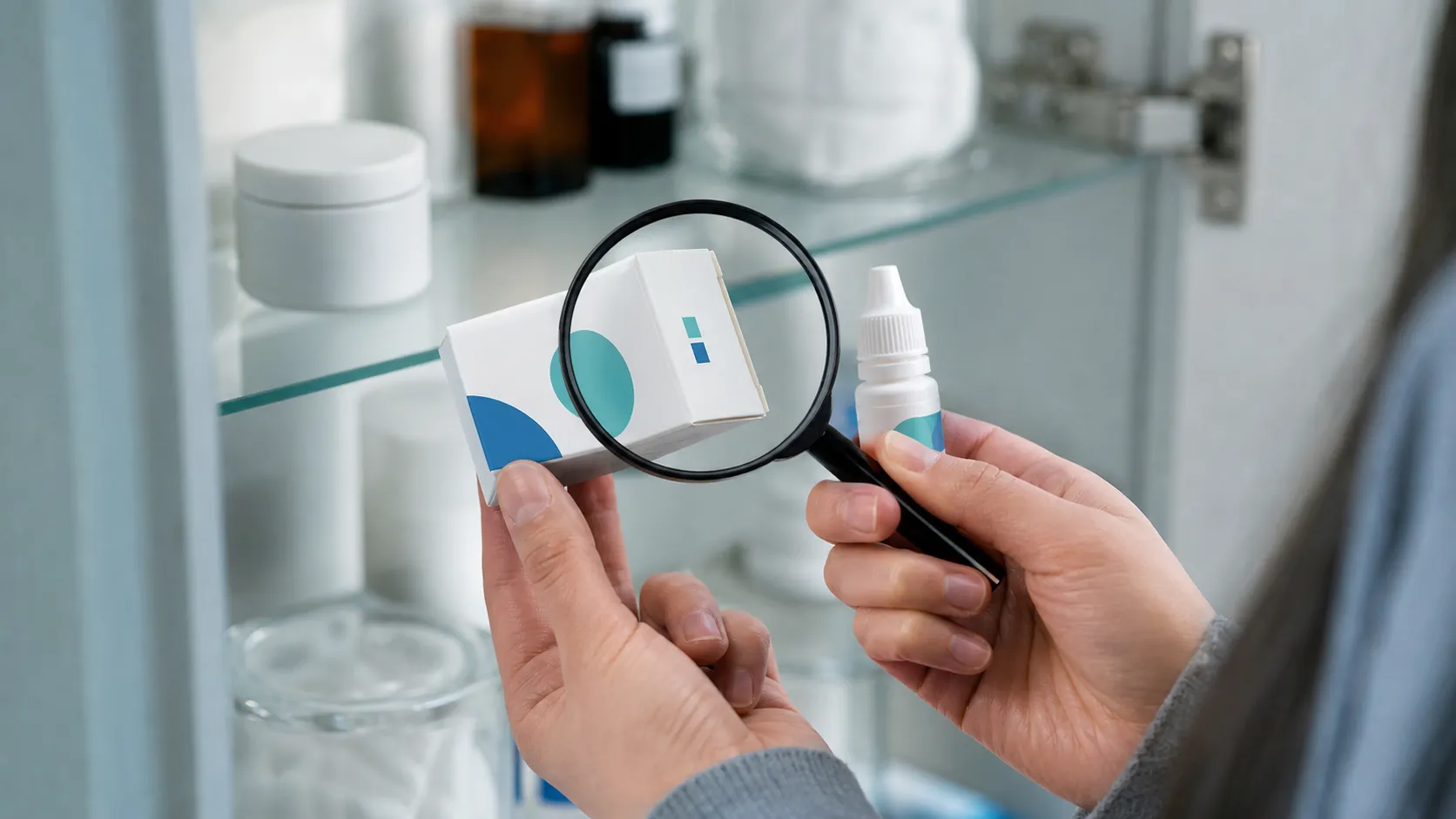
The practical answer starts with the carton, not the brand name. If you have Rohto eye drops in hand, find the lot number, look for the Vietnam-made lot pattern that includes the letter “V,” and then compare the exact product and lot against FDA Event 99440. A product name that sounds close is not enough. A matching lot is enough to stop using it.
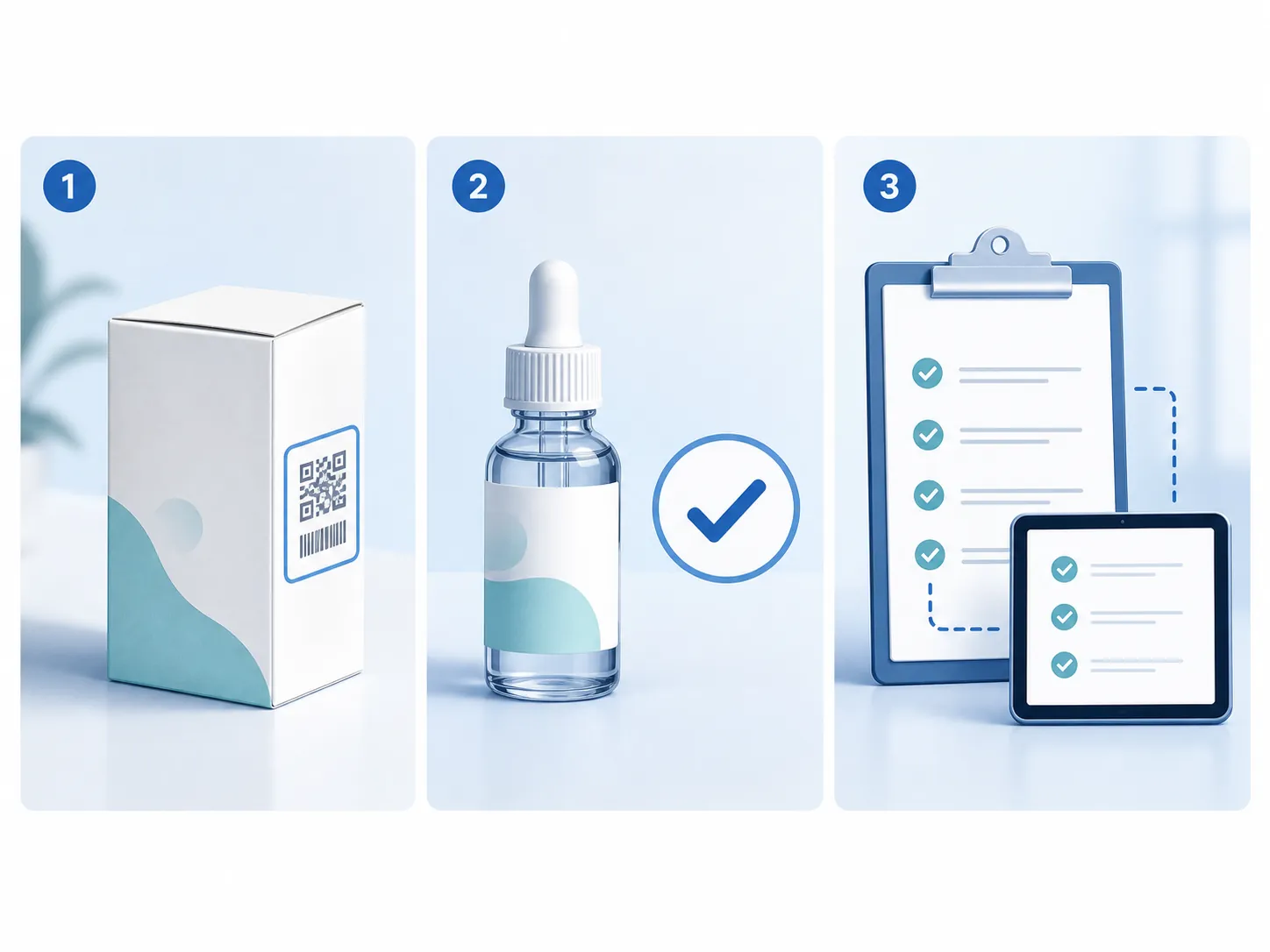
The three checks that matter
- Find the lot number on the carton. Do this before comparing product names, package size, or retailer listings. The recall is resolved at the lot level.
- Look for the letter “V” in the lot code. FDA-listed recalled lots contain “V” in the lot number; examples reported for the recall include formats such as 3H1V, 4A2V, and 5B1V [1].
- Cross-reference the FDA record itself. Use Event 99440 as the controlling list, because copied lot tables in news stories and social posts introduce avoidable error risk [1].
If the lot number is hard to read, use better light, photograph the code, or check the outer carton if it is still available. If the code cannot be read or matched, the household decision is still unresolved; do not treat uncertainty as a non-match.
The FDA IRES record is the source to use even if its table loads awkwardly in some browsers or does not appear cleanly in search previews. A recall table that has been retyped elsewhere is useful only as a pointer back to the FDA record. It should not control the answer for a product used near the eye.
What FDA Event 99440 covers
Event 99440 identifies the recalling firm as Rohto-Mentholatum (Vietnam) Co., Ltd., with The Mentholatum Company listed as the U.S. distributor. The recall covers 11,960,623 cartons containing 12,460,649 bottles, with expiration dates running from July 2026 through February 2029 [1].
| Field | What to check |
|---|---|
| FDA event | Enforcement Report Event 99440 [1] |
| Recall class | Class II [1] |
| Initiated / classified | Initiated July 14, 2026; FDA-classified July 23, 2026 [1] |
| Covered Rohto varieties | Max Strength Cooling Eye Drops single pack and twin pack; Cool Relief; Optic Glow; All-In-One; Dry Aid single pack and twin pack; Digi Eye [1] |
| Lot-code signal | Recalled lot numbers contain the letter “V” [1] |
| Expiration range | July 2026 through February 2029 [1] |
| Reported scale | 11,960,623 cartons containing 12,460,649 bottles [1] |
Those totals explain why many households may be checking cabinets at the same time, but the total is not the household test. The household test is whether the product, lot, and expiration information on the carton match the FDA list.
Secondary coverage is useful for context, but it is not the record. Reports have described the recall as involving nearly 12 million cartons or roughly 12.46 million bottles, and some secondary counts differ slightly by product line, including for All-In-One and Digi Eye [2][3][4]. When a secondary source and the FDA record disagree, use the FDA record.
What “lack of assurance of sterility” means here
The recall reason is narrower than confirmed contamination. FDA Event 99440 describes the problem as lack of assurance of sterility tied to a process-validation failure, not as a finding that every recalled bottle tested contaminated [1]. That distinction matters, but it does not make a matching carton usable.
Sterile eye products are held to a high standard because they are applied directly to the eye. Once the manufacturer cannot assure sterility for a covered lot, a consumer cannot restore that assurance at home by inspecting the bottle, checking whether the liquid looks clear, or considering whether earlier uses felt normal.
Class II is also not a reassurance label. In this recall context, it means the FDA classified the event in a category where use may cause temporary or medically reversible adverse health consequences, or where the probability of serious adverse health consequences is remote [1]. The record still requires action when the product matches.
Several late-July reports stated that no adverse events had been reported at the time of their coverage [2][3][4]. That is a reported-events fact, not a safety test on a carton in a bathroom cabinet. If the lot matches, the absence of reported injuries does not override the recall.
Ignore the March 2026 date confusion for this Rohto check
Some social posts have attached March 2026 recall dates to Rohto eye-drop discussions. For Event 99440, use the July dates: initiated July 14, 2026, and FDA-classified July 23, 2026 [1][2][4]. A March date should not be used to decide whether this Rohto carton is on the FDA list.
If your carton matches Event 99440
A match means the product cannot be verified safe at home. Stop using the drops. Follow the recall instructions to dispose of the affected product or return it through the available return path. If symptoms occur, consult a healthcare provider. Suspected reactions can be reported to FDA MedWatch at 1-800-FDA-1088 [1].
- Do not keep using a matching bottle while waiting for more reassuring language.
- Do not rely on a retailer photo, a rounded headline, or a retyped lot list if the FDA record is available.
- Do keep the carton or a clear photo of the lot code long enough to document what you checked.
Readers looking for legal theories rather than household verification can use the separate Rohto product-liability analysis. For this record, the risk decision is simpler: if the product, lot, and expiration match FDA Event 99440, stop using it and follow the recall action path.
References
- FDA Enforcement Report Event 99440 — U.S. Food and Drug Administration
- Rohto brand eye drops recalled: See full list — USA Today, July 30, 2026
- Rohto Eye Drop Recall: Nearly 12 Million Cartons Tied to Factory History, FDA Violations — TechTimes, July 30, 2026
- FDA recalls millions of cooling eye drops over sterility concerns — News4JAX, July 29, 2026
Related records
Tool profile
Browse tool evaluations →Governing regulation
Browse the obligations tracker →Preventive workflow
Browse verification workflows →
Report a correction or tip
Spotted an outdated figure, a misstated fact, or a ruling this case record should reflect? Public comments are disabled for this content given the professional cost of a misreported case outcome, penalty amount, or rule text — use the structured correction channel instead.
Report a correction or tip for this record →