
DOL Cites San Antonio Bakery for Child Labor and Wages
A U.S. Department of Labor investigation at La Panaderia Bakery & Cafe resulted in a $25,706 civil penalty for child labor violations, along with minimum-wage and overtime findings across three San Antonio locations. This record details what the Wage and Hour Division cited, how the employer responded, and what remains unresolved.
- Jurisdiction
- US-TX
- Court
- U.S. Department of Labor, Wage and Hour Division
- AI tool named
- No AI tool implicated
- Ruling date
- Aug 4, 2026
- Source document
- View primary court order ↗
- Last verified
- Aug 5, 2026
Lex Machina Review is an independent risk-tracking and reference resource. Nothing on this site is legal advice, and using it does not create an attorney-client relationship. Every record is reviewed against primary sources but may not reflect the most current status of a matter — always verify directly against the cited court order, rule text, or a licensed attorney before relying on it.
Companion explanation — secondary to the source document above
| Record field | Verified detail |
|---|---|
| Agency record | U.S. Department of Labor, Wage and Hour Division, Release 26-1185-DAL |
| Release date | Aug. 4, 2026 |
| Employer | La Panaderia Bakery & Café, San Antonio |
| Locations cited | Three San Antonio bakery-café locations, including the La Cantera location at 17030 Fiesta Texas Dr. |
| Violation categories cited | Child labor, minimum wage, and overtime under the Fair Labor Standards Act |
| Civil money penalty | $25,706 for child labor violations |
| Last verified | Aug. 5, 2026 |
The latest federal record involving San Antonio bakery child labor law violations is not a sprawling national trend report. It is narrower, and more useful for operators with several nearby storefronts: one Wage and Hour Division investigation of La Panaderia Bakery & Café that identified child-labor, minimum-wage, and overtime problems across three San Antonio locations. The DOL announced a $25,706 civil money penalty for the child-labor violations, along with wage findings tied to unpaid overnight work and overtime that was not calculated across all three café locations. [1]
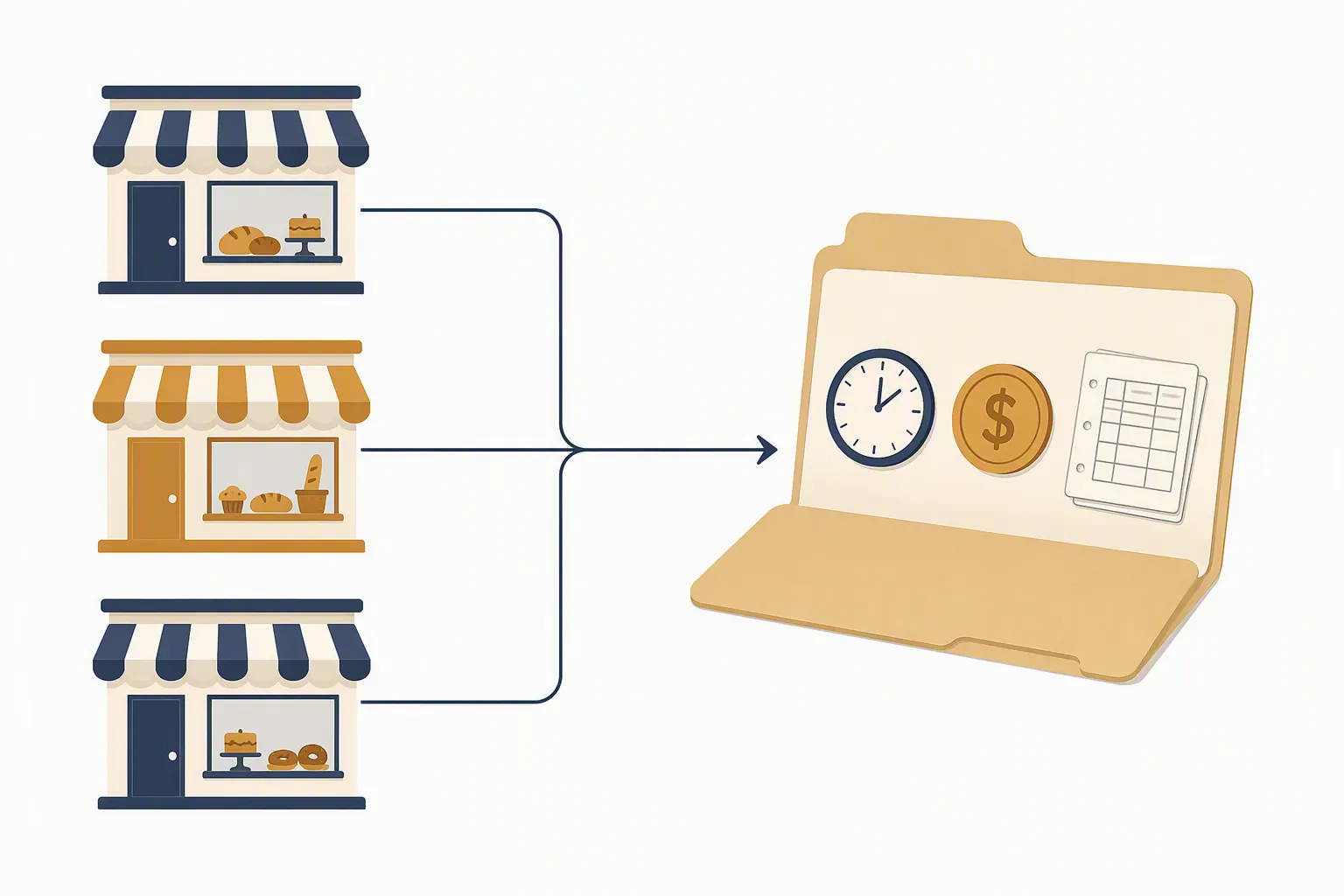
The dollar figure is not the part that should stop a payroll or employment-law reader. The structure is. In the same file, WHD cited a bakery-café operator for employing a 13-year-old, allowing a 15-year-old to work overnight, failing to pay for two overnight shifts at La Cantera, and not combining hours worked across three locations when calculating overtime. [1]
What WHD cited at La Panaderia
The child-labor finding has two separate pieces. First, WHD found that La Panaderia employed a 13-year-old, below the FLSA minimum age of 14 for most non-agricultural work. Second, WHD found that a 15-year-old was permitted to work overnight, outside the 7 p.m. to 7 a.m. restricted window that applies to 14- and 15-year-old employees. Those findings produced the $25,706 civil money penalty. [1]
That is a different kind of exposure from a missed pay calculation. The age floor and the prohibited-hours rule are not clerical preferences; they are the core federal limits that separate lawful youth employment from work the statute does not allow. In a restaurant, bakery, or retail setting where scheduling often happens close to the shift level, that means the compliance control has to sit before the schedule is worked, not after payroll closes.
The minimum-wage finding was more operationally ordinary, which is why it matters. WHD identified two unpaid overnight shifts at the La Cantera location, 17030 Fiesta Texas Dr. [1] Nothing in the available record turns those shifts into a complicated legal theory. The problem, as reported, is simpler: work happened, and the department found that it was not paid.
The overtime finding is the multi-location issue. WHD found that La Panaderia did not combine employee hours worked across the three café locations and instead paid straight time rather than time-and-one-half when combined hours required overtime pay. [1] For a small operator, this is often where the payroll story and the business story diverge. A company may think in storefronts for scheduling convenience, but WHD can still examine whether the hours belong in one overtime calculation.
The three exposure types are separate, even though they came from one investigation
| Issue WHD identified | Location or scope reported | Compliance consequence |
|---|---|---|
| Child labor | Three-location La Panaderia investigation; findings included a 13-year-old employee and a 15-year-old working overnight | $25,706 civil money penalty |
| Minimum wage | La Cantera location, 17030 Fiesta Texas Dr. | Two overnight shifts were found unpaid |
| Overtime | Across the three café locations | Hours were not combined across locations; straight time was paid instead of time-and-one-half |
The separation is useful because the remedies and legal theories should not be blurred. The $25,706 penalty belongs to the child-labor violations. The wage findings concern pay for work performed and overtime calculation. The public record supplied for this profile does not provide a separate back-wage dollar amount, so the safer reading is to treat the civil penalty and the wage findings as distinct parts of the same enforcement record, not as one interchangeable total. [1]
That distinction matters when counsel briefs the file internally. A civil money penalty for employing or scheduling minors unlawfully raises different control questions than an unpaid-shift finding. The unpaid overnight shifts point toward timekeeping, manager approval, and off-cycle work controls. The overtime finding points toward whether the payroll system saw the employee’s total hours across all locations, not just the hours at the location where a particular manager approved a shift.
Where the record places the problem
The DOL release identifies the case as involving three San Antonio bakery and café locations. The minimum-wage finding is tied specifically to the La Cantera location at 17030 Fiesta Texas Dr., where WHD found two unpaid overnight shifts. The overtime finding is broader: employees’ hours were not aggregated across the three café locations for overtime purposes. [1]
The release details supplied for this record do not identify each location’s separate role in each violation. That leaves some questions unanswered. The record supports saying WHD investigated and cited violations across three San Antonio locations; it does not support assigning every violation to every storefront.
For risk review, that limitation is still enough to matter. The agency did not treat the payroll question as ending at one storefront’s schedule. It looked across the operator’s three-location footprint for overtime aggregation, while also identifying a location-specific unpaid-shift issue at La Cantera. [1]
What the employer response does, and does not, resolve
The DOL release includes the agency’s account of the violations and the penalty. The materials available for this record do not provide a quoted employer statement or enough detail to characterize La Panaderia’s response beyond the fact that the enforcement record reports the agency’s findings. That restraint is important: a WHD release is a government enforcement record, not a full litigation file.
What is resolved on the face of the record is the civil money penalty amount for the child-labor violations: $25,706. What remains less clear from the available release details is the wage-payment endpoint for the minimum-wage and overtime findings, including whether a specific back-wage amount was assessed, paid, or otherwise resolved. [1]
That does not soften the child-labor findings. It simply keeps the record in its proper lane. The agency cited a 13-year-old employee and overnight work by a 15-year-old; those are the facts that explain the civil money penalty. The unpaid shifts and overtime aggregation issue are separate wage-and-hour findings that should be tracked separately until the public record supplies more detail. [1]
Why this small-dollar file is worth saving
A $25,706 child-labor penalty will not shock large employers that have seen enterprise-level wage-and-hour exposure. But the amount is not the best measure of the file. The better measure is how many failure modes appeared in one local investigation: age eligibility, youth work hours, unpaid time, and cross-location overtime calculation.
For Texas food-service and retail counsel, the La Panaderia record is a reminder to test the system the way WHD may test it. Can a manager schedule a 14- or 15-year-old outside the permitted window? Can an overnight shift occur without landing in paid time? Can one employee work at two or three locations in the same workweek while payroll still calculates overtime location by location? Those are not abstract policy questions; they map directly onto what WHD reported here. [1]
The case does not prove a national crackdown, and it does not say every small multi-location operator has the same defects. It does show that WHD treated this San Antonio bakery-café group as a compliance system, not as three isolated storefronts. That is the practical signal in the record: the penalty is modest, but the structure of the investigation is not.
References
- US Department of Labor finds child labor and wage violations at 3 San Antonio bakery and café locations — U.S. Department of Labor, Aug. 4, 2026.
Related records
Tool profile
How Meta's AI Spending Reshapes Law Firm ProfitabilityGoverning regulation
Browse the obligations tracker →Preventive workflow
Browse verification workflows →
Report a correction or tip
Spotted an outdated figure, a misstated fact, or a ruling this case record should reflect? Public comments are disabled for this content given the professional cost of a misreported case outcome, penalty amount, or rule text — use the structured correction channel instead.
Report a correction or tip for this record →