
Securities Cases Emerge from the AI Debt Boom
The AI debt boom has already generated the first securities class actions and SEC enforcement actions based on AI-washing and disclosure omissions. This analysis documents the live cases, the legal theories being tested, and what they mean for issuers, D&O carriers, and securities litigators.
- Jurisdiction
- US Federal
- Court
- US District Court
- AI tool named
- AI (general)
- Ruling date
- Jan 1, 2026
- Source document
- View primary court order ↗
- Last verified
- Jul 25, 2026
Lex Machina Review is an independent risk-tracking and reference resource. Nothing on this site is legal advice, and using it does not create an attorney-client relationship. Every record is reviewed against primary sources but may not reflect the most current status of a matter — always verify directly against the cited court order, rule text, or a licensed attorney before relying on it.
Companion explanation — secondary to the source document above
The securities docket around AI financing no longer consists only of warnings about a future bubble. By Q3 2026, it contains a bondholder suit over AI-related debt offering documents, shareholder class actions alleging AI-washing, settled SEC enforcement matters, and a financing structure question large enough to matter to credit disclosures. The legal implications of the AI debt issuance boom for tech companies are therefore less about whether AI is expensive, and more about which statements investors were given when that expense moved through securities markets.
The first cut should be procedural. Ohio Carpenters' Pension Fund v. Oracle Corporation is described by Quinn Emanuel as a January 2026 bondholder action alleging materially false or misleading statements in AI-related debt offering documents; that is a live complaint, not a merits ruling.[1] Masaitis v. CoreWeave is a January 2026 securities class action alleging AI-washing and misleading statements about GPU collateral value and revenue projections ahead of an IPO/SPAC transaction; that, too, is a pleading-stage record.[2] Richtech Robotics appears in 2026 securities-litigation commentary as another AI-washing class action tied to robotics and AI capability representations.[3] The SEC matters against Delphia and Global Predictions in 2024, followed by Presto Automation and Nate/Saniger in 2025, are enforcement actions, with a different evidentiary posture and different remedial consequences.[4]
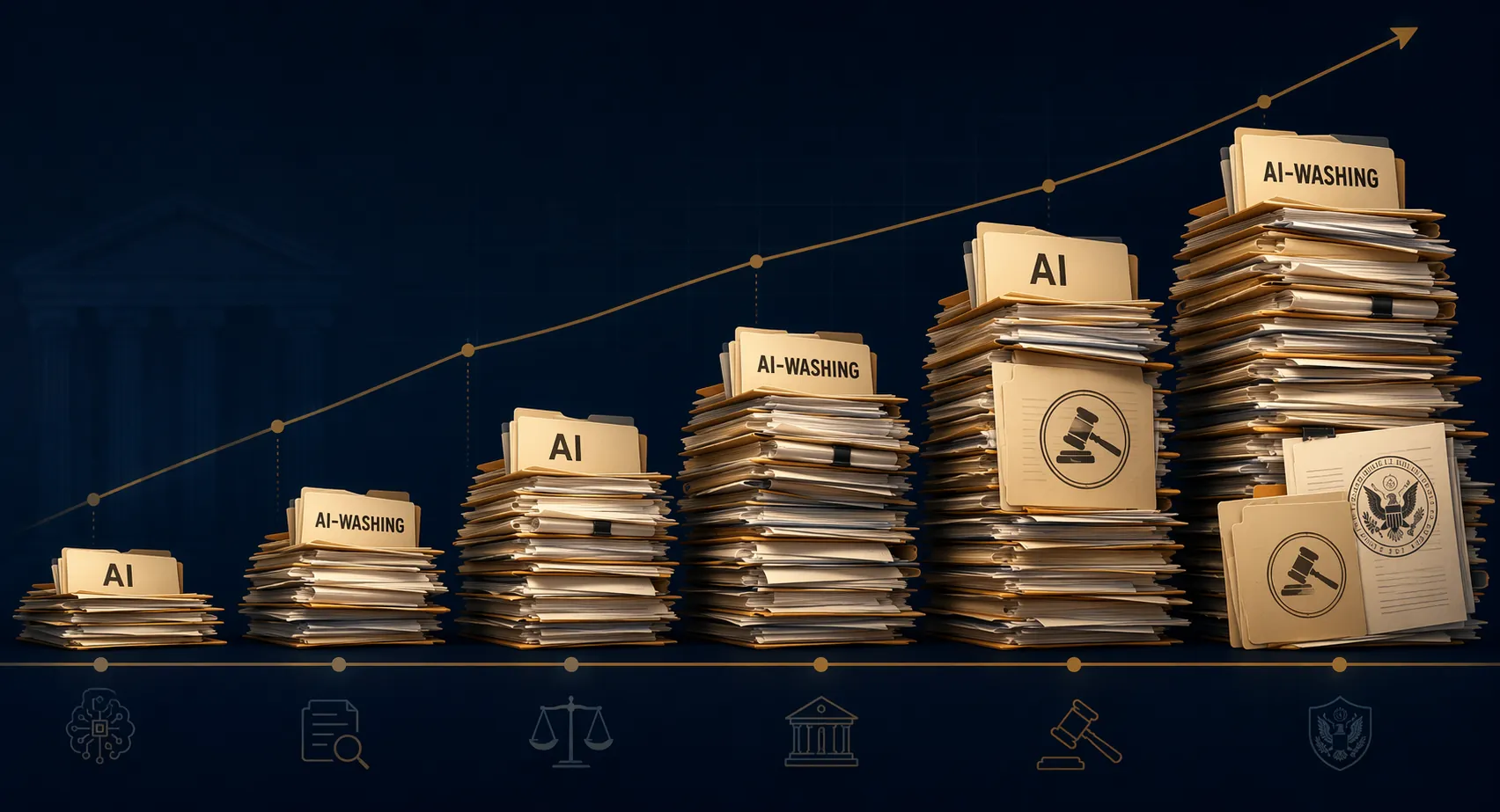
That distinction matters because the category is forming faster than the case law. Secretariat, using Cornerstone Research and Stanford Securities Class Action Clearinghouse data according to its summary page, counted 51 AI-related securities class actions filed since 2020, including 33 with AI-washing allegations and 16 filed in 2025 alone.[5] The same summary reports that AI filings represented 57% of the Maximum Dollar Loss Index in 2025.[5] Those figures are useful for sizing the docket, but they do not answer whether any particular AI-debt theory survives a motion to dismiss.
| Record | Procedural Weight | Disclosure Theory |
|---|---|---|
| Ohio Carpenters' Pension Fund v. Oracle Corporation | January 2026 live bondholder complaint; no merits ruling identified in the research record | Sections 11 and 12(a)(2) offering-document allegations tied to AI product demand and financial condition |
| Masaitis v. CoreWeave | January 2026 securities class action; pleading-stage record | Rule 10b-5-style AI-washing allegations involving GPU collateral value and revenue projections |
| Richtech Robotics class action | 2026 securities class action identified in litigation-trends commentary | AI capability representations in robotics/automation business |
| Delphia/Global Predictions, Presto Automation, Nate/Saniger | SEC enforcement record, including settled or filed enforcement matters | Existing anti-fraud provisions applied to claimed or represented AI capability |
| AI data-center SPV structures | Structural disclosure vulnerability; not identified here as a decided AI-debt omission case | Possible material omissions around off-balance-sheet debt, guarantees, lease liabilities, and residual exposures |
The Oracle Complaint Moves the Issue into Offering Documents
The Oracle bondholder action is the docket entry that changes the conversation from AI-washing as a stock-drop label to AI financing as a securities-offering problem. Quinn Emanuel’s March 2026 client alert describes the case as the first bondholder suit alleging that AI debt offering documents contained materially false or misleading statements about AI product demand and financial condition.[1] On the available record, the case should be treated as an early complaint, potentially at the motion-to-dismiss stage, with no merits ruling yet identified.
That posture should temper any prediction, but it should not obscure why the case is important. A bondholder plaintiff suing over offering documents is not simply arguing that the market became disenchanted with an AI story. The pleading theory, as summarized by Quinn Emanuel, points to the Securities Act lane: whether the documents used to sell debt misstated or omitted material information about AI demand and the issuer’s financial condition.[1] For a debt investor, the alleged problem is not only the growth narrative. It is whether the instrument was priced against a disclosure record that fairly described the cash-flow, demand, and balance-sheet facts bearing on repayment risk.
Sections 11 and 12(a)(2) are a natural fit for that kind of challenge when the challenged statements sit in registration statements, prospectuses, or offering materials. They do not require the same pleading architecture as a Rule 10b-5 fraud claim, and they can put underwriters, issuers, and signatories into the litigation frame in ways that matter for D&O insurers and capital-markets counsel. The AI label may attract attention, but the more durable issue is conventional: what exactly was said in the offering documents, who was responsible for it, and whether later facts make the earlier disclosure record look materially incomplete or misleading.
This is also where the AI debt issuance boom becomes legally different from ordinary capital expenditure commentary. Forecasts about how much debt may be issued for AI infrastructure can be helpful background only if their methodology is visible. The litigation record is cleaner. It shows that plaintiffs have begun selecting debt-offering statements, not only public-company earnings-call statements, as the liability surface.
AI-Washing Claims Supply the Parallel Rule 10b-5 Track
The CoreWeave and Richtech Robotics actions sit in the adjacent, more familiar private securities lane. The D&O Diary describes Masaitis v. CoreWeave as alleging AI-washing and misleading statements about GPU collateral value and revenue projections ahead of an IPO/SPAC transaction.[2] Skadden’s 2026 litigation outlook identifies Richtech Robotics as one of the AI-related securities cases to watch, involving claims tied to robotics and AI capability representations.[3]
The common allegation pattern is easy to overstate, so it is worth keeping it narrow. These cases do not prove that every issuer using AI language has a securities-law problem. They show that plaintiffs are testing whether statements about AI capability, AI-driven revenue, collateral quality, and commercialization can become actionable when the later record allegedly contradicts the earlier presentation. The case turns on the statement, the speaker, the context, the alleged corrective disclosure, loss causation, and scienter where Rule 10b-5 is invoked.
CoreWeave is especially useful for legal-risk readers because GPU collateral allegations bring the financing story into the Rule 10b-5 frame. A company can describe AI demand and compute assets in commercial language, but once those representations are used to support valuation, financing, or investor expectations, plaintiffs can argue that the statements had securities-market significance. Whether that argument survives depends on the pleading record, not on the rhetorical force of the phrase “AI-washing.”
The Secretariat numbers give that docket some scale. A count of 51 AI-related securities class actions since 2020, with 33 involving AI-washing allegations, suggests this is no longer a one-off pleading experiment.[5] But the data also require restraint. A filing count measures adoption of a theory by plaintiffs, not judicial acceptance. The high Maximum Dollar Loss Index share in 2025 says the alleged investor losses in AI filings were large by that metric; it does not establish that the claims are meritorious.[5]
The SEC Record Undercuts the “New Law Needed” Premise
The SEC enforcement record matters because it shows existing anti-fraud authority already being applied to AI representations. FinRep’s 2026 summary identifies the 2024 Delphia and Global Predictions matters as the first SEC AI-washing settled enforcement actions, followed by Presto Automation in 2025 and Nate/Saniger in 2025.[4] The same source states that the SEC Division of Examinations’ FY2026 priorities specifically target AI disclosure adequacy.[4]
A settled enforcement action is not the same thing as a plaintiff victory after contested motion practice. It does, however, answer a narrower and important question: the SEC has not needed an AI-specific statute to challenge allegedly false or misleading claims about AI use or capability. Traditional anti-fraud provisions are doing work. That matters for issuers who are waiting for “AI rules” before treating AI statements as securities-law risk, and it matters for defense counsel who may prefer to frame the issue as regulatory novelty.
The comment-letter record points in the same direction, though it is not itself enforcement. FinRep reports 92 SEC comment letters to 56 companies, with 61% demanding specificity on how AI is used.[4] A comment letter does not establish liability. It does show the staff asking companies to move from generalized AI references toward operationally specific disclosure. For litigation purposes, that is a record plaintiffs can use to argue that the market and the regulator cared about the distinction between aspiration and actual deployment.
Off-Balance-Sheet AI Debt Is the Harder Disclosure Front
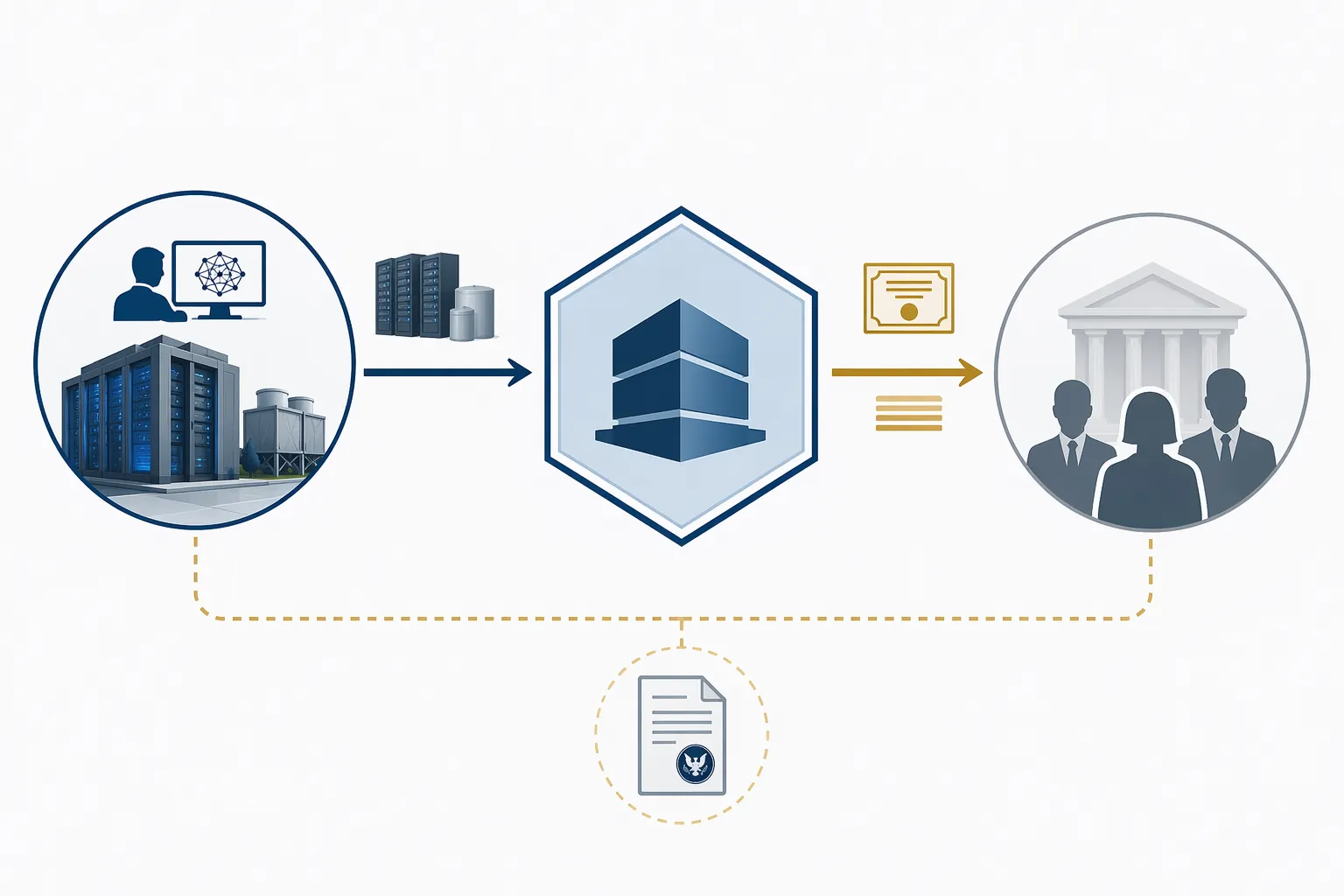
The SPV issue is more structurally interesting and less adjudicated. Quinn Emanuel’s client alert states that more than $120 billion in AI data center spending moved off balance sheets through SPV structures over roughly 18 months, citing Financial Times and Bloomberg reporting.[1] The alert also describes Meta’s Beignet Investor SPV as involving $27 billion in loans from Pimco, BlackRock, and Apollo that did not appear on Meta’s balance sheet, along with a $28 billion residual value guarantee disclosed only in a footnote.[1]
Those figures should not be converted into a decided legal conclusion. The available record does not identify a merits ruling holding that an AI data-center SPV omission violated the federal securities laws. The better reading is that the structure creates a material-omission vulnerability. If a company tells investors that AI infrastructure expansion is manageable, asset-light, partner-funded, or insulated from the balance sheet, while retaining residual guarantees, lease-like obligations, purchase commitments, or dependency on specialized assets, plaintiffs have an obvious place to look.
The credit side is already reacting. Quinn Emanuel reports that Moody’s warned in February 2026 that reported lease liabilities may understate likely cash outflows and that it would adjust credit ratings for hidden AI data-center risks.[1] That warning is not a securities-law ruling either, but it sharpens materiality. If a rating agency says reported liabilities may not capture expected cash obligations, a bondholder plaintiff can argue that the omitted or minimized exposure mattered to credit analysis, not merely to a narrative about technological ambition.
SPVs also complicate who bears the consequence. Investors may see a financing entity, a data-center operator, equipment vendors, hyperscaler commitments, and residual guarantees arranged so that formal debt appears away from the operating company. The legal question is not whether that architecture is inherently improper. It is whether the issuer’s disclosures gave investors enough information to understand the issuer’s retained economics and downside exposure. A footnote may be sufficient in one record and inadequate in another; materiality will turn on the size, terms, dependency, and prominence of the disclosed obligation.
What the Current Record Proves, and What It Does Not
The current record proves that AI-related securities exposure is measurable across more than one procedural channel. Private plaintiffs have filed AI-washing and AI-debt offering cases. The SEC has brought AI-washing enforcement actions. The SEC staff has pressed companies for specificity in AI disclosure. Financing structures used for AI data centers have attracted law-firm and credit-rating scrutiny. That is enough for issuers, D&O carriers, and securities litigators to track the area by claim type rather than by headline theme.
The record does not yet prove the contours of liability. Oracle matters because it appears to be the first bondholder suit tied to AI debt offering documents, not because a court has accepted its theory.[1] CoreWeave and Richtech matter because they show plaintiffs extending AI-washing allegations into financing-adjacent and capability-representation settings, not because the term “AI-washing” itself supplies the elements of Rule 10b-5.[2][3] The SEC actions matter because they show enforcement use of existing anti-fraud authority, not because settled orders decide private plaintiffs’ claims.[4]
For underwriters and offering counsel, the practical file review starts with the places where AI language meets payment risk: demand forecasts, capacity commitments, GPU collateral descriptions, customer concentration, capex funding assumptions, residual guarantees, lease obligations, and statements about balance-sheet insulation. For D&O carriers, the underwriting question is not simply whether the insured uses AI. It is whether the insured raises capital against AI demand or AI infrastructure while relying on disclosure that stays at the level of broad technological promise.
For securities litigators, the useful dividing line is already visible. Existing anti-fraud rules reach exaggerated or false AI capability claims; the SEC enforcement record has made that point concrete. The more contested front is whether AI data-center debt structures, SPV obligations, residual value guarantees, and footnote-only exposures make omissions material in offering documents and periodic disclosures. That is where the next round of pleading leverage is likely to be fought.
References
- Emerging Litigation Risks in Financing AI Data Centers Boom, Quinn Emanuel, March 2026.
- Securities Suit Alleges AI-Washing Stock Price Pump, The D&O Diary, February 2026.
- AI-Related Claims and Other Securities Litigation Trends To Watch, Skadden, 2026.
- AI Legal Risks in SEC Filings: What the SEC Is Actually Looking For in 2026, FinRep, 2026.
- Trends in AI-Related Securities Class Actions Through 2025, Secretariat.
Related records
Tool profile
How Meta's AI Spending Reshapes Law Firm ProfitabilityGoverning regulation
Browse the obligations tracker →Preventive workflow
Browse verification workflows →
Report a correction or tip
Spotted an outdated figure, a misstated fact, or a ruling this case record should reflect? Public comments are disabled for this content given the professional cost of a misreported case outcome, penalty amount, or rule text — use the structured correction channel instead.
Report a correction or tip for this record →