
What South Korea's property tax increase legally changes
South Korea's Aug. 3, 2026 property tax proposal would raise holding taxes on non-owner-occupied, multiple, and ultra-high-value homes while protecting single owner-occupiers, with the package proposed to take effect Jan. 1, 2027. This record explains who the increase legally affects, the proposal-to-law timeline, and why the package is not yet binding law.
- Jurisdiction
- South Korea
- Court
- No court proceeding
- AI tool named
- No AI tool
- Ruling date
- Aug 3, 2026
- Source document
- View primary court order ↗
- Last verified
- Aug 4, 2026
Lex Machina Review is an independent risk-tracking and reference resource. Nothing on this site is legal advice, and using it does not create an attorney-client relationship. Every record is reviewed against primary sources but may not reflect the most current status of a matter — always verify directly against the cited court order, rule text, or a licensed attorney before relying on it.
Companion explanation — secondary to the source document above
Status record — proposed, not enacted
South Korea proposed changes on Aug. 3, 2026; it did not enact a property-tax increase that day. For legal-impact purposes, the operative status is still proposed / not yet enacted. Finance Minister Koo Yun-cheol announced a package that would raise holding-tax rates by up to 2.3 percentage points by house-price tier, but that figure describes the government proposal, not a binding liability already imposed on all homeowners.[1][2]
- Jurisdiction: South Korea.
- Government context: Aug. 3, 2026 tax-package announcement by the finance ministry and Finance Minister Koo Yun-cheol.
- Legal status: proposed; pending public notice, government review, Cabinet approval, and National Assembly action.
- Last verified: Aug. 4, 2026, UTC.
- Non-advice notice: this record is for legal-impact tracking only and is not tax, legal, investment, or restructuring advice.
- Source set reviewed: Reuters; WTVB syndicated Reuters copy; The Korea Herald; The Korea Times.
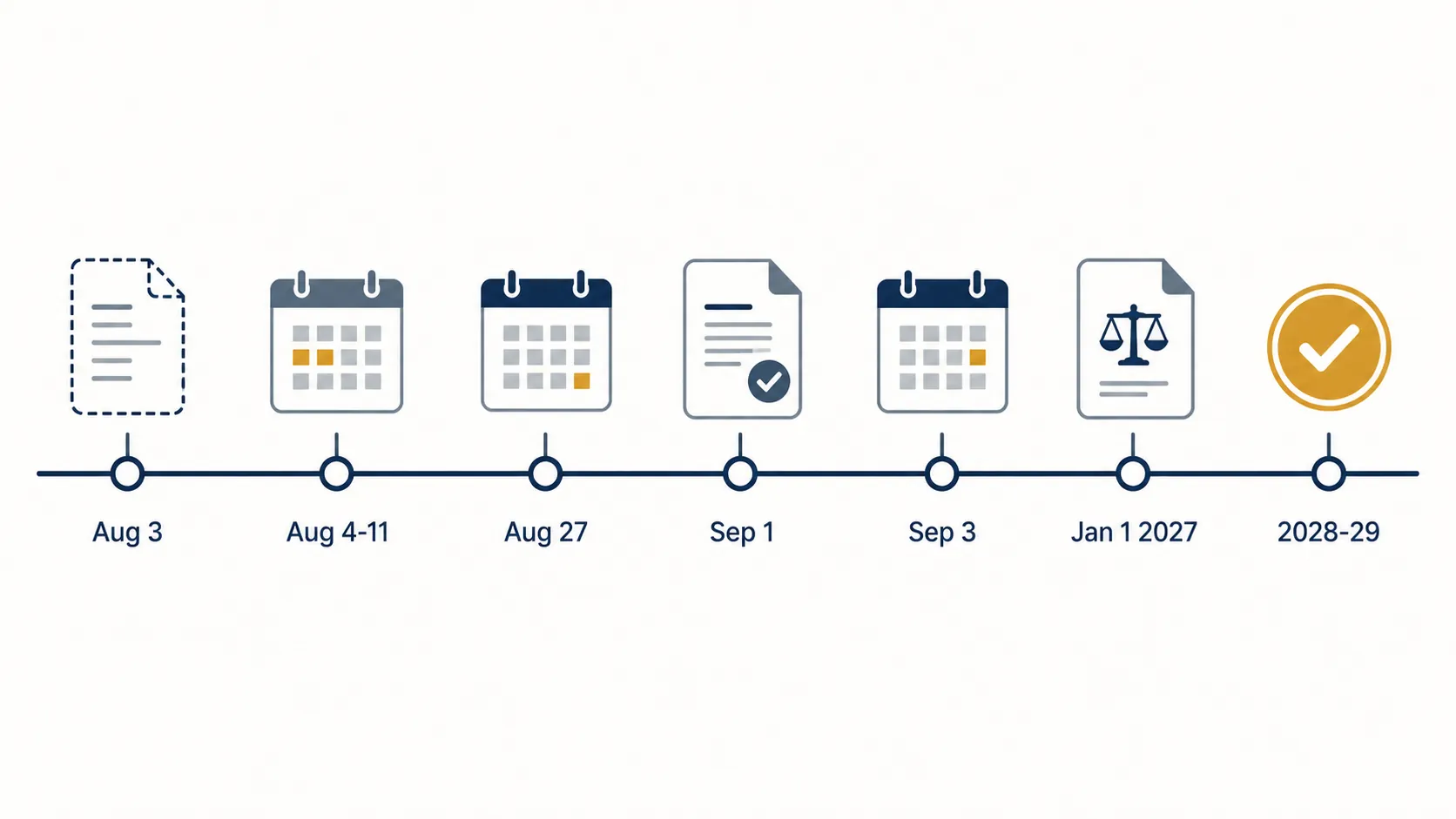
The scheduled legal path is the first control point. The proposal is scheduled for public notice from Aug. 4 to Aug. 11, vice-ministerial review on Aug. 27, Cabinet approval on Sept. 1, and submission to the National Assembly by Sept. 3. The proposed effective date is Jan. 1, 2027, with several design elements phased in during 2028 and 2029.[3][4] Until those approval and legislative steps are complete, compliance files should not describe the package as an enacted tax increase.
The proposal does not treat every homeowner the same way
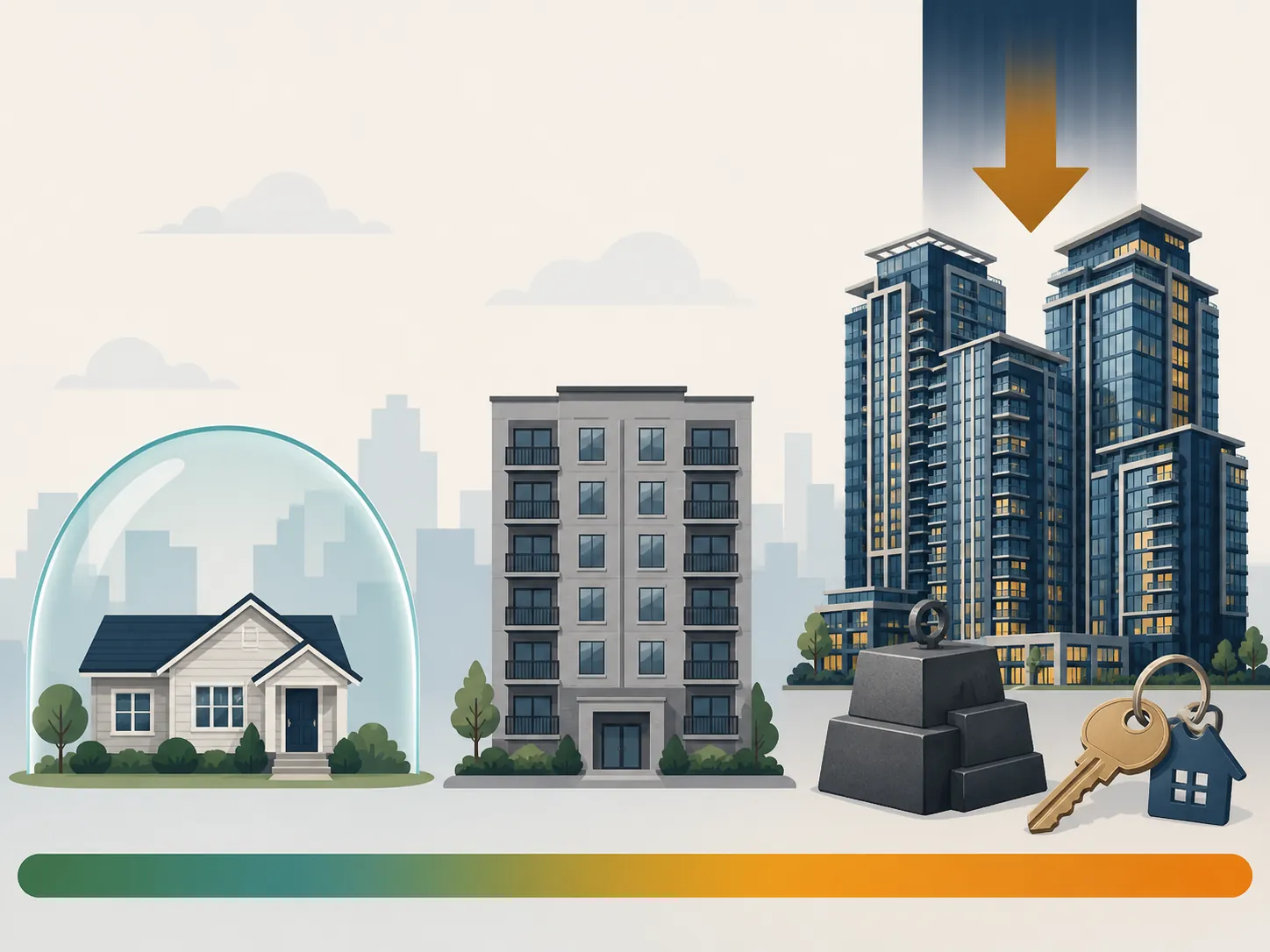
The headline rate increase is real as a proposal, but it is a poor substitute for the legal test. The package shifts the holding-tax analysis toward combined home value and residency. That matters because a single owner-occupier, a non-resident owner of one home, and a multi-home owner can sit in different exposure categories even before any final tax bill is calculated.
The government simulation reported by The Korea Herald is the cleanest guardrail against overstatement: holding taxes would fall for owner-occupied single homes up to roughly 3 billion won, change little around the 4 billion to 5 billion won range, and rise sharply above that range.[3] That is not the same as saying “homeowners pay more.” It says the proposed burden is concentrated on higher-value and less-protected ownership profiles.
The proposed Comprehensive Real Estate Tax mechanics show the same direction. The basic deduction would move from 1.2 billion won for single-home owners and 900 million won for multi-home owners to a more residence-sensitive structure: 1.4 billion won for owner-occupied single homes, 900 million won for non-owner-occupied single homes, and 400 million won plus up to 500 million won for multi-home owners.[4] The legal consequence is straightforward enough for a briefing note: residence and use become more important, while simply asking how many homes a person owns becomes less complete.
What changes inside the holding-tax calculation
For cross-border files, the key holding-tax issue is not the policy slogan but the tax base. The proposal changes deductions, valuation ratios, and long-term holding relief. Each of those can change exposure before any owner gets to the final payable amount.
| Proposed mechanism | Reported change | Legal impact if enacted |
|---|---|---|
| Basic CRET deduction | Owner-occupied single homes: 1.4B won; non-owner-occupied single homes: 900M won; multi-home owners: 400M won plus up to 500M won.[4] | Separates owner-occupiers from non-owner-occupied and multi-home ownership, rather than using a simpler single-home / multi-home split. |
| Fair market value ratio | Rises from 60% to 70%; rises to 80% from 2028 for owners of three or more homes and regulated-area owners.[4] | Increases the portion of value entering the CRET calculation, with a delayed heavier effect for the specified higher-risk categories. |
| Residence-based long-term holding deduction | Set at 8% per year and capped at 80% from 2029, with monetary caps of 2B won in 2028 and 1B won in 2029.[4] | Preserves relief tied to residence and holding period, but narrows how much value can be sheltered in later years. |
| High-value exposure | Government simulation indicates little change around 4B to 5B won for owner-occupied single homes, but sharper increases above that range.[3] | Ultra-high-value homes carry the clearest upward holding-tax risk under the proposed design. |
The fair market value ratio deserves particular attention in legal-impact work because it does not sound like a rate increase to a non-tax reader. It is still capable of increasing the taxable base. If the ratio moves from 60% to 70%, more of the relevant property value is pulled into the calculation before rates and deductions do their work.[4]
The 2028 and 2029 items also matter for transaction planning. A client who is outside the heaviest 2027 exposure may still need a later-year model if the owner has three or more homes, owns in a regulated area, or relies heavily on long-term holding relief. The proposal-to-law period is not only about Jan. 1, 2027.
Who should be treated as materially exposed
A defensible preliminary exposure screen should separate at least three groups. First, single owner-occupiers below the upper high-value ranges are not the proposal’s main target; the reported simulation shows relief or limited change for many of them.[3] Second, non-owner-occupied single-home owners lose the benefit of being treated like resident owner-occupiers for deduction purposes. Third, multi-home owners face lower base deductions and, for some categories, higher valuation ratios later in the phase-in.[4]
For foreign investors and overseas owners, residency classification is therefore not a footnote. The proposal’s structure makes the fact pattern around occupation, residence, aggregate value, number of homes, and regulated-area status central to any preliminary risk answer. The record does not support a separate foreign-buyer surcharge conclusion, and this article does not treat unsourced surcharge chatter as part of the legal package.
Action dates during the proposal-to-law window
The useful work now is conditional modeling, not treating the proposal as settled law. Counsel and tax teams can use the scheduled public notice, review, Cabinet, and National Assembly dates to decide when to refresh internal advice and when to warn stakeholders that a prior answer has become stale.
- Before and during the Aug. 4–11 public notice period: identify Korean residential assets, ownership counts, owner-occupation status, and whether any property sits in a regulated area.
- Before the Aug. 27 vice-ministerial review and Sept. 1 Cabinet date: prepare a conditional exposure model that labels every figure as proposed.
- By the expected Sept. 3 National Assembly submission: compare the submitted text against the Aug. 3 announcement rather than assuming the package is unchanged.
- Before the proposed Jan. 1, 2027 effective date: update transaction, financing, or holding-structure memos only if the proposal has advanced into enacted law.
- For 2028 and 2029: keep a separate phase-in note for fair market value ratio changes and monetary caps, because those later-year mechanics can change the answer for owners who are not the immediate 2027 priority.
Related tax-package items are not the same legal issue
The package also includes a temporary easing of capital-gains-tax surcharges in regulated areas through 2028, described as a measure to induce multi-home owners to sell.[4] That item may affect exit planning, but it is not the holding-tax increase. It should be tracked separately from CRET exposure.
The foreign-worker optional flat tax is another separate item. The proposal would raise the optional flat rate from 19% to 21% and extend eligibility to employment starting by the end of 2029.[4] That can matter for mobility, payroll, and assignment-cost planning, but it does not answer whether a Korean residential property owner faces higher holding tax.
Revenue projections help size the package, but they do not establish individual liability. The government projected 3.44 trillion won in net year-over-year revenue and 13.3 trillion won cumulatively from 2027 through 2031.[3] Those figures support the scale of the proposal; they do not change its pending legal status.
What this record does not conclude
This record does not conclude that the National Assembly will enact the package as announced. It also does not rely on pre-announcement editorials for the Aug. 3 mechanics, does not import separate older tax reforms into this proposal, and does not use rent pass-through estimates to define legal exposure. Market-stabilization rationale explains why the package was presented, but it is not the legal test for who pays.
As of Aug. 4, 2026, the package legally changes nothing yet. If enacted on the proposed schedule, it would reallocate holding-tax burden toward non-owner-occupied, multiple, and ultra-high-value homes while preserving protection for many single owner-occupiers. The practical compliance answer is therefore conditional: evaluate exposure now, but keep every rate, threshold, deduction, and phase-in label tied to the proposal until legislative action is complete.
References
- South Korea proposes higher taxes on wealthy homeowners to stabilise property market — Reuters, Aug. 3, 2026. https://www.reuters.com/world/asia-pacific/south-korea-proposes-higher-taxes-wealthy-homeowners-stabilise-property-market-2026-08-03/
- South Korea proposes higher taxes on wealthy homeowners to stabilise property market — WTVB, Aug. 3, 2026. https://wtvbam.com/2026/08/03/south-korea-proposes-higher-taxes-on-wealthy-homeowners-to-stabilise-property-market/
- Korea Herald report on South Korea’s 2026 property tax overhaul — The Korea Herald, Aug. 3, 2026. https://www.koreaherald.com/article/10829532
- Govt targets high-value, non-owner-occupied homes in tax overhaul — The Korea Times, Aug. 3, 2026. https://www.koreatimes.co.kr/economy/policy/20260803/govt-targets-high-value-non-owner-occupied-homes-in-tax-overhaul
Related records
Tool profile
How Meta's AI Spending Reshapes Law Firm ProfitabilityGoverning regulation
Browse the obligations tracker →Preventive workflow
Browse verification workflows →
Report a correction or tip
Spotted an outdated figure, a misstated fact, or a ruling this case record should reflect? Public comments are disabled for this content given the professional cost of a misreported case outcome, penalty amount, or rule text — use the structured correction channel instead.
Report a correction or tip for this record →