
Spanish-Speaking Car Accident Lawyer CA Directory & AI Risk
This article provides directories to find Spanish-speaking car accident lawyers in California and explains why you should also assess a firm's AI-verification practices, given recent sanctions against personal injury attorneys for AI-hallucinated citations.
- Jurisdiction
- California
- Court
- Orange County Superior Court
- AI tool named
- generative AI
- Ruling date
- Apr 13, 2026
- Source document
- View primary court order ↗
- Last verified
- Jul 30, 2026
Lex Machina Review is an independent risk-tracking and reference resource. Nothing on this site is legal advice, and using it does not create an attorney-client relationship. Every record is reviewed against primary sources but may not reflect the most current status of a matter — always verify directly against the cited court order, rule text, or a licensed attorney before relying on it.
Companion explanation — secondary to the source document above
If you need a Spanish-speaking car accident lawyer in California, start with tools that let you search by language, location, and injury practice area. A directory will not tell you everything about a firm, and it cannot replace checking an attorney’s license status. But after a crash, when an adjuster is calling and someone in the family is searching from a phone, a directory is often the fastest front door.
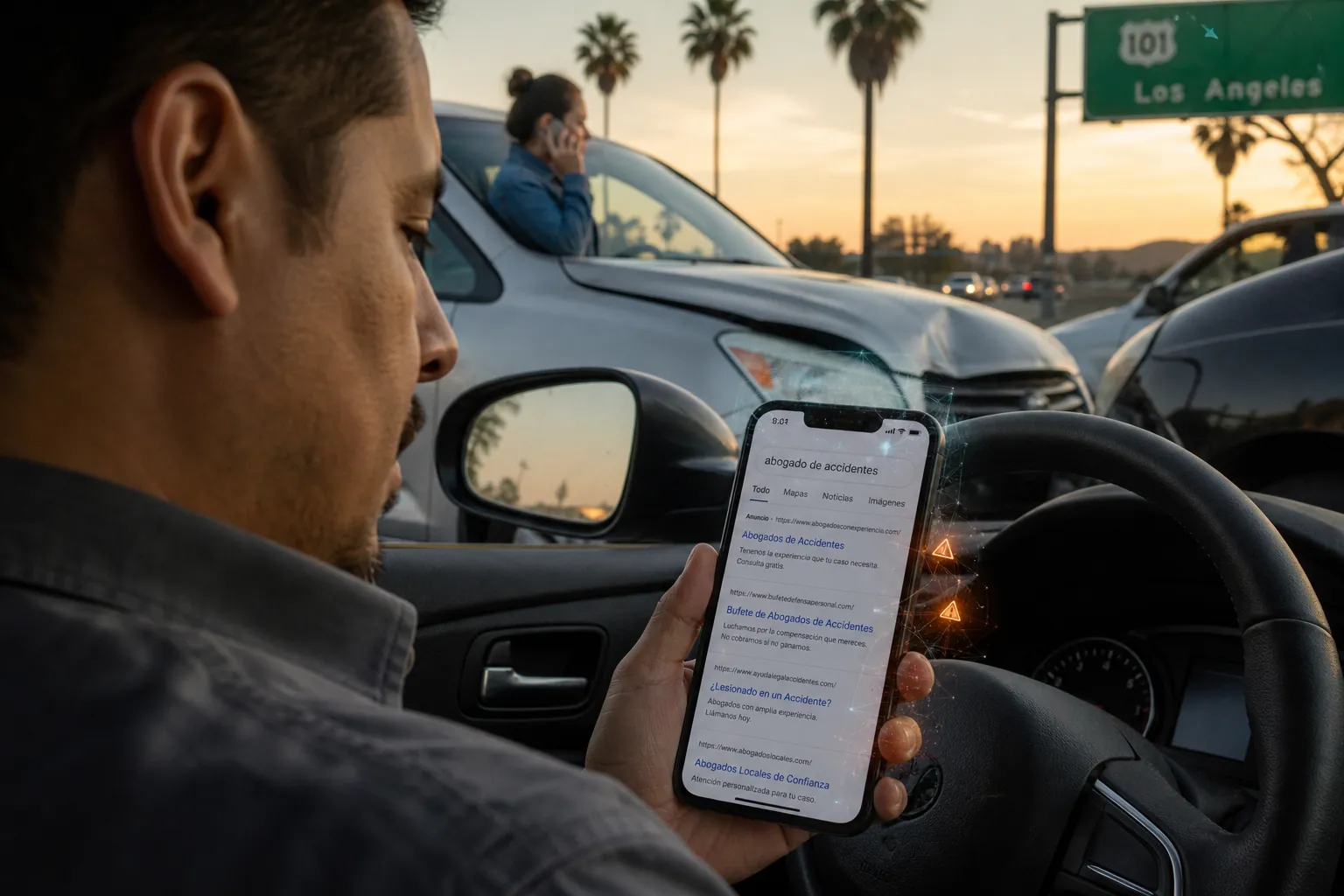
The practical route is simple: use a Spanish-language or language-filtered directory to make a short list, confirm the lawyer’s status with the State Bar of California, and then ask whether the firm has a real process for checking any AI-generated work before it reaches a court filing.
Where To Look First
EquipoDeLesiones.com is the most direct match for a Spanish-speaking car accident lawyer California directory. As captured for this article, the site lists 1,097 California law firms serving Spanish-speaking accident victims, and it also offers Spanish-language legal guides and anonymous case reviews.[1] That makes it useful for someone who wants to begin in Spanish rather than translate every search term into English.
Use that number carefully. A directory count is not a guarantee that every listed firm is currently accepting cases, that every lawyer personally speaks Spanish, or that the listing is complete. It is a starting point, not a certification.
The State Bar of California’s attorney search is the next stop because it is tied to attorney licensing. Its advanced search lets users filter by language, including Spanish, and by self-reported practice areas, including personal injury.[2] The language and practice fields still depend on what attorneys report, so the search is best used to confirm status and narrow possibilities, not to decide by itself who should handle a case.
County bar referral services can also help, especially when a caller wants a local referral rather than a statewide marketing list. They may be less convenient than a searchable directory, but they can be safer for people who want a live referral process, need Spanish-language help, or are unsure whether their matter is really a car accident, insurance, workers’ compensation, or another kind of claim.
| Search route | What it helps with | What to verify separately |
|---|---|---|
| EquipoDeLesiones.com | Spanish-language accident-lawyer search and guides | Attorney status, current availability, who at the firm speaks Spanish |
| State Bar of California attorney search | License status, discipline history, language and practice-area filters | Whether the firm is a good fit for a car accident claim |
| County bar referral services | Local referral help and possible Spanish-language intake support | Fee structure, case experience, and filing-review process |
The Directory Field That Is Missing
Most directories can help you find a bilingual lawyer. They usually cannot tell you whether a firm has been sanctioned for AI misuse, whether it uses generative AI to draft legal filings, or whether a human lawyer checks citations before anything is filed with a court.
That gap matters because a polished Spanish-language intake experience can make a firm feel careful. Sometimes it is. But client-facing accessibility and back-office filing discipline are different things. A receptionist who can explain the intake form in Spanish cannot fix a brief that cites cases no court ever decided.
This is not an argument against using AI at a law firm. AI may help lawyers organize medical records, draft internal chronologies, outline demand letters, or support translation tasks. The problem is narrower and more concrete: AI-generated or AI-assisted legal citations can enter a filing without adequate verification, and the client’s case is the place where that mistake lands.
What Recent AI Citation Cases Show
The California example deserves care. The Los Angeles Times reported that California personal injury attorney Steven Thomas Romeyn was charged by the State Bar in April 2026 over alleged AI-hallucinated citations in an Orange County Superior Court filing connected to a personal-injury car-accident matter.[3] That is a report of charges, not a final adjudication. The distinction matters, especially when consumers are trying to evaluate a lawyer fairly.
The mechanism is easier to see in Wadsworth v. Walmart. Reporting on sanctions against three Morgan & Morgan personal-injury attorneys described a filing where 8 of 9 cited cases were AI hallucinations.[4][5] In plain terms, the filing looked legal on the page, but most of the cited authorities reportedly did not hold up when checked.
For an injured client, that is not a technical embarrassment. It can mean delay, court sanctions, loss of credibility, and extra work for another lawyer or staff member who has to repair the filing. The paralegal or associate asked to clean up the mistake may not have been the person who trusted the AI output in the first place, but the case still has to be salvaged in real time.
Another California matter, Lacey v. State Farm, has been described by CEB as involving a $31,000 sanction against a California law firm for AI-generated fake citations in court filings.[6] Because that figure is being used here from CEB’s secondary-source guidebook page rather than a reviewed primary court order, it should be treated as reported, not independently confirmed from the docket.
The broader sanctions trend has also been described as accelerating in early 2026, but secondary reports about totals and timing should not be used to rank individual California firms unless they are checked against underlying court orders. For a person choosing counsel, the safer lesson is modest: ask how the firm verifies AI-assisted work before it files anything.
A Safer Search Process
A good search does not need to become a private investigation. It does need a few checkpoints before signing a fee agreement.
- Build a short list from a Spanish-language directory, the State Bar attorney search, or a county bar referral service.
- Confirm each lawyer’s active status and any public discipline information through the State Bar of California.
- Call the firm and confirm who speaks Spanish: the attorney, the intake team, a paralegal, or an interpreter.
- Ask who will handle the case day to day, not only whose name appears in advertising.
- Ask the two AI-verification questions before signing.
Those steps are not legal advice, and they do not guarantee a result. They are a way to reduce avoidable confusion at intake, especially for families trying to compare firms quickly after a crash.
Question 1: What AI Tools Does Your Firm Use?
The point is not to catch the lawyer using AI. A thoughtful firm may use AI for limited tasks and still have strong controls. The useful answer names the kinds of tasks AI may touch: medical summaries, translation support, demand-letter drafts, research memos, pleadings, or briefs.
A vague answer is more concerning than a candid one. If a firm says “we use advanced technology” but cannot explain whether AI is used for legal research or court filings, the client still does not know where the risk sits.
Question 2: Who Reviews AI-Generated Content Before Filing?
This is the more important question. The answer should identify a human reviewer with legal responsibility. For court filings, that usually means an attorney verifies citations, quotations, and legal propositions before the document is filed. For client communications, it may mean a lawyer or trained staff member checks medical, insurance, and deadline information before it is sent.
California lawyers also have professional duties around competence, diligence, supervision, and candor that do not disappear because a draft came from software. For more on those duties, see our guide to California State Bar AI ethics guidance.
What A Useful Answer Sounds Like
A careful firm does not need to hand over its internal policy during an intake call. But it should be able to answer in ordinary language. A useful answer might sound like this: “We may use AI to organize records or prepare drafts, but an attorney checks all legal citations against a legal research database before anything is filed.”
A weaker answer is one that treats the question as strange, refuses to say whether AI is used at all, or suggests that software accuracy is enough by itself. The concern is not secrecy alone. It is whether anyone has been assigned to verify the parts of the work that can hurt the client if they are wrong.
If the person answering the phone does not know, that is not automatically disqualifying. Intake staff may not know every filing process. The better test is whether the firm can get the answer from the lawyer or case manager before the client signs.
How To Use Directories Without Overtrusting Them
Directory listings are built for discovery. They help people find names, locations, languages, and practice areas. They are less useful for evaluating internal controls, recent court sanctions, or whether the lawyer named in an advertisement will personally supervise the work.
That does not make the directories bad. For Spanish-speaking accident victims, language access is not a cosmetic feature. It affects whether a client understands medical-record requests, insurance deadlines, settlement authority, and what the lawyer is asking them to sign.
The safer habit is to separate three decisions that often get blurred together: Can I find the firm? Can I confirm the lawyer is licensed and in good standing? Can the firm explain how it checks AI-assisted work before it reaches a court?
| If you see this | Ask this before signing |
|---|---|
| The firm advertises Spanish-language service | Will I be able to speak with the attorney or case team in Spanish? |
| The directory lists personal injury or car accidents | Who will supervise my case, and how often will I get updates? |
| The firm says it uses AI or legal technology | What AI tools do you use, and for what tasks? |
| The firm prepares court filings | Who verifies AI-generated citations, quotes, and legal arguments before filing? |
| The firm has a strong marketing presence | Where can I confirm the attorney’s State Bar status? |
California has several workable paths to find Spanish-speaking car accident lawyers. EquipoDeLesiones.com, the State Bar’s attorney search, and county bar referral services can all help a family move from panic-searching to a real call list. The missing piece is filing reliability. Directory visibility is not the same as verification discipline, so bilingual access should now be paired with State Bar checks and direct AI-review questions before a client signs.
References
- EquipoDeLesiones.com — Abogados de Accidentes que Hablan Español, EquipoDeLesiones.com
- Attorney Search — The State Bar of California, The State Bar of California
- Attorneys used AI, cited fake legal decisions, State Bar alleges, LA Times, April 13, 2026
- Injury Attys Sanctioned Over AI-Hallucinated Case Citations, Law360
- Lawyers in Walmart lawsuit admit AI 'hallucinated' case citations, Reuters, February 10, 2025
- A California Law Firm Just Paid $31K in Sanctions for AI Hallucinations, CEB
Related records
Tool profile
How Meta's AI Spending Reshapes Law Firm ProfitabilityGoverning regulation
Browse the obligations tracker →Preventive workflow
Browse verification workflows →
Report a correction or tip
Spotted an outdated figure, a misstated fact, or a ruling this case record should reflect? Public comments are disabled for this content given the professional cost of a misreported case outcome, penalty amount, or rule text — use the structured correction channel instead.
Report a correction or tip for this record →