
Dana Stubblefield's Rape Conviction Reversal Is Not Final
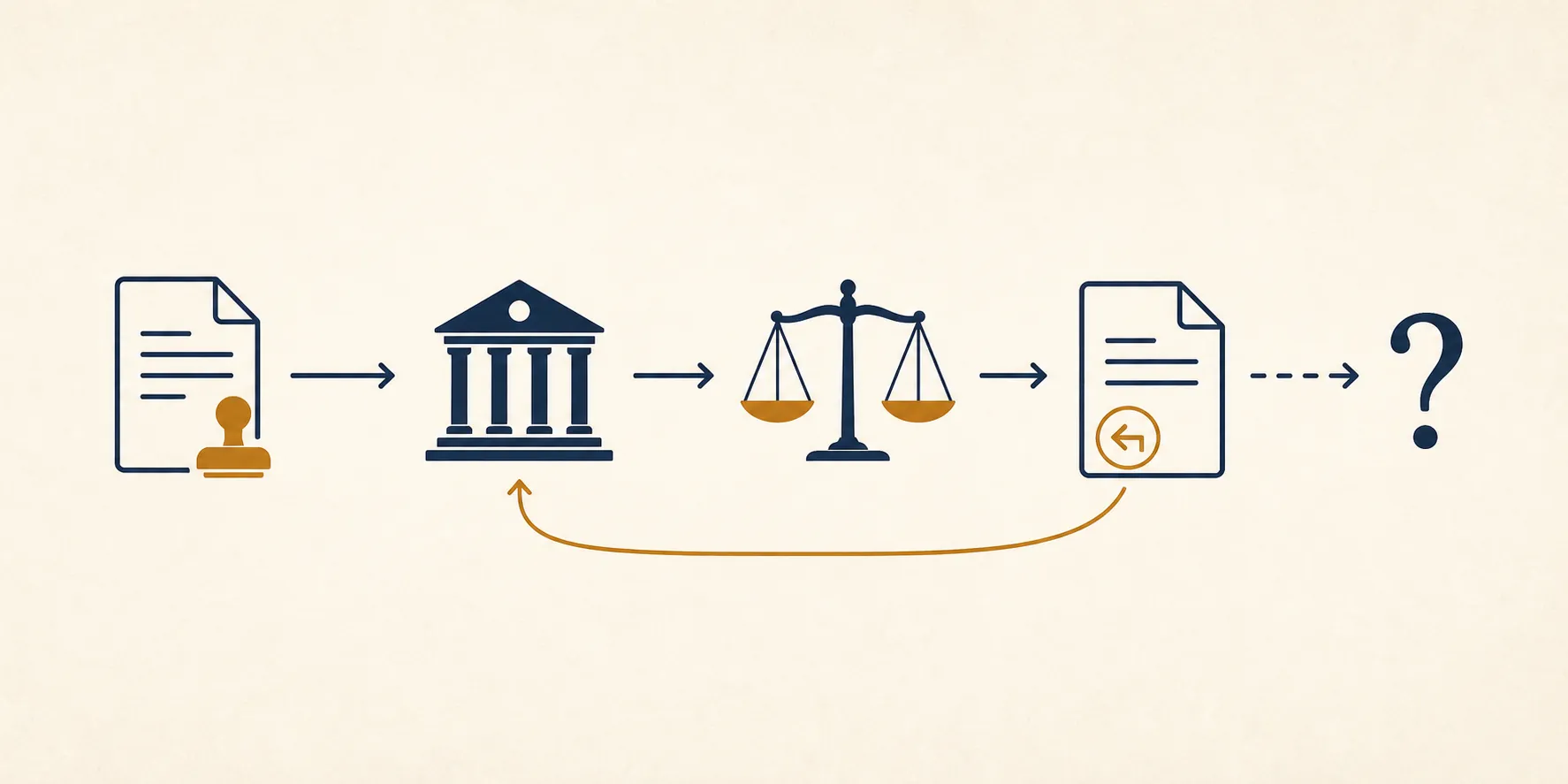
As of early August 2026, Dana Stubblefield's rape-conviction reversal is not final. The California Supreme Court remanded the case for reconsideration under Bankston's harmless-error rule, and the district attorney's re-file decision remains pending.
- Jurisdiction
- US-CA
- Court
- California Supreme Court
- AI tool named
- No AI tool implicated
- Ruling date
- Jul 1, 2026
- Source document
- View primary court order ↗
- Last verified
- Aug 1, 2026
Lex Machina Review is an independent risk-tracking and reference resource. Nothing on this site is legal advice, and using it does not create an attorney-client relationship. Every record is reviewed against primary sources but may not reflect the most current status of a matter — always verify directly against the cited court order, rule text, or a licensed attorney before relying on it.
Companion explanation — secondary to the source document above
Status as of August 1, 2026
No: Dana Stubblefield’s rape-conviction reversal is not a settled final endpoint. The usable status is narrower and more awkward: the Sixth District vacated the 2020 judgment in People v. Stubblefield, H048598; the California Supreme Court granted review in S289152; and public July 2026 accounts identify the Supreme Court’s disposition as a remand to the Sixth District for reconsideration after Bankston rather than an affirmance of the vacatur or a reinstatement of the conviction. [1][2][3]
Bankston is the reason the case cannot be treated as simply “overturned and done.” Decided June 1, 2026, Bankston held that Racial Justice Act violations in pre-enactment judgments are reviewed for harmless error beyond a reasonable doubt, and it disapproved Stubblefield’s reasoning to the extent inconsistent with that rule. [4][5]
Three appellate matters organize the record: H048598, the Sixth District appeal that vacated the conviction; H052893, Stubblefield v. Superior Court, the release-pending-remittitur proceeding; and S289152, the California Supreme Court review matter. H052893 explains why Stubblefield was released under conditions while the appellate process continued, but it did not make the reversal final. [6]
The Santa Clara district attorney’s stated intention to re-file charges dates to the February 2025 release period. The public materials cited here do not supply a resolved 2026 re-file decision, so the district attorney item remains open, not confirmed closed. [7]

| Matter | Court / role | Current use |
|---|---|---|
| H048598 | Sixth District Court of Appeal | The published appeal that vacated the 2020 judgment under the California Racial Justice Act. |
| H052893 | Sixth District original proceeding | The release-pending-remittitur matter; useful for custody status, not for finality. |
| S289152 | California Supreme Court | Review granted, then remanded after Bankston for Sixth District reconsideration. |
What the Sixth District actually did
The Sixth District’s December 2024 decision was a major appellate event, not a minor procedural correction. It vacated Stubblefield’s conviction under the California Racial Justice Act, Penal Code section 745, after concluding that the prosecution’s closing argument violated the Act’s prohibition on racially discriminatory language or argument. The decision was later published at 107 Cal.App.5th 896. [1][8]
That ruling is why the case entered the shorthand stream as “Dana Stubblefield rape conviction overturned appeal.” The shorthand is understandable, but it leaves out the part that now matters most: after review was granted and Bankston was decided, the vacatur became a ruling awaiting reconsideration under a different harmless-error framework, not a final stopping point.
The factual shorthand also needs discipline on the charges. AP corrected its reversal coverage to state that Stubblefield was acquitted of the count alleging rape of a victim incapable of consent. That correction matters because describing the case as if that count resulted in conviction is not a harmless stylistic slip; it changes what the jury actually did. [9]
A citation-safe background sentence is therefore: Stubblefield’s 2020 rape conviction was vacated by the Sixth District under the Racial Justice Act, but the California Supreme Court later sent the case back for reconsideration after Bankston. If the complainant’s capacity or the acquitted count is relevant, the acquittal must be stated expressly.
Release conditions answered custody, not finality
The February 2025 release proceeding is often where the status drift starts. Stubblefield was released after the Sixth District’s vacatur, but release pending the remittitur and further review is not the same thing as a final appellate mandate ending the prosecution.
In H052893, the Sixth District addressed the authority to consider release after reversal while appellate proceedings remained in motion, including the interaction of Code of Civil Procedure section 916(a) and Penal Code provisions governing release. That proceeding helped get Stubblefield out of custody; it did not decide whether the RJA ruling would survive California Supreme Court review or later remand. [6]
The release order was functional: no monetary bail, supervised release, an ankle monitor, no firearms, and no contact with the victim. Those conditions are important for present custody status, but they do not close the appellate case or eliminate possible retrial exposure. [7]
How Supreme Court review changed the posture
The California Supreme Court granted review in March 2025. That alone made any “final reversal” formulation unsafe. Review meant the Sixth District’s judgment was not the last word, even while Stubblefield’s custody status had changed. [1]
The Supreme Court then waited on Bankston and related Racial Justice Act issues. That wait mattered because Stubblefield’s conviction predated the RJA’s effective date. The legal question was not simply whether an RJA violation requires a remedy; it was what harmless-error rule applies when the judgment was entered before the Act took effect. [4][5]
After Bankston, public July 2026 accounts reported that the Supreme Court sent Stubblefield back to the Sixth District for reconsideration in light of that decision. For anyone quoting the July 2026 order, the exact S289152 order language should be checked against the appellate docket rather than copied from a news paraphrase or conference recap. The status point, however, is already clear enough: remand is neither affirmance nor final erasure. [2][3]
The narrow Bankston point that matters here
Bankston does not need to be inflated into a complete RJA treatise to explain Stubblefield’s posture. Its relevant holding is that, for pre-enactment judgments, an RJA violation is subject to harmless-beyond-a-reasonable-doubt review. That is a demanding standard: the reviewing court asks whether the error can be deemed harmless beyond a reasonable doubt, not merely whether a different outcome was possible. [4][5]
Bankston also expressly undercut Stubblefield’s earlier reasoning to the extent inconsistent. That does not mean Stubblefield automatically loses on remand. It means the Sixth District must now reconsider the case under Bankston’s harmless-error rule rather than rely on any earlier Stubblefield reasoning Bankston rejected. [4]
That distinction is the one most likely to disappear in memos and media clips. “Conviction overturned” describes what the Sixth District did in December 2024. “Conviction reversal final” describes something the present record does not support.
The two live uncertainties
The first live uncertainty is appellate: what the Sixth District will do on reconsideration after the Supreme Court’s Bankston remand. It may not simply cite its prior result as if nothing happened. It has to address the case through the harmless-beyond-a-reasonable-doubt lens Bankston supplied.
The second live uncertainty is prosecutorial: whether and how the Santa Clara district attorney will pursue charges if the procedural posture permits it. The public February 2025 reporting identified the DA’s intention to re-file, but the available public record for this status check does not show a later resolved 2026 charging decision. [7]
Those uncertainties are related but not identical. The appellate remand concerns whether the Sixth District’s RJA vacatur survives under Bankston. The re-file question concerns what prosecutors do after the appellate path leaves room for renewed proceedings. Conflating them produces the usual bad sentence: free, therefore over; vacated, therefore final; remanded, therefore reinstated. None of those follows.
For readers tracking comparable procedural-status records, this belongs in the Risk Digest bucket rather than as a celebrity-crime retrospective. The closest site format analogue is the Adam King status record: a record to cite carefully, not a narrative to remember loosely.
Citation-safe current formulation
As of August 1, 2026, Stubblefield is free under supervised-release conditions, and the Sixth District previously vacated his 2020 rape conviction under the California Racial Justice Act. But the reversal is not final: the California Supreme Court granted review and sent the matter back for reconsideration in light of Bankston, which requires harmless-beyond-a-reasonable-doubt review for pre-enactment RJA judgments. The Santa Clara district attorney’s re-file decision remains unresolved in the public materials reviewed here, so retrial exposure should be treated as open.
References
- People v. Stubblefield, California Courts, March 14, 2025.
- Supreme Court will hear murder resentencing evidence case, Horvitz & Levy, July 30, 2026.
- Dana Stubblefield’s overturned rape conviction, San Francisco Chronicle, July 31, 2026.
- Racial Justice Act, Metropolitan News-Enterprise, June 2, 2026.
- Recent Opinions & Review Grants, FDAP.
- Stubblefield v. Superior Court, California Courts, February 5, 2025.
- Former 49ers player Dana Stubblefield released from jail after rape conviction was overturned, AP News.
- People v. Stubblefield, Central California Appellate Program.
- Dana Stubblefield rape conviction overturned, AP News.
Related records
Tool profile
How Meta's AI Spending Reshapes Law Firm ProfitabilityGoverning regulation
Browse the obligations tracker →Preventive workflow
Browse verification workflows →
Report a correction or tip
Spotted an outdated figure, a misstated fact, or a ruling this case record should reflect? Public comments are disabled for this content given the professional cost of a misreported case outcome, penalty amount, or rule text — use the structured correction channel instead.
Report a correction or tip for this record →