
Can a Super Speeder Plea Endanger Richardson's Assault Deal?
Sha'Carri Richardson's July 31, 2026 Florida no-contest super-speeder plea is now a criminal conviction on her record, giving SeaTac prosecutors a colorable basis to treat it as a breach of the 'no criminal law violations' condition in her assault-case deferral. Whether they act remains unresolved as of August 1, 2026.
- Jurisdiction
- US-FL; US-WA
- Court
- Orange County Court (FL); SeaTac Municipal Court (WA)
- AI tool named
- None
- Ruling date
- Jul 31, 2026
- Source document
- View primary court order ↗
- Last verified
- Aug 1, 2026
Lex Machina Review is an independent risk-tracking and reference resource. Nothing on this site is legal advice, and using it does not create an attorney-client relationship. Every record is reviewed against primary sources but may not reflect the most current status of a matter — always verify directly against the cited court order, rule text, or a licensed attorney before relying on it.
Companion explanation — secondary to the source document above
| Risk Digest field | Record status |
|---|---|
| Florida matter | CONFIRMED/REPORTED: Richardson entered a no-contest plea on July 31, 2026, in an Orange County, Florida dangerous excessive speeding case; WKMG reports a $500 fine, 100 hours of community service, an 8-hour driving course, and no jail, while FOX 35 describes a written plea and says online court records show she was adjudicated guilty. [1][2] |
| Florida statute | CONFIRMED: Florida Statutes § 316.1922 makes dangerous excessive speeding a criminal offense covering driving 50 mph or more over the posted limit or driving at 100 mph or more in a way that endangers persons or property; for a first offense, the statute authorizes up to 30 days in jail and/or a $500 fine. [3] |
| Florida law timing | CONFIRMED: HB 351 created Florida’s dangerous excessive speeding framework effective July 1, 2025. [4] |
| Washington matter | REPORTED: A December 23, 2025 SeaTac Stipulated Order of Continuance reportedly continued Richardson’s fourth-degree domestic-violence assault case for two years and required, among other terms, “no criminal law violations,” 20 hours of community service, DV moral reconation therapy, and no hostile contact with Christian Coleman. [5] |
| Cross-case risk | REPORTED/ANALYZED: TechTimes frames the Florida plea as a possible threat to the SeaTac deal because a nolo plea carries criminal-record consequences in Florida while the SeaTac SOC reportedly bars criminal-law violations. [6] |
| Current enforcement status | UNRESOLVED: No reported source states that SeaTac prosecutors have moved to revoke the SOC, that a court has found a breach, or that the assault-case deal has ended as of August 1, 2026. |
The short answer is that Sha’Carri Richardson’s Florida no-contest plea appears to give SeaTac prosecutors a colorable argument that she violated the “no criminal law violations” condition in her separate assault-case continuance, but it does not automatically revoke that deal, and no revocation decision had been reported as of August 1, 2026.
Two source caveats matter before the legal consequence is overstated. First, the Florida adjudication point is being treated here as FOX 35’s reading of online court records, not as a plea order independently obtained for this article. Second, the SeaTac SOC terms are attributed to the order obtained by LetsRun through a public-records request and should be checked against the court docket and order before any record summary is treated as final. That is the same verification discipline used in a Risk Digest record: start with the operative document, then read the recap.
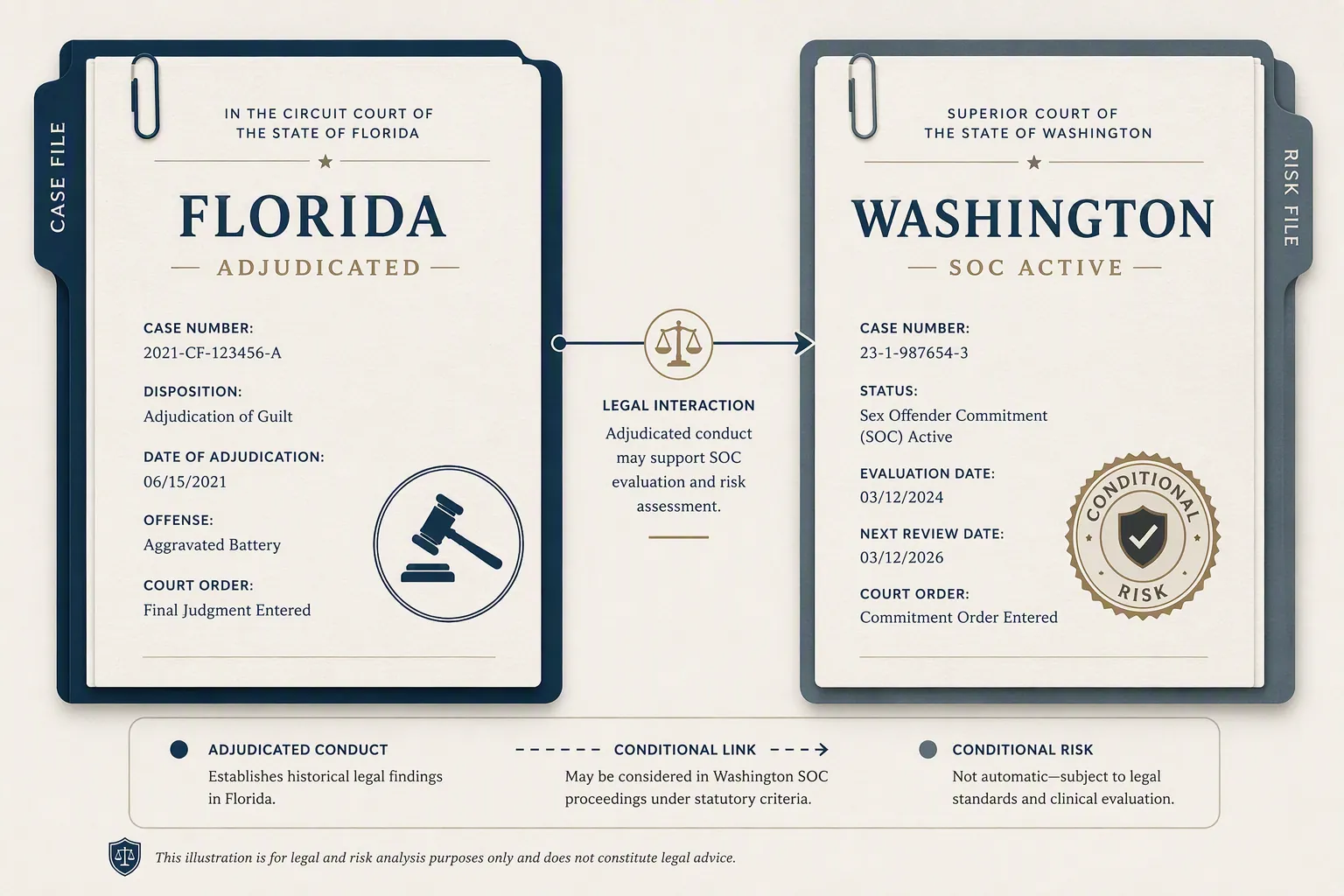
The Florida plea is not just ordinary traffic shorthand
The legal hinge is the word “criminal.” Florida’s dangerous excessive speeding statute is not merely a label attached to fast driving. It says a person commits dangerous excessive speeding by driving 50 miles per hour or more over the posted speed limit, or by driving at 100 miles per hour or more in a way that threatens the safety of persons or property. For a first conviction, the statute permits imprisonment for up to 30 days, a fine of up to $500, or both. [3]
That matters because “super speeder” is a loose phrase unless tied to a statute. In this record, it refers to Florida’s § 316.1922 framework, created by HB 351 and effective July 1, 2025, not Georgia’s separate super-speeder surcharge law. [4]
WKMG reports that Richardson pleaded no contest on July 31, 2026, and received a $500 fine, 100 hours of community service, an 8-hour driving course, and no jail. [1] FOX 35 reports that the written plea was submitted without Richardson appearing in court and that online court records show she was adjudicated guilty. [2] The adjudication detail is the load-bearing fact for the cross-case question. “Avoids jail” is a sentencing result; “adjudicated guilty” is a record consequence.
A no-contest plea does not have to be dressed up as a confession to matter here. TechTimes describes the Florida nolo plea as carrying the same weight as a guilty plea for criminal sentencing and record purposes while not serving as an admission usable in a civil suit. [6] For the SeaTac SOC issue, the useful distinction is narrow: if the Florida case produced a criminal adjudication, it gives the Washington prosecutor something more concrete than a traffic citation to point to.
The SeaTac order reportedly turns on “no criminal law violations”
The Washington case is not described in the better-sourced materials as a closed matter with charges simply gone. FOX 13 Seattle reported that Richardson was arrested at Seattle-Tacoma International Airport on July 27, 2025, on a fourth-degree domestic violence assault allegation handled by Port of Seattle Police. [7] LetsRun later reported that a December 23, 2025 Stipulated Order of Continuance postponed the case for two years and imposed conditions, including “no criminal law violations,” 20 hours of community service, DV moral reconation therapy, and no hostile contact with Christian Coleman. [5]
That is different from a final dismissal. In ordinary procedural terms, an SOC leaves a case suspended on conditions. If the defendant satisfies the conditions through the continuance period, dismissal may follow. If the prosecutor alleges a breach and the court agrees, the postponed case can return to active status. The exact Washington consequence depends on the order and local procedure, which is why the order itself matters more than a recap.
Pulse Sports Kenya also described the SeaTac deal as a two-year arrangement that could be affected by the later Florida arrest and reported that Richardson’s assault-case attorney, Todd Maybrown, declined comment. [8] That is a useful corroborating report, but it still leaves the important enforcement question unanswered.
Why the breach argument is colorable, not automatic
The breach argument has a plain sequence: Florida creates a criminal speeding offense; Richardson pleads no contest; FOX 35 reports an adjudication of guilt from online records; the SeaTac SOC reportedly requires no criminal-law violations. Put those verbs in order and a prosecutor has a plausible basis to say the condition was violated. [2][3][5]
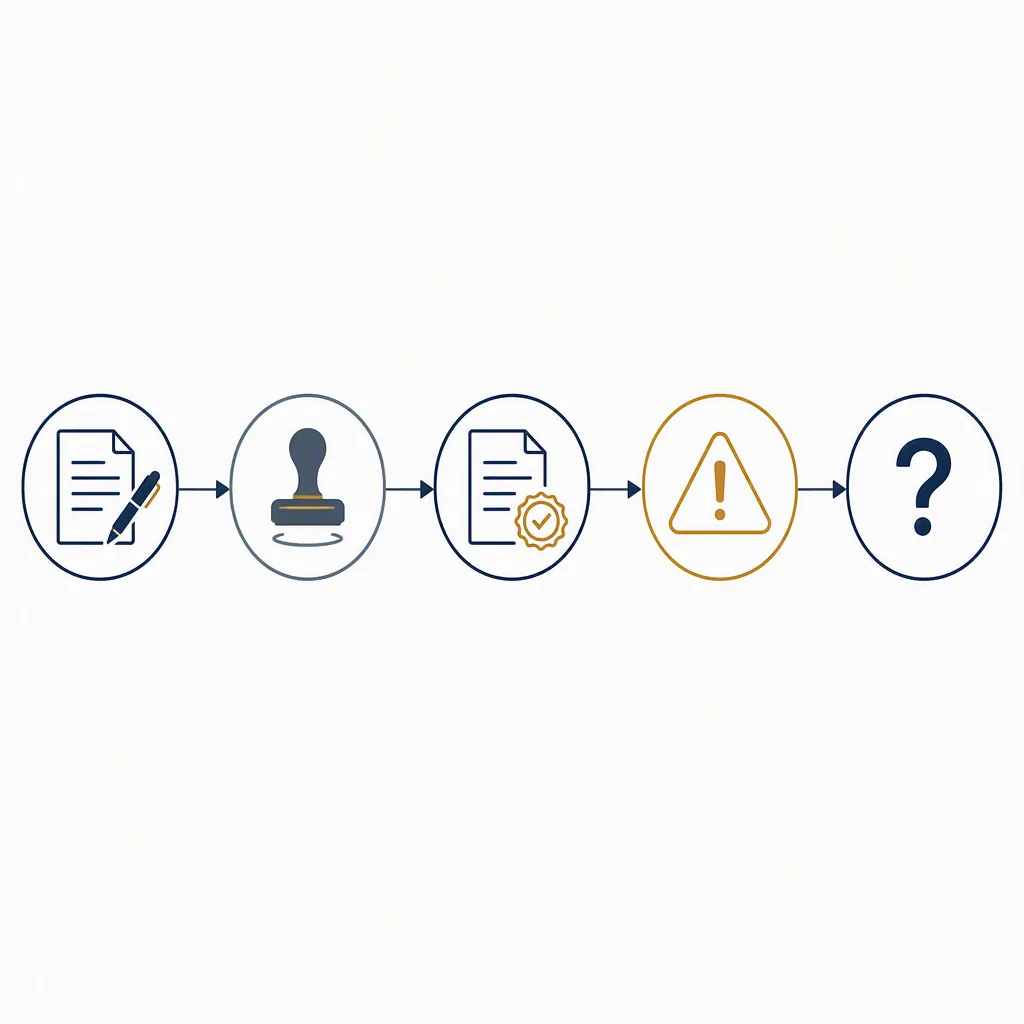
The sequence still does not revoke the SOC by itself. Someone in SeaTac would have to act on the Florida adjudication, usually by deciding whether to treat the Florida conviction as a breach, putting the issue before the court in the Washington matter, and asking for whatever remedy the SOC permits. The current public record described in the available sources does not show that step.
TechTimes is the most direct bridge source on this point, stating that the Florida plea may put the prior assault deal at risk because of the SOC’s no-criminal-law-violations condition. [6] The safer formulation is “may put at risk,” not “ended,” “revoked,” or “charges dropped.” The Florida conviction supplies a possible trigger; the Washington case still requires enforcement.
| Step | What the record currently supports | What it does not support |
|---|---|---|
| Florida plea | No-contest plea entered July 31, 2026; reported adjudication of guilt from online court records. [1][2] | A claim that the Florida plea order has been independently reviewed here. |
| Criminal character | Florida § 316.1922 is a criminal dangerous excessive speeding statute with possible jail time for a first conviction. [3] | A claim that every “super speeder” label in every state has the same consequence. |
| SeaTac condition | SOC reportedly required “no criminal law violations” during a two-year continuance. [5] | A claim that the SeaTac case was already finally dismissed. |
| Breach enforcement | A prosecutor has a colorable basis to raise the Florida adjudication as a breach. | A claim that SeaTac has moved, that a judge has ruled, or that the SOC has been revoked. |
The reported plea terms conflict, but the conflict does not erase the conviction risk
The public reports do not line up cleanly on the Florida sentencing terms. WKMG reports a $500 fine, 100 hours of community service, an 8-hour driving course, and no jail. [1] Florida Today reports a fine plus an aggressive driving course and says no community service was required; WESH similarly reports a fine plus an aggressive driving course and no community service. [9][10]
That conflict should be recorded, not quietly harmonized. It affects the sentence summary. It does not do much work on the SeaTac question if the adjudication point is accurate, because the reported criminal conviction—not whether the sentence included community service—is what gives the prosecutor a possible SOC-breach argument.
There is also a speed discrepancy in the available reports. NBC News, citing the Florida affidavit, reported that Richardson was stopped on January 29, 2026, after driving 104 mph in a 65 mph zone and described allegations of tailgating and lane-weaving. [11] FOX 35’s original account used “over 110 mph” language. [2] For the present issue, the precise number is less important than the charged statute and the later adjudication, but it should not be rounded into certainty.
Be careful with “charges dropped” language in the assault case
Florida Today’s report says the SeaTac charges were dropped after Coleman declined to participate. [9] That phrasing sits uneasily beside the SOC account from LetsRun: a charged case conditionally continued for two years under an order with ongoing terms. [5] The difference is not cosmetic. A dropped case leaves little for a later prosecutor to enforce; a continued case under conditions leaves a live compliance question.
The better record treatment is to describe the SeaTac case as reported under a Stipulated Order of Continuance unless and until the docket shows a dismissal. If a later docket entry says “dismissed,” the date and basis would matter. If it says “continued,” the conditions matter. If it says “revoked,” the Florida conviction may become part of a new record summary. Those verbs are not interchangeable.
What has to happen before the assault deal is actually revoked
A practical enforcement path would begin with SeaTac learning of the Florida adjudication and deciding that it qualifies as a criminal-law violation under the SOC. The prosecutor would then need to invoke the SOC’s breach mechanism. Richardson’s counsel could dispute the effect of the Florida plea, the meaning of the condition, the remedy, or the factual record being used. The court would have to decide what follows under the order.
The available reports do not show that any of that has happened. There is no reported SeaTac revocation motion, no reported breach finding, and no reported order ending the continuance as of August 1, 2026. The risk is therefore real enough to appear in a careful legal record summary, but too contingent to write as an outcome.
For legal journalists and records teams, the next verification step is not to reword the celebrity narrative. It is to pull the Florida plea/adjudication document and the SeaTac SOC docket entry, then check that the cited law exists and says what the secondary sources claim. That source-checking habit is the same one discussed in this site’s guide to lawyers’ AI verification work.
Current risk posture
As the record stands, Richardson’s July 31, 2026 Florida no-contest plea appears to have produced a criminal conviction under Florida’s dangerous excessive speeding statute. The SeaTac assault case is reported to be under a December 23, 2025 SOC conditioned on “no criminal law violations.” Those two facts give the SeaTac prosecutor a colorable breach argument.
They do not, by themselves, establish that the assault-case deal has been revoked. The unresolved point is enforcement: whether SeaTac prosecutors will act, whether the court will treat the Florida adjudication as a breach, and what remedy the SOC permits.
References
- Olympic runner Sha’Carri Richardson pleads no contest in Florida ‘super speeder’ case, WKMG ClickOrlando, July 31, 2026
- Olympic gold medalist Sha’Carri Richardson arrested in Orange County for excessive speeding, FOX 35 Orlando
- Florida Statutes § 316.1922, Florida Senate
- CS/CS/CS/HB 351, Florida Senate
- Sha’Carri Richardson case stemming from 2025 airport incident postponed two years, but recent arrest in Florida could potentially put her in legal jeopardy, LetsRun, April 2026
- Richardson Avoids Jail In Florida Super Speeder Plea, But Prior Assault Deal May Be At Risk, TechTimes, August 1, 2026
- Sha’Carri Richardson arrested at Seattle airport, FOX 13 Seattle
- How Sha’Carri Richardson’s recent arrest could mess earlier agreement on assault of boyfriend Christian Coleman, Pulse Sports Kenya
- Olympian Sha’Carri Richardson reaches plea deal in Florida ‘super speeder’ case, Florida Today / USA TODAY Network, July 31, 2026
- Olympic track star Sha’Carri Richardson reaches plea deal in Florida super-speeder case, WESH
- Sha’Carri Richardson pleads not guilty after super speeding arrest in Florida, NBC News
Related records
Tool profile
Browse tool evaluations →Governing regulation
Browse the obligations tracker →Preventive workflow
Browse verification workflows →
Report a correction or tip
Spotted an outdated figure, a misstated fact, or a ruling this case record should reflect? Public comments are disabled for this content given the professional cost of a misreported case outcome, penalty amount, or rule text — use the structured correction channel instead.
Report a correction or tip for this record →