
Who Qualifies for the Sweet v. McMahon Settlement
The Sweet v. McMahon borrower-defense settlement is closed to new applicants, so only borrowers with an application pending as of June 22, 2022, or filed between June 23 and November 15, 2022, can qualify — with Exhibit C school status deciding whether relief is automatic or decision-based. This guide walks through the two-fact eligibility check, what each cohort is owed, and why paying anyone for 'access' is a scam.
- Jurisdiction
- US Federal
- Court
- U.S. Court of Appeals for the Ninth Circuit
- AI tool named
- No AI tool implicated
- Ruling date
- Jul 17, 2026
- Source document
- View primary court order ↗
- Last verified
- Aug 4, 2026
Lex Machina Review is an independent risk-tracking and reference resource. Nothing on this site is legal advice, and using it does not create an attorney-client relationship. Every record is reviewed against primary sources but may not reflect the most current status of a matter — always verify directly against the cited court order, rule text, or a licensed attorney before relying on it.
Companion explanation — secondary to the source document above
Non-advice note: this is a verification guide for official settlement notices and loan records, not legal advice. If your records conflict or a deadline is active, use official channels or qualified legal help.
Last verified: August 4, 2026 (UTC). Primary verification links: the official Department of Education Sweet settlement page and the official Exhibit C school list PDF.[1][2]
The answer is fixed by past dates. You can qualify for the Sweet v. McMahon settlement, formerly Sweet v. Cardona, only if you had a borrower-defense application pending as of June 22, 2022, or you filed a borrower-defense application from June 23 through November 15, 2022. Applications filed after November 15, 2022 are outside this settlement. Whether your school appears on the 151-school Exhibit C list then controls whether the settlement treats you as an automatic-relief borrower or as someone whose relief depends on a decision process.[1][2]
That means this is not an application opportunity in 2026. It is a records check. PPSL’s Eileen Connor told CNBC, “It is not something one can newly qualify for today.” CNBC also reported that the settlement affects more than 450,000 borrowers.[3] If anyone asks for money to get you “access,” “priority,” or “moving up in line,” treat that as a scam signal; the FTC has specifically warned borrowers not to pay for help tied to the Sweet lawsuit.[4]
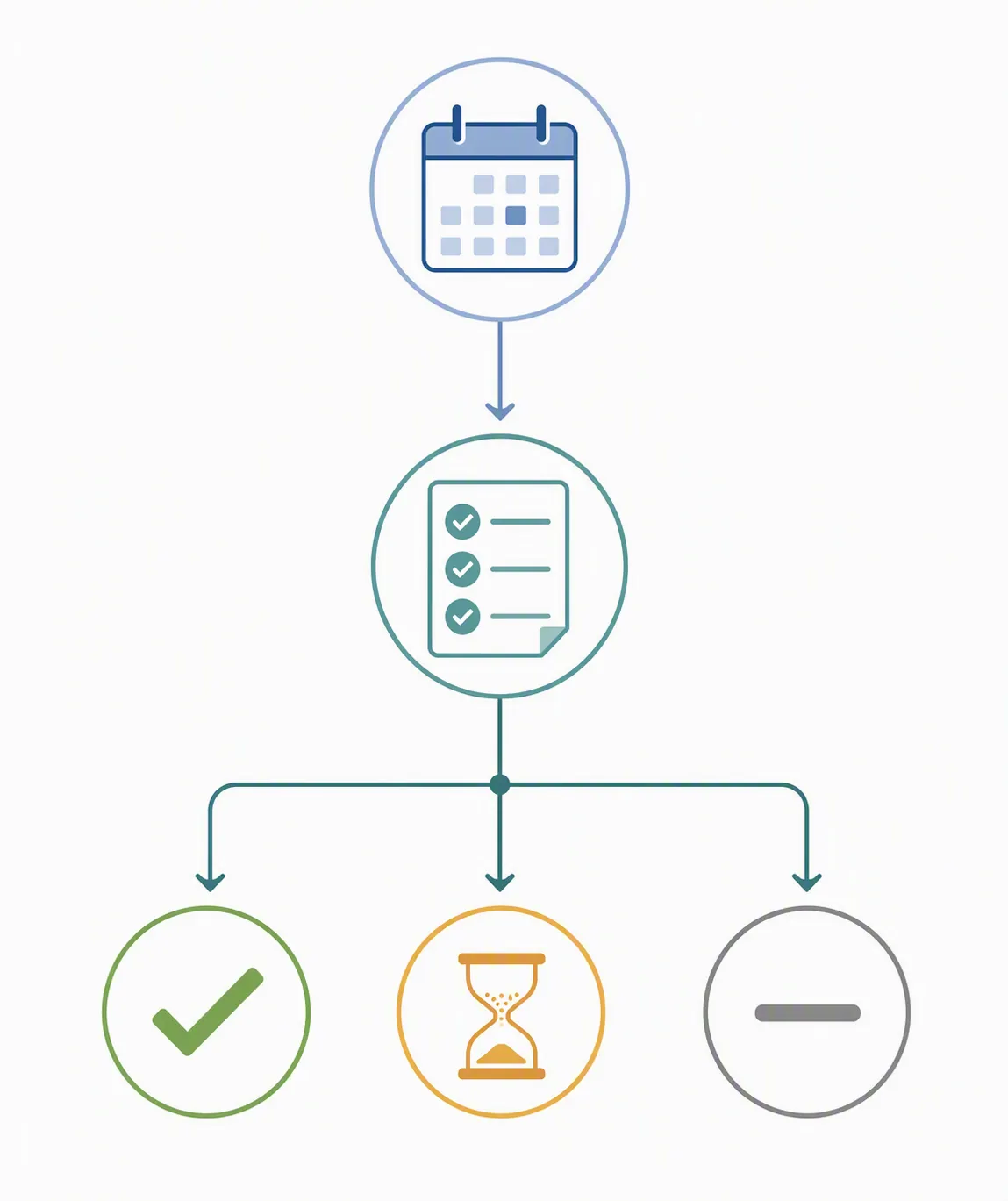
The two facts that decide the answer
Do not start with the school story, the age of the loan, or whether the school closed. Start with the borrower-defense application. The settlement is built around when that application was pending or filed. Then check the school against Exhibit C. A parent PLUS borrower must do this for the parent’s own borrower-defense application history, not just the student’s.
| Fact to verify | What to look for | Why it matters |
|---|---|---|
| Borrower-defense application date | Pending as of June 22, 2022; filed June 23–November 15, 2022; or filed after November 15, 2022 | This decides whether you are in the class, post-class group, or outside the settlement window.[1] |
| Exhibit C school status | Whether the school connected to your borrower-defense claim appears on the official Exhibit C PDF | This decides whether the settlement points toward automatic relief or a decision-based track.[2] |
Step 1: verify the borrower-defense application date
The relevant date is the borrower-defense application date, not the date you enrolled, graduated, withdrew, consolidated, defaulted, or first complained to the school. Look for confirmation emails, StudentAid.gov account records, Department of Education notices, or copies of the application you submitted.
- If the borrower-defense application was pending as of June 22, 2022, you are in the settlement class. PPSL also states that class members whose denials were issued from December 2019 through October 2020 had those denials rescinded under the settlement.[5][6]
- If the borrower-defense application was filed from June 23 through November 15, 2022, you are a post-class applicant. You are not a class member, but the settlement still creates obligations for how your application is treated.[8]
- If the borrower-defense application was filed after November 15, 2022, the Sweet settlement does not cover it. The application may still exist under ordinary borrower-defense rules, but not under this settlement.
- If no borrower-defense application was filed in either settlement window, the settlement does not create eligibility now.
Step 2: check the school against Exhibit C
Exhibit C is the school list that changes the settlement result for many borrowers. Use the official PDF, not a copied list in a social-media post or a fee-charging website. School names can be similar, campuses can have related brands, and corporate ownership is not the same thing as the exact school entry used for settlement treatment.[2]
If you attended more than one school, match the school tied to the borrower-defense application. If a parent PLUS loan is involved, match the school connected to the parent’s borrower-defense application for that parent loan. PPSL’s FAQ states that the settlement covers federal loans, not private loans, and explains that parent PLUS borrowers needed to submit their own borrower-defense applications for their own loans.[6]
What each date-and-school combination means
| Your borrower-defense status | School on Exhibit C? | Settlement treatment |
|---|---|---|
| Application pending as of June 22, 2022 | Yes | Class member in the automatic-relief group. |
| Application pending as of June 22, 2022 | No | Class member whose application is handled through a decision-deadline group. |
| Application filed June 23–November 15, 2022 | Yes | Post-class applicant; post-class automatic-relief obligations have been triggered after the 2026 court development, with completion timing tied to notice. |
| Application filed June 23–November 15, 2022 | No | Post-class applicant; treatment depends on the post-class notice and decision framework. |
| Application filed after November 15, 2022, or no application in the settlement windows | Either | Not covered by the Sweet settlement. |
Class member plus Exhibit C school
This is the cleanest settlement category: a borrower-defense application pending as of June 22, 2022, tied to an Exhibit C school. PPSL describes the automatic-relief group as borrowers entitled to discharge, refunds of amounts paid to the federal government where applicable, credit tradeline deletion, and restoration of federal student aid eligibility.[5][6]
The refund language matters. The settlement materials described by PPSL are about amounts paid to the federal government on covered federal loans. They do not turn private loans into settlement loans, and they do not promise a refund for every dollar ever paid to anyone connected to the school.[6]
Class member without an Exhibit C school
A pending application as of June 22, 2022 still matters even if the school is not on Exhibit C. The borrower is not in the Exhibit C automatic-relief group. Instead, the application falls into a decision framework. NCLC described Decision Groups 1 through 5 for class members whose applications were not in the automatic-relief group, with the Department of Education required to issue decisions by set deadlines depending on the group.[7]
For this borrower, the practical check is not “is my school famous enough?” It is: did the Department issue the required decision, what did the notice say, and does the loan record match that notice? If you are in this lane, the notice language and your StudentAid.gov account are more useful than a generic settlement summary.
Post-class applicant plus Exhibit C school
Post-class applicants filed from June 23 through November 15, 2022. Cullen & Dykman described the post-class population as about 207,000 borrowers with more than 251,000 applications.[8] PPSL states that more than 170,000 post-class borrowers who attended Exhibit C schools are covered by the post-class automatic-relief provisions.[5]
The July 17, 2026 Ninth Circuit development matters because post-class automatic relief has triggered; it did not reopen the settlement to new applications. Cullen & Dykman’s advisory frames the development as tightening post-class timelines rather than expanding who can enter the settlement.[8]
For borrowers in this lane, the current task is to verify the notice and the loan-servicing record. Tate & Associates describes post-class relief timing as running one year from each notice, with the latest notice batch dated June 15, 2026, making June 15, 2027 the latest one-year completion date for that batch.[9]
Post-class applicant without an Exhibit C school
A post-class application tied to a non-Exhibit C school is still inside the post-class date window, but it is not treated the same way as an Exhibit C post-class application. Tate & Associates reported a June 15, 2026 final notice batch of about 30,000 non-Exhibit C post-class applicants under Paragraph IV.D.2.[9]
That does not prove every eligible person has successfully received and read a notice. It does mean many borrowers checking status in Q3 2026 should be looking for official notice history, account changes, and servicer updates rather than waiting for a new application pathway to appear.
Who does not qualify under the settlement
This is the point most scam pages blur. The settlement class and post-class group are closed.
- A borrower who filed a borrower-defense application after November 15, 2022 is not covered by the Sweet settlement.
- A borrower who never filed a borrower-defense application during either settlement window is not covered by the Sweet settlement.
- A parent PLUS borrower does not become covered for the parent’s loan merely because the student filed a borrower-defense application. PPSL’s FAQ says parent PLUS borrowers needed their own applications for their own loans.[6]
- Private student loans do not qualify for Sweet settlement relief. PPSL’s FAQ identifies the settlement as federal-loan relief and states that private loans do not qualify.[6]
- A borrower cannot pay a company to create settlement eligibility, add a late application to the class, or move a covered application ahead of others. The FTC warning on Sweet-related scams is directly aimed at fee-charging promises around this lawsuit.[4]
What covered borrowers should verify now
The settlement relief is only as useful as the records you can match. A borrower who has already been misled once should not have to trust a caller, a text message, or a screenshot of a spreadsheet. Use records that can be traced back to the Department of Education, your servicer, Treasury, or class counsel.
| Record | What you are checking |
|---|---|
| Borrower-defense application record | Submission date, pending status as of June 22, 2022, or filing date within June 23–November 15, 2022. |
| Exhibit C PDF | Exact school match for the school tied to the borrower-defense claim. |
| Department of Education notice | Whether the notice says automatic relief, decision treatment, denial, discharge, refund, or other action. |
| StudentAid.gov and servicer records | Whether loan balances, discharge status, aid eligibility, and credit-reporting changes match the notice. |
| Treasury payment records | Whether a refund, if owed, arrives as a Treasury payment rather than as a branded “Sweet” check. |
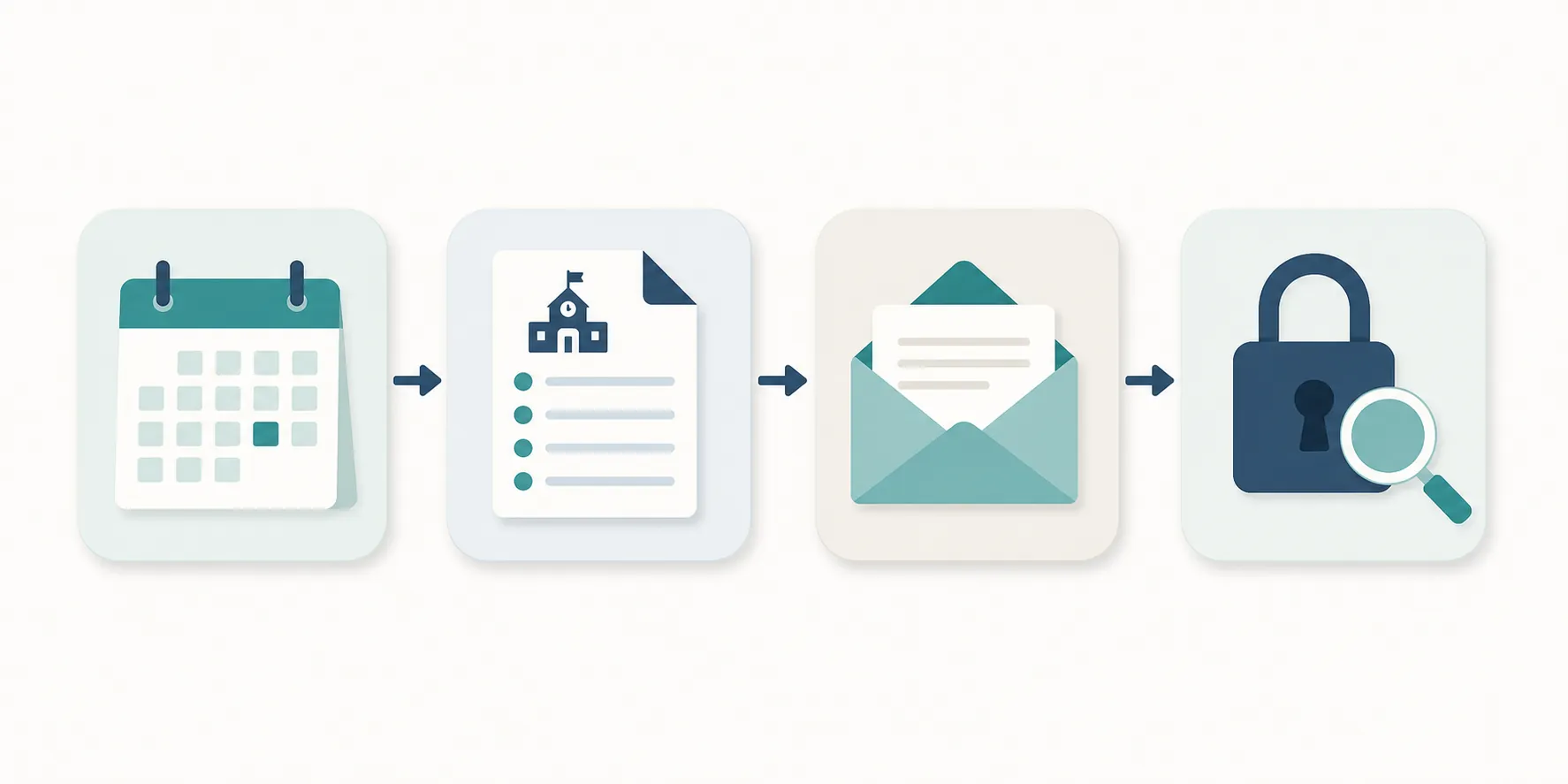
Relief does not always appear in one place at one time
Automatic relief can include several moving parts: discharge of covered federal loans, refunds of qualifying payments made to the federal government, deletion of related credit tradelines, and restoration of federal student aid eligibility.[5][6] A borrower may see the discharge before understanding the refund path, or may see a servicer adjustment before a credit-reporting change appears.
Refunds deserve special caution. Tate & Associates describes refund payments as coming through the U.S. Treasury, sometimes in multiple disbursements, and not necessarily with “Sweet” branding.[9] That is a reason to inspect the payment source carefully, not a reason to give bank credentials to anyone who says they can “release” the refund.
Parent PLUS borrowers need a separate check
Parent PLUS borrowers are easy to misclassify because the student’s school misconduct story may be the same, but the borrower-defense application history may not be. PPSL’s FAQ says parent PLUS borrowers needed to submit their own borrower-defense applications for their own loans.[6] If the student applied during the settlement window and the parent did not, the parent should not assume the student’s application automatically covers the parent PLUS debt.
Keep the cohort numbers separate
Large numbers are often repeated without saying which group they describe. That is how borrowers end up thinking a total-impact figure proves their own relief status. It does not.
| Number | What it describes | Source |
|---|---|---|
| About 200,000 | Automatic-relief group estimate for class members tied to Exhibit C schools | NCLC[7] |
| About 64,000 | Decision-deadline group estimate for class members not in the automatic-relief group | NCLC[7] |
| About 207,000 borrowers / more than 251,000 applications | Post-class borrowers and applications | Cullen & Dykman[8] |
| More than 170,000 | Post-class borrowers who attended Exhibit C schools | PPSL[5] |
| More than 450,000 | Total borrowers affected by the settlement, as reported by CNBC | CNBC[3] |
If your notice and records do not match
First, separate the problem. Is the dispute about the application date, the school match, the type of loan, the borrower identity, the relief category, or the implementation of relief already granted? A servicer balance problem is different from an Exhibit C mismatch. A parent PLUS application problem is different from a delayed Treasury refund.
Second, keep copies. Save the official notice, the borrower-defense application confirmation, the Exhibit C page showing the school name if applicable, loan-detail pages from StudentAid.gov, servicer statements, Treasury payment records, and any credit-reporting correspondence. If you contact a servicer or the Department of Education, write down the date, channel, and substance of the response.
Third, do not pay an intermediary to “fix” eligibility. The FTC warning is blunt for a reason: scammers follow confusion around student-loan relief.[4] Sweet settlement qualification cannot be bought, newly created, or accelerated by a third party because it is controlled by a past borrower-defense application date and a school list fixed in the settlement.
References
- Sweet v. Cardona Settlement, Federal Student Aid
- Sweet v. Cardona School List, Federal Student Aid
- Sweet v. McMahon student loans borrower defense, CNBC, July 31, 2026
- Got student loans? Spot scams related to the Sweet lawsuit, Federal Trade Commission, September 2022
- Sweet v. McMahon, Project on Predatory Student Lending
- Sweet v. McMahon Class Members, Project on Predatory Student Lending
- What Borrowers Need to Know About the Department of Education’s Tentative Agreement to Resolve All Pending Borrower Defense Applications, National Consumer Law Center
- Sweet v. McMahon Settlement: Court Rejects Broad Extension of Borrower Defense Deadlines, Tightens Timelines for Post-Class Applicants, Cullen & Dykman
- Sweet v. McMahon Settlement Update, Tate & Associates
Related records
Tool profile
How Meta's AI Spending Reshapes Law Firm ProfitabilityGoverning regulation
Browse the obligations tracker →Preventive workflow
Browse verification workflows →
Report a correction or tip
Spotted an outdated figure, a misstated fact, or a ruling this case record should reflect? Public comments are disabled for this content given the professional cost of a misreported case outcome, penalty amount, or rule text — use the structured correction channel instead.
Report a correction or tip for this record →