
Is the Sweet v. McMahon Class Action Settlement Final?
Source-linked status for the Sweet v. McMahon class action settlement as of August 2026: final approval stands and all adjudication deadlines have passed, but relief delivery extends into mid-2027. Two risk tracks remain open — a material-breach enforcement dispute and a possible Supreme Court petition.
- Jurisdiction
- US-Federal (Ninth Circuit)
- Court
- U.S. Court of Appeals for the Ninth Circuit
- AI tool named
- No AI tool named
- Ruling date
- Jul 17, 2026
- Source document
- View primary court order ↗
- Last verified
- Aug 4, 2026
Lex Machina Review is an independent risk-tracking and reference resource. Nothing on this site is legal advice, and using it does not create an attorney-client relationship. Every record is reviewed against primary sources but may not reflect the most current status of a matter — always verify directly against the cited court order, rule text, or a licensed attorney before relying on it.
Companion explanation — secondary to the source document above
Status as of August 2026
The Sweet v. McMahon class action settlement is final in the sense that matters for present lower-court and Ninth Circuit posture: final approval was entered on Nov. 16, 2022; the Ninth Circuit rejected the Department of Education’s emergency stay bid on Mar. 25, 2026; and the Department lost its merits appeal on Jul. 17, 2026.[1][2][3] That does not make the settlement complete. The operative adjudication deadlines for the post-class have passed, missed decisions have triggered automatic full relief for both post-class groups, and relief delivery still runs into mid-2027.[4]
The clean answer is therefore: final, but still in execution. The two live risk tracks are not about whether the settlement presently stands; they are about enforcement of delivery obligations after a June 18, 2026 Notice of Material Breach and the unresolved possibility of a Supreme Court petition following the Ninth Circuit merits loss.[5][3]

Court finality: approval survived the appellate track now on record
The starting point is not the missed servicing work or the continuing wait for relief. It is the judgment posture. Final approval was entered on Nov. 16, 2022.[1] After that, the question for status purposes became whether appellate activity had suspended, displaced, or undone the settlement obligations.
On the record available as of August 2026, it did not. The Ninth Circuit rejected the Department’s emergency stay request on Mar. 25, 2026, leaving the settlement’s execution obligations operative rather than frozen while the appeal proceeded.[2] The same court then rejected the Department’s merits appeal on Jul. 17, 2026.[3] A status article that stops at “there was an appeal” is now stale; a status article that says “nothing remains” is also too loose.
| Date | Procedural event | Status consequence |
|---|---|---|
| Nov. 16, 2022 | Final approval entered | Settlement became court-approved at the district-court level.[1] |
| Jan. 28, 2026 | Post-class Exhibit C decision deadline passed | Missed decisions triggered automatic full relief for that group.[4] |
| Mar. 25, 2026 | Ninth Circuit rejected the Department’s emergency stay request | Execution was not stayed on the cited emergency-stay theory.[2] |
| Apr. 15, 2026 | Post-class non-Exhibit C decision deadline passed | Missed decisions triggered automatic full relief for that group as well.[4] |
| June 18, 2026 | Notice of Material Breach issued | Created a live enforcement track concerning delivery and compliance, not a reopening of final approval.[5] |
| Jul. 17, 2026 | Ninth Circuit merits appeal loss | Lower-court and Ninth Circuit finality posture became substantially clearer, subject to any further Supreme Court activity.[3] |
The post-class deadlines have now done their work
The most easily misstated part of the Sweet v. McMahon class action settlement status is the post-class deadline structure. These deadlines were not merely internal processing targets. The settlement attached a consequence to missed adjudication: automatic Full Settlement Relief.
For the post-class Exhibit C group, estimated at roughly 170,000 borrowers, the decision deadline was Jan. 28, 2026. That deadline passed without the required decisions, triggering automatic full relief for that group.[4] For the post-class non-Exhibit C group, estimated at roughly 30,000 borrowers, the corresponding decision deadline was Apr. 15, 2026. That deadline also passed without the required decisions, triggering automatic full relief for that group too.[4]
That is a narrower and more useful statement than saying all relief has already been delivered. The deadline failure determines entitlement under the settlement mechanism. It does not prove that every account has already been adjusted, every discharge has posted, every refund has been paid, or every credit-reporting consequence has been corrected.
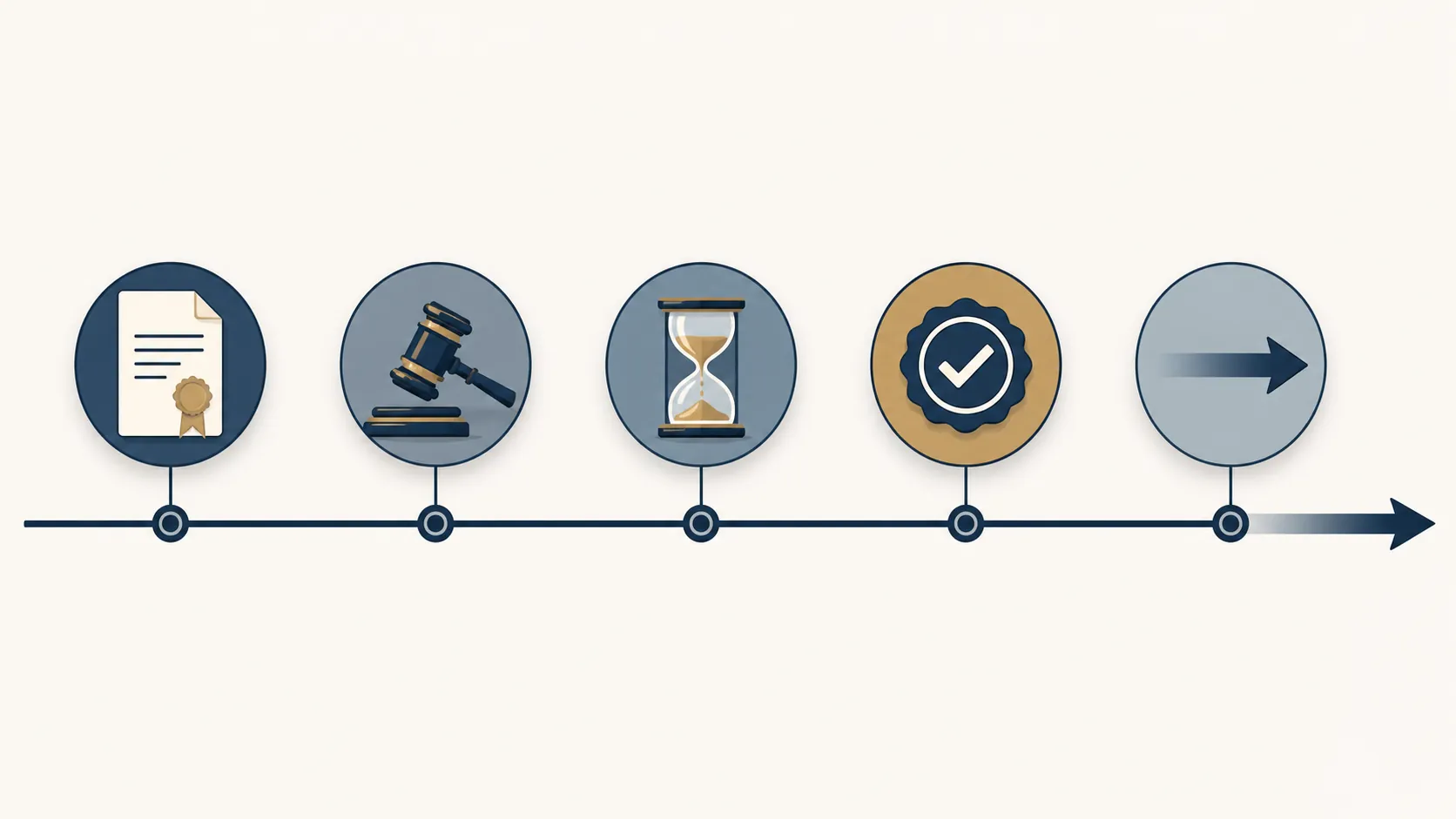
Finality and completion are different statuses
For a practitioner, “final” has to be separated from “fully administered.” Final approval answers whether the settlement has been approved by the court. The stay and merits rulings answer whether the appellate posture presently blocks or defeats the settlement. The adjudication-deadline failures answer whether the post-class remedy has been triggered. None of those facts, by itself, closes the administrative delivery file.
The better description is that the settlement has moved from litigation uncertainty into execution risk. The Department no longer has the same kind of open lower-court or Ninth Circuit argument over whether the settlement obligations stand, but it still has delivery obligations that extend into mid-2027.[4] That remaining period matters for anyone tracking institutional exposure, compliance reporting, or enforcement risk.
This is also where casual coverage tends to blur the point. A borrower may experience “not final” as a practical matter if the account-level remedy has not appeared. That experience can be real without changing the procedural answer. Conversely, saying the case is final does not justify treating every operational consequence as complete.
The material-breach notice is an enforcement signal, not a finality defect
The June 18, 2026 Notice of Material Breach belongs in the status answer because it identifies a live compliance dispute.[5] It should not be overread. A breach notice does not mean final approval has vanished, and it does not mean the settlement is back at square one. It means the parties may be headed into an enforcement phase if delivery failures are not cured or otherwise resolved.
That distinction matters in advising. The legal instrument can be final while performance under that instrument remains contested. The breach track is therefore relevant to timing, remedy administration, and possible court supervision. It is not, on the present record, a reason to describe the settlement as unapproved or undecided.

The remaining appellate question is Supreme Court risk
After the Jul. 17, 2026 Ninth Circuit merits ruling, the remaining appellate uncertainty is the possibility of Supreme Court review.[3] The current record does not confirm that a petition has been filed or granted. Until that changes, the practical status is not “appeal still pending” in the ordinary Ninth Circuit sense; it is “certiorari risk not yet resolved.”
That risk should be monitored, but it should not be allowed to swallow the present posture. A possible petition is different from a stay, and it is different from a merits reversal. On the current record, the settlement stands at the district-court and Ninth Circuit levels, the post-class relief triggers have fired, and the execution file remains open.
Bottom-line status
As of August 2026, the Sweet v. McMahon class action settlement is final but not complete. Final approval stands, the Ninth Circuit rejected the Department’s emergency stay request and later rejected its merits appeal, and both post-class adjudication deadlines have passed with automatic full relief triggered for the affected post-class borrowers.[1][2][3][4] What remains open is execution: delivery obligations extending into mid-2027, the enforcement path following the June 18, 2026 Notice of Material Breach, and the unresolved possibility of Supreme Court review.[4][5][3]
References
- Sweet v. McMahon final approval order, U.S. District Court for the Northern District of California, Nov. 16, 2022
- Ninth Circuit order rejecting the Department of Education’s emergency stay request, Mar. 25, 2026
- Ninth Circuit merits decision in Sweet v. McMahon, Jul. 17, 2026
- Forbes report by Adam Minsky on Sweet v. McMahon post-class adjudication deadlines, Forbes, Jan. 30, 2026
- Notice of Material Breach, Jun. 18, 2026
Related records
Tool profile
How Meta's AI Spending Reshapes Law Firm ProfitabilityGoverning regulation
Browse the obligations tracker →Preventive workflow
Browse verification workflows →
Report a correction or tip
Spotted an outdated figure, a misstated fact, or a ruling this case record should reflect? Public comments are disabled for this content given the professional cost of a misreported case outcome, penalty amount, or rule text — use the structured correction channel instead.
Report a correction or tip for this record →