
UK Supreme Court revives Tesla's 5G patent pool lawsuit
A verified case record of the Tesla–InterDigital–Avanci 5G patent dispute, anchored to the UK Supreme Court's [2026] UKSC 27 judgment. It covers the parties and claims, the rulings at each court stage, and the open FRAND questions — including the $32-per-vehicle pool rate — that return to the High Court for merits trial.
- Jurisdiction
- UK
- Court
- UK Supreme Court
- Judge
- Lord Hamblen and Lord Kitchin
- AI tool named
- No AI tool implicated
- Ruling date
- Jul 27, 2026
- Source document
- View primary court order ↗
- Last verified
- Aug 2, 2026
Lex Machina Review is an independent risk-tracking and reference resource. Nothing on this site is legal advice, and using it does not create an attorney-client relationship. Every record is reviewed against primary sources but may not reflect the most current status of a matter — always verify directly against the cited court order, rule text, or a licensed attorney before relying on it.
Companion explanation — secondary to the source document above
The Tesla InterDigital 5G patent lawsuit details that matter now are procedural before they are economic. On 27 July 2026, the UK Supreme Court unanimously revived Tesla’s licensing claims against InterDigital Patent Holdings, Inc and Avanci Vehicle LLC in Tesla, Inc v InterDigital Patent Holdings, Inc and Avanci Vehicle LLC, UKSC/2025/0058/A, neutral citation [2026] UKSC 27. Tesla’s appeal was allowed, InterDigital’s cross-appeal was dismissed, and the claims over the Avanci 5G Platform licence return to the High Court. The Supreme Court did not decide whether Avanci’s $32-per-vehicle rate is FRAND.[1][2]
| Record field | Verified entry |
|---|---|
| Case | Tesla, Inc v InterDigital Patent Holdings, Inc and Avanci Vehicle LLC |
| UK Supreme Court number | UKSC/2025/0058/A |
| Neutral citation | [2026] UKSC 27 |
| Judgment date | 27 July 2026 |
| Court | UK Supreme Court |
| Judgment | Given by Lord Hamblen and Lord Kitchin, with Lord Sales, Lord Briggs and Lord Burrows concurring |
| Outcome | Tesla’s appeal allowed; InterDigital’s cross-appeal dismissed; licensing claims revived |
| Current posture | Licensing claims return to the High Court for merits trial; validity and essentiality claims concerning three InterDigital UK SEPs remain stayed |
| Risk-record fit | Verified litigation-risk record under track regulation. This is not an AI sanction, hallucination, or penalty record; AI-tool and penalty-amount fields do not map cleanly. |
| Source note | This is a case-record summary for legal and commercial tracking, not legal advice. |
What the Supreme Court revived
Tesla’s revived claim is not a conventional one-patent infringement fight. It asks whether a FRAND licence for InterDigital’s UK standard-essential patents may, in commercial reality, be a global licence to Avanci’s 5G vehicle patent pool at a FRAND rate set by the English court. The Supreme Court held that this was a serious issue to be tried. It was enough, at this stage, that SEP owners may be using the Avanci platform as the mechanism through which they perform their ETSI FRAND obligations, and that the court might ultimately conclude that the only FRAND licence of InterDigital’s UK SEPs is a global Avanci platform licence.[2]
That last qualification is doing real work. A serious issue to be tried is not a merits finding. The Supreme Court has opened the door to a trial over pool-level FRAND terms; it has not held that Avanci’s rate is excessive, discriminatory, or otherwise non-FRAND.
The UK Supreme Court press summary framed the commercial setting in the terms that explain why the claim was not treated as artificial. The Avanci 5G Platform offers a single licence covering declared 5G standard-essential patents from multiple owners for connected vehicles, and the case concerns a flat $32-per-vehicle rate.[3] For an automotive implementer, that is not an abstract licensing preference. It is the offered route to a large aggregation of cellular SEP rights.
The claims Tesla filed in December 2023
Tesla began the English proceedings in December 2023. Its pleaded licensing relief sought declarations that a FRAND licence of InterDigital’s UK SEPs would be a global Avanci 5G Platform licence at a FRAND rate. Alongside that licensing claim, Tesla challenged the validity and essentiality of three InterDigital UK patents.[4]
The choice to plead both licensing relief and patent challenges mattered. If the licensing claim was struck out, the English case risked shrinking into stayed technical patent issues rather than reaching the commercial question Tesla wanted tested: whether the pool licence being presented to vehicle makers satisfied FRAND obligations owed by SEP owners. That is why the procedural route, rather than any immediate answer on the $32 figure, is the center of the case.
How the English courts handled the case before the Supreme Court
The High Court moved first. On 15 July 2024, Fancourt J struck out Tesla’s licensing claims in [2024] EWHC 1815 (Ch). The validity and essentiality challenges to the three UK patents were not the immediate vehicle for deciding the pool-rate question.[4]
The Court of Appeal followed on 6 March 2025 in [2025] EWCA Civ 193. By majority, it dismissed Tesla’s appeal. Arnold LJ dissented. That dissent is now easier to see as procedurally important: it preserved the view that Tesla’s pool-level FRAND claim was not merely a disguised attack on a foreign commercial arrangement, but a claim capable of fitting within English SEP jurisdiction.[5]
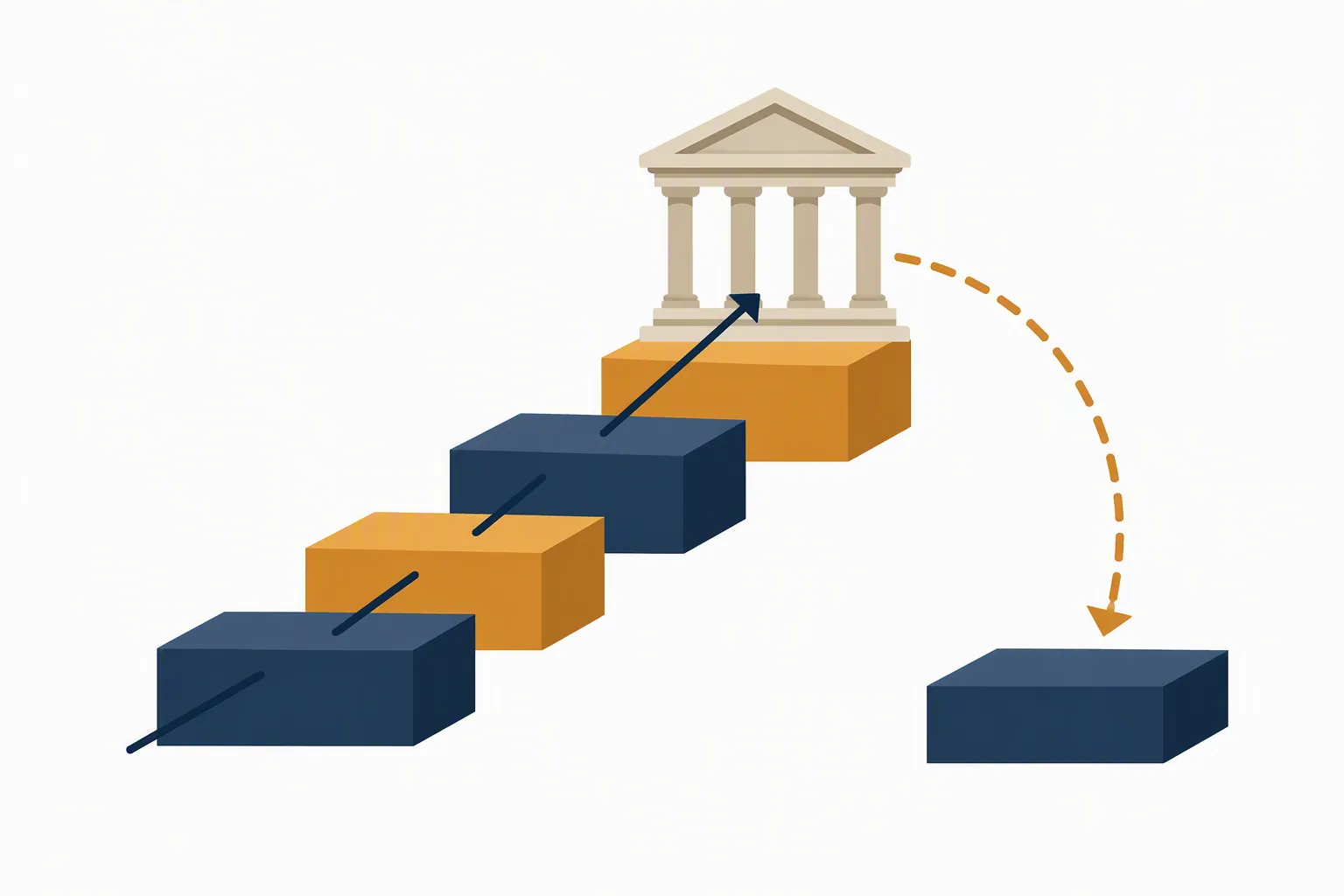
The Supreme Court heard the appeal from 27 to 29 April 2026 and delivered judgment on 27 July 2026. It allowed Tesla’s appeal unanimously and dismissed InterDigital’s cross-appeal. The result is a revived licensing case, not a completed FRAND determination.[1][2]
| Stage | Date | What happened |
|---|---|---|
| High Court filing | December 2023 | Tesla sought declarations that a FRAND licence of InterDigital’s UK SEPs is a global Avanci 5G Platform licence at a FRAND rate, and challenged three InterDigital UK patents. |
| High Court | 15 July 2024 | Fancourt J struck out the licensing claims in [2024] EWHC 1815 (Ch). |
| Court of Appeal | 6 March 2025 | The majority dismissed Tesla’s appeal in [2025] EWCA Civ 193; Arnold LJ dissented. |
| Supreme Court hearing | 27–29 April 2026 | The Supreme Court heard Tesla’s appeal and InterDigital’s cross-appeal. |
| Supreme Court judgment | 27 July 2026 | The Court unanimously allowed Tesla’s appeal, dismissed InterDigital’s cross-appeal, and revived the licensing claims. |
Why a pool licence could be justiciable
The core reasoning is commercially practical. SEP owners that made ETSI FRAND commitments do not necessarily answer the implementer’s complaint by saying that licensing is now handled through Avanci. The Supreme Court held that there is a serious issue to be tried over whether those owners can shed, avoid, or satisfy their ETSI obligations by licensing jointly through the Avanci 5G Platform.[2]
That does not make patent pools suspect. Pools exist because bilateral licensing at cellular scale can be commercially unmanageable. The point is narrower: if the pool is the chosen commercial mechanism for SEP owners to license implementers, then the FRAND inquiry may have to look at the pool licence itself rather than pretending that the real licensing proposal sits somewhere else.
The Court’s own arithmetic illustrates the pressure. By the Supreme Court stage, the Avanci 5G Platform was described as involving 89 licensors and 86 brands. The Court referred to the equivalent of over 7,500 bilateral licences — 89 multiplied by 86 gives 7,654 — if every licensor had to contract separately with every brand.[3] That does not prove the pool rate is FRAND. It does explain why a court was unwilling to treat a pool licence as too remote from the SEP owners’ FRAND obligations to be tried.
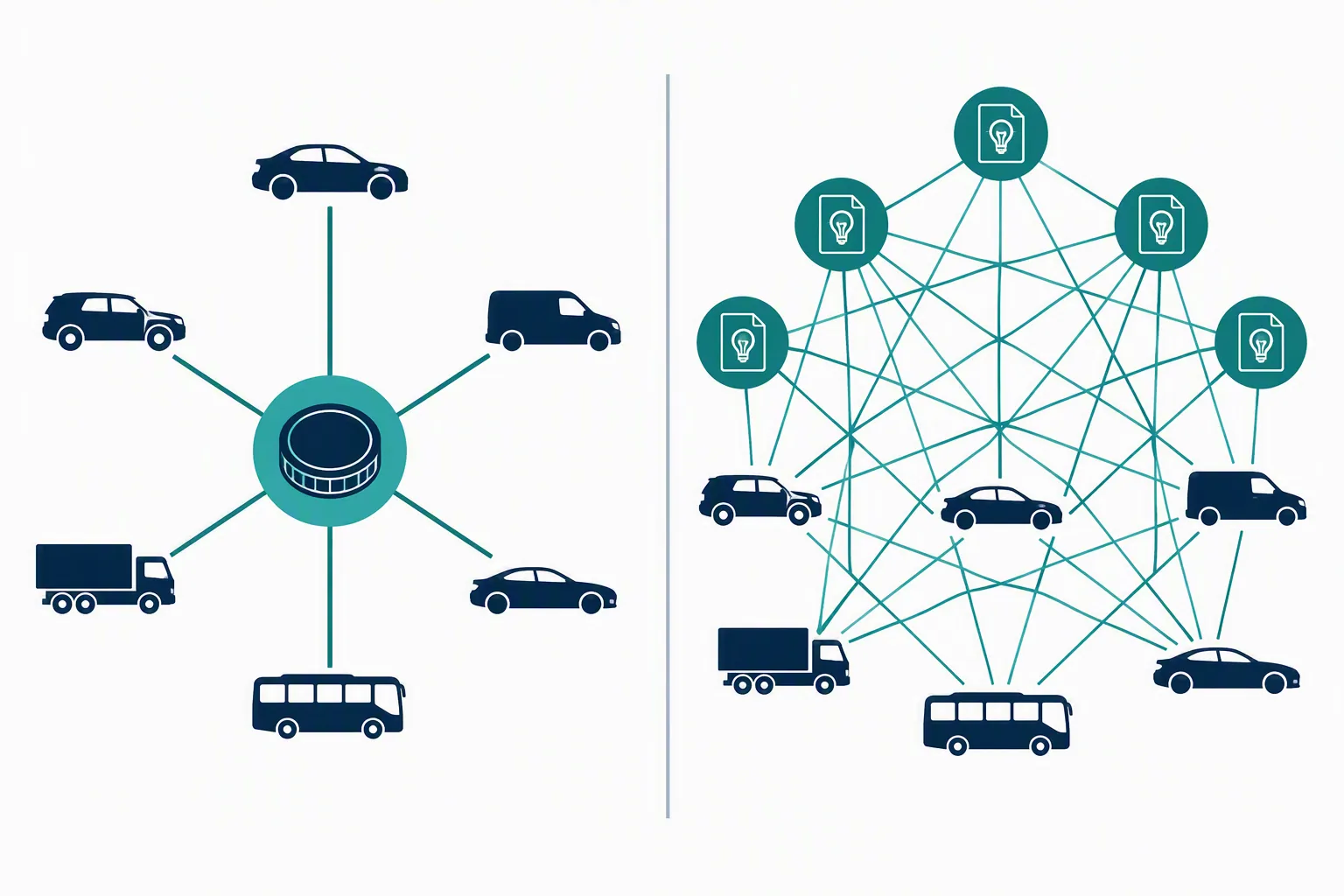
The figures have not been perfectly static across the case record and commentary. At the July 2024 High Court stage, the Avanci 5G Platform was reported as covering about 170,000 declared SEPs from about 65 owners; by the Supreme Court stage, reporting tied to the judgment described 89 licensors and 86 brands.[6] That change should not be smoothed over. A growing pool can strengthen the commercial case for aggregation while also making the rate dispute more consequential.
The UK share is also relevant but limited. Freshfields reported that about 7% of the pool’s SEPs are UK patents.[7] That does not turn the whole pool into a UK-only dispute. It matters because the English court’s jurisdiction over UK patents may anchor a broader FRAND inquiry where the commercial licence in issue is global.
Service, gateways, and the Delaware forum point
InterDigital’s cross-appeal required the Supreme Court to deal with jurisdiction and service, not just strike-out. The Court held that Tesla’s licensing claims were properly served under CPR r 63.14(2) and passed Gateways 3 and 11 of CPR Practice Direction 6B.[2]
Those procedural findings matter because they keep the English case from being characterized as an overreach with no proper service route. Gateway 3 concerns a necessary or proper party claim; Gateway 11 concerns claims about property within the jurisdiction, including UK patents. The Supreme Court’s treatment meant the licensing claims could proceed in England alongside the UK SEP issues rather than being stopped at the threshold.[2]
The forum conveniens point was equally concrete. InterDigital argued that Delaware was the more appropriate forum. The Supreme Court did not accept Delaware as an available forum for the relevant claim, because US courts would be unlikely to set a FRAND rate for non-US patents. For a dispute framed around a non-US global FRAND licence, that was not a small defect in the alternative forum; it went to the remedy Tesla was seeking.[2]
There is a separate first-instance fairness point that should not be inflated into a Supreme Court holding. Commentary on the 2024 High Court decision noted Fancourt J’s criticism of Tesla’s without-notice service application for failure of full and frank disclosure.[8] That criticism belongs to the High Court stage. It did not prevent the Supreme Court from holding that the licensing claims were properly served and could proceed.
The $32-per-vehicle rate is the issue, not the answer
Avanci’s flat $32-per-vehicle rate is the commercial fact that gives the case its weight. It is also the fact most likely to be misstated after the Supreme Court ruling. The Court did not decide that $32 is too high. It decided that Tesla has a serious issue to be tried over whether a FRAND licence of InterDigital’s UK SEPs may be a global Avanci 5G Platform licence at a court-set FRAND rate.[2][3]
That distinction changes the advice a client should receive. An implementer can point to the judgment as authority that pool-level terms may be tested in England in the right procedural setting. It cannot point to the judgment as a judicial discount on the Avanci 5G rate.
Nor does the judgment erase the facts favoring Avanci’s commercial model. The platform’s uptake, the number of licensors and licensed brands, and Avanci’s own FRAND representations were part of the setting before the Court.[3] A pool can be the efficient answer to SEP fragmentation and still be subject to judicial testing over whether its aggregate rate and terms satisfy FRAND in a particular case.
Interveners and the post-ruling positions
The case drew attention beyond the named parties. Industry interveners reported as supporting Tesla included CCIA, ACT | The App Association, the Motion Picture Association, and the Fair Standards Alliance. The International Center for Law & Economics argued against extending FRAND analysis to pools.[9]
Avanci did not treat the ruling as a merits loss. Reuters reported that Avanci Vehicle president Laurie Fitzgerald disagreed with the decision and said Tesla’s claims “are without merit.”[10] That response is consistent with the procedural posture: Avanci lost the attempt to keep the licensing claims out at this stage, not the trial over whether its 5G platform terms are FRAND.
Where this sits in UK FRAND law
The judgment is significant because it is the first UK Supreme Court FRAND ruling since Unwired Planet v Huawei [2020] UKSC 37, and because it applies English FRAND jurisdiction to a pool-licence setting rather than only a bilateral SEP licence dispute.[6] The important development is not a new slogan about patent pools. It is the Court’s willingness to treat the pool licence as a possible vehicle for satisfying, or failing to satisfy, ETSI FRAND obligations.
That makes the ruling useful to automotive and IoT implementers facing aggregate SEP offers, especially where the proposed rate is presented as global and non-negotiable. It also leaves room for pool administrators and SEP owners to defend aggregation on its actual merits: reduced transaction costs, broader coverage, and licensing uptake. The High Court trial will have to deal with that evidence rather than assume the answer from the pool structure alone.
What returns to the High Court
The revived case now goes back to the High Court for a merits trial on the licensing claims. The live question is whether, on the evidence, a FRAND licence of InterDigital’s UK SEPs is a global Avanci 5G Platform licence and, if so, what FRAND rate and terms the English court should set. The Supreme Court has confirmed that such a claim is arguable and within the English court’s procedural reach; it has not supplied the rate.[2]
The validity and essentiality issues on the three InterDigital UK patents remain stayed. That is a useful reminder of the case’s current shape. The immediate consequence of [2026] UKSC 27 is not a patent trial on those three assets and not a damages award. It is the return of Tesla’s pool-level FRAND licensing claim to the court that will have to decide the merits.
The cleanest account is therefore also the narrowest one: Tesla won the right to have the licensing claim tried; InterDigital failed to keep that claim out through strike-out, service, and forum objections; Avanci’s $32-per-vehicle rate remains undecided. The next real answer belongs to the High Court.
References
- Tesla, Inc v InterDigital Patent Holdings, Inc and Avanci Vehicle LLC, UK Supreme Court.
- UKSC 2025/0058 Judgment, UK Supreme Court, 27 July 2026.
- Press Summary: Tesla, Inc v InterDigital Patent Holdings, Inc and Avanci Vehicle LLC, UK Supreme Court.
- Tesla v InterDigital, Judiciary of England and Wales, 15 July 2024.
- Tesla v InterDigital, Judiciary of England and Wales, 6 March 2025.
- UK Supreme Court hands Tesla landmark win in Avanci 5G pool licence dispute, Juve Patent.
- A big splash in a patent pool: Supreme Court rules in Tesla v InterDigital and Avanci, Freshfields.
- The end of the road for Tesla’s claim against InterDigital and Avanci?, Kluwer Patent Blog.
- Supreme Court: Tesla v InterDigital/Avanci, D Young & Co.
- Tesla wins bid to revive UK lawsuit over 5G patents licence, Reuters, 27 July 2026.
Related records
Tool profile
How Meta's AI Spending Reshapes Law Firm ProfitabilityGoverning regulation
Browse the obligations tracker →Preventive workflow
Browse verification workflows →
Report a correction or tip
Spotted an outdated figure, a misstated fact, or a ruling this case record should reflect? Public comments are disabled for this content given the professional cost of a misreported case outcome, penalty amount, or rule text — use the structured correction channel instead.
Report a correction or tip for this record →