
No Trump ballroom contractor-fee lawsuit — the term is real
The viral claim that Trump earned a 2.5% contractor fee on White House ballroom donations is unproven: the fee term is real in the released agreement, but no evidence ties the money to Trump. The actual case is the FOIA suit that forced disclosure — not a contractor-fee dispute.
- Jurisdiction
- US federal
- Court
- U.S. District Court for the District of Columbia
- Judge
- Randolph D. Moss
- AI tool named
- No AI tool implicated
- Ruling date
- Apr 23, 2026
- Source document
- View primary court order ↗
- Last verified
- Aug 3, 2026
Lex Machina Review is an independent risk-tracking and reference resource. Nothing on this site is legal advice, and using it does not create an attorney-client relationship. Every record is reviewed against primary sources but may not reflect the most current status of a matter — always verify directly against the cited court order, rule text, or a licensed attorney before relying on it.
Companion explanation — secondary to the source document above
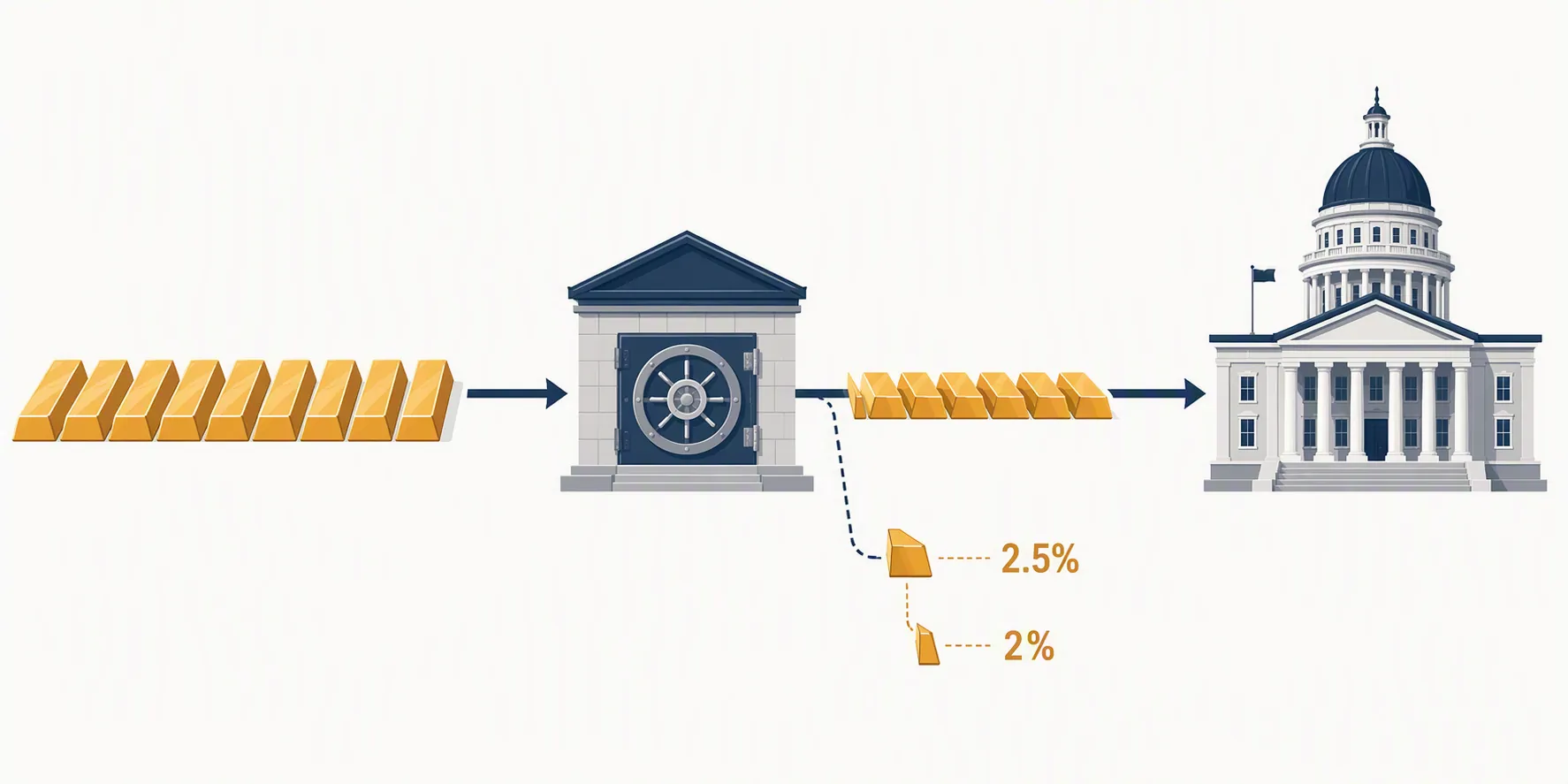
Verification result for “trump white house ballroom contractor fee lawsuit”: no located primary-source lawsuit shows Trump suing over, receiving, or being awarded a contractor fee for the White House ballroom project. The fee term itself is real: the released Philanthropic Support Agreement allows the Trust for the National Mall to retain 2.5% of the first $200 million in private donations and 2% above that.[1] The lawsuit that matters here is not a compensation case; it is Public Citizen v. National Park Service, the FOIA case that led to public release of the agreement.[2] The claim that the retained fee went to Trump or his family remains unproven, which is the narrower and more accurate conclusion reflected in Snopes’ July 15, 2026 rating.[3]
This record is also not an AI incident. No AI tool is implicated in the materials reviewed here. The risk is the older kind: a real clause, a real court case, and an unsupported beneficiary claim fused into one shareable sentence.

The contract term is real, but the named recipient is the Trust
The load-bearing document is the Oct. 7, 2025 Philanthropic Support Agreement. Section III.A.9 is the paragraph that makes the viral claim tempting: it authorizes the Trust for the National Mall to retain, as a fee, 2.5% of the first $200 million in donations and 2% of donations above that amount.[1]
That is enough to say the 2.5% figure was not invented. It is not enough to say Trump received it. The clause identifies the Trust as the entity allowed to retain the fee. It does not name Trump, his family, a Trump business, or a contractor controlled by him as the recipient of that retained amount.[1]
The agreement contains other provisions that explain why the rumor had room to travel. It includes donor-vetting language requiring “reasonable efforts” for donations above $25,000, and it permits donor anonymity. The record also shows pledge forms circulated around Sept. 15, 2025, before the Oct. 8, 2025 signing.[1] Those details matter for transparency analysis. They still do not convert the Trust’s retained-fee clause into proof of a payment to Trump.
| Record point | What the document supports | What it does not prove |
|---|---|---|
| 2.5% / 2% retained fee | The Trust may retain 2.5% of the first $200 million in donations and 2% above that.[1] | That Trump or his family received the retained amount. |
| Donor vetting | The agreement includes “reasonable efforts” language for donations above $25,000.[1] | That an improper donor payment occurred. |
| Donor anonymity | The agreement permits anonymity under its terms.[1] | That anonymous donations were routed to Trump. |
| FOIA disclosure | The agreement became public through litigation over records access.[2] | That the lawsuit was a contractor-fee compensation dispute. |
CBS News summarized the same fee structure and calculated that, if the project reached full $400 million financing, the Trust’s retained amount would be about $9 million: 2.5% of the first $200 million, plus 2% of the next $200 million.[4] That calculation is useful because it shows the financial scale of the clause. It does not change the beneficiary named in the agreement.
The lawsuit was a FOIA case, not a contractor-fee case
The court record behind the public disclosure is Public Citizen v. National Park Service, docketed as 1:25-cv-04468 in the U.S. District Court for the District of Columbia. It was filed on Dec. 22, 2025, before Judge Randolph D. Moss.[2]
That docket matters because it explains how the agreement surfaced. Public Citizen sued under FOIA for access to records. The case did not ask a court to decide whether Trump was entitled to a contractor fee, whether he had collected one, or whether he had unlawfully diverted the Trust’s retained amount. After disclosure in April 2026, the case was dismissed with prejudice on Apr. 23, 2026.[2]
That procedural path is not a small technicality. A FOIA production can expose a contract term; it does not, by itself, adjudicate what the term means beyond the document or trace where money later moved. Treating the FOIA case as a “contractor-fee lawsuit” smuggles in a conclusion the docket does not contain.

There is also a separate preservationist construction lawsuit, National Trust v. NPS, that readers may encounter while searching the ballroom dispute. It is a parallel fight over the project, not the FOIA case that produced the funding agreement and not a lawsuit over Trump’s personal contractor-fee compensation.[3]
What remains unproven
A careful version of the claim can be sourced. A stronger version cannot, at least on the present record.
- Supported: the agreement contains a retained-fee clause for the Trust, using 2.5% for the first $200 million and 2% above that.[1]
- Supported: the agreement became public after Public Citizen filed a FOIA lawsuit against the National Park Service.[2]
- Supported: Snopes rated the claim that Trump earned the contractor fee as unproven, not false.[3]
- Not supported by the cited primary documents: that Trump or his family received the retained fee.
- Not supported by the cited docket: that Public Citizen v. NPS was a lawsuit over Trump’s contractor-fee compensation.
Public Citizen’s broader “Ballroom Billions” analysis treats the donor contracts as part of a wider transparency and influence problem.[5] That is a separate, legitimate line of scrutiny. But it should not be used as a substitute for proof that the Trust’s retained fee was paid onward to Trump. Donor anonymity, donor access concerns, and a fundraising structure involving a politically powerful president may justify questions. They do not, without a payment record or equivalent primary evidence, answer the contractor-fee question.
A safer wording for the record
The accurate formulation is: the released White House ballroom funding agreement allowed the Trust for the National Mall to retain a two-tier fee from private donations, and that agreement became public through Public Citizen’s FOIA lawsuit against the National Park Service. No cited primary source currently proves that Trump or his family received that retained fee.
The inaccurate shortcut is: “a lawsuit showed Trump paid himself a 2.5% contractor fee.” That sentence borrows one real number from the agreement, borrows the existence of one real lawsuit from the docket, and assigns the money to a beneficiary the record does not name.
References
- White House Ballroom Funding Agreement, Public Citizen, Oct. 7, 2025
- Public Citizen v. National Park Service, CourtListener
- Trump Contractor Fee, Snopes, July 15, 2026
- Trump East Wing ballroom contract fundraising, CBS News
- Ballroom Billions, Public Citizen
Related records
Tool profile
How Meta's AI Spending Reshapes Law Firm ProfitabilityGoverning regulation
Browse the obligations tracker →Preventive workflow
Browse verification workflows →
Report a correction or tip
Spotted an outdated figure, a misstated fact, or a ruling this case record should reflect? Public comments are disabled for this content given the professional cost of a misreported case outcome, penalty amount, or rule text — use the structured correction channel instead.
Report a correction or tip for this record →