
Where Trump's DOJ Election Monitor Fight Stands
A source-linked litigation docket showing where the Trump DOJ election-monitor fight actually stands as of Aug 4, 2026: the only adjudicated challenges, Missouri and Texas (Nov 2024), ended without a merits ruling, no injunction is in place, and the 2025–26 California, New Jersey, and Michigan confrontations produced letters and counter-deployments rather than court orders. Each record carries the court, judge, ruling date, status flag, and a link to the primary source, so readers can verify the status before relying on it.
- Jurisdiction
- US
- Court
- E.D. Mo., N.D. Tex.
- Judge
- Sarah Pitlyk, Matthew Kacsmaryk
- AI tool named
- No AI tool implicated
- Ruling date
- Nov 22, 2024
- Source document
- View primary court order ↗
- Last verified
- Aug 4, 2026
Lex Machina Review is an independent risk-tracking and reference resource. Nothing on this site is legal advice, and using it does not create an attorney-client relationship. Every record is reviewed against primary sources but may not reflect the most current status of a matter — always verify directly against the cited court order, rule text, or a licensed attorney before relying on it.
Companion explanation — secondary to the source document above
As of Aug. 4, 2026, no injunction is in place that resolves the fight over Trump DOJ election monitors. No located merits ruling authorizes or bars the 2025–26 deployments in California, New Jersey, or Michigan. The two challenges that actually reached federal judges were filed in November 2024 against the Biden-era DOJ, and both ended without a merits decision.
That is the status answer, not a prediction. A deployment letter is not an order. A state attorney general’s objection is not an injunction. A voluntary access agreement can matter a great deal on Election Day, but it is not a nationwide holding. This is a litigation-status tracker, not legal advice.
Status docket, last verified Aug. 4, 2026
| Record | Forum or actor | What happened | Status flag |
|---|---|---|---|
| Missouri v. DOJ | E.D. Mo.; Judge Sarah Pitlyk | Missouri sought emergency relief to block DOJ election monitoring before the November 2024 election. Judge Pitlyk denied the TRO for lack of irreparable harm and did not issue a merits ruling. [1] | No injunction; no merits holding. |
| Texas v. Garland | N.D. Tex.; Judge Matthew Kacsmaryk | Texas filed on Nov. 4, 2024. Texas and DOJ then agreed that federal personnel would remain outside polling and central-count locations, comply with Texas law including the 100-foot electioneering bar, and not interfere with voters. Texas later voluntarily dismissed the case on Nov. 22, 2024. [2][3] | Agreement-based limits; voluntary dismissal; no merits holding. |
| California and New Jersey 2025 deployments | DOJ Office of Public Affairs; state and federal officials responding outside court | DOJ announced monitoring for Passaic County, New Jersey, and Kern, Riverside, Fresno, Orange, and Los Angeles counties in California on Oct. 24, 2025. [4] | Deployment announcement; no located injunction. |
| California counter-observation and Senate objections | California DOJ; Sens. Alex Padilla and Adam Schiff | California said it would send state observers to watch DOJ monitors, and Padilla and Schiff demanded cancellation of what they called a partisan deployment. [5][6] | Letters and counter-deployment; no court order. |
| April 2026 expansion | DOJ Civil Rights Division | Democracy Docket reported that Assistant Attorney General Harmeet Dhillon expanded monitoring to 15 jurisdictions in Arizona, Michigan, Massachusetts, Minnesota, New Hampshire, and Virginia, announced the same day as 50-state noncitizen-voting letters. [7] | Reported expansion; no located monitoring injunction. |
| Michigan municipal letters | DOJ letters to Detroit, East Lansing, and Lansing; Michigan AG and Secretary of State response | Michigan officials responded in July 2026 to DOJ primary-election municipal letters, and Bridge Michigan reported DOJ would send monitors to Detroit, Lansing, and East Lansing. [8][9] | Letters and deployment dispute; no located court order. |
The two TRO records carry the legal weight
The Missouri and Texas cases are easy to overread because they sit next to a much louder national argument. They should not be. They are important because judges were involved at all. They are limited because neither produced a merits ruling.
Missouri: a TRO denial, not an approval of DOJ’s position
Missouri asked a federal court to stop DOJ election monitoring on the eve of the November 2024 election. Judge Sarah Pitlyk denied emergency relief because the state had not shown irreparable harm. The reported ruling did not decide the underlying legality of DOJ monitoring on the merits. [1]
For an election lawyer standing in a county office, that distinction matters. A denial of emergency relief can leave the parties exactly where they stood before the application: one side objecting, the other side intending to proceed, and no merits order settling the boundary for the next dispute.
Texas: the usable document is the access agreement
Texas filed its case on Nov. 4, 2024, challenging DOJ plans to send federal personnel to Texas election sites. The practical result was not an injunction. It was an agreement on access terms: DOJ monitors would stay outside polling and central-count locations, follow Texas law including the 100-foot electioneering restriction, and not interfere with voters. [2]
Texas then withdrew its TRO request and voluntarily dismissed the case on Nov. 22, 2024. [3] That sequence is a poor vehicle for broad slogans. The complaint showed the legal theory Texas wanted to press. The agreement showed the operational limits DOJ accepted there. The dismissal means the court did not supply a merits rule.
The Texas terms are still useful in the way practical election-law materials are useful: they tell local counsel what the federal government agreed to in a real confrontation. They do not, by themselves, bind California, New Jersey, Michigan, or the next state that receives a DOJ notice.
“Observer” and “monitor” are not interchangeable labels
The statutory distinction is where a lot of public discussion gets sloppy. Section 10305 of Title 52 addresses federal observers under the Voting Rights Act framework. [10] DOJ’s Civil Rights Division separately describes election monitoring by department personnel, including attorney monitors, who observe election procedures but do not themselves have law-enforcement authority at the polling place. [11]
Those two words are not harmless synonyms. A court-authorized observer scheme raises different authority questions from a Civil Rights Division attorney monitor standing outside or near an election site under agreed or disputed access conditions. The Texas fight turned on exactly the kind of operational line that gets lost when every federal presence is called a “monitor” in one sentence and an “observer” in the next.
DOJ’s own Civil Rights Division page does not make the job easier. Its text says federal observers are “currently authorized in 4 political subdivisions in 2 states,” while its table lists Alaska, Louisiana, New Jersey’s Union County, and Rhode Island’s Pawtucket. [11] The safer reading for a practitioner is not to harmonize that inconsistency into new authority. It is to check the specific jurisdiction, the asserted source of authority, and any court order or agreement being invoked.
California and New Jersey produced a political-administrative exchange, not litigation
On Oct. 24, 2025, DOJ announced that it would monitor polling sites in Passaic County, New Jersey, and in five California counties: Kern, Riverside, Fresno, Orange, and Los Angeles. [4] That announcement is a source for where DOJ said it would go. It is not a source for a judicial ruling that DOJ could go there over state objection.
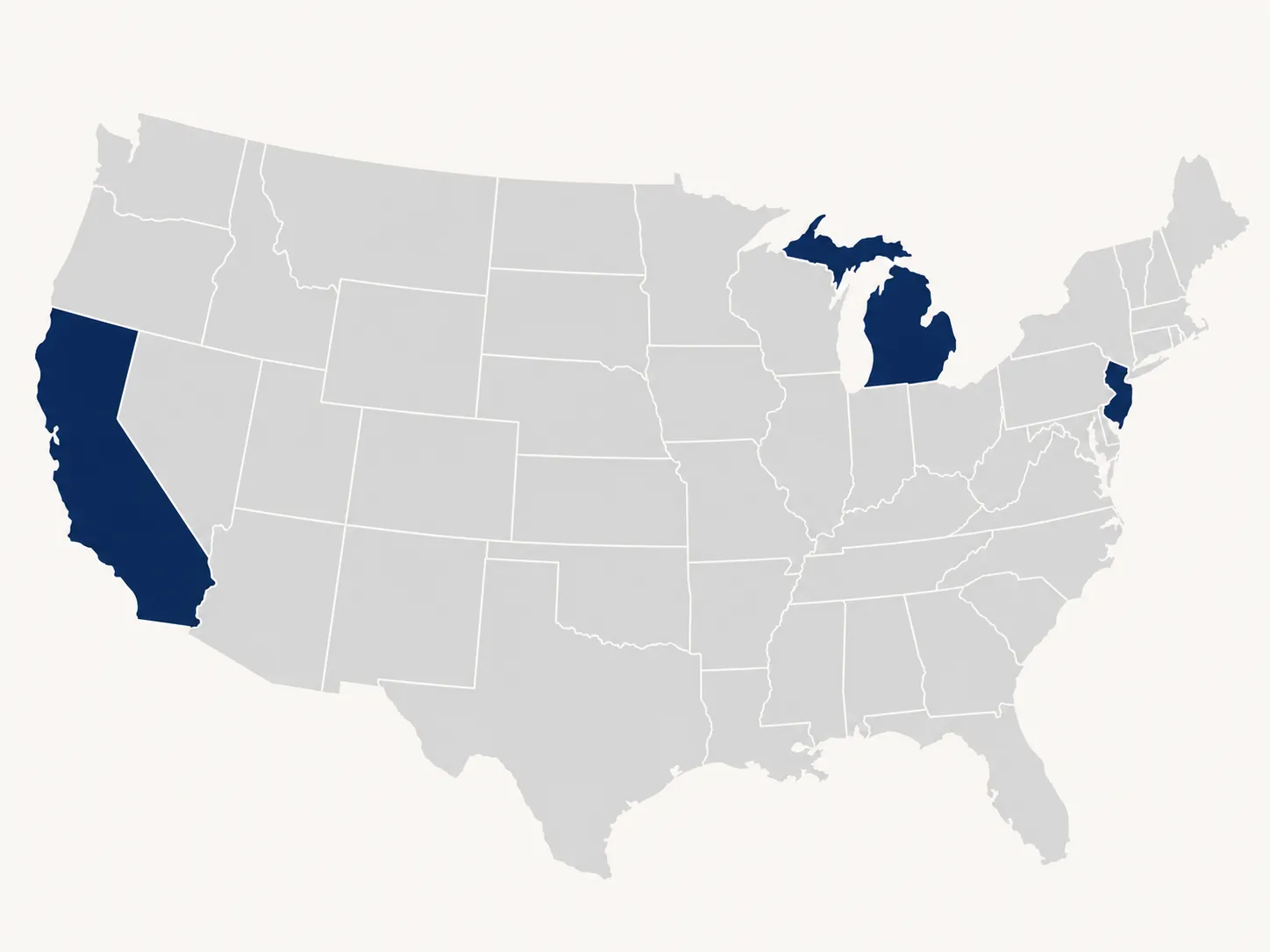
California’s response stayed outside court. Politico reported on Oct. 27, 2025, that Attorney General Rob Bonta would dispatch state observers to watch DOJ’s election monitors. [5] Sens. Alex Padilla and Adam Schiff sent a letter demanding that the Trump administration cancel the California deployment. [6] Those records matter because they show state and congressional pushback. They do not create an injunction, and they do not answer the merits question the Missouri and Texas cases left unresolved.
New Jersey fits the same category on the materials reviewed here. DOJ identified Passaic County in its deployment announcement. [4] State-level opposition and public statements may affect planning, communications, and the risk of confrontation at a site, but no located New Jersey monitoring case changes the litigation status.
The 2026 expansion widened the dispute without settling it
The April 2026 record is significant because it suggests scale, not because it supplies adjudication. Democracy Docket reported that Assistant Attorney General Harmeet Dhillon expanded DOJ monitoring to 15 jurisdictions across Arizona, Michigan, Massachusetts, Minnesota, New Hampshire, and Virginia, and that the announcement came the same day as DOJ’s 50-state noncitizen-voting letters. [7] The crawled sources did not provide complete jurisdiction-level detail for Massachusetts, Minnesota, New Hampshire, and Virginia.
Michigan then generated a more concrete paper trail. In July 2026, Attorney General Dana Nessel and Secretary of State Jocelyn Benson responded to DOJ primary-election municipal letters involving Detroit, East Lansing, and Lansing. [8] Bridge Michigan separately reported that DOJ would send monitors to Detroit, Lansing, and East Lansing. [9]
Again, the record is operationally important and legally incomplete. It helps identify where a dispute may arise, which officials objected, and which municipalities were named. It does not identify a court order defining DOJ’s access rights in those places.
Do not borrow rulings from the voter-data cases
There is a related Trump DOJ election-law stream that has produced actual rulings: voter-data litigation. ACLU of D.C. described the Common Cause v. DOJ dispute as part of litigation over federal election interference and voter information, and the research record for that stream includes district-court losses and a first appellate loss, with no court ordering states to turn over unredacted voter rolls. [12]
That docket should be read on its own terms. This site tracks it separately in Why Trump’s DOJ Is 0-18 in Voter-Data Lawsuits and Why the DOJ Has Lost 18 Voter Roll Lawsuits. Those rulings may matter to state-federal election administration risk. They do not, by implication, decide whether DOJ attorney monitors may be present at a polling site, a tabulation site, or outside a local election office.
The same caution applies to New Jersey-specific voter-roll and noncitizen-voting records, including the Quraishi rulings and the separate aiding-and-abetting theory covered in New Jersey voting scandal tests DOJ’s aiding-and-abetting theory. They may explain why DOJ and state officials are watching each other. They are not a substitute for a monitoring-access order.
What a Tuesday-morning decision can rely on
The usable hierarchy is narrower than the public fight suggests.
- A court order controls if one exists for the jurisdiction and conduct at issue. None was located in the reviewed 2025–26 monitoring confrontations.
- A filed agreement can control the parties and facts it covers. The Texas agreement is the clearest example: outside polling and central-count locations, compliance with Texas law, the 100-foot electioneering bar, and no voter interference.
- A DOJ deployment announcement shows federal intent. It does not, standing alone, resolve state-law access limits.
- A state attorney general letter or counter-observer deployment preserves objection and may shape operations. It is not an injunction.
- The word “observer” should trigger a source-of-authority check. A Section 10305 federal observer is not automatically the same thing as a Civil Rights Division attorney monitor.
The current risk fact is therefore negative but concrete: the fight is happening mostly through letters, deployments, counter-deployments, agreements, and press statements, while no located merits ruling defines DOJ’s limits for the next confrontation.
References
- Judge won’t block DOJ election poll monitors — The Hill, Nov. 5, 2024.
- Texas, DOJ agree on terms for federal agents monitoring polling locations — Courthouse News Service.
- Texas DOJ Election Surveillance Challenge — Democracy Docket.
- Justice Department to Monitor Polling Sites in California, New Jersey — U.S. Department of Justice, Oct. 24, 2025.
- California will dispatch observers to watch DOJ’s election monitors — Politico, Oct. 27, 2025.
- Padilla, Schiff Demand Trump Administration Cancel Partisan Deployment of Election Monitors to California — Office of Sen. Alex Padilla.
- Trump DOJ To Deploy Election Monitors in 6 States Amid Pressure Campaign — Democracy Docket, Apr. 28, 2026.
- AG Nessel, Secretary Benson Respond to DOJ Primary Election Municipal Letters — Michigan Department of Attorney General, July 6, 2026.
- DOJ to send election monitors to Detroit, Lansing, East Lansing — Bridge Michigan.
- 52 U.S.C. § 10305 - Observers — U.S. House Office of the Law Revision Counsel.
- About Federal Observers and Election Monitoring — U.S. Department of Justice Civil Rights Division.
- Voting Rights Group, Members of Congress, and Local Election Officials Move to Prevent Federal Interference in Elections — ACLU of D.C., May 19, 2026.
Related records
Tool profile
How Meta's AI Spending Reshapes Law Firm ProfitabilityGoverning regulation
Browse the obligations tracker →Preventive workflow
Browse verification workflows →
Report a correction or tip
Spotted an outdated figure, a misstated fact, or a ruling this case record should reflect? Public comments are disabled for this content given the professional cost of a misreported case outcome, penalty amount, or rule text — use the structured correction channel instead.
Report a correction or tip for this record →