
Trump's national park fee increase legal challenge stalls
Center for Biological Diversity v. Burgum (D.D.C.) is the only direct court challenge to the 2026 national park fee increase, and as of August 2, 2026, it has no ruling: the government's motion to dismiss is fully briefed and the fees remain in effect. This docket-verified risk record tracks the challenged pass redesign and fee structure, the FLREA and APA theories, and how related actions differ from the fee case.
- Jurisdiction
- US Federal (D.D.C.)
- Court
- U.S. District Court for the District of Columbia
- Judge
- Carl J. Nichols
- AI tool named
- No AI tool
- Ruling date
- Aug 2, 2026
- Source document
- View primary court order ↗
- Last verified
- Aug 2, 2026
Lex Machina Review is an independent risk-tracking and reference resource. Nothing on this site is legal advice, and using it does not create an attorney-client relationship. Every record is reviewed against primary sources but may not reflect the most current status of a matter — always verify directly against the cited court order, rule text, or a licensed attorney before relying on it.
Companion explanation — secondary to the source document above
Current litigation status, last verified August 2, 2026
The Trump national park fee increase legal challenge exists, but it has not stopped the 2026 fees. The direct case is Center for Biological Diversity v. Burgum, pending in the U.S. District Court for the District of Columbia before Judge Carl J. Nichols. As of this record’s August 2, 2026 verification, the government’s motion to dismiss is fully briefed, Judge Nichols has not ruled, and no injunction, vacatur, or merits decision has issued. The National Park Service still describes the nonresident fee program as operative. [1][2]
| Item | Verified record |
|---|---|
| Case | Center for Biological Diversity v. Burgum, No. 1:25-cv-04285 |
| Court and judge | U.S. District Court for the District of Columbia; Judge Carl J. Nichols |
| Cause of action identified in the docket | Administrative Procedure Act, 5 U.S.C. § 702 |
| Last docket event material to status | Docket last updated July 22, 2026; briefing on the renewed motion to dismiss completed June 12, 2026. [1] |
| Live procedural question | Standing, raised through the government’s motion to dismiss |
| What is stayed | The government’s obligation to respond to plaintiffs’ summary-judgment motion, pending resolution of the motion-to-dismiss standing issues. [1] |
| What is not stayed | The fee program itself; NPS continues to present the nonresident fees as in effect. [1][2] |
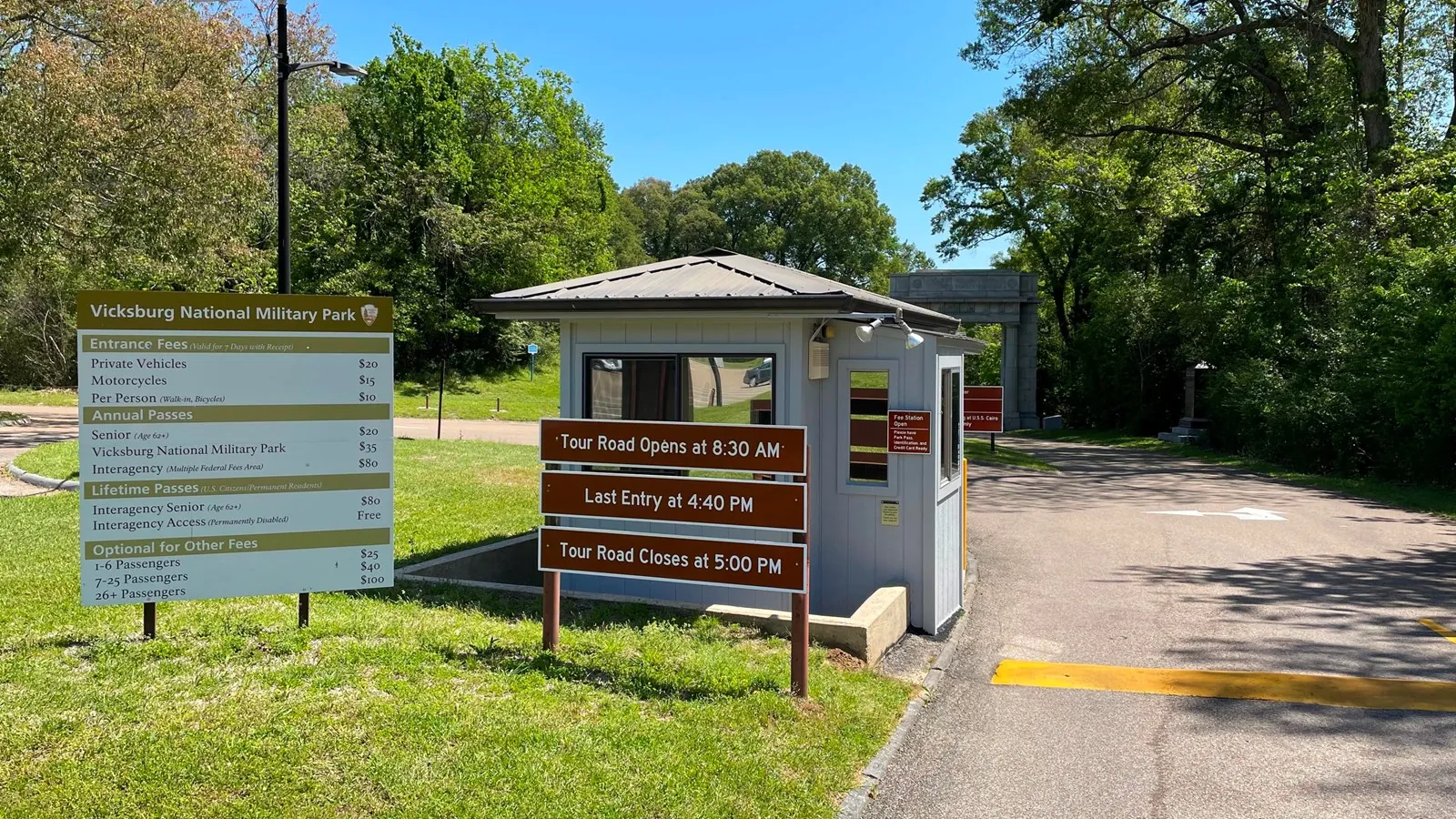
That is the useful line for anyone briefing the risk today: the case is pending, not resolved. The complaint and amended complaint put the legality of the pass redesign and fee structure in dispute; they do not establish illegality. The completed motion-to-dismiss briefing establishes posture; it does not establish the government’s win or plaintiffs’ loss.
How the docket got to the motion-to-dismiss stage
The docket sequence matters because the case’s practical effect depends on it. The court has not yet reached the statutory merits under the Federal Lands Recreation Enhancement Act or the APA. Instead, the government has pressed threshold objections, and Judge Nichols has sequenced the case around those objections.
| Date | Docket event | Why it matters |
|---|---|---|
| December 10, 2025 | Center for Biological Diversity filed the complaint. [1] | This opened the direct challenge to the pass redesign and fee program. |
| March 23, 2026 | The government moved to dismiss. [1] | The case moved immediately into threshold litigation rather than merits resolution. |
| April 24, 2026 | Plaintiffs filed an amended complaint. [1] | The amended pleading became the operative complaint for the renewed dismissal fight. |
| April 27, 2026 | Plaintiffs filed a motion for summary judgment. [1] | Plaintiffs tried to push the case toward merits review. |
| May 6, 2026 | Judge Nichols stayed the government’s obligation to respond to the summary-judgment motion pending resolution of standing issues raised in the motion to dismiss. [1] | This was a sequencing order, not a ruling that the fees are valid or invalid. |
| May 22, 2026 | The government filed a renewed motion to dismiss. [1] | The dismissal posture continued after the amended complaint. |
| June 12, 2026 | Briefing on the renewed motion to dismiss was completed. [1] | The motion is ripe unless the court orders further briefing or argument. |
| July 22, 2026 | The docket was last updated, with no ruling on the motion to dismiss reflected in the record. [1] | The case remained unresolved as of the August 2 verification. |
The May 6 order is the point most likely to be misread. It did not pause the national park fee increase. It did not decide whether the pass redesign violates FLREA. It did not decide whether the nonresident fee structure is arbitrary, capricious, or otherwise unlawful under the APA. It simply held the summary-judgment track while the court considers whether plaintiffs can proceed past the standing challenge. [1]
For a risk record, that distinction is not cosmetic. If the court grants the motion to dismiss on standing, the case may end without any ruling on the pass design or fee-setting authority. If the court denies it, the stayed summary-judgment work could become important. As of August 2, neither branch has happened.
The fee program under attack
The challenged program traces back to Executive Order 14314, issued July 3, 2025, and the Interior Department’s November 25, 2025 announcement of a revised national park access policy that took effect January 1, 2026. [3][4] The National Park Service’s nonresident-fees page, last updated July 15, 2026, describes the operative charges and fee-free-day treatment. [2]
| Program element | What the sources show |
|---|---|
| Executive action | Executive Order 14314, “Making America Beautiful Again By Improving Our National Parks,” dated July 3, 2025. [3] |
| Agency announcement | Interior announced the modernized access policy on November 25, 2025, with a January 1, 2026 effective date. [4] |
| Nonresident annual pass | NPS identifies a $250 annual pass for nonresidents. [2] |
| Per-person nonresident fee | NPS identifies a $100 per-person fee at 11 named parks. [2] |
| Fee-free days | NPS describes fee-free days reserved to U.S. residents under the program. [2] |
| Pass redesign | Plaintiffs challenge the replacement of the contest-winning Glacier National Park photo with a design featuring President Trump and George Washington. [1] |
This is enough to understand what the lawsuit attacks without turning the case into a travel-fee guide. The dollar amounts explain the practical stakes. The operative legal dispute remains narrower: whether the agency had statutory and procedural authority to redesign the America the Beautiful pass and create the disputed nonresident fee categories in the way it did.
Plaintiffs’ theories are allegations, not holdings
The pass-design claim is the part that has drawn the most attention. Reports on the filing describe the Center for Biological Diversity’s objection to putting Trump’s image on the annual pass after a public photo contest had selected a Glacier National Park image. [5][6] In the complaint, plaintiffs contend that this redesign conflicts with FLREA’s pass provisions and violates the APA. [1]
The fee-structure claim is less photogenic and more important for the 2026 price increase. Plaintiffs argue that FLREA does not authorize the disputed nonresident pass category and per-person surcharge structure, pointing to statutory limits on recreation pass categories and to participation and notice requirements associated with recreation-fee changes. A UC Law Review analysis of the dispute identifies the same FLREA hooks: the annual photo-contest issue, the § 6801(a)(9) pass-category argument, and public-participation/local-notice objections. [7]
Those are legal theories in a pending APA case. Judge Nichols has not accepted them, rejected them, or reached an alternative merits rationale. The standing dispute comes first on the current docket.
Readers tracking adjacent agency-litigation posture may find the same sequencing problem in other pending records: a live APA theory is not the same thing as reviewable injury, final relief, or a merits ruling. For comparison, see this site’s related records on the Trump green card bond requirement, Part D premium litigation risk, and the 2019 ESA rule changes.
Pressure tracks are not court orders
Several public actions surround the fee dispute, but they should not be collapsed into the D.D.C. docket. On December 23, 2025, Senators Alex Padilla, Catherine Cortez Masto, Mazie Hirono, Adam Schiff, and Ron Wyden sent a letter demanding that the administration pause what they described as discriminatory national park entry fees. The letter also cited International Inbound Travel Association figures showing overseas visitation down more than 3% and Canadian visitation down 25%. [8] That is political oversight pressure, not judicial relief.
The National Parks Conservation Association’s February 10, 2026 demand that the administration halt fee changes targeting non-U.S. residents belongs in the same category. It is an advocacy and administrative-pressure move unless and until it appears as relief entered by a court in the fee case. [9]
H.R. 4604 is another separate track. The Guardian reported on January 8, 2026 that the bill would address fee-free days, but that report does not make the proposal enacted law and does not supply a court ruling against the fee program. [10] Legislative activity can change risk, but it is not a substitute for a docket entry.
Related matters that should stay in their own files
Do not import rulings from NPCA et al. v. DOI in Massachusetts into Center for Biological Diversity v. Burgum. The Massachusetts matter concerns exhibit removals under Secretary’s Order 3431, not the 2026 nonresident fee increase. A snippet or database summary reporting action on a motion to dismiss in that separate case does not answer whether Judge Nichols has ruled in the D.D.C. fee case.
The same caution applies to similarly named National Parks Conservation Association entries that concern the National Garden of American Heroes. Party overlap or agency overlap is not enough. For this fee challenge, the controlling docket remains No. 1:25-cv-04285 in the District of Columbia.
Revenue estimates and visitor-disruption accounts also belong in a separate evidentiary lane. Mountain Journal reported projections tied to foreign-visitor surcharge revenue, including an NPS FY2026 projection above $90 million and a PERC estimate around $55 million for a Yellowstone-only $100 surcharge. [11] Those are projections, not verified collections from the challenged 2026 program, and they do not resolve standing or statutory authority.
The record therefore stops in a precise place: one direct challenge to the 2026 national park nonresident fee increase is pending; the government’s renewed motion to dismiss is fully briefed; standing is the unresolved threshold issue; summary-judgment work is stayed pending that ruling; and the challenged fees remain in effect. That is a pending litigation-risk record, not a merits call.
References
- Center for Biological Diversity v. Burgum, CourtListener
- Nonresident Fees, National Park Service, July 15, 2026
- Making America Beautiful Again By Improving Our National Parks, The White House, July 3, 2025
- Department of the Interior Announces Modernized, More Affordable National Park Access, U.S. Department of the Interior, November 25, 2025
- National Park Service faces lawsuit to wipe Trump's face from annual passes, Courthouse News, December 10, 2025
- Lawsuit Filed Over President Trump's Image On America The Beautiful Pass, National Parks Traveler, December 10, 2025
- Leave No Trace—Except My Face? Politicization of the National Park Service, UC Law Review, March 22, 2026
- Padilla, Colleagues Demand Trump Administration Pause Discriminatory National Park Entry Fees, Office of Senator Alex Padilla, December 23, 2025
- Parks Group Demands Halt to National Park Fee Changes Targeting Non-U.S. Residents, National Parks Conservation Association, February 10, 2026
- Trump administration blamed for chaos at national parks as foreign tourists hit with extra fees, The Guardian, January 8, 2026
- Trump Order: Foreign Visitors Will Pay For National Park Repairs, Mountain Journal
Related records
Tool profile
How Meta's AI Spending Reshapes Law Firm ProfitabilityGoverning regulation
Browse the obligations tracker →Preventive workflow
Browse verification workflows →
Report a correction or tip
Spotted an outdated figure, a misstated fact, or a ruling this case record should reflect? Public comments are disabled for this content given the professional cost of a misreported case outcome, penalty amount, or rule text — use the structured correction channel instead.
Report a correction or tip for this record →