
TSA's New CT Scanners: Unresolved Legal Questions for Criminal Defense
Criminal defense attorneys can challenge evidence discovered by TSA's AI-powered CT scanners under the Fourth Amendment and evidentiary rules, even though no court has yet ruled on this specific technology. This article analyzes the legal foundation and potential suppression strategies.
- Jurisdiction
- United States Court of Appeals for the District of Columbia Circuit
- AI tool named
- TSA CT scanner with AI/ML computer vision (DHS-132)
- Ruling date
- Jul 15, 2011
- Source document
- View primary court order ↗
Lex Machina Review is an independent risk-tracking and reference resource. Nothing on this site is legal advice, and using it does not create an attorney-client relationship. Every record is reviewed against primary sources but may not reflect the most current status of a matter — always verify directly against the cited court order, rule text, or a licensed attorney before relying on it.
Companion explanation — secondary to the source document above
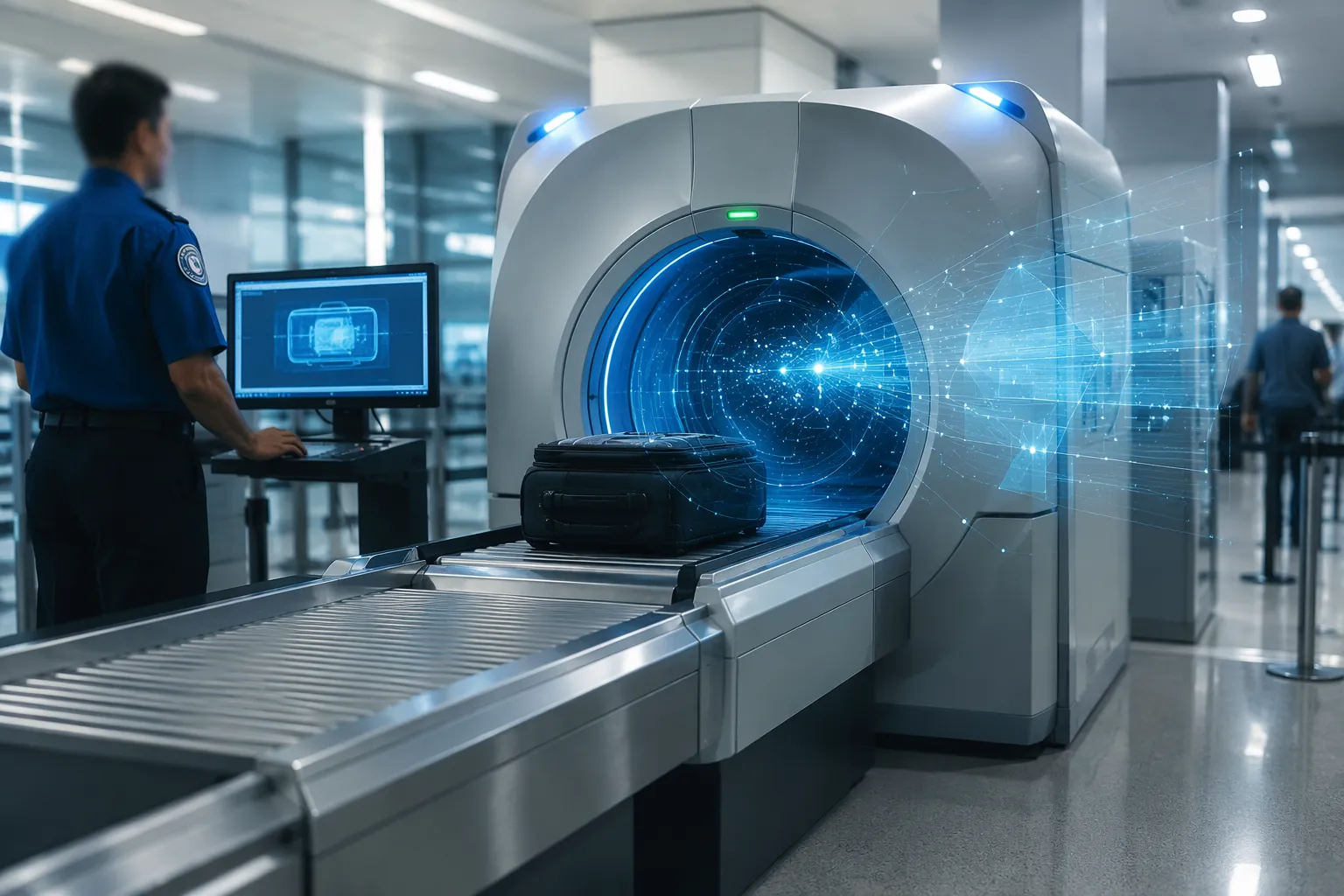
The legal problem starts before the passenger says anything and before the officer opens the bag. It starts when a carry-on enters a CT scanner, the system produces an automated flag, and a Transportation Security Officer treats that flag as the reason to conduct a closer search. If that search turns up contraband and the passenger is later prosecuted, the defense question is not simply whether TSA may screen bags at airports. It is whether the government can rely on the older administrative-search cases when the first meaningful suspicion came from an AI/ML computer-vision system rather than a human screener.
That distinction matters because TSA’s own AI inventory describes “Accessible Property Screening CT Prohibited Items Detection,” identified as DHS-132, as a use case involving AI/ML computer vision to detect and flag prohibited items in carry-on baggage CT imagery.[1] The issue is not just what travelers may leave in a bag. For criminal defense, the harder question is what constitutional and evidentiary foundation the government must provide when the machine’s output sets the search in motion.
The Old TSA Cases Do Not Quite Answer the CT Scanner Question
The government’s first answer will be familiar: airport screening is an administrative search. Courts have repeatedly accepted that TSA checkpoint searches serve a special need beyond ordinary law enforcement and may be reasonable without individualized suspicion or a warrant. That proposition is real. It is also not the end of the motion.
In EPIC v. DHS, the D.C. Circuit reviewed TSA’s use of advanced imaging technology for passenger screening and upheld the program against a Fourth Amendment challenge, treating it as an administrative search directed at aviation security.[2] In Corbett v. TSA, the Supreme Court denied certiorari after a challenge to TSA body scanners failed.[3] In United States v. Aukai, the Ninth Circuit held en banc that a passenger who presents himself at the checkpoint may be subjected to screening, and that the search’s reasonableness turns on the airport-security purpose rather than on ordinary consent doctrine.[4]
Those cases are powerful for the government, but their factual center is different. They validated screening regimes in which officers reviewed images, operated checkpoint procedures, or responded within human-supervised protocols. DHS-132 describes something more specific: automated item detection by AI/ML computer vision in CT imagery.[1] The defense does not have to pretend that this makes every checkpoint search unconstitutional. The narrower argument is better: the prior cases did not decide whether an algorithmic flag, if materially unreliable or insufficiently reviewed by a human officer, can supply the operational predicate for opening a bag and discovering criminal evidence.
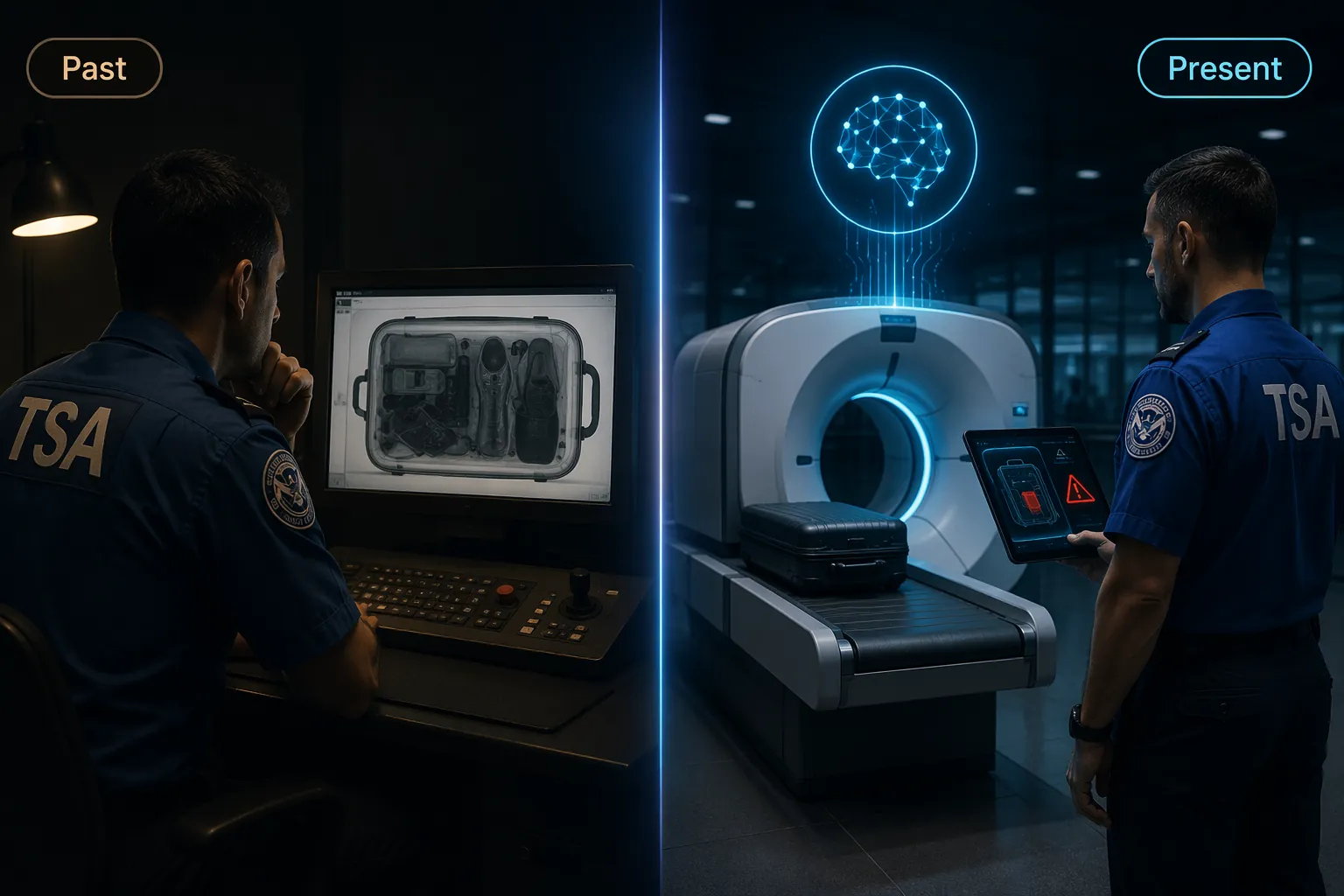
That is the hinge. A passive image viewed by an officer and an automated detection output followed by an officer are not the same decision chain. The government may still win. A court may say the AI merely assists the same administrative process and that the aviation-security interest remains decisive. But if the officer’s search is functionally triggered by a machine-generated classification, defense counsel has a record to demand, not just a doctrine to concede.
What the Automated Flag Changes
The Fourth Amendment reasonableness inquiry is not allergic to technology. Courts have long permitted security technologies at airports because the setting, the notice, the limited purpose, and the grave public-safety interest all matter. But reasonableness still has a factual substrate. If the government says a bag was searched because the CT scanner flagged an item, counsel should not let that sentence pass as if it described a flashlight beam.
DHS-132 makes the CT system’s role more active than simple display: AI/ML computer vision is used to identify and flag prohibited items in carry-on CT imagery.[1] A flag is a claim about the contents of the bag, even if the agency would rather call it a workflow prompt. Once that claim causes the officer to select a bag for search, it becomes part of the government’s explanation for why the search happened when and how it did.
There is a practical reason not to overstate this. TSA officers still operate the checkpoint, inspect bags, and make safety decisions. The algorithm does not arrest anyone. It does not draft the complaint. It may not even be preserved in a form that prosecutors think of as “evidence.” Yet suppression motions often live in precisely that gray area: the government calls something operational until the defense shows it supplied the causal basis for the intrusion.
Reliability Is Not a Side Issue
DHS’s related CT use case, DHS-135, is labeled “Low Probability of False Alarm Algorithm.”[5] That title alone should be handled carefully. It does not prove that DHS-132 is unreliable, and it does not supply a public false-alarm rate for any particular airport, software version, object category, or checkpoint configuration. It does show, however, that false alarms are a recognized design problem in this family of CT screening automation. That is enough to justify discovery aimed at the model’s actual performance in the relevant deployment.
The Evolv Technologies matter is useful for the same limited reason. In 2024, the Federal Trade Commission announced an enforcement action against Evolv over allegedly false claims about its AI-powered security screening technology, including claims about weapon detection and false positives.[6] Evolv is not TSA. A school or venue screening system is not an airport CT scanner. A vendor enforcement action is not an admissibility ruling. But the matter is still a concrete reminder that AI security-screening claims can be overstated, that false positives are not speculative theater, and that reliability representations may become legally significant when they influence screening decisions.
A disciplined suppression motion would not argue, “Evolv had false positives, therefore TSA CT scanners are unconstitutional.” It would argue that automated security-screening systems can produce legally relevant false positives, that DHS itself identifies false-alarm reduction as a CT automation use case, and that the government therefore should not be permitted to rely on a CT alert without disclosing enough about the system to permit adversarial testing.
The Suppression Theory Counsel Can Actually Plead
The cleanest defense theory is not that all TSA CT screening violates the Fourth Amendment. That is too broad and almost certain to invite a quick administrative-search ruling. The better theory is particularized: in this case, the government searched the defendant’s bag because an AI/ML CT detection system produced an automated flag; the government has not established that the algorithm was deployed, configured, validated, and human-reviewed in a manner that made the resulting search reasonable.
That motion should separate the layers the government will try to collapse:
- Checkpoint authority: TSA’s general power to conduct administrative screening at airports.
- Machine output: the CT system’s automated classification or flag concerning the defendant’s bag.
- Human action: what the officer independently saw, understood, verified, or merely followed.
- Criminal use: the later use of evidence found during the administrative search in a prosecution.
The suppression hearing then becomes less abstract. The officer can be asked whether the bag was selected because of a CT alert, whether the officer personally interpreted the CT image before opening the bag, whether the system identified a specific prohibited item or category, whether the officer knew the model’s false-alarm characteristics, and whether any written TSA procedure required the officer to treat the alert as sufficient for a bag search.
Counsel should also preserve the argument that the administrative-search doctrine does not automatically sanitize downstream criminal evidence when the triggering mechanism is materially different from the mechanisms courts previously approved. The point is not to relitigate airport security from first principles. The point is to force the government to prove that this search, with this automated predicate and this level of human review, remained reasonable.
Discovery Should Be Built Around the Decision Chain
The discovery requests should be boring, specific, and hard to dismiss as an anti-AI fishing expedition. Counsel needs the materials that show what the machine did and what the officer did next.
- The CT scanner model, software version, algorithmic detection module, and deployment status at the checkpoint on the date of the search.
- Logs, screenshots, alert records, or metadata showing the automated flag associated with the defendant’s bag.
- Training materials explaining how officers are instructed to respond to CT alerts.
- Validation, testing, or performance materials for the relevant detection category, including false-alarm information if available.
- Any policy describing when an officer must independently review CT imagery before opening a bag.
- Chain-of-custody and incident records showing how the administrative search became a criminal referral.
If the government responds that the algorithm’s alert was merely an internal operational cue, that answer should be pinned down. An operational cue can still be the cause of a search. If the officer did not independently identify the suspicious object before opening the bag, the machine output did more than organize a queue.
FRE 707 Is a Bridge, Not a Shortcut
Proposed Federal Rule of Evidence 707 gives this argument a vocabulary courts may soon become more comfortable using. The rule, approved by the Judicial Conference but not yet enacted, would address machine-generated evidence and require a reliability showing tied to principles familiar from Daubert practice.[7] Its pending status matters. A lawyer should not cite it as binding law unless and until it becomes effective in the relevant proceeding.
Even as pending law, FRE 707 is useful scaffolding. It captures the procedural instinct that machine outputs should not enter the courtroom wrapped in institutional authority but stripped of reliability foundation. If the prosecution offers testimony that “the CT scanner flagged the bag” to justify the search or explain the officer’s actions, counsel can ask whether that output is being used for its truth, as background, or as part of the Fourth Amendment reasonableness record.
Those categories are not cosmetic. If the output is offered to prove that the bag contained a prohibited item or suspicious object, reliability and admissibility questions sharpen. If it is offered only to explain why the officer acted, the court still must decide whether an unreasonable or unvalidated automated trigger can support a reasonable administrative search. The evidentiary label does not erase the constitutional function the output performed.
Deployment Facts Need Rechecking Before They Become Litigation Facts
There is a temptation to make the motion turn on the scale of deployment. Secondary reporting has stated that TSA had 1,162 CT units at 296 airports as of July 2026, but those numbers should be reverified against current TSA primary sources before being used in a pleading, declaration, or published factual claim.[8] The more important litigation fact is not national saturation. It is whether the checkpoint in the defendant’s case was using the relevant AI/ML detection function on the date of the search.
The DHS inventory also requires care because some CT-related AI capabilities have been described in pre-deployment terms.[1][5] That does not defeat the argument; it refines it. Counsel should not assume that every CT scanner at every airport used the same algorithmic detection feature in the same way. The record has to establish the actual configuration in the defendant’s lane, not the procurement story of the entire agency.
Pellegrino Belongs in the Background
Pellegrino v. TSA is not the suppression case that answers the CT scanner question. It is a liability backdrop. The Third Circuit, sitting en banc, held that Transportation Security Officers can qualify as law enforcement officers for purposes of claims under the Federal Tort Claims Act’s law-enforcement proviso.[9] That holding may matter when airport screening conduct later becomes civil litigation, and it reinforces that TSOs are not legally invisible actors.
For a criminal suppression motion, though, Pellegrino should stay in its lane. The central issue is not whether a passenger can sue a TSO. It is whether evidence discovered after an AI-generated CT alert survives Fourth Amendment reasonableness review and, where machine-output evidence is offered, reliability review. The liability case supplies atmosphere, not the rule of decision.
What the Record Must Force the Government to Say
No reported criminal case has yet squarely decided whether TSA’s AI-assisted CT scanner flag changes the Fourth Amendment analysis for evidence found in a carry-on search. That absence cuts both ways. The defense cannot sell suppression as settled law. The government cannot honestly treat the question as already resolved by cases about earlier screening arrangements.
The viable argument is narrower and more durable: where the government uses evidence found after an automated CT scanner alert, the defendant is entitled to test whether the alert was generated by a deployed AI/ML detection system, whether the officer independently reviewed the image, whether the system’s reliability supports the intrusion, and whether the administrative search remained reasonable when its first operative predicate came from the machine.
That is the record to build now. An appellate court cannot decide the CT scanner AI question cleanly if the suppression hearing leaves the most important facts blurred: what the algorithm said, what the officer personally perceived, what the officer was trained to do with the alert, and what reliability foundation supports the automated flag.
References
- TSA AI Use Case Inventory - DHS, https://www.dhs.gov/ai/use-case-inventory/tsa
- Electronic Privacy Information Center v. U.S. Department of Homeland Security - CourtListener, July 15, 2011, https://www.courtlistener.com/opinion/223626/electronic-privacy-information-center-v-us-department-of-homeland/
- Corbett v. Transportation Security Administration - Supreme Court of the United States, 2012, https://www.supremecourt.gov/search.aspx?filename=/docketfiles/12-33.htm
- United States v. Aukai - CourtListener, August 10, 2007, https://www.courtlistener.com/opinion/145419/united-states-v-aukai/
- TSA AI Use Case Inventory - DHS, https://www.dhs.gov/ai/use-case-inventory/tsa
- FTC Takes Action Against Evolv Technologies Over Allegedly False Claims About Its AI-Powered Security Screening Systems - Federal Trade Commission, November 2024, https://www.ftc.gov/news-events/news/press-releases/2024/11
- Pending Rules and Forms Amendments - United States Courts, https://www.uscourts.gov/rules-policies/pending-rules-and-forms-amendments
- TSA’s new scanners could mean fewer airport hassles - The Hill, July 2026, https://thehill.com/
- Pellegrino v. United States Transportation Security Administration - CourtListener, August 30, 2019, https://www.courtlistener.com/opinion/4652091/pellegrino-v-united-states-transportation-security-administration/
Related records
Tool profile
How Meta's AI Spending Reshapes Law Firm ProfitabilityGoverning regulation
Browse the obligations tracker →Preventive workflow
Browse verification workflows →
Report a correction or tip
Spotted an outdated figure, a misstated fact, or a ruling this case record should reflect? Public comments are disabled for this content given the professional cost of a misreported case outcome, penalty amount, or rule text — use the structured correction channel instead.
Report a correction or tip for this record →