
Why USDA sued an Iowa dog breeder over blocked inspections
USDA's inspection-access lawsuit against Iowa dog breeder Wuanita Swedlund is an early test case inside the federal animal-welfare crackdown announced February 18, 2026. Blocked inspection access has become the DOJ's enforcement trigger of choice, raising civil-enforcement risk for AWA-regulated facilities.
- Jurisdiction
- U.S. federal
- Court
- U.S. District Court (Iowa)
- AI tool named
- No AI tool named
- Ruling date
- Jul 1, 2026
- Source document
- View primary court order ↗
- Last verified
- Aug 3, 2026
Lex Machina Review is an independent risk-tracking and reference resource. Nothing on this site is legal advice, and using it does not create an attorney-client relationship. Every record is reviewed against primary sources but may not reflect the most current status of a matter — always verify directly against the cited court order, rule text, or a licensed attorney before relying on it.
Companion explanation — secondary to the source document above
Last verified: August 3, 2026, UTC. This article addresses why USDA and DOJ sued Iowa dog breeder Wuanita Swedlund over blocked inspections. It treats the matter as an active federal civil inspection-access case under the Animal Welfare Act, not as an assessed civil penalty. For the charge-count record, docket posture, and later case-status updates, use the linked Risk Digest case record. This is legal-risk analysis, not legal advice.
The short answer is procedural: the government went to court because USDA inspectors alleged they could not get the inspection access the Animal Welfare Act requires. DOJ’s July releases describe court-ordered access to Swedlund’s facility, seizure of dogs after that access order, and a later order continuing USDA access following the seizure.[1][2]
The longer answer is why that access fight became a DOJ-facing civil case in 2026. Swedlund arrived after a February 18 federal enforcement package that told prosecutors, USDA, and other federal agencies to treat chronic animal-welfare violations as a coordinated enforcement priority. That timing is what makes the Iowa lawsuit more than a local kennel dispute.
The lawsuit is about access before it is about punishment
A blocked-inspection case has a narrower center than many headlines give it. The government does not have to prove every alleged animal-care violation before it can seek an order requiring entry. It needs to show that regulated activity is subject to inspection and that access was denied or obstructed. In the Swedlund releases, DOJ’s stated civil objective was access: get USDA inspectors into the facility, then preserve continued access after dogs were seized.[1][2]
That distinction matters for reporting accuracy. The July 1 DOJ release says 32 dogs were seized after a court ordered access, and the July 14 release again uses 32 in describing continued access after seizure.[1][2] Public accounts have not cleanly resolved every collateral discrepancy about dog counts, denied-access counts, and shelter location; this article does not treat those conflicts as settled. The procedural case-status page should remain the place to track those details as filings and source documents change.
The federal suit also should not be read as a completed penalty event. A civil access order, a seizure, administrative license action, state criminal proceedings, and a civil monetary penalty are separate legal events. Swedlund is being used here for what the present federal record supports: an inspection-access case inside a new enforcement posture.
February 18 supplied the enforcement machinery
The key date is February 18, 2026. DOJ announced that Attorney General Pam Bondi had issued a memorandum prioritizing animal-welfare enforcement and described a five-part plan: a prosecutor summit, an Animal Welfare Executive Strategy Committee chaired by Environment and Natural Resources Division head Adam Gustafson, a law-enforcement “Tiger Team,” use of the Asset Forfeiture Fund for seized-animal care, and Office of Justice Programs grants.[3]
USDA, DOJ, DHS, and HHS issued a same-day coordinated announcement aimed at chronic dog-welfare violators. USDA said compliance among dog-breeding facilities had risen from an average of 67% in 2015 to over 92% in 2025, while also announcing six license actions, two administrative cases, and one DOJ referral involving a facility that repeatedly prevented inspections.[4]
That compliance number should be handled with care. It is USDA’s own claim, not an independently audited finding supplied in the record. Still, even as an agency-reported figure, it creates the tension that defines the current posture: if ordinary compliance is allegedly much higher than a decade ago, federal enforcement attention shifts toward the operators the government views as chronic, obstructive, or unreachable.
| Federal mechanism | Practical enforcement function |
|---|---|
| DOJ prosecutor summit | Signals that animal-welfare cases are not being left only to routine agency channels.[3] |
| Animal Welfare Executive Strategy Committee | Creates a DOJ-level coordination body for civil, criminal, and agency-facing priorities.[3] |
| Law-enforcement Tiger Team | Gives agencies a structure for faster escalation when inspectors or investigators need support.[3] |
| Asset Forfeiture Fund mechanism | Addresses the recurring problem of who pays for care when animals are seized during enforcement.[3] |
| USDA license actions, administrative cases, and DOJ referrals | Shows the same-day package moving through licensing, administrative, and court-facing tools at once.[4] |
This is the context DOJ itself later invoked for Swedlund. The July releases tie the Iowa access litigation to the February memorandum, which is why the case reads as an early test of the new pathway rather than a freestanding quarrel over scheduling.[1][2][3]
Inspection denial is the clean trigger
Animal-care allegations can be fact-heavy. They depend on veterinary records, facility conditions, animal observations, photographs, license history, and witness accounts. Denied access is different. It is often easier for the government to frame: inspectors appeared, access was required, access was not provided, and the court is asked to order entry.
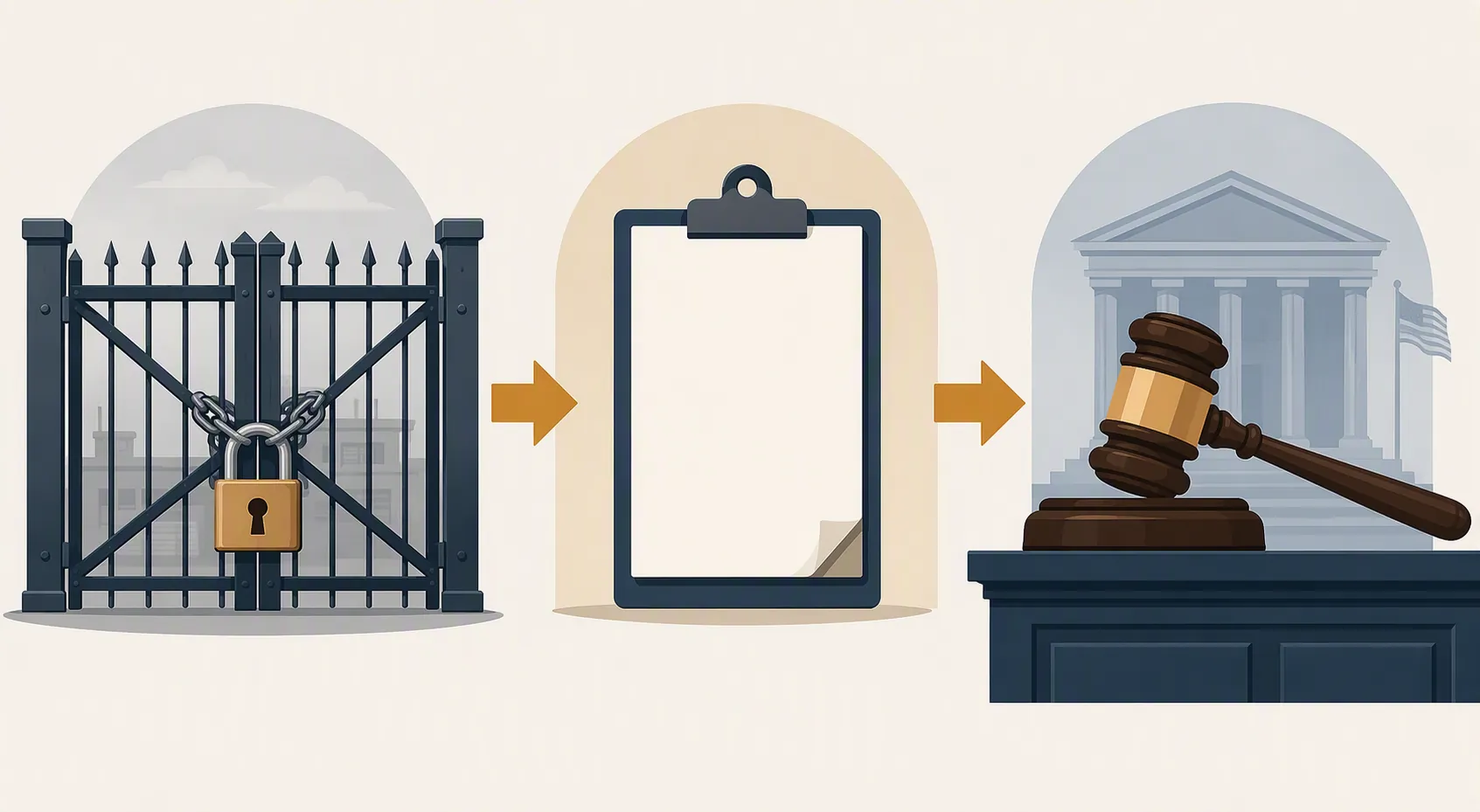
Swedlund is not the only 2026 access example. On February 27, DOJ announced that it had secured a temporary restraining order in the Eastern District of Michigan requiring K&M Pets to allow inspectors access. That case, like Swedlund, was about getting inspectors through the door before the government could fully test the underlying animal-welfare picture.[5]
Paired together, the two cases show why access denial is attractive to enforcers in a coordinated posture. It gives DOJ a direct civil ask, gives USDA an immediate remedy for stalled inspections, and avoids waiting for the administrative record to mature while animals remain beyond inspection. That does not mean every missed appointment becomes federal litigation. It does mean refusal, obstruction, or repeated non-access now carries a more visible route to court.
The post-courtesy-visit backdrop makes blocked access more consequential
There is another reason inspection access now matters more. In October 2025, Judge Christopher Cooper of the U.S. District Court for the District of Columbia held USDA’s Courtesy Visits Rule unlawful because it directed inspectors to leave observed violations unrecorded, while upholding the Veterinary Care Rule. News From The States reported the ruling in December 2025.[6]
The regulatory lesson is not complicated. If inspectors must record violations they observe, then preventing them from observing anything becomes more than a scheduling inconvenience. It blocks the factual record that later supports license action, administrative enforcement, referral, or court relief.
That is also why access cases are uncomfortable to minimize as paperwork disputes. The paperwork is the inspection system. When it fails at the doorway, the downstream burden shifts to emergency motions, court orders, and, if animals are removed, the people and institutions that have to house and care for them.
What regulated entities should take from Swedlund
The Swedlund case is about a dog-breeding facility, but the enforcement signal is not limited to dog breeding. A March 2026 Crowell & Moring client alert read the federal initiative as increasing compliance risk across AWA-regulated industries, including through more inspection activity and reputational exposure from posted compliance reports.[7]
For compliance teams, the immediate risk control is basic and procedural: know who is authorized to receive inspectors, who can open the facility, where required records are kept, how after-hours or owner-absence scenarios are handled, and when counsel is notified. None of that answers the merits of an animal-care allegation. It reduces the chance that the first litigated issue becomes access.
The distinction matters for facilities that think in licensing terms only. USDA licensing consequences remain important, but the February 18 package put inspection failures into a broader federal channel. A blocked inspection can now implicate USDA, DOJ civil litigators, possible law-enforcement support, and seized-animal care logistics before any final merits determination.
That is the narrow conclusion the record supports. Swedlund does not establish liability for every allegation reported around the facility, and it does not show that a civil penalty has already been imposed. It does show that, in the 2026 enforcement posture, USDA inspection access is a bright procedural line. For AWA-regulated entities, blocking that line is no longer merely an administrative friction point; it is a DOJ-facing event.
References
- 32 Dogs Seized After Court Orders Access for USDA to Inspect Iowa Dog Breeder’s Facility, U.S. Department of Justice, July 1, 2026.
- Court Orders Continued Access for USDA to Inspect Iowa Dog Breeder’s Facility Following Seizure of 32 Dogs, U.S. Department of Justice, July 14, 2026.
- Attorney General Bondi Announces Department of Justice Prioritization of Animal Welfare Enforcement, U.S. Department of Justice, February 18, 2026.
- USDA, DOJ, DHS and HHS Launch Coordinated Effort to Crackdown on Chronic Dog Welfare Violators, U.S. Department of Agriculture, February 18, 2026.
- Justice Department Secures Order Against Michigan Pet Store Owner to Allow Inspectors Access, U.S. Department of Justice, February 27, 2026.
- Judge: USDA’s animal welfare inspectors must report violations they uncover, News From The States, December 11, 2025.
- Federal Agencies Ordered to Prioritize Animal Welfare Enforcement, Elevating Compliance Risks for Regulated Organizations, Crowell & Moring, March 18, 2026.
Related records
Tool profile
How Meta's AI Spending Reshapes Law Firm ProfitabilityGoverning regulation
Browse the obligations tracker →Preventive workflow
Browse verification workflows →
Report a correction or tip
Spotted an outdated figure, a misstated fact, or a ruling this case record should reflect? Public comments are disabled for this content given the professional cost of a misreported case outcome, penalty amount, or rule text — use the structured correction channel instead.
Report a correction or tip for this record →