
University System of Maryland Faces Union Lawsuit Over Blocked Raises
Analyzes the legal dispute between AFSCME and the University System of Maryland over withheld wage increases, focusing on the appropriations question, the union's unfair-labor-practice charge, and the remedies available under Maryland law.
- Jurisdiction
- Maryland
- Court
- Maryland District Court
- AI tool named
- No AI tool
- Ruling date
- Jul 23, 2026
- Source document
- View primary court order ↗
- Last verified
- Jul 25, 2026
Lex Machina Review is an independent risk-tracking and reference resource. Nothing on this site is legal advice, and using it does not create an attorney-client relationship. Every record is reviewed against primary sources but may not reflect the most current status of a matter — always verify directly against the cited court order, rule text, or a licensed attorney before relying on it.
Companion explanation — secondary to the source document above
The legal action over blocked University System of Maryland wage increases is not, at its center, a dispute over whether employees expected raises. The harder question is whether a budget appropriation for “general salary increases” gave USM a legal duty to pay every component of the wage package it had already negotiated with AFSCME: a 2.5% merit increase, a 1.5% cost-of-living adjustment, and a $500 flat increase for eligible bargaining-unit employees.[1]
That distinction matters because both sides can point to a document that looks decisive. AFSCME points to the 2024 contract covering about 6,500 workers across 13 institutions and to a Maryland appropriation of about $35.7 million for USM salary increases in fiscal 2027.[1][2] USM points to the same budget cycle and says the money provided did not cover the full contractual package, so it withheld the 2.5% merit increase while implementing other compensation items.[2][3]
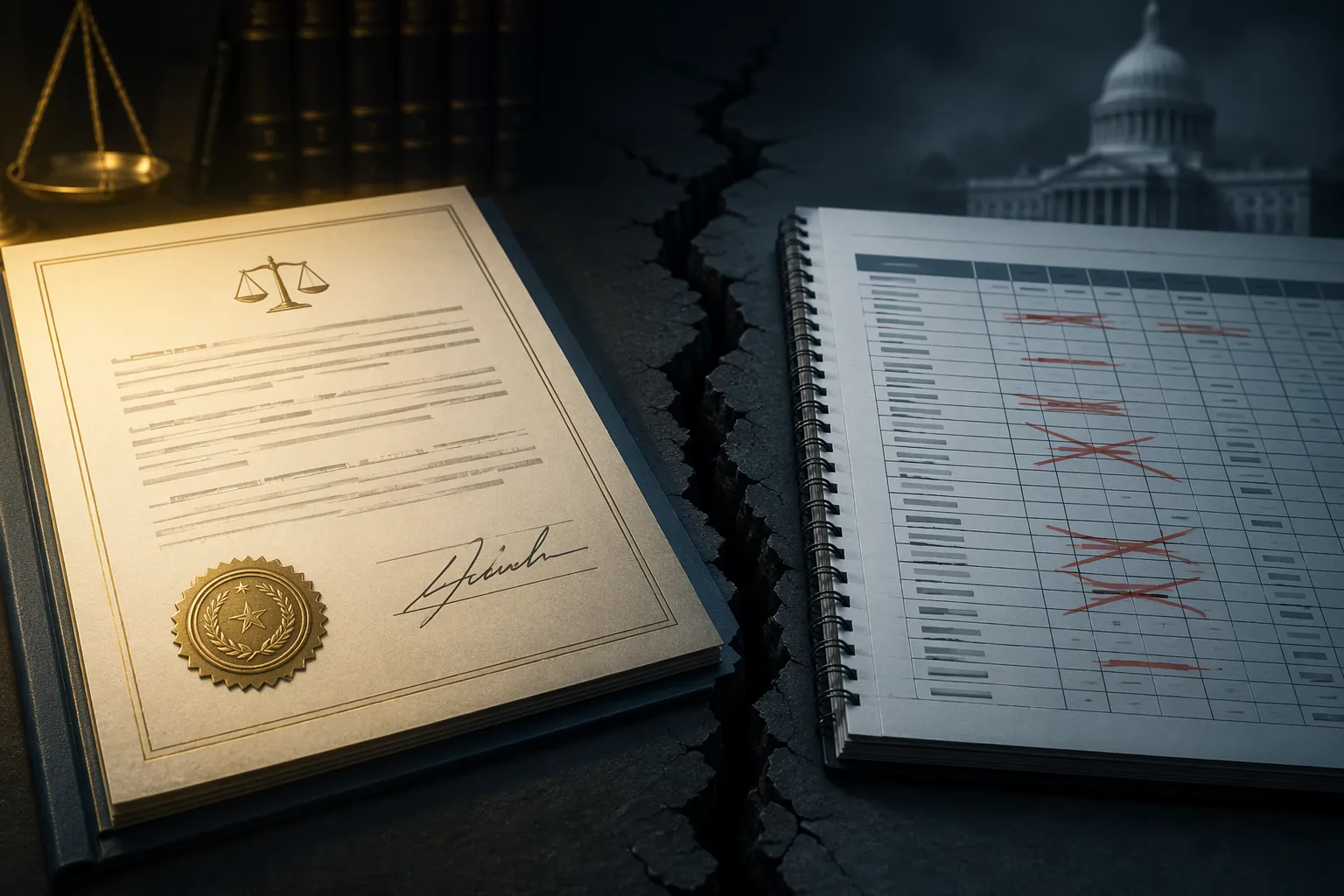
The case therefore sits on the hinge that public-sector wage litigation often tries to hide in plain sight: a signed labor agreement is one layer of authority, an appropriation is another, and an institution’s power to spend can depend on how those layers are connected. If the appropriation legally incorporated the full wage deal, USM’s refusal to pay the merit increase looks like a unilateral stripping-out of a negotiated term. If the appropriation merely supplied partial funding for salary increases, USM’s defense is that it could not lawfully spend money it did not have.
The Wage Package Was Specific; The Budget Language Was Not
AFSCME’s strongest opening fact is the specificity of the contract. The reported wage package was not a general aspiration to improve compensation. It identified three components: a 2.5% merit increase, a 1.5% COLA, and a $500 flat increase for eligible bargaining-unit employees.[1] The agreement was also institutionally significant: USM describes collective bargaining across the system as operating under Maryland’s statutory framework, and the 2024 agreement was the first system-wide contract after the 2022 expansion of bargaining rights.[4]
The state’s appropriation is less tidy. Reports describe Maryland as allocating roughly $35.7 million, or about $36 million in some accounts, for USM salary increases in fiscal 2027.[1][2] That phrasing does not, by itself, answer whether the legislature funded the AFSCME package as a binding whole, funded salary increases in a more general sense, or funded only part of what the system would need to comply with every negotiated wage term.
USM’s public position is the narrower one: the appropriation was not enough to cover the full package. AFSCME’s position is that the legislature funded salary increases and USM cannot use an asserted shortfall to delete the merit portion of a bargained-for agreement. The legal problem is not resolved by saying “money was appropriated.” The operative question is what legal consequence attached to that appropriation.
| Document or action | What it appears to support | What it does not settle |
|---|---|---|
| 2024 AFSCME-USM contract | A defined wage package: 2.5% merit increase, 1.5% COLA, and $500 flat increase for eligible bargaining-unit employees | Whether later budget language made full implementation legally mandatory |
| FY 2027 Maryland appropriation | Funding for USM salary increases, reported at about $35.7 million | Whether the appropriation covered the full contractual package or only part of it |
| USM implementation decision | USM withheld the 2.5% merit increase while citing insufficient funding | Whether that withholding was a lawful response to underfunding or a contract breach |
USM’s Internal Analysis Makes This A Choice-Of-Risk Case
The most important reported fact for litigation strategy is not a public statement. It is USM’s internal legal assessment. According to reporting on the dispute, USM lawyers internally described the budget problem as leaving the system between two litigation risks: ignore the contract and face legal action, or fulfill the wage terms and risk layoffs because the governor had not appropriated all funds necessary for the full package.[2]
That does not prove AFSCME’s case. Internal risk analysis is not a final legal holding, and lawyers routinely identify exposure without conceding liability. But it does weaken any account in which USM simply discovered after the fact that compliance was impossible. The reported analysis suggests USM understood the contract problem before choosing which consequence it was more willing to absorb.
The layoffs sharpen that choice. USM laid off 94 AFSCME-represented employees in May and June 2026, including 73 at the University of Maryland, College Park and 21 at Bowie State University.[2][3] Those layoffs are not proof that the merit increase was legally excusable. They are, however, part of the institutional record AFSCME will use to argue that employees bore both sides of the austerity decision: lost jobs for some workers and a withheld merit increase for others.
For USM, the same facts will likely be framed differently. The system can argue that the layoffs show the shortfall was real rather than pretextual, and that full implementation would have required additional workforce reductions. That argument may matter to remedy, equities, and public pressure. It still leaves the legal question intact: whether USM had authority, after signing the contract and receiving salary-increase funding, to decide unilaterally which negotiated wage component would not be paid.
The Missing Maryland Precedent Is The Point
The current record does not show a Maryland court or PERB ruling on AFSCME’s specific USM complaint. As of July 25, 2026, AFSCME had filed an unfair-labor-practice charge with the Maryland Public Employee Relations Board on July 23, 2026, and a separate breach-of-contract lawsuit in Maryland District Court, but no decision on the merits of those claims had been issued.[1][2]
That absence is not a minor procedural gap. It is why the dispute is useful to lawyers beyond Maryland higher education. The case asks how Maryland’s expanded public-sector bargaining rights operate when an employer says the legislature funded salary increases, but not enough salary increases to satisfy the agreement it signed.
A court or PERB could treat the contract language as central and require the employer to honor the wage terms unless a statute clearly prevents payment. It could instead treat the appropriation as the outer boundary of spending authority, leaving the union to prove that the budget language was sufficient to fund the full package. A narrower ruling is also possible: the decision-maker could avoid a broad appropriations rule and focus on bargaining conduct, notice, unilateral-change doctrine, or the remedy available under the particular contract.
That is why the phrase “general salary increases” deserves more attention than the usual political theater around blocked raises. If budget language is general, the union needs a theory connecting that language to the precise contractual increases. If the employer had discretion to allocate salary-increase money among wage components, the union’s breach theory becomes harder. If the employer did not have that discretion, the withheld merit increase becomes the central violation rather than a permissible implementation choice.
The July 2 PERB Ruling Adds Pressure, Not An Answer
AFSCME has one favorable nearby signal. On July 2, 2026, Maryland’s Public Employee Relations Board ruled in a related dispute involving the state Department of Budget and Management and AFSCME that the state violated its bargaining agreement by failing to bargain in good faith.[5] That ruling matters because it shows PERB is willing to scrutinize state bargaining failures rather than treating budget constraints as an automatic answer.
But the July 2 ruling is not controlling precedent for the USM wage dispute on the facts described here. It involved a different state actor and a different dispute posture.[5] It does not establish that USM’s fiscal 2027 appropriation legally obligated the system to implement the full 2.5% merit increase, 1.5% COLA, and $500 flat increase. Practitioners should treat it as leverage and context, not as the missing holding.
The comparison is still useful. If PERB views post-agreement budget explanations skeptically, USM may face pressure to show more than an arithmetic shortfall. It may need to explain when the shortfall became clear, what alternatives were considered, whether AFSCME was given a meaningful bargaining opportunity before the merit increase was withheld, and why the system selected that component rather than another implementation path.
AFSCME, in turn, cannot simply import the July 2 result. The union still has to connect the USM facts to a statutory or contractual violation: a failure to bargain in good faith, an unlawful unilateral change, a breach of the wage article, or some combination. The evidentiary center remains USM’s contract, the fiscal 2027 appropriation, and the system’s own understanding of the risk it chose.
Why The Remedy Path Is More Cumbersome Than It Looks
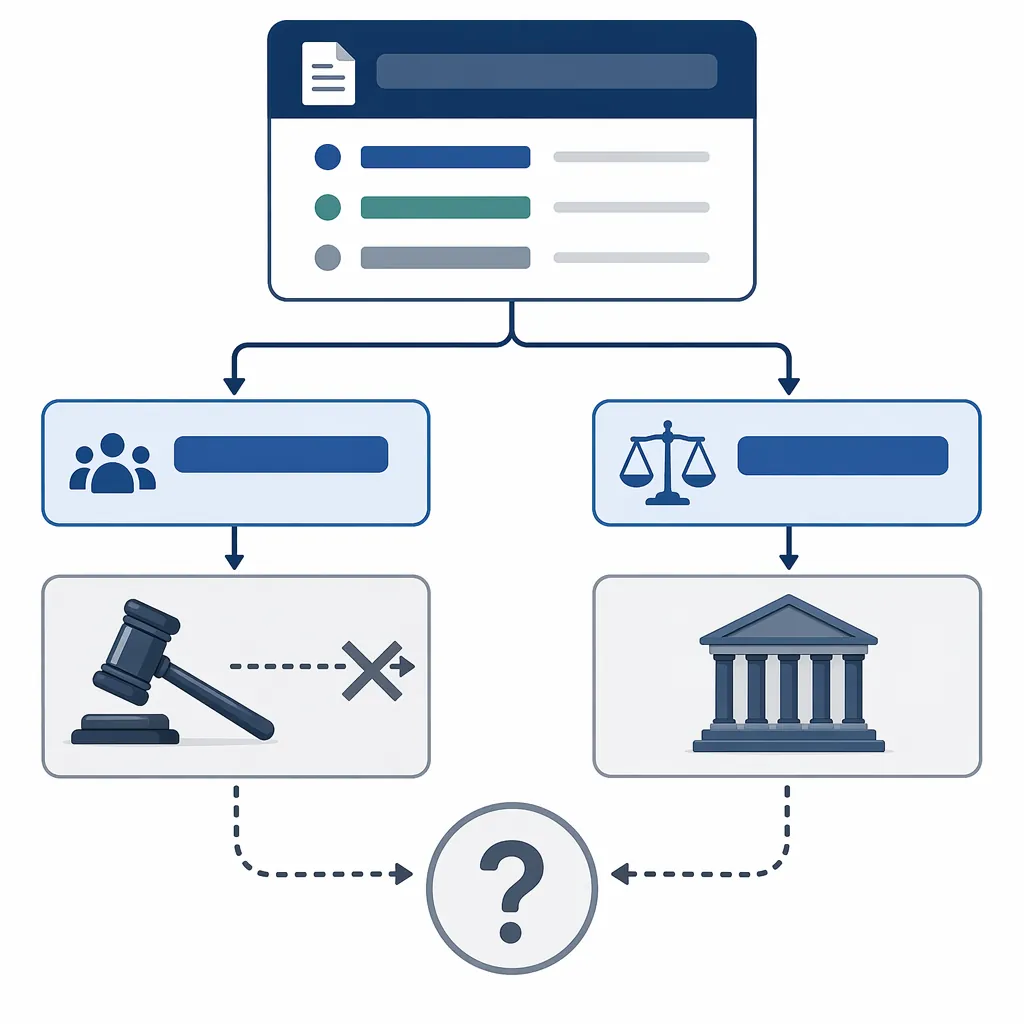
AFSCME is proceeding on two tracks: an unfair-labor-practice charge before PERB and a breach-of-contract lawsuit in Maryland District Court.[1][2] That dual route is not just a litigation preference. It reflects a remedial gap for USM employees.
Maryland’s Arbitration Reform for State Employees Act of 2026, passed in April 2026 as SB28/HB604, created a neutral arbitration process for state employees, but USM employees are excluded from that law.[6] The exclusion matters because it denies this bargaining unit the cleaner path that binding arbitration can provide in a wage-implementation dispute: a focused contractual ruling from a neutral decision-maker with authority to order a remedy.
Without that route, AFSCME must ask PERB to treat USM’s conduct as an unfair labor practice and ask a court to enforce the contract. Those forums do related but not identical work. PERB can address statutory bargaining obligations and labor-practice violations. A breach-of-contract action asks whether USM failed to perform a legally enforceable promise. The same facts may matter in both places, but the available remedies, defenses, timing, and standards are not interchangeable.
That fragmentation favors delay and narrows leverage. AFSCME can seek pressure from overlapping proceedings, but it does not currently have a single arbitral forum designed to answer the contract question quickly. USM, by contrast, can litigate the appropriation issue as both a merits defense and a remedial constraint: even if a violation is found, what money can be ordered, from which source, and under what authority?
The Prior Wage Baseline Explains The Heat, Not The Holding
The wage history gives the dispute its practical force. USM’s own COLA and salary increase history lists fiscal 2026 as providing a 1% COLA and a 0% merit increase, which available records identify as the smallest total wage increase since 2018.[7] For workers who organized around a first system-wide contract, the fiscal 2027 wage package was not an abstract benefit; it followed a year with little base-pay movement.
That context should not be confused with proof. Rising costs, morale, and prior-year wage compression help explain why AFSCME pressed the issue and why the withheld merit increase has become a flashpoint. They do not answer whether the fiscal 2027 appropriation bound USM to pay the full package. Courts and labor boards may care deeply about context, but the enforceability question still has to pass through contract language, budget authority, and Maryland labor law.
What Each Side Has To Make Stick
USM’s strongest defense is appropriation insufficiency. The system will want the decision-maker focused on the amount actually provided, the cost of the full package, and the legal limits on spending beyond available funds. Its internal analysis may be used to show that the system faced a real institutional constraint rather than a convenient after-the-fact excuse.
AFSCME’s strongest response is that USM signed a specific wage agreement, received salary-increase funding, and then unilaterally removed the merit component from the negotiated package. The union does not need to prove that budget politics were easy. It needs to prove that USM lacked legal authority to convert a three-part wage promise into a partial implementation decision.
The hard unresolved point is whether Maryland law treats the fiscal 2027 appropriation as enough to bind USM to the full wage package. That issue is narrower than public sympathy and broader than one payroll decision. It asks how enforceable Maryland’s expanded public-sector bargaining rights are when contract language, budget language, and institutional austerity do not line up.
Until PERB or the court rules, the dispute should be read as a remedies-and-authority test rather than a settled wage case. AFSCME has a signed contract and a funded salary-increase line to work with. USM has an insufficiency defense and an internal record showing it believed every option carried legal or workforce costs. The decision that matters will be the one that says whether that combination produces an enforceable duty to pay the full increase.
References
- Maryland union announces lawsuit against USM over withheld wage increases, The Diamondback
- State workers union sues Moore, university system for withheld raises, News From The States
- Union says University System of Maryland blocked wage increases, WBAL-TV
- Collective Bargaining in the University System of Maryland (USM), University System of Maryland
- Maryland board rules state violated bargaining agreement with union, Maryland Matters, July 2, 2026
- Several bills to strengthen workers' rights advancing in Maryland General Assembly, WBAL-TV
- USM COLA & Salary Increase History, University System of Maryland
Related records
Tool profile
How Meta's AI Spending Reshapes Law Firm ProfitabilityGoverning regulation
Browse the obligations tracker →Preventive workflow
Browse verification workflows →
Report a correction or tip
Spotted an outdated figure, a misstated fact, or a ruling this case record should reflect? Public comments are disabled for this content given the professional cost of a misreported case outcome, penalty amount, or rule text — use the structured correction channel instead.
Report a correction or tip for this record →