
How to verify the Brij Bhushan Singh acquittal case
The Aug 3, 2026 acquittal of Brij Bhushan Singh is reported but not yet confirmed in primary records, and AI research tools cannot know it. Confirming the ruling against live court records is now a professional-duty step under 2026 INSC 668, and this guide identifies the exact checks that establish its verified status.
- Jurisdiction
- India (Delhi)
- Court
- Rouse Avenue Court, Delhi
- Judge
- ACJM Ashwini Panwar
- AI tool named
- Unspecified AI research tool
- Ruling date
- Aug 3, 2026
- Source document
- View primary court order ↗
- Last verified
- Aug 3, 2026
Lex Machina Review is an independent risk-tracking and reference resource. Nothing on this site is legal advice, and using it does not create an attorney-client relationship. Every record is reviewed against primary sources but may not reflect the most current status of a matter — always verify directly against the cited court order, rule text, or a licensed attorney before relying on it.
Companion explanation — secondary to the source document above
As of Aug. 3, 2026, the Brij Bhushan Singh acquittal case should be marked this way in any legal research file: reported acquittal, reasoned judgment not yet confirmed from a public primary record, appeal announced. Multiple outlets report that ACJM Ashwini Panwar at Rouse Avenue Court acquitted Brij Bhushan Sharan Singh and co-accused Vinod Tomar in the women wrestlers’ sexual harassment case on Aug. 3, 2026.[2][3][4][5] The Federal reported that Vinesh Phogat said the acquittal would be challenged, and also reported prosecutorial plans to appeal.[6]
That is enough to record a same-day reported outcome. It is not enough to let an AI-generated answer harden into a filed legal proposition. One month before this reported verdict, the Supreme Court’s decision in Pooja Ramesh Singh v. Jammu and Kashmir Bank Ltd., 2026 INSC 668, treated reliance on unverified AI-generated legal material as advocate misconduct and warned that a decision resting even on “an iota” of hallucinated material is “no decision in the eyes of the law.”[1] The professional step is therefore not to ask whether the report sounds plausible. It is to check custody: which court record, when last accessed, and whether the order text is actually available.
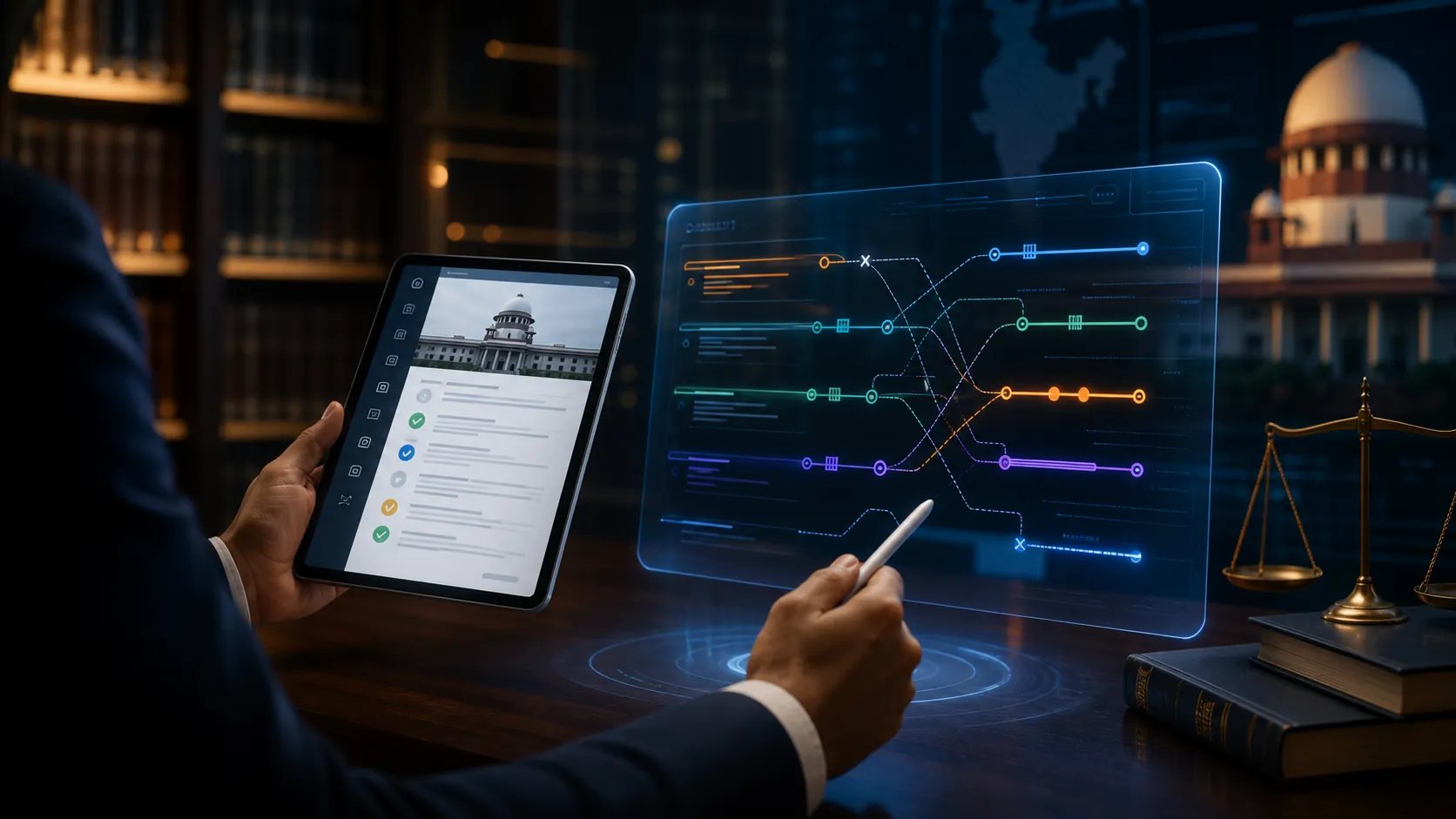
The current verification status
| Issue | Status as of Aug. 3, 2026 | How to treat it in a memo or AI-check file |
|---|---|---|
| Acquittal | Reported by multiple outlets as pronounced by ACJM Ashwini Panwar, Rouse Avenue Court, for Brij Bhushan Sharan Singh and Vinod Tomar. | Use “reported acquittal” unless and until the reasoned judgment or authenticated docket entry is found. |
| Reasoned judgment | Not yet public in the materials reviewed for this same-day verification. | Do not quote court reasoning. Attribute any rationale to the reporting source or to defence counsel as reported. |
| Finality | Appeal announced by complainant-side public statements and reported prosecutorial position. | Do not write “finally acquitted” or “case over.” Write that the trial-court acquittal is reported and appeal has been announced. |
| AI research answer | Any tool with a knowledge cutoff before Aug. 3, 2026 cannot know the verdict. A live-connected tool may still conflate adjacent proceedings. | Require a visible primary-record check and last-verified timestamp. |
The reported defence position should be handled with the same restraint. ThePrint relayed defence counsel Rajiv Mohan’s explanation that the defence relied on unexplained delay, inconsistencies, contradictions on major issues, and post-incident conduct said to make the complainants’ version “highly unbelievable.”[2] That is not yet the court’s verified reasoning. Until the order text is available, it belongs in a memo as reported argument or reported post-verdict explanation, not as a finding extracted from the judgment.
Start with the court record, not the best-written answer
For the target search “brij bhushan singh acquittal case,” a polished answer will probably assemble the public facts faster than a tired associate. That is also why this file is dangerous. The answer may be fluent before it is current. It may know the 2024 charge-framing order, the 2025 POCSO closure, and the Aug. 3 listing, then incorrectly treat one as proof of another.
The verification sequence should be mechanical enough that the person checking it can repeat it under deadline pressure:
- Identify the exact court and presiding officer reported for the verdict: ACJM Ashwini Panwar, Rouse Avenue Court, Aug. 3, 2026.[2][3][4][5]
- Confirm the accused in the reported acquittal: Brij Bhushan Sharan Singh and Vinod Tomar.[3][4][5]
- Separate the adult-women criminal case from the POCSO matter that was closed earlier.
- Match the procedural history: two FIRs on Apr. 28, 2023; chargesheet on Jun. 15, 2023; May 2024 charge framing with one discharge; POCSO closure in May 2025; reported acquittal on Aug. 3, 2026.
- Search live primary-record sources: Delhi e-courts, the Rouse Avenue Court listing or order upload if available, Indian Kanoon after indexing, and any authorized legal database used by the office.
- Record the last-verified timestamp, including time zone.
- Keep the status label as “reported, not confirmed from public primary record” until the order or authenticated docket entry is located.
The last step is not cosmetic. If a later correction is needed, the memo should show exactly what was known at the time. “Checked Delhi e-courts at 18:10 IST; no uploaded reasoned judgment located” is useful. “AI says acquitted” is not.
Why this case is easy to conflate
The case is not difficult because the words are obscure. It is difficult because the public record has several nearby strands that look related, and are related, but do not carry the same legal consequence.
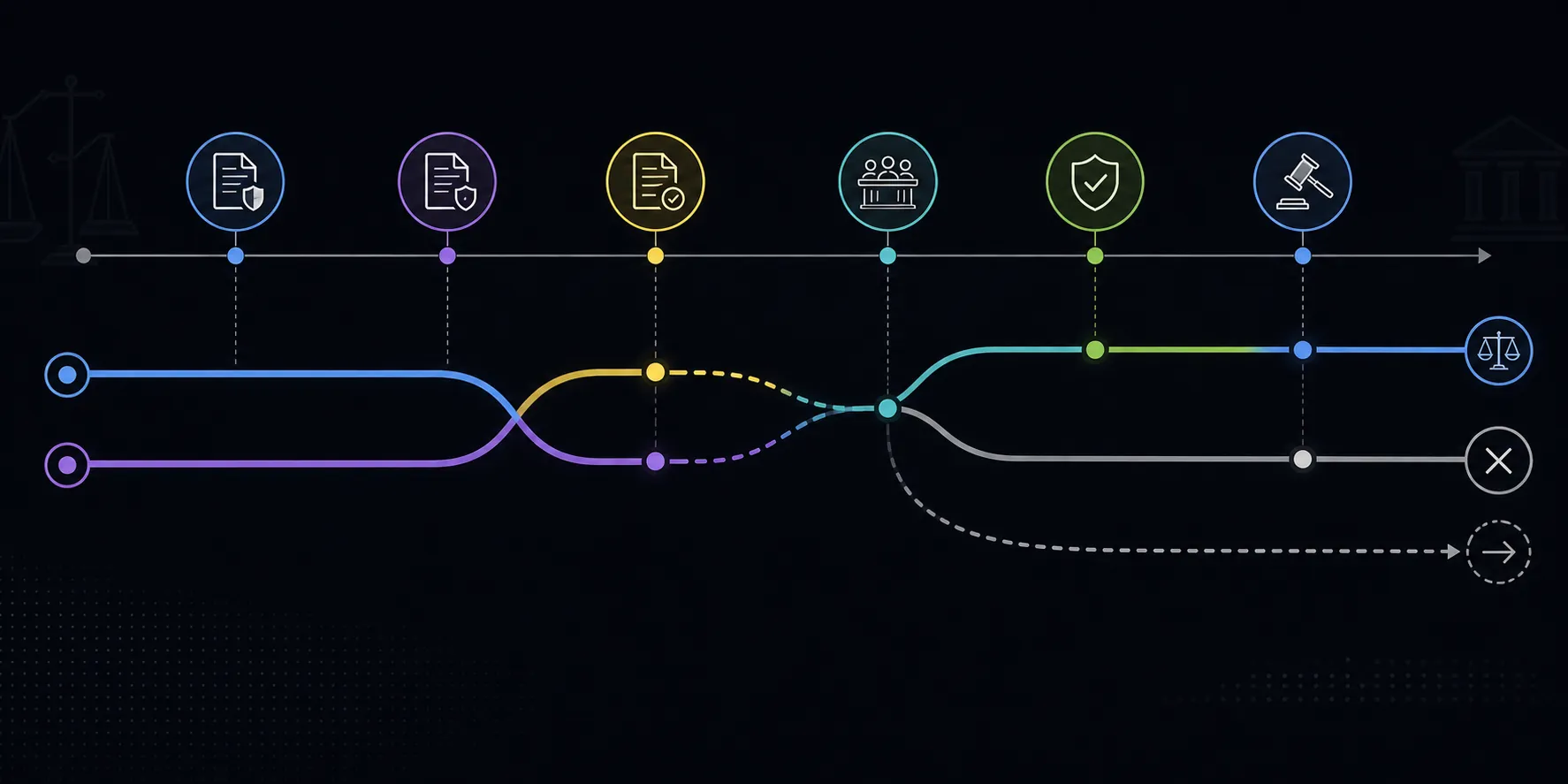
The core adult-women case traces back to FIRs registered on Apr. 28, 2023 after Supreme Court intervention, followed by a Jun. 15, 2023 chargesheet under Sections 354, 354A, 354D, and 506(1) of the Indian Penal Code, with Vinod Tomar additionally charged under Section 109 according to the reported procedural history.[2][3][4] In May 2024, ACMM Priyanka Rajpoot reportedly framed charges on allegations involving five women wrestlers and discharged Brij Bhushan Singh as to one complainant.[3][4] LawBeat later reported on Jul. 2, 2026, that the Delhi court had reserved judgment for Aug. 3, 2026.[7]
A separate POCSO proceeding had a different procedural endpoint. The Hindu reported that ASJ Gomti Manocha at Patiala House Courts accepted the Delhi Police closure report in May 2025 in the case concerning allegations by a minor wrestler, after the minor and her father said in court that they had no objection to the closure report.[8] That 2025 closure is not the Aug. 3, 2026 acquittal. Treating it as such is precisely the kind of error a timeline summary can hide.
The secondary reports also contain small discrepancies that matter in a verification file. The Hindu described the chargesheet as running to over 1,000 pages, while the Times of India described it as around 1,500 pages.[4][5] ThePrint’s procedural account places the FIRs on Apr. 28, 2023, while The Federal’s same-day appeal report uses a formulation that can read as though an FIR was filed on Jun. 15, 2023, the date otherwise associated with the chargesheet.[2][6] ThePrint also supplied a roughly 10:30 a.m. IST timing detail for the acquittal; in the materials reviewed here, that timing detail is single-source.[2]
None of those discrepancies proves that the acquittal report is wrong. They prove something narrower and more useful: secondary reporting is not a stable enough foundation for a court-status field when the next user may cite it in a brief, client note, or litigation-risk memo.
What to check in Delhi e-courts or another primary source
The primary-source check should not begin with a broad name search alone. “Brij Bhushan Singh” will return public noise, political references, and possibly adjacent proceedings. Start with the reported court, date, accused, and offence cluster, then widen only if the record does not appear.
1. Confirm the court and date
Search the Delhi District Courts or e-courts interface for Rouse Avenue Court entries on Aug. 3, 2026, using the accused name and the reported court designation. If the cause list or case-status page shows a disposed matter, capture the case number, party names, next-action field if any, and the order date. If no order PDF is attached, say so in the note.
2. Verify that the accused match the reported acquittal
The reported Aug. 3 acquittal covers Brij Bhushan Sharan Singh and Vinod Tomar.[3][4][5] A record that contains only one name, a different accused set, or a different court should not be merged without a docket match. In a live database, initials, spacing, and honorifics can vary; party-name similarity is not enough.
3. Separate the adult-women case from the POCSO closure
The POCSO closure was reported in May 2025 before ASJ Gomti Manocha at Patiala House Courts.[8] The reported Aug. 3, 2026 acquittal was before ACJM Ashwini Panwar at Rouse Avenue Court.[2][3][4][5] Court, date, proceeding type, and complainant category all differ. A correct memo can mention both, but only to prevent mistaken identity.
4. Do not import reasoning before the judgment is uploaded
A same-day news story may fairly report what defence counsel says happened. A legal research note should still distinguish three things: the verdict, the counsel’s account of the defence, and the court’s written reasoning. Only the first is being reported by multiple outlets on Aug. 3. The third remains pending in the public primary materials reviewed for this article.
5. Preserve the timestamp
A useful status line reads like this: “Last checked Aug. 3, 2026, 18:10 IST / 12:40 UTC: multiple outlets report acquittal by ACJM Ashwini Panwar, Rouse Avenue Court; no public reasoned judgment located in checked primary sources; appeal announced.” The exact time in that example is hypothetical. The format is the point: it tells the next reviewer what was checked and what was not found.
Where AI tools are most likely to fail on this file
The Brij Bhushan Singh case is not an AI-sanction incident. No material reviewed here suggests that the acquittal was caused by an AI hallucination, involved one, or led to AI-related sanctions. The AI-risk point is a verification inference: this is the kind of record layout that exposes legal-research systems to conflation, especially when the user asks for a status answer rather than a docket trail.
A cutoff-based model trained or updated before Aug. 3, 2026 cannot know the reported verdict. It may respond by stopping at the 2024 charge-framing stage, the 2025 POCSO closure, or the Jul. 2, 2026 reserved-judgment report. A live-connected product has a different problem: it may retrieve fresh reporting but merge it with older summaries, producing a confident answer with the wrong court, wrong proceeding, or wrong finality.
The hallucination record in Indian courts is no longer theoretical. In 2026, BBC reported that the Supreme Court expressed anger after a junior civil judge in Andhra Pradesh cited fake AI-generated orders; the report described the Supreme Court calling the matter an “institutional concern.”[9] The broader 2024–2026 record discussed in legal commentary includes Buckeye Trust v. PCIT, KMG Wires v. ITO, Jeetmal Choraria v. Union of India, Deepak Bahry v. Heart & Soul, and Gummadi Usha Rani v. Sure MR, with fake or misread authorities leading to recalls, costs, warnings, or judicial concern.[9][10][11]
Those cases are not evidence about Brij Bhushan Singh. They are evidence about the failure mode: fabricated citations, misread authorities, and unverified AI-generated legal material can enter formal legal work unless someone checks the primary source before use. Pooja Ramesh Singh makes that check a professional-duty issue, not a preference for old-fashioned research habits.[1]
A clean status note for this case
A careful note for the Brij Bhushan Singh acquittal case can be short:
“As of Aug. 3, 2026, multiple news outlets report that ACJM Ashwini Panwar, Rouse Avenue Court, acquitted Brij Bhushan Sharan Singh and Vinod Tomar in the women wrestlers’ sexual harassment case. The reasoned judgment has not yet been located in the checked public primary sources. The acquittal should be treated as reported, not confirmed from order text, and not final because appeal has been announced. Update required when Delhi e-courts, Indian Kanoon, or another authorized primary source publishes the order.”
That wording leaves room for what the record can still supply: the precise reasoning, the case number, the operative order language, and any appellate filings. It also prevents the common same-day error: turning a reported courtroom outcome into a broader, unsourced statement about what the court found and what happens next.
References
- Reliance on AI-generated fake precedents, Supreme Court Observer
- Brij Bhushan case verdict today: From allegations and protests of wrestlers to defence arguments, ThePrint
- Delhi Court Acquits Former BJP MP Brij Bhushan Sharan Singh In Women Wrestlers Sexual Harassment Case, LawBeat
- Brij Bhushan Sharan Singh, Vinod Tomar acquitted in women wrestler sexual harassment case, The Hindu
- Brij Bhushan Sharan Singh acquitted in wrestlers' sexual harassment case; Delhi court clears Vinod Tomar too, Times of India
- Vinesh Phogat vows appeal, court acquits Brij Bhushan Singh, The Federal
- Brij Bhushan Singh Sexual Harassment Case: Delhi Court Reserves Verdict; Judgment On August 3, LawBeat, Jul. 2, 2026
- Court accepts closure report to cancel sexual harassment case against Brij Bhushan, The Hindu, May 26, 2025
- India's top court angry after junior judge cites fake AI-generated orders, BBC, Mar. 3, 2026
- AI-hallucinated case law: how fake citations are getting lawyers sanctioned in India, iPleaders
- AI Hallucinations in Indian Courts: Every Case 2024-2026 (Complete Guide), Advocate Prakhar
Related records
Tool profile
How Meta's AI Spending Reshapes Law Firm ProfitabilityGoverning regulation
Browse the obligations tracker →Preventive workflow
Browse verification workflows →
Report a correction or tip
Spotted an outdated figure, a misstated fact, or a ruling this case record should reflect? Public comments are disabled for this content given the professional cost of a misreported case outcome, penalty amount, or rule text — use the structured correction channel instead.
Report a correction or tip for this record →