
How to verify viral clips in the Udhayanidhi Stalin arrest
When a controversy turns on a viral clip, a detector percentage is a probability, not proof. This workflow adapts the Udhayanidhi Stalin deepfake debunking — visual red flags, multi-detector testing, original-footage tracing, and official corroboration — into a repeatable sequence counsel can run before relying on any video.
- Jurisdiction
- Tamil Nadu, India
- Court
- Tamil Nadu courts
- AI tool named
- Hive Moderation
- Ruling date
- Dec 9, 2025
- Source document
- View primary court order ↗
- Last verified
- Aug 4, 2026
Lex Machina Review is an independent risk-tracking and reference resource. Nothing on this site is legal advice, and using it does not create an attorney-client relationship. Every record is reviewed against primary sources but may not reflect the most current status of a matter — always verify directly against the cited court order, rule text, or a licensed attorney before relying on it.
Companion explanation — secondary to the source document above
A breaking arrest controversy is the wrong moment to let a viral video become a fact merely because everyone is moving quickly. In the current searches around “udhayanidhi stalin arrest tr,” the “tr” is most plausibly a reference to actor Trisha Krishnan, but the disputed Tamil phrasing circulating around the reported speech should remain treated as reported unless counsel has the underlying source, transcript, and procedural record in hand. The practical question is narrower and more useful: before a clip is cited in a client memo, described in a filing, or repeated in a newsroom legal review, what must be true about that video?
The answer is not “a detector gave it a high score.” AI-video detectors are useful at intake. They can move a clip from casual suspicion to a documented risk flag. But the December 2025 Udhayanidhi Stalin deepfake debunkings show why the file only becomes defensible after a second stage: recovery of original, timestamped footage and corroboration from an official source.
Handle the clip as an evidence-risk object first
The intake posture matters. A viral political clip should not enter the file as “true,” “fake,” or “debunked.” It should enter as an item with an unresolved provenance problem: Who uploaded it first? Is it a full video or an excerpt? Does it carry platform compression, edits, overlays, or captions? Is there an original event video with a date, location, and institutional source?
For the current arrest controversy, that means separating the reported legal event from the evidentiary status of any speech clip attached to it. Early reports about FIRs, bail, and alleged remarks may explain why the video matters, but they do not authenticate the video. The December 2025 Udhayanidhi Stalin computer-screen clip is a separate incident. It is useful here because three fact-checking outlets documented a verification path that counsel can adapt without adopting anyone’s political framing.
| File stage | What counsel records | What the stage can safely support |
|---|---|---|
| Visual triage | Observable anomalies in the clip, without overclaiming | A suspicion flag |
| Detector testing | Named tools, probabilities, timestamps, uploaded sample used | A documented AI-manipulation risk assessment |
| Source tracing | Original or earlier footage, date, event, source account, visible differences | A materially stronger authenticity comparison |
| Official corroboration | Whether an official source has confirmed or flagged the clip | A defensible conclusion, still described with its basis |
Visual red flags justify testing, not a verdict
In the December 2025 clip, the early visual clues were the sort that belong in a triage note: distorted hand movements, a flash that appeared to float unnaturally, and unusually smooth skin texture. Those observations were reported across the fact-checking work on the clip, but none of them alone could carry the conclusion that the video was AI-generated.
This distinction is not pedantry. If a lawyer writes that a clip is fake because a hand “looks wrong,” the memo has converted perception into proof. The safer entry is factual and modest: the clip contains visible anomalies associated with manipulation, so it should be screened and traced before anyone relies on it.
Detector scores belong in the log, not in the conclusion
The detector results in the Udhayanidhi Stalin debunkings are useful precisely because they vary. Alt News reported that Hive Moderation returned a 94.3% likelihood that the computer-screen clip contained AI-generated content.[1] The Quint reported 72.9% certainty from its detector testing.[2] Vishvas News used the University at Buffalo DeepFake-O-Meter and published a cleaner tool-by-tool battery: AVSRDD (2025) at 100%, AltFreezing (2023) at about 100%, FTCN (2021) at about 100%, TALL (2023) at 100%, LSDA (2024) at about 80%, and WAV2LIP-STA (2022) at about 80%.[3]
| Outlet | Detector result reported | How counsel should treat it |
|---|---|---|
| Alt News | Hive Moderation: 94.3% likelihood of AI content | Strong suspicion marker; not proof by itself |
| The Quint | Detector testing: 72.9% certainty | Additional risk signal; confirms that tools may produce different probabilities |
| Vishvas News | DeepFake-O-Meter battery: several named tools around 100%, others around 80% | Best audit trail among the published detector descriptions, because it names tools and records separate outputs |
The legal value of those numbers is not that one of them becomes the magic threshold. Their value is that they create a repeatable testing record: which tool was used, what sample was submitted, what probability was returned, and whether other tools moved in the same direction. A 94.3% output and a 72.9% output are both risk signals. Neither is a witness.
That is also where tool reliability work should be cross-linked rather than implied. Benchmark performance can help a team understand whether a detector is a useful screening instrument, but it does not adjudicate a specific clip. The same discipline appears in evaluations that treat benchmark scores as risk signals instead of dispositive answers.
What the detector log should preserve
- The exact clip tested, including platform source, download method, duration, resolution, and whether captions or overlays were present.
- The detector name and, where available, model or tool version.
- The probability or classification returned, copied exactly rather than rounded into certainty.
- The date and time of testing, because tools, interfaces, and model behavior can change.
- Any failed uploads, inconclusive outputs, or conflicting results. Silence around inconvenient tool results is a litigation risk.
The case turned when fact-checkers traced the source footage
The decisive move in the December 2025 debunking was not the highest detector score. It was source recovery. Fact-checkers traced the viral claim to original inspection footage, including ANI’s Oct. 28, 2025 video of Udhayanidhi Stalin’s surprise inspection at the Greater Chennai Corporation Command and Control Centre, where the screen was visibly on.[1][2] The Quint also identified a Nov. 29–30, 2025 cyclone Ditwah inspection video as additional source footage relevant to the circulating material.[2]
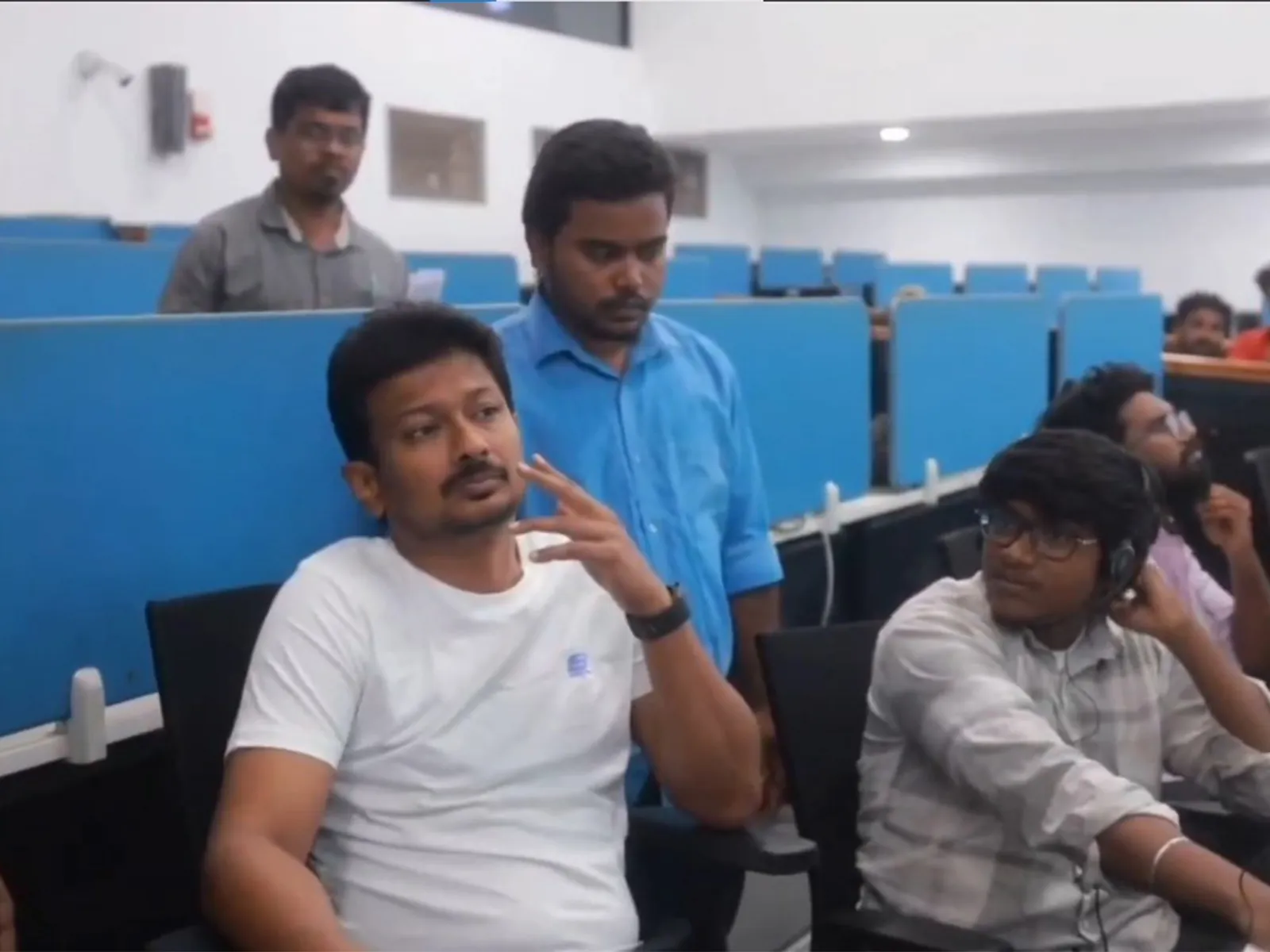
That comparison changes the legal posture. Before source recovery, the file contains anomalies and detector probabilities. After source recovery, the file contains a concrete mismatch between a viral clip and an identified earlier record: the original footage shows the inspection scene with the screen on, while the viral claim depended on the screen appearing off. The finding no longer rests on whether a detector is generally accurate. It rests on a traceable comparison to a dated source.
For counsel, the source-recovery note should be more prosaic than dramatic. Record the event, date, uploader or publisher, visible frame-level differences, and whether the recovered footage predates the viral clip. If the original video is from an agency, government account, court feed, broadcaster, or other institutional source, say so. If it is merely an earlier social upload by an unknown account, say that too.
Official corroboration is the last step, not a substitute for tracing
The Tamil Nadu government fact-check account also publicly flagged the circulating clip as AI-generated, which gave the debunking an official corroboration point in addition to the detector and source-tracing record.[2][3] That matters, but it should not be allowed to do more work than it can bear. An official post may corroborate a finding; it does not relieve counsel from preserving the underlying comparison.
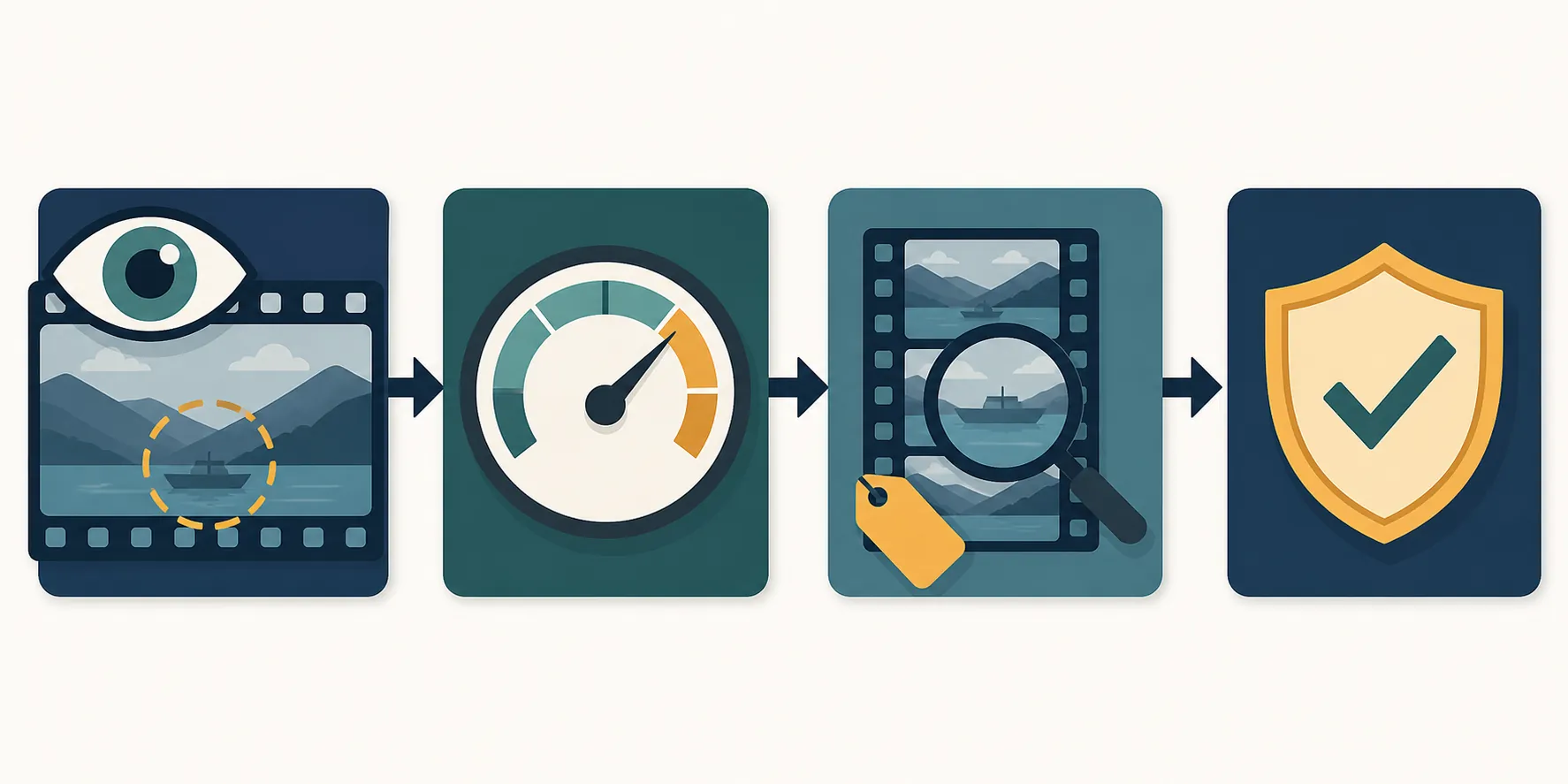
This is the handoff problem that often gets missed on day one. A platform post, detector screenshot, or partisan narration may be enough to fuel public certainty. It is not enough for the person who later has to explain why the clip was treated as usable evidence. A conservative file should show the chain: visual anomaly, detector outputs, recovered original footage, official corroboration.
How to write the status call without overstating it
The safest wording changes as the file matures. If the only support is a detector score, the clip is “flagged as potentially AI-generated” or “requires source verification.” If several detectors point the same way, it is “the subject of multiple AI-manipulation risk signals.” Once original, timestamped footage is recovered and matched against the viral version, counsel can write that fact-checkers concluded the viral clip was AI-generated or manipulated, and explain the basis for that conclusion.
The December 2025 Udhayanidhi Stalin case supports that latter formulation because the conclusion did not stop at tool output. Alt News, The Quint, and Vishvas News combined visual review and AI-detection testing with source tracing; the official fact-check account then supplied a corroborating institutional signal.[1][2][3] That is materially different from a viral post that says “94% AI” and asks everyone else to treat the matter as closed.
The same confirmed-versus-reported discipline is useful outside video authentication. A team maintaining a discrepancy log for reported allegations is doing the same kind of work: separating what the record proves from what public accounts merely assert. For video, the equivalent log is a provenance table.
Applying the workflow to the arrest controversy
For the Udhayanidhi Stalin arrest searches now circulating, the immediate legal-risk move is to resist merging three different things: the reported arrest, the alleged speech content, and any viral clip said to show or prove that content. Each has a different verification burden. A reported FIR is not the same as a public bail order. A paraphrase of a disputed Tamil remark is not the same as a sourced transcript. A viral video is not the same as original footage.
If counsel is asked today whether the clip can be cited, the answer should track the chain. Has anyone preserved the upload? Has anyone identified the earliest available version? Have visual anomalies been logged? Have multiple detectors been run and documented? Has reverse-image or frame search found the original event footage? Has an official account, agency video, court record, or primary source corroborated the relevant point?
Until that chain exists, the clip can be discussed as circulating, disputed, alleged, or under review. It should not be treated as confirmed evidence. A high detector percentage may justify urgent caution; it does not justify evidentiary confidence. The confirmed point arrives only when the detector record is matched against original, timestamped footage and corroborated by a source with institutional accountability.
That standard is not slow for its own sake. It is the difference between a lawyer advising from a preserved record and a lawyer inheriting a viral claim after the public narrative has already hardened. The December 2025 debunkings are useful because they show the whole route from suspicion to conclusion. The arrest controversy should be handled with the same restraint until its own source record is recovered.
References
- Video of Udhayanidhi Stalin using computer without switching it on is AI-generated, Alt News, Dec. 5, 2025
- Udhayanidhi Stalin Using Turned-Off Computer? AI-Generated Clip Shared With False Claim, The Quint, Dec. 8, 2025
- Fact Check: Deepfake video of Udhayanidhi Stalin shared with false claim of inspecting a computer screen without power on, Vishvas News, Dec. 9, 2025
Related records
Tool profile
Browse tool evaluations →Governing regulation
Browse the obligations tracker →Preventive workflow
Browse verification workflows →
Report a correction or tip
Spotted an outdated figure, a misstated fact, or a ruling this case record should reflect? Public comments are disabled for this content given the professional cost of a misreported case outcome, penalty amount, or rule text — use the structured correction channel instead.
Report a correction or tip for this record →