
Verify Max Miller abuse allegations against docket records
On the Max Miller dockets, the same allegations carry different evidentiary postures across five trackable proceedings, so each status word — unsubstantiated, denied, dropped, pending — must be verified against a specific primary record. This discrepancy-log worked example gives researchers a repeatable method for separating court-confirmed facts from reported allegations in AI-assisted research.
- Jurisdiction
- Ohio, United States
- Court
- Cuyahoga County Court of Common Pleas
- Judge
- Debra Boros
- AI tool named
- No AI tool named
- Ruling date
- Jul 29, 2026
- Source document
- View primary court order ↗
- Last verified
- Aug 4, 2026
Lex Machina Review is an independent risk-tracking and reference resource. Nothing on this site is legal advice, and using it does not create an attorney-client relationship. Every record is reviewed against primary sources but may not reflect the most current status of a matter — always verify directly against the cited court order, rule text, or a licensed attorney before relying on it.
Companion explanation — secondary to the source document above
The hard part in verifying the Max Miller domestic abuse allegations against the Ohio congressman is not finding a dramatic account. There are plenty. The hard part is preventing one status word from leaking across records where it does not belong. Public-records reporting has described more than 2,000 pages of materials, allegations involving abuse, threats, drug use, and a leaked-audio transcript; separate reporting has also described a DCFS disposition as “unsubstantiated,” meaning insufficient evidence to support a finding, not a finding that the allegations were false.[1][2] Miller, in turn, has publicly denied the abuse claims and said no court or agency has substantiated them.[3]
Those sentences can all sit in the same research file. They cannot all be collapsed into one conclusion. For publication, filing, or an AI-assisted research memo, each word has to be attached to a proceeding, a date, a source type, and the record that would make it safe to cite.

Confirmed-vs-reported discrepancy log, last checked Aug. 4, 2026
| Claim or status word to verify | Source currently carrying the claim | Proceeding or record bucket | Status word used | Primary record needed before citing as confirmed | Current verification posture |
|---|---|---|---|---|---|
| Public-records materials describe allegations against Miller, including allegations of abuse, threats, drug use, and a leaked-audio transcript. | Mother Jones public-records reporting based on more than 2,000 pages.[1] | Public records / reported factual universe, not one court disposition. | Alleged; reported; records obtained. | Underlying records, transcript, and any specific docket filing being cited. | Useful as reported public-records material. Not a global court finding. |
| DCFS did not substantiate allegations. | Mother Jones and AP discussion of the DCFS disposition.[1][2] | Child-welfare agency disposition. | Unsubstantiated. | DCFS disposition record or an authenticated copy quoted in reporting. | Means insufficient evidence to support a finding. It does not mean the agency found the allegations false. |
| Miller said no court or agency has ever substantiated the abuse claims. | Cleveland.com account of Miller’s Aug. 2 livestream denial.[3] | Party statement / public denial. | Denied; no court or agency has substantiated. | Livestream/video record for the statement, plus the relevant court and agency records for the underlying claim. | A party characterization that may be consistent with the absence of substantiation. It is not itself an adjudication. |
| Miller’s domestic-violence protection-order request involving Emily Moreno was dropped or dismissed. | NY Post account quoting a July 29, 2026 dismissal order by Judge Debra Boros, including findings of no apparent infirmity and no apparent threat or fear.[4] | Protection-order proceeding. | Dropped; dismissed; no evidence of harm, depending on source language. | The actual July 29 dismissal order and docket sheet. | Stronger than a source-familiar report because it quotes a judicial order. Still best verified against the docket before being stated as docket-confirmed. |
| Emergency discovery was denied in Miller v. Moreno, and a UPEPA dismissal hearing was set. | Chandra Law posts by Moreno’s counsel, including the July 7, 2026 emergency-discovery denial and references to Case No. 26-138810 before Judge Joy Kennedy.[5][6] | Miller v. Moreno et al., Cuyahoga County Court of Common Pleas, Case No. 26-138810. | Denied; stayed; scheduled; moving toward anti-SLAPP dismissal, in counsel’s framing. | Cuyahoga County Clerk docket entries, orders, and hearing results. | Docket facts are useful when cross-checked. Counsel’s advocacy language must remain attributed. No public source in this file confirms the July 23 dismissal outcome or any fee award as of Aug. 4, 2026. |
| Ohio UPEPA may require a prompt hearing, ruling, and fee award if dismissal is granted. | Frantz Ward summary and Ohio Revised Code Chapter 2747.[7][8] | Statutory framework for the Miller v. Moreno UPEPA motion. | Hearing within 60 days; ruling within 60 days; mandatory fees if dismissal is granted. | Applicable statutory text and the case docket showing whether dismissal was granted. | Relevant to what could happen. It does not prove that dismissal or fees have happened. |
| Miller faced an Aug. 5 or Aug. 10 ballot-related deadline if he left the race. | Roll Call, Washington Examiner, and Akron Beacon Journal accounts.[9][10][11] | Election administration / candidate replacement mechanisms. | Deadline; last day; replacement process. | Applicable election-law mechanism and party action records. | Not a simple contradiction. Aug. 5 and Aug. 10 describe different replacement mechanisms or practical decision points. Aug. 5 had not yet occurred as of this article’s last check. |
A clean row is not cosmetic. It is the point at which a researcher can stop repeating a source’s confidence and start identifying what the record actually supports. The same underlying allegations may be “reported” in one row, “unsubstantiated” in an agency row, “denied” in a party-statement row, “dismissed” in a protection-order row, and “pending” in a defamation/UPEPA row. None of those words is portable.
For broader case-status context, the site’s five-proceeding docket grid and confirmed-orders-vs-reported-filings treatment should be used as companion records. This article is narrower: it is about how to keep the source posture intact when the same allegations move through different legal and institutional channels.
Why “unsubstantiated” is not the same as “false”
The DCFS row is the easiest place for a summary to become misleading while still sounding careful. “Unsubstantiated” is a real status word. It belongs to an agency disposition. But AP’s framing matters: the term means there was insufficient evidence to support a finding; it is not an agency finding that the allegations were false.[2]
That distinction changes the sentence a researcher may safely write. “DCFS found the allegations false” is not supported by the materials in this record. “DCFS did not substantiate the allegations” is closer, but still incomplete if the reader may understand “unsubstantiated” as exoneration. The safer version is: “A DCFS disposition described in reporting was unsubstantiated, a term AP described as meaning insufficient evidence to support a finding, not a finding that the allegations were false.”
That wording is less smooth. It is also less likely to be wrong. In a high-profile matter, smoothness is often where the damage enters: the agency’s evidentiary threshold disappears, and the reader is left with a conclusion the agency did not make.
Miller’s Aug. 2 statement creates a related problem. Cleveland.com reported that he denied the abuse claims and said no court or agency had ever substantiated them.[3] That statement may be consistent with the DCFS posture and with the absence of a confirmed court finding substantiating abuse in the materials reviewed here. It still should be logged as a party statement. A party’s accurate description of non-substantiation does not become a court’s finding of innocence, and it does not erase reported allegations from public records.
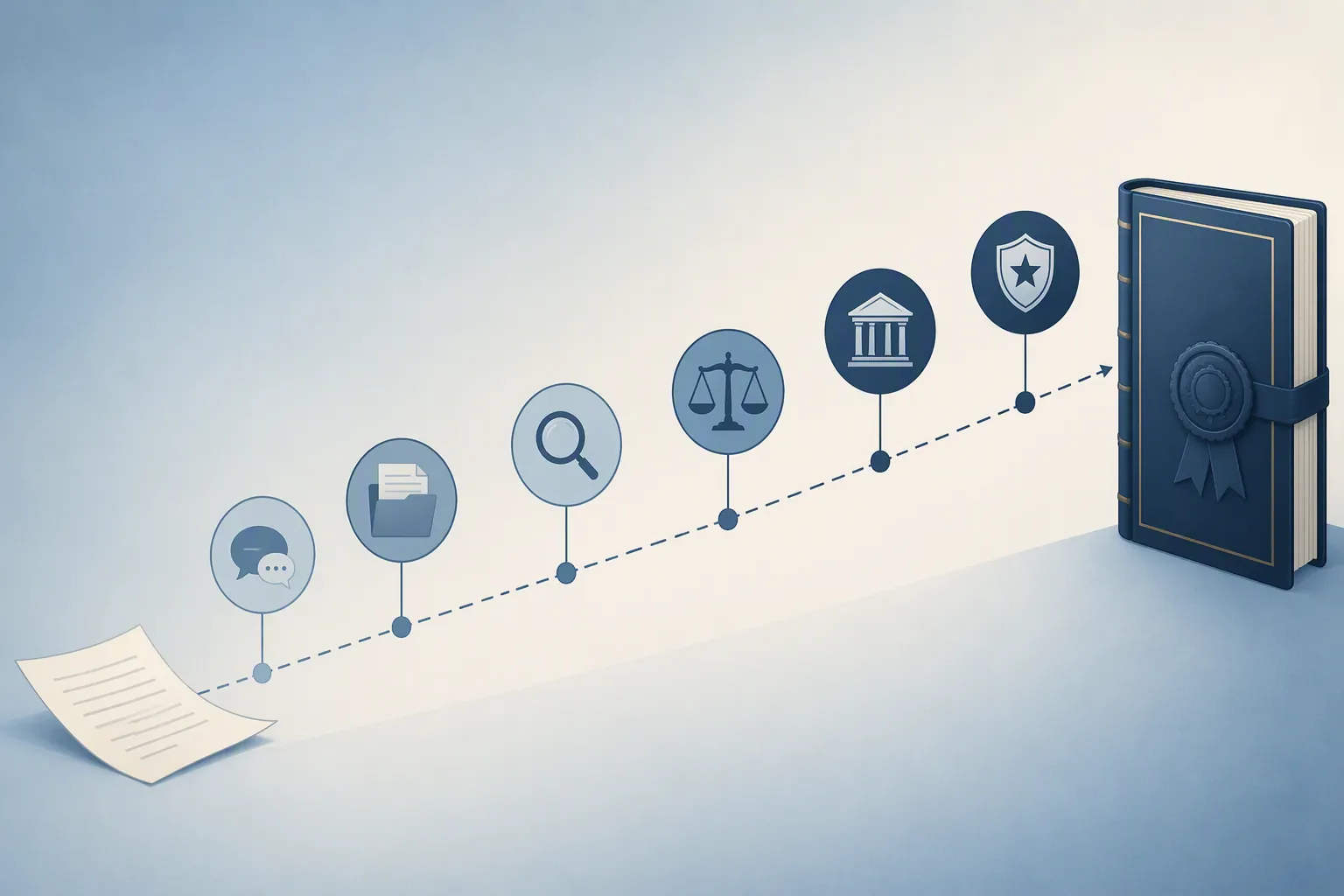
“Dropped” and “dismissed” are not interchangeable until the order is located
The protection-order row shows a different verification problem: timing and source type. A source-familiar account that a request was dropped is not the same thing as a published account quoting a judge’s dismissal order. The NY Post account gives the later and stronger posture because it quotes a July 29, 2026 order by Judge Debra Boros and reports findings that there was no apparent infirmity and no apparent threat or fear.[4]
That still does not mean the researcher should stop at the article if the sentence will be used in a legal memo. The NY Post item is a primary-source-quoted report, not the docket itself. The next step is to retrieve the order and the docket sheet. Once that is done, the status can move from “reported order” to “docket-confirmed dismissal order.” Until then, the sentence should say what made it true: “The NY Post reported, quoting a July 29 dismissal order, that Judge Debra Boros dismissed the request and found no apparent threat or fear.”
This is not fussiness over style. “Dropped” suggests party action. “Dismissed” suggests court action. “No evidence of harm” may be a headline compression. “No apparent threat or fear” is closer to the quoted judicial language described in the report. Each phrase points to a different actor and a different record.
The UPEPA row belongs under docket control, not counsel’s verbs
Chandra Law’s posts are useful for the Miller v. Moreno row because they identify docket facts a researcher can chase: Miller v. Moreno et al., Case No. 26-138810, Judge Joy Kennedy, a July 7, 2026 denial of Miller’s emergency discovery motion, a UPEPA discovery stay, and references to a July 23 hearing.[5][6] They are also posts by Moreno’s counsel. Their words “thwarted,” “fishing expedition,” and similar characterizations should remain defense counsel’s language unless a court order uses the same terms.
The UPEPA framework explains why the dates matter. Ohio’s Uniform Public Expression Protection Act provides timing rules for hearings and rulings, and Chapter 2747 includes a fee consequence if dismissal is granted.[7][8] That makes the July 23 hearing reference important. It does not make dismissal inevitable, and it does not establish that fees were awarded.
As of Aug. 4, 2026, the usable entry is therefore narrow: Chandra Law reported docket facts and hearing timing in Miller v. Moreno, including the July 7 emergency-discovery denial and the July 23 UPEPA hearing reference; before stating that the case was dismissed or that fees were awarded, check the Cuyahoga County Clerk of Courts docket for Case No. 26-138810.
For readers who need the statute-level background rather than this verification step, the site’s Ohio anti-SLAPP record on Miller covers the UPEPA issue more directly. The workflow point here is simpler: counsel’s blog can point you to the docket, but it does not replace the docket.
Build the log around source posture, not narrative order
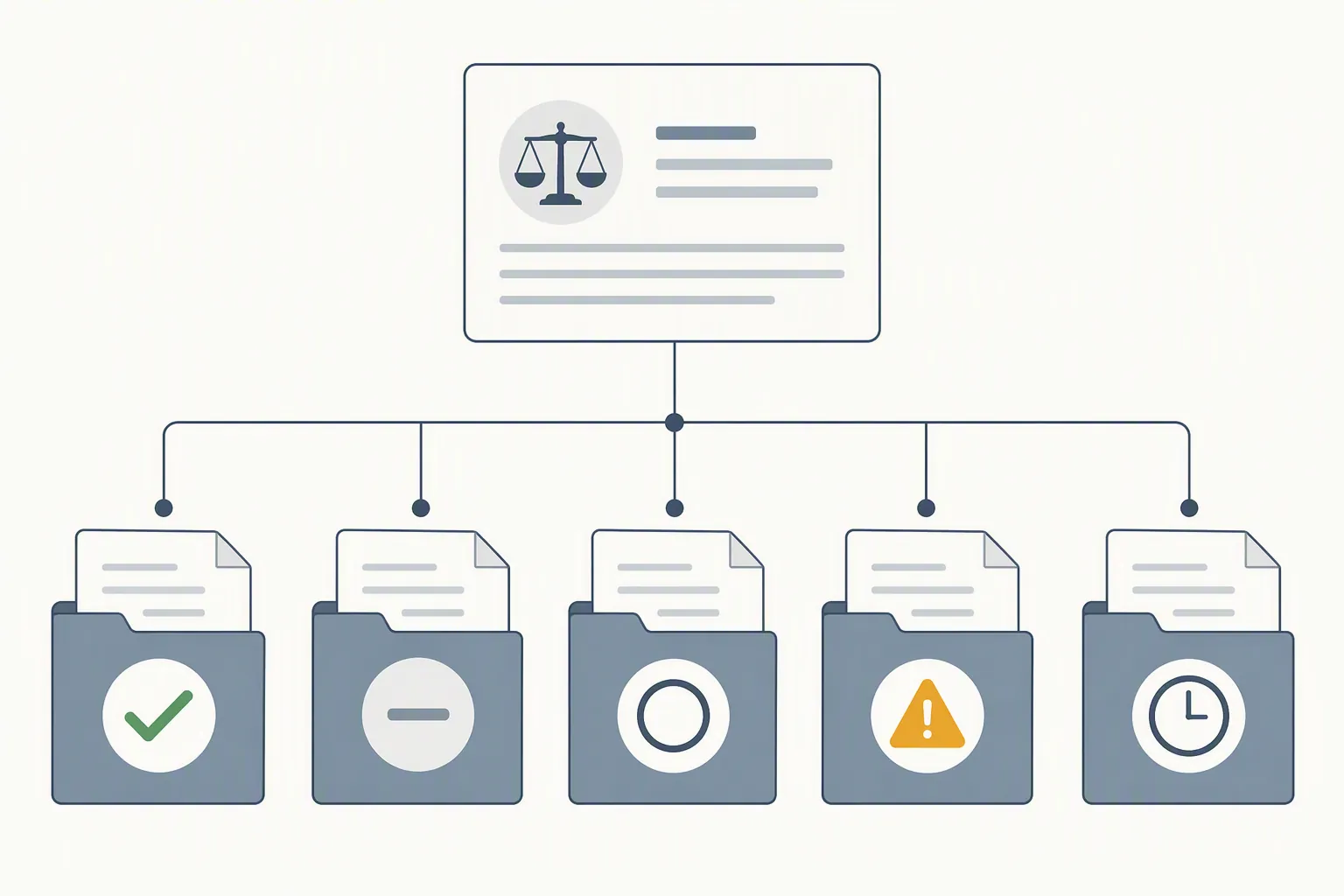
A useful discrepancy log does not start by asking which source is most dramatic or most recent. It asks what kind of assertion is being made. In the Miller materials, the recurring buckets are distinct enough to keep separate:
- Reported allegation: a journalist reports that a person made an allegation or that records contain an allegation.
- Reported filing: a source reports that a filing was made, but the docket or file-stamped pleading has not yet been reviewed.
- Primary-source-quoted order: reporting quotes or describes language from an order, but the researcher has not independently retrieved the order.
- Docket-confirmed order: the docket entry or order has been retrieved and matched to the proceeding.
- Party characterization: a litigant, lawyer, or campaign describes what the records mean.
- Pending docket event: a hearing, motion, deadline, or ruling window exists, but the outcome has not been confirmed.
Those categories are not abstractions. They determine the verb. “Alleged” belongs in the first bucket. “Filed” may belong in the second only if the filing can be identified. “The court found” should wait for the order. “Counsel argues” belongs to advocacy material. “Pending” should be reserved for a live event whose outcome is not yet verified.
The ballot-deadline row is a small example with a familiar trap. Roll Call, the Washington Examiner, and the Akron Beacon Journal described pressure on Miller and replacement timing, with Aug. 5 and Aug. 10 appearing in the coverage.[9][10][11] Those dates should not be treated as a simple factual contradiction. They map to different election mechanisms or practical decision points: withdrawal timing that can trigger a party-committee replacement process, and the last point at which GOP officials could select a replacement under the account being discussed. As of Aug. 4, the Aug. 5 event had not happened.
A reusable workflow for AI-assisted legal research
There is no confirmed AI-generated-content issue in the Miller matter. The reason it belongs in a verification workflow is more ordinary: an AI tool, a hurried reporter, or a junior researcher can easily flatten five proceedings into one confident paragraph. The repair method is the same regardless of who produced the first draft.
- Extract every status word from the draft: substantiated, unsubstantiated, denied, dropped, dismissed, stayed, pending, scheduled, granted, or awarded.
- Attach each word to one proceeding or record bucket. If it cannot be attached, it should not survive as a status word.
- Identify the source type: reporting, public-records reporting, quoted order, docket entry, party statement, counsel advocacy, statute, or agency disposition.
- Write the primary record needed to upgrade the claim. This is often the docket sheet, the order, the file-stamped pleading, the agency disposition, or the hearing entry.
- Downgrade the sentence until the record supports it. “The court dismissed” may become “the NY Post reported, quoting a July 29 order, that the court dismissed.”
- Add a last-checked date for unresolved rows. In this matter, the Miller v. Moreno UPEPA dismissal outcome and any fee award remain in that category as of Aug. 4, 2026.
The Miller file also shows why a single global sentence is usually unsafe. “The allegations were unsubstantiated” overstates the DCFS row if it is applied to everything. “The case was dropped” may describe one protection-order posture but says nothing about the defamation action. “Miller denied the claims” is a party-statement fact, not a substitute for the agency or court records. “No court has substantiated the allegations” may be a careful statement of current posture, but it should not be edited into “no evidence exists.”
A discrepancy log is not a verdict. It is a guardrail against accidental verdicts. In this matter, the verified boundary is narrow: serious allegations have been publicly reported; Miller has denied them; DCFS non-substantiation does not equal a finding of falsehood; the protection-order dismissal should be tied to the July 29 order; the UPEPA dismissal outcome and any fee award in Miller v. Moreno should not be asserted without checking the Cuyahoga County docket; and no single status word summarizes all proceedings.
References
- Assault, Misogyny, Verbal Threats: Records Detail New Allegations Against Rep. Max Miller — Mother Jones
- Democrats see a chance to flip a seat as focus on abuse claims mounts against Ohio Rep. Max Miller — AP
- Rep. Max Miller goes live to deny abuse claims, vows to stay in race — cleveland.com
- Rep. Max Miller drops domestic violence case against senator's daughter after judge finds no evidence of harm by ex-wife — NY Post
- THWARTED: Court denies Congressman Max Miller's emergency discovery motion — Chandra Law
- Congressman Max Miller's re-election boasts torpedo his own defamation lawsuit — Chandra Law
- Ohio Enacts Uniform Public Expression Protection Act, Establishing Anti-SLAPP Protections — Frantz Ward
- Ohio Revised Code Chapter 2747 — Ohio Laws & Administrative Rules
- As Max Miller allegations intensify, Republicans keep their distance — Roll Call
- What is the process to replace Max Miller... — Washington Examiner
- Congressman Max Miller staying in race despite abuse allegations — Akron Beacon Journal
Related records
Tool profile
How Meta's AI Spending Reshapes Law Firm ProfitabilityGoverning regulation
Browse the obligations tracker →Preventive workflow
Browse verification workflows →
Report a correction or tip
Spotted an outdated figure, a misstated fact, or a ruling this case record should reflect? Public comments are disabled for this content given the professional cost of a misreported case outcome, penalty amount, or rule text — use the structured correction channel instead.
Report a correction or tip for this record →