
Watts 2025 Habeas Ruling Tightens Martinez v. Ryan Boundaries
The 11th Circuit's June 2025 unpublished ruling in Christopher Watts v. Secretary, Florida DOC holds that Martinez v. Ryan does not excuse procedural default when an ineffective-assistance claim was raised at trial but not briefed on state post-conviction appeal. Practitioners in the circuit must preserve IAC arguments through every appellate tier to preserve federal habeas review.
- Jurisdiction
- US - Eleventh Circuit
- Court
- United States Court of Appeals for the Eleventh Circuit
- AI tool named
- None
- Ruling date
- Jun 30, 2025
- Source document
- View primary court order ↗
- Last verified
- Jul 31, 2026
Lex Machina Review is an independent risk-tracking and reference resource. Nothing on this site is legal advice, and using it does not create an attorney-client relationship. Every record is reviewed against primary sources but may not reflect the most current status of a matter — always verify directly against the cited court order, rule text, or a licensed attorney before relying on it.
Companion explanation — secondary to the source document above
This is not an update about the Colorado Chris Watts associated with the 2018 Shanann Watts family murders. That case was resolved by guilty plea with a waiver of appellate rights in November 2018, and there is no 2025 criminal case-law development there. The 2025 ruling at issue involves a different Christopher Watts: a Florida state prisoner pursuing federal habeas relief under 28 U.S.C. § 2254.
The operative point is narrow and important: in an unpublished June 30, 2025 per curiam disposition, the Eleventh Circuit held that Martinez v. Ryan does not excuse a procedural default where an ineffective-assistance-of-counsel claim was raised in state post-conviction trial proceedings but then abandoned by not briefing it on post-conviction appeal. The mandate issued July 29, 2025.[1]
Because the decision is unpublished, it should not be treated as a new binding habeas rule for the circuit. It is still a useful risk record. It shows how the Eleventh Circuit applied Martinez in 2025 when the default was not a failure to raise an IAC claim at all, but a failure to carry that claim through the state appellate layer. Any direct quotation from the disposition should be checked against the primary opinion PDF before publication; the safer use is to describe the holding and procedural posture.
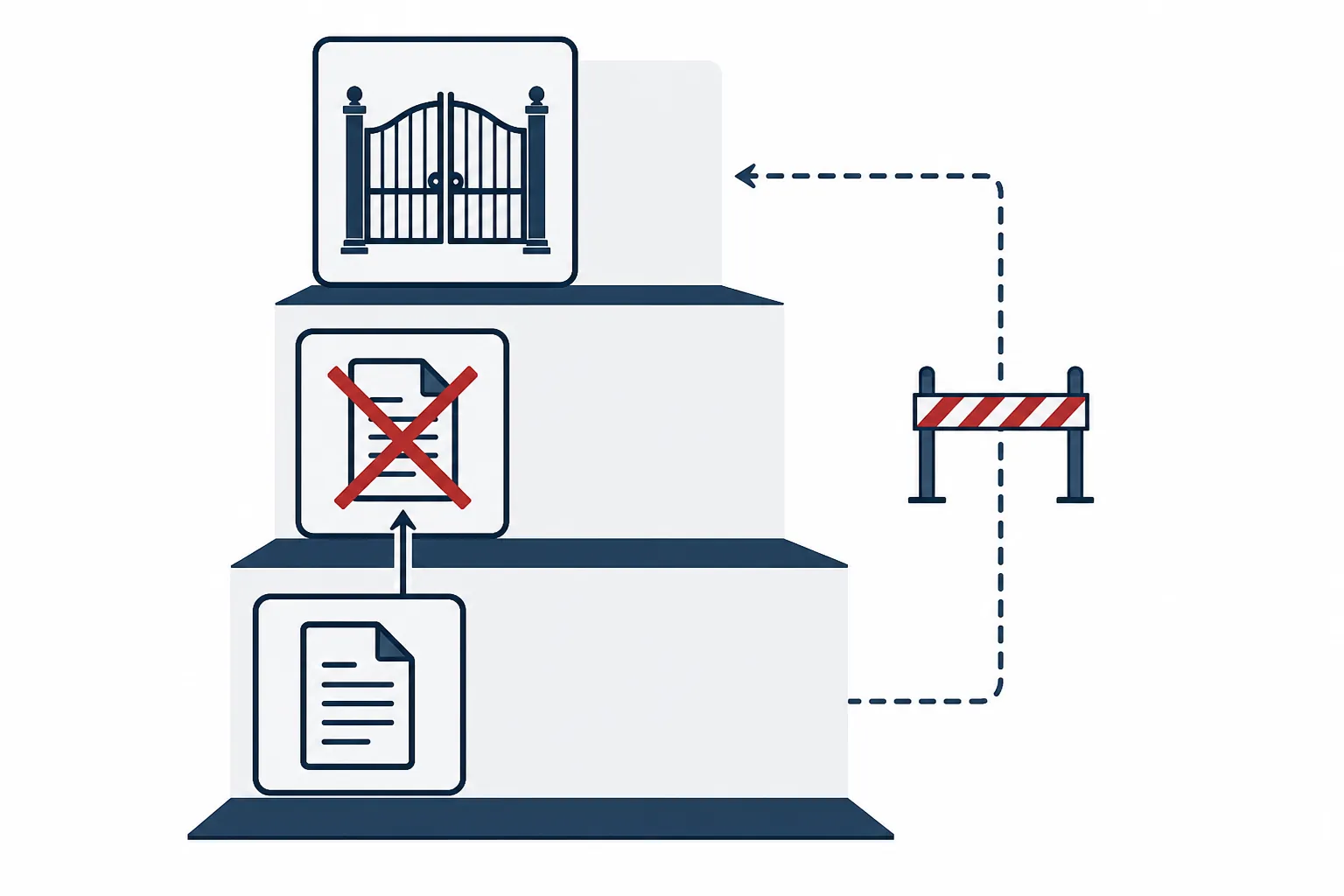
Where the Default Crystallized
The federal docket matters because it locates the trapdoor. Watts filed his initial § 2254 petition in the Middle District of Florida on November 24, 2020. Judge Brian J. Davis denied the petition on November 13, 2023. A certificate of appealability was granted on September 13, 2024, putting the preservation question before the Eleventh Circuit.[2]
| Date | Procedural Event | Why It Matters |
|---|---|---|
| Nov. 24, 2020 | Initial § 2254 petition filed in the Middle District of Florida | The federal habeas case begins after state post-conviction litigation. |
| Nov. 13, 2023 | District court denies the petition | The federal court rejects relief before appellate review. |
| Sept. 13, 2024 | Certificate of appealability granted | The Eleventh Circuit receives a defined issue for review. |
| June 30, 2025 | Unpublished Eleventh Circuit disposition issued | The panel applies Martinez to an IAC claim raised below but not briefed on post-conviction appeal. |
| July 29, 2025 | Mandate issued | The appellate disposition becomes procedurally final in the court of appeals. |
That sequence is not just chronology. It explains why the case is useful to practitioners. A claim can look preserved when someone sees it in the trial-level post-conviction papers. But federal habeas review does not stop its exhaustion inquiry at the first state collateral filing. If the state appellate brief omits the claim, the later federal petition inherits that omission.
For the lawyer doing the final preservation audit, the question is therefore not simply, “Was this IAC claim raised?” It is, “Was this IAC claim fairly presented through the state process in the posture state law required?” Watts is a reminder that those are not the same question.
What Martinez Covers—and What Watts Says It Does Not
The Supreme Court in Martinez v. Ryan created a limited equitable path around procedural default for certain substantial ineffective-assistance-of-trial-counsel claims when state post-conviction counsel was absent or ineffective in the initial-review collateral proceeding. The decision did not create a constitutional right to post-conviction counsel, and it did not erase ordinary exhaustion rules.[3]
That distinction does the work in Watts. Martinez is aimed at the initial-review collateral proceeding: the point at which state law may require a prisoner to raise a trial-counsel ineffectiveness claim for the first time. Watts had a different problem. The IAC claim appeared at the state post-conviction trial level but was not briefed or argued on post-conviction appeal. The claimed defect was therefore not the initial absence of a meaningful forum for the IAC claim; it was the abandonment of the issue at the appellate stage.
That is why describing the omission as a mere technicality badly understates the risk. In AEDPA practice, the state appellate brief is not clerical residue. It is one of the places where fair presentation either continues or stops. Once it stops, a federal court is not free to treat the claim as exhausted simply because the words once appeared in a lower state-court motion.
The Harvard Law Review’s survey of ineffective-assistance doctrine in habeas corpus usefully frames the larger pressure point: ineffective-assistance claims often carry both trial-error substance and collateral-review procedural complexity. Watts belongs on the procedural side of that divide. The panel did not need to make new law about Strickland prejudice or trial performance; it applied an existing default boundary to a claim that fell out of the state appellate presentation.[4]
The Practical Audit After Watts
A preservation check after Watts should start with the state post-conviction appellate brief, not with the federal petition. The federal petition may present the claim cleanly. The trial-level collateral record may contain it. Neither fact answers whether the state appellate court was fairly asked to decide it.
- Match each federal IAC ground to the state post-conviction motion or equivalent trial-level collateral filing.
- Then match the same ground to the state post-conviction appellate brief, not merely to the notice of appeal or appendix.
- Check whether the appellate brief actually argued the claim, rather than mentioning it in passing or incorporating a lower filing in a way state practice may not accept.
- Separate claims that were never raised in the initial-review collateral proceeding from claims raised below and later abandoned; Martinez may matter to the first category, but Watts is a warning about the second.
- Treat pro se status as relevant to the human difficulty of the record, not as a substitute for the exhaustion analysis.
The third item is where many files need the most careful reading. An IAC claim can change shape as it moves from a Rule 3.850 motion or similar state collateral filing into appellate briefing. A federal ground that depends on one factual theory may not be preserved by a state appellate argument built around another. Watts does not supply a full taxonomy of those mismatches, but it reinforces the basic discipline: do not infer appellate preservation from trial-level presentation.
The CaseMine commentary describes the ruling as “doctrinally unmistakable” and summarizes it as a reaffirmation that Martinez does not excuse default for unbriefed IAC claims on post-conviction appeal.[5] That is a fair shorthand if it remains subordinate to the primary disposition. Commentary can help flag the issue; it should not become the source for quoting the court.
Why the Unpublished Status Matters
The unpublished label should restrain the claim, not erase the signal. Watts is not a circuit-splitting event. It is not a major new AEDPA precedent. It is also not useless to the person evaluating whether a federal petition is already carrying a defaulted IAC issue. Recent unpublished applications often show how panels are likely to sort familiar procedural arguments when the record is plain.
The source hierarchy should remain clean. The Eleventh Circuit disposition and the district-court docket supply the procedural record. Martinez supplies the governing equitable-exception frame. Secondary commentary may be useful for orientation, but it cannot enlarge the holding.
That hierarchy is especially important because the search phrase “chris watts 2025 investigator update criminal case law” mixes unrelated signals. The “investigator update” language likely points readers toward the Colorado Watts record, including earlier true-crime coverage. It does not bear on the Florida habeas ruling. The 2025 legal development is a procedural-default decision in a § 2254 case, not a factual update in the Colorado prosecution.
Related Procedure Notes
For adjacent procedural coverage, the same preservation instincts appear in post-conviction and appellate posture disputes outside § 2254. See the site’s coverage of Kohberger post-conviction relief analysis, Pamela Smart habeas proceedings, ICE-detention habeas matters such as Chantal Morales Rojas’s habeas petition, and the Navarro contempt-conviction appeal. Those pieces are not authority for Watts; they are nearby examples of why appellate posture often decides what a court can reach.
The Boundary to Carry Forward
Watts leaves the petitioner visible in a familiar posture: a pro se Florida prisoner trying to keep an ineffective-assistance claim alive after state collateral review. The ruling is not about innocence, sentencing policy, or the equities of prison litigation generally. It is about where federal review ends when state appellate presentation fails.
For Eleventh Circuit practice, the operational rule is severe but easy to audit: a preserved IAC issue is not merely one that appeared in a trial-level post-conviction filing. It must be actively carried through the state appellate tier if the petitioner wants federal habeas review. Watts is unpublished and not revolutionary, but it is a fresh warning that Martinez remains an exception with hard edges.
References
- Christopher Watts v. Secretary, Florida Department of Corrections, et al, Justia, June 30, 2025.
- Watts v. Secretary, Department of Corrections et al, PACER Monitor.
- Martinez v. Ryan, 566 U.S. 1 (2012), Justia.
- The Supreme Court, 2021 Term — Federal Habeas Corpus — Ineffective Assistance of Counsel, Harvard Law Review, November 2022.
- Reaffirming the Limits of Martinez: Procedural Default Not Excused for Unbriefed IAC Claims on Post-Conviction Appeal, CaseMine.
Related records
Tool profile
Browse tool evaluations →Governing regulation
Browse the obligations tracker →Preventive workflow
Browse verification workflows →
Report a correction or tip
Spotted an outdated figure, a misstated fact, or a ruling this case record should reflect? Public comments are disabled for this content given the professional cost of a misreported case outcome, penalty amount, or rule text — use the structured correction channel instead.
Report a correction or tip for this record →