
Whistleblower Attorney Sanctioned for Reckless AI Citations
A whistleblower attorney in a D.D.C. False Claims Act case was sanctioned after filing an opposition brief where all nine legal citations were fabricated by AI tools including Grammarly, ProWritingAid, and Lexis+ AI. The case illustrates the court's expectation that attorneys independently verify every citation regardless of the AI tool used.
- Jurisdiction
- D.D.C. (U.S. District Court for the District of Columbia)
- Court
- U.S. District Court for the District of Columbia
- Judge
- Amit P. Mehta
- AI tool named
- Grammarly, ProWritingAid, Lexis+ AI
- Ruling date
- Apr 3, 2026
- Source document
- View primary court order ↗
- Last verified
- Jul 26, 2026
Lex Machina Review is an independent risk-tracking and reference resource. Nothing on this site is legal advice, and using it does not create an attorney-client relationship. Every record is reviewed against primary sources but may not reflect the most current status of a matter — always verify directly against the cited court order, rule text, or a licensed attorney before relying on it.
Companion explanation — secondary to the source document above
Smith v. Athena Construction Group is now a confirmed D.D.C. AI-citation sanctions entry, not a generic warning about legal technology. The case is a False Claims Act retaliation suit, No. 1:24-cv-01234, before Judge Amit P. Mehta. Glenn Ellis prepared an opposition to a continuance motion while traveling, said he relied on Grammarly, ProWritingAid, and Lexis+ AI, and the court found that the resulting brief contained no valid legal citation among the nine it offered.[1]
The sanction was not imposed because a lawyer used drafting software. It was imposed because generated legal authority crossed into a filed brief without one human lawyer opening the cited cases and checking whether they existed, said what the brief claimed, or supported the proposition for which they were used. Judge Mehta called the conduct “reckless” and “singularly egregious,” ordered fee sanctions payable to the defendant, granted Ellis’s motion to withdraw, and required Ellis to supplement his self-report to the Pennsylvania Disciplinary Board with the sanctions order.[1]
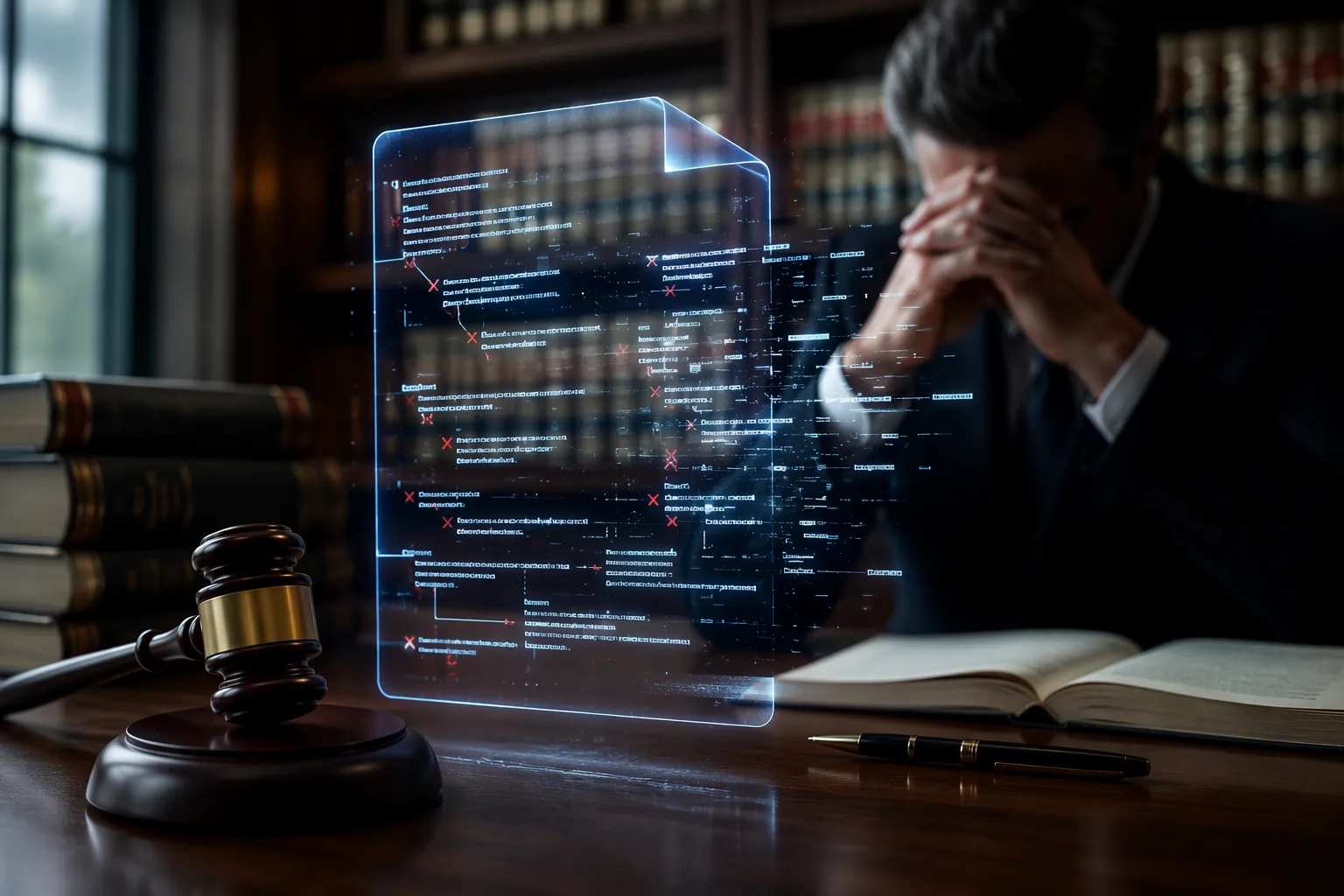
What Actually Failed in the Brief
The important number is nine. Not one mistaken reporter citation in an otherwise clean filing. Not one overextended quotation. All nine citations in the opposition failed in some way: fabricated cases, nonexistent quotations, and misread or misused precedent.[1] That matters because it removes the comforting explanation that the filing contained an isolated citation defect of the sort any busy litigation team might catch on proofing.
Ellis’s explanation made the workflow problem clearer. He said he used Grammarly, ProWritingAid, and Lexis+ AI in preparing the opposition, and that quotation marks inserted around what he intended as paraphrases were mistaken for direct quotations.[1][2] That explanation may describe one visible symptom of the failure, but it does not explain away the failure itself. A paraphrase still needs a source. A quotation needs exact language. A case citation needs a real case. The brief reached the docket before those questions were answered.
The named tools should be kept in their proper place. Grammarly and ProWritingAid are commonly understood as writing and editing tools; Lexis+ AI is a legal research and drafting product. The court’s sanction analysis, as reported and reflected in the order, did not turn on declaring any one product inherently unsafe. It turned on the lawyer’s exclusive reliance on AI-generated output without independent verification.[1][2]
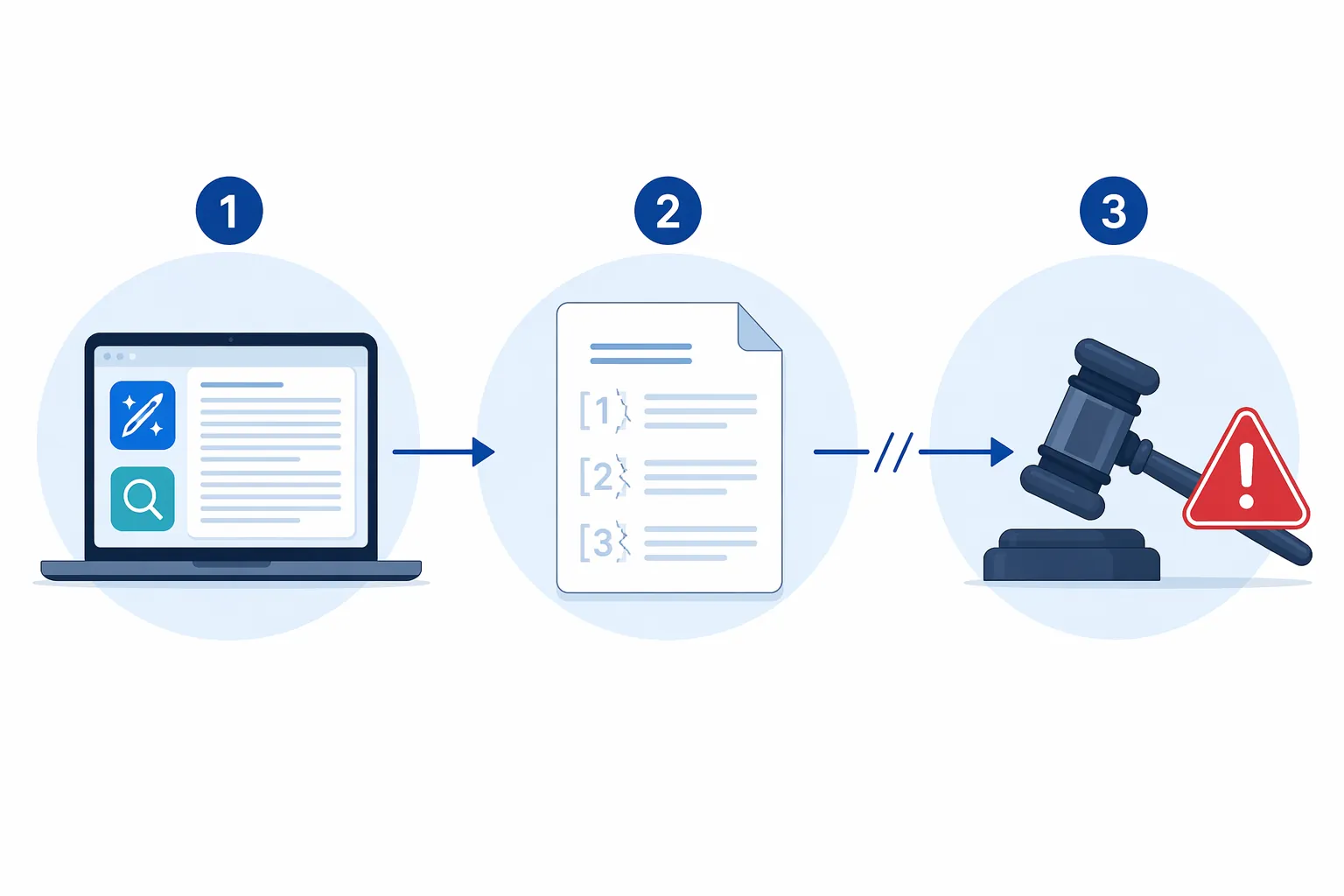
The Court Treated This as a Chain-of-Custody Failure
Legal teams already know the ordinary path a cite is supposed to travel. Someone drafts. Someone checks. Someone confirms the proposition against the source. Someone makes sure the final filed version still matches the source. The Smith order is notable because that chain broke at the point where AI-assisted drafting became filed advocacy.
Judge Mehta’s most useful language is also the least technological. AI tools, he wrote, are “not a better mouse trap that allows lawyers to ignore what we were all taught as first-years in law school: check your legal citations for accuracy.”[1] That sentence is doing more than scolding. It places AI output inside the existing filing duty rather than outside it. The obligation was not new because the tool was new.
Travel and time pressure appear in the record because Ellis prepared the opposition while traveling.[1] Those facts may explain why a bad workflow was tempting. They do not help much as a defense. A cite-check rule is designed for exactly the period between a draft that looks plausible and a filing deadline that makes everyone want to trust it.
Why the Whistleblower Context Does Not Change the Filing Duty
The underlying case was a False Claims Act retaliation suit.[1] That context identifies the docket and explains why the matter may surface in whistleblower or employment-retaliation searches. It does not create a special AI rule, and it does not soften the ordinary requirement that legal authority in a federal filing be real and accurately represented.
For risk purposes, the label “whistleblower attorney” is less important than the procedural event. The filing was an opposition to a continuance motion, not a merits brief after months of record development.[1] That makes the incident more recognizable, not less. Many citation failures enter through routine filings that receive less internal review than dispositive motions.
The Co-Counsel Problem Is the Part Firms Should Not Skip
Catherine Dorsey of Baron & Budd filed the brief on Ellis’s behalf while he was traveling and admitted that she did not independently verify the citations.[1][3] The court did not separately sanction Dorsey, and the available materials do not support saying that Baron & Budd was sanctioned or that the court found vicarious liability.[1][3]
That narrow outcome should not be mistaken for a clean risk answer. The operational question for a referring firm, local counsel, or co-counsel is not only “Who generated the hallucinated citation?” It is also “Who allowed the unverified authority to become the filed version?” In a real filing workflow, the person who transmits, signs, or submits the document may be the one left answering the court’s first questions.
This is where AI policies written around individual tool use often miss the risk. A lawyer may never open Lexis+ AI, Grammarly, or ProWritingAid and still file a draft that came through those tools. If the firm’s intake rule for co-counsel work is “originating counsel handled the research,” the Smith order is a warning that the assumption needs a verification step attached to it.
What Remains Open
The sanctions order required Ellis to supplement his Pennsylvania Disciplinary Board self-report with the court’s order.[1] The available materials do not report a final disciplinary outcome. That distinction matters. The court sanction is known; the professional-discipline consequence remains unresolved on the present record.
The fee amount also sits in a different category from the conduct finding. The court ordered fee sanctions payable to the defendant.[1] The risk signal does not depend on treating that outcome as a universal measure of what every AI-citation failure will cost. It shows that a federal judge treated the conduct as sanctionable when every citation in the filing failed and no independent check occurred.
A Short Place in the Larger AI-Sanctions Record
Smith belongs with the growing set of court orders addressing AI-generated false authority, but it should not be diluted into a generic “AI sanctions wave” story. NPR covered broader judicial concern about AI hallucinations in legal filings in April 2026, and practitioner reviews have tracked hallucinated-citation cases across courts.[4][5] Those sources are useful context. They are not the reason this particular order matters.
This order is useful because the failure pattern is complete and easy to audit against: a lawyer used named AI tools, relied on them exclusively for an opposition brief, filed authority that did not survive basic checking, and then faced fee sanctions and disciplinary-board supplementation.[1] That is enough for any litigation team to test its own process without waiting for a new rule.
The Filing Rule After Smith
AI assistance can reduce drafting friction. It can help organize rough language, surface possible research paths, and make early versions less painful to read. Smith does not require pretending otherwise. It requires refusing to let a plausible-looking citation become filed legal authority until a lawyer checks it against an independent source.
The practical rule is blunt: before filing, every legal citation must be opened, read, and matched to the proposition it supports. A lawyer who files or transmits another lawyer’s AI-assisted draft cannot safely assume that the originating lawyer, the platform, or the presence of quotation marks has already done that work.
References
- Memorandum Opinion and Order, Smith v. Athena Construction Group, No. 1:24-cv-01234, U.S. District Court for the District of Columbia, docket available
- Whistleblower Attorney's 'Reckless' AI Use Demands Sanctions, Bloomberg Tax, source link not provided
- Atty Sanctioned For 'Reckless' AI Use In DC FCA Case, Law360 Pulse, source link not provided
- NPR coverage of AI hallucinations in legal filings, NPR, April 3, 2026, source link not provided
- AI Hallucination Cases review, Sterne Kessler, source link not provided
Related records
Tool profile
How Meta's AI Spending Reshapes Law Firm ProfitabilityGoverning regulation
Browse the obligations tracker →Preventive workflow
Browse verification workflows →
Report a correction or tip
Spotted an outdated figure, a misstated fact, or a ruling this case record should reflect? Public comments are disabled for this content given the professional cost of a misreported case outcome, penalty amount, or rule text — use the structured correction channel instead.
Report a correction or tip for this record →