
Does Amazon's Cloud AI Capex Make Quick for Legal Safer?
Amazon's roughly $200B AI buildout signals infrastructure scale, not legal-accuracy verification. Quick for Legal is a Bedrock-hosted interface that routes to third-party LLMs with no published legal benchmark, so procurement should rest on application-layer verification — guardrails, source caps, and citation checks — rather than AWS's balance sheet.
- Tool
- Amazon Quick for Legal
- Benchmark source
- Stanford HAI
- Hallucination rate
- Not measured / undisclosed
- Test methodology
- Pre-registered dataset of over 200 legal queries
- Test date
- Jan 1, 2026

Last verified: August 1, 2026 (UTC). This is an editorial reliability assessment for legal-technology evaluation, not legal advice.
The procurement question is not whether Amazon can fund AI
The useful procurement answer starts with a separation that procurement packets often blur: Amazon’s cloud-AI spending is an infrastructure signal; legal reliability is an application-layer question. Fortune described Amazon and Microsoft as spending about $400 billion on AI, with Amazon’s 2026 capex around $200 billion in that context.[1] That is a serious buildout. It can support data-center capacity, model access, enterprise contracting, uptime expectations, and the durability of the surrounding AWS platform.
It does not, by itself, make Amazon Quick for Legal filing-safe. Quick for Legal surfaced in legal-tech coverage on July 15, 2026, and the central reliability issue is much smaller than the capex number: the materials available so far describe a Bedrock-hosted interface and workflow layer, not a legal model with a disclosed training corpus, legal-domain benchmark, or Quick-specific hallucination file.[2][3]
That distinction matters because the person who will explain a bad citation is rarely the person who approved the cloud budget. It will be the KM lawyer, litigation support lead, procurement owner, or in-house counsel who has to say which guardrail failed, which source was used, and why the answer reached a draft, memo, filing, or client communication.
Quick for Legal looks like an enterprise AI interface adapted to legal work
Artificial Lawyer’s launch coverage is the architectural fact worth reading slowly. It described Amazon Quick “for Legal” as a structured chatbox or interface whose outputs come from a range of LLMs available through Amazon Bedrock. The same coverage later added a July 23 update noting Amazon’s reframing from “Quick for Legal” toward “How legal teams use Amazon Quick.”[2]
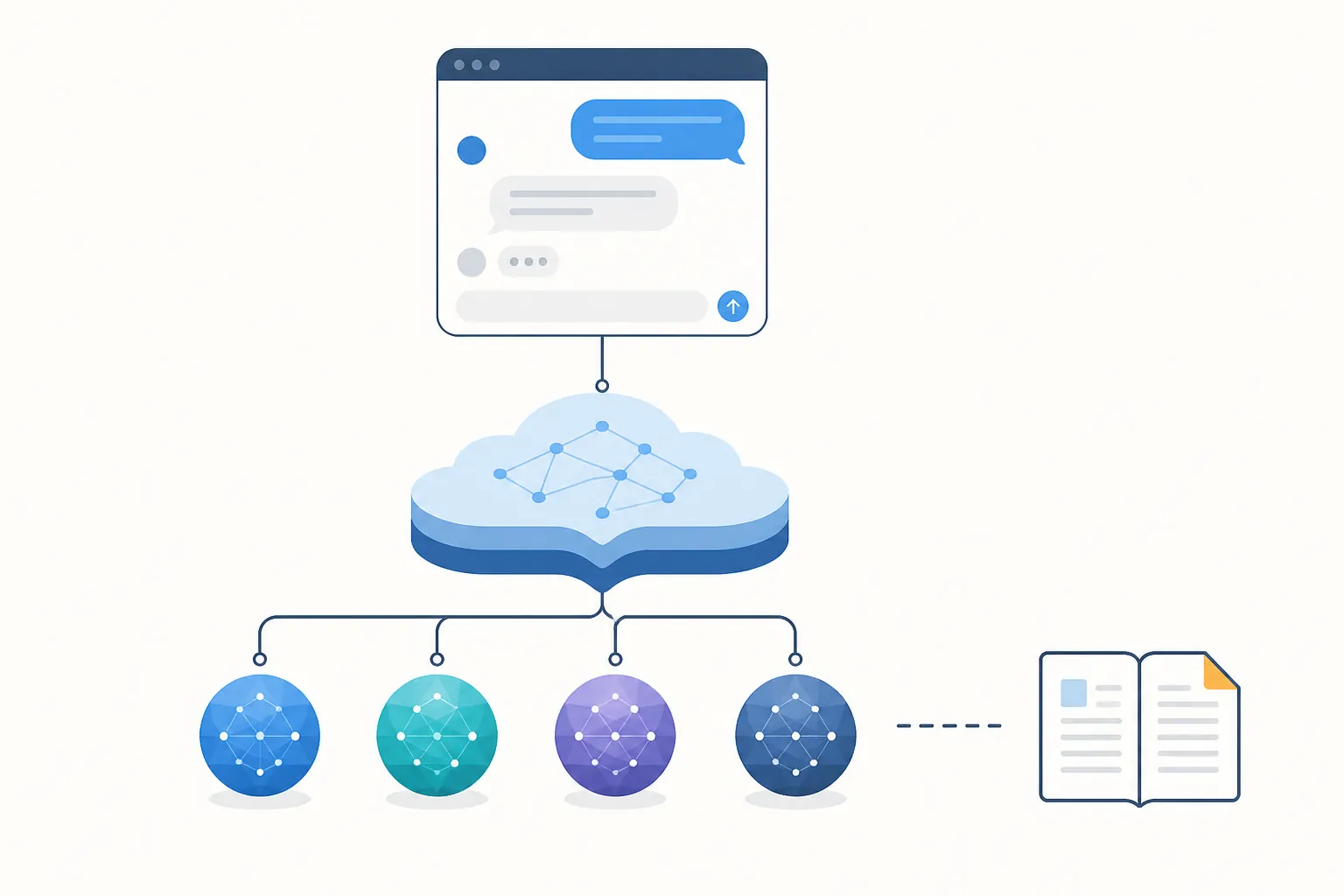
Law.com’s Legaltech News coverage described the offering in workflow terms: agentic legal workflows for contract monitoring, e-discovery, legal research, compliance, and document analysis, with integrations including Box, Slack, and Zoom.[3] Those are adoption and orchestration claims. They tell a buyer where the interface may sit in daily work. They do not answer whether a research answer, contract-risk conclusion, or cited proposition is legally correct.
The difference is not semantic. A dedicated legal vertical product would normally invite questions about its legal corpus, citator coverage, editorial layer, domain-specific evaluation set, and benchmark date. A general enterprise AI interface adapted for legal teams invites different questions: which model was routed, which source set was available, which policies were checked, what the workflow allowed the agent to do, and who reviewed the output before use.
The public materials reviewed here do not disclose a proprietary Quick legal corpus, a named legal-domain expert layer, a Quick-specific legal hallucination rate, or a published benchmark for legal research, contract analysis, e-discovery, or compliance use cases.[2][3] That absence is not proof that Quick for Legal is inaccurate. It means buyers do not yet have the evidence they would need to treat AWS scale as an accuracy credential.
| What the launch materials support | What they do not establish |
|---|---|
| Quick can be framed for legal teams and legal workflows.[2][3] | That Quick has been benchmarked as a legal research system. |
| Quick can use Amazon Bedrock and route through available LLMs.[2] | That a single disclosed legal model, corpus, or editorial layer controls the answer. |
| Quick may integrate with enterprise collaboration and content systems such as Box, Slack, and Zoom.[3] | That citations, authorities, or contract interpretations are independently verified. |
| Amazon’s AI capex indicates infrastructure commitment at cloud scale.[1] | That legal outputs are accurate enough for filing, advice, or unsupervised workflow action. |
There is a separate, broader capex-risk layer to this story — how AWS investment shifts the burden of evaluation onto buyers — but Quick for Legal adds the product-layer question. A buyer can read more on that infrastructure issue in AWS’s AI investment shifts legal-tech risk to buyers. For Quick itself, the decisive file is narrower: application-layer verification.
The Stanford hallucination data sets the baseline warning
The best available cautionary context does not come from Quick. It comes from Stanford RegLab and HAI’s evaluation of named legal AI systems. In that benchmark, Lexis+ AI and Ask Practical Law AI were incorrect more than 17% of the time, while Westlaw AI-Assisted Research was incorrect more than 34% of the time, on a pre-registered dataset of more than 200 queries.[4]

Those are not Quick for Legal hallucination rates. They should not be used as if Stanford measured Amazon’s product. The narrower and more useful conclusion is still uncomfortable: even legal-publisher systems with retrieval-grounded designs can fail often enough that buyers should require testing before relying on outputs.
That context cuts through a common procurement shortcut. If specialized legal tools do not make hallucination vanish, then a Bedrock-based enterprise interface routed to third-party models should not receive a safer presumption merely because the infrastructure provider is larger. Scale can reduce some platform risks. It does not certify legal propositions.
Bedrock Automated Reasoning is a guardrail, not a legal-citation benchmark
AWS’s most relevant verification material is its Bedrock Automated Reasoning checks. AWS describes a solver-based mechanism that evaluates model outputs against supplied policies or source content and returns results such as Valid, Invalid, or No Data. The AWS ML Blog also states “up to 99% verification accuracy,” notes a 6,000-character source-document cap, and describes the feature as being in gated preview.[5]
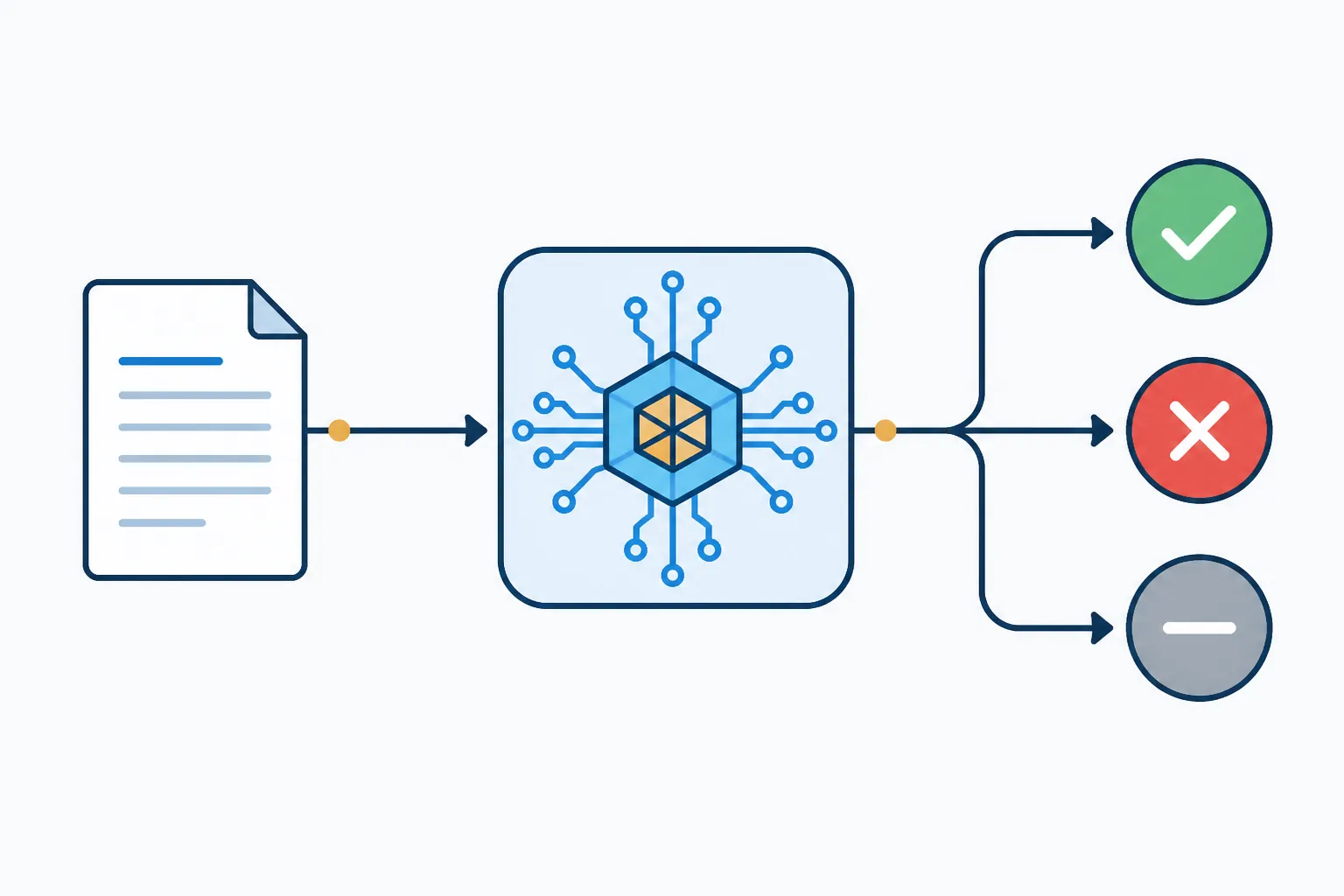
That is a meaningful enterprise control. It may be useful for bounded policy compliance, internal rule checks, and workflows where the permitted source text is known and narrow. It is also not the same thing as proving that a legal research answer correctly states the law, that a citation supports the sentence placed before it, or that a contract-risk conclusion reflects the governing clause and jurisdiction.
The 6,000-character cap is not a footnote for legal teams. Many legal questions turn on a chain of authorities, a full contract plus exhibits, a regulatory definition plus exceptions, or a factual record spread across documents. If the verification source must be compressed into a small window, procurement needs to know what was excluded, who selected the excerpt, and whether the check confirms the answer or only confirms consistency with a fragment.
The No Data outcome also deserves operational design before rollout. A legal workflow cannot treat No Data as a soft pass. If the system cannot verify a statement against the available source, the next step should be visible: block the answer, route it to review, ask for more source material, or mark the output as unusable for advice or filing.
| Buyer question | Why it matters |
|---|---|
| Which sources can Quick be forced to use for a legal answer? | A bounded source set is easier to audit than an answer assembled from unclear context. |
| Can the workflow prevent unsupported citations from leaving draft status? | Citation reliability is the failure mode counsel will have to explain. |
| What happens when Bedrock returns No Data? | No Data should trigger review or blocking, not silent continuation. |
| Is the legal research or contract-analysis use case benchmarked separately from generic AI accuracy? | A general verification claim does not measure legal-domain performance. |
| Can reviewers see model choice, source excerpts, prompts, and policy checks? | Auditability determines whether a firm can reconstruct a bad output after the fact. |
Integrations may move work faster; they do not make the work correct
Box, Slack, and Zoom integrations are useful in the way enterprise integrations are useful: they reduce friction, keep work inside familiar systems, and make it easier for teams to adopt an interface without changing every habit at once.[3] In a legal setting, that convenience has a second edge. The more naturally an AI answer appears inside collaboration software, the easier it is for an unverified answer to look like ordinary work product.
Amazon also should not be assumed to inherit Microsoft-style distribution merely because AWS is dominant infrastructure. Forbes’ April 2026 analysis of Amazon Quick pointed to Amazon’s prior productivity-software struggles, including WorkDocs, Chime, and WorkMail being shut down within a 23-month window.[6] That is not an accuracy objection. It is an adoption-risk reminder: Quick still has to win the workflow layer.
The timing record is messy enough to state plainly. Forbes discussed broader Amazon Quick timing before the legal-specific July 2026 coverage, while Artificial Lawyer and Law.com are the sources for Quick for Legal’s July 15, 2026 appearance in the legal market.[2][3][6] For this reliability assessment, the legal-specific launch materials matter more than the broader Quick timeline.
What procurement should require before treating Quick outputs as usable
The defensible posture is not “do not buy.” It is “do not treat the tool as legally reliable until the application layer has been tested.” That testing file should be specific enough that a KM lawyer or risk committee can reconstruct how an answer was produced and why it was allowed to move forward.
- Model-routing disclosure: which Bedrock models can Quick call, which model handled each output, and whether routing changes by task type.
- Source-boundary controls: whether the answer was limited to approved matter documents, a contract repository, a legal research database, uploaded text, or a broader enterprise corpus.
- Citation-check workflow: how each cited authority is matched to the proposition it supposedly supports, and whether unsupported citations are blocked before external use.
- Use-case benchmark: separate evaluation for legal research, contract review, compliance monitoring, e-discovery, and document analysis, with the benchmark date and sample design disclosed.
- Automated Reasoning configuration: which policy or source text is checked, how the 6,000-character source cap is handled, and what operational consequence follows Valid, Invalid, and No Data.
- Human-review gates: which outputs may remain internal drafts, which require legal review, and which are prohibited from reaching filings, advice letters, or client-facing summaries without approval.
- Audit logs: retention of prompts, source excerpts, model identifiers, routing records, verification results, reviewer decisions, and final output versions.
A buyer comparing Quick with Anthropic, Microsoft, OpenAI, or legal-publisher tools should resist the temptation to build a comparison matrix from brand names and integrations alone. Without comparable legal-domain benchmarks, the matrix will look rigorous while measuring the wrong thing. The better comparison is by failure control: source boundaries, citation verification, benchmark transparency, logging, and the ability to stop an unsupported answer before it becomes work product.
The narrower answer
Amazon’s roughly $200 billion AI buildout may make AWS a more durable platform for enterprise AI, and it may help Amazon support the capacity demands that legal AI workflows create.[1] It does not answer whether Quick for Legal can reliably cite law, distinguish authorities, interpret contract provisions, or keep an agentic workflow from acting on an unsupported conclusion.
Quick for Legal may become useful if buyers can bind sources, test outputs, audit routing, and enforce review before legal use. Until Amazon publishes application-layer legal accuracy evidence, the safer procurement position is simple: do not let AWS scale answer a legal-accuracy question.
References
- Amazon and Microsoft are spending $400 billion on AI, Fortune, July 27, 2026.
- Meet Amazon Quick "For Legal" – Updated, Artificial Lawyer, July 15, 2026.
- Amazon Joins Big Tech's Dive Into the Legal Market With Amazon Quick for Legal, Law.com Legaltech News, July 15, 2026.
- AI on Trial: Legal Models Hallucinate in 1 out of 6 (or More) Benchmarking Queries, Stanford HAI.
- Minimize generative AI hallucinations with Amazon Bedrock Automated Reasoning checks, AWS ML Blog.
- Amazon Quick Walks Into The Trap That Killed WorkDocs, Forbes, April 28, 2026.
Chronological incident history
No sanction cases have named this tool in the tracked record set to date. This does not imply the tool is safe — see Risk Digest for ongoing monitoring.
← Compare peer toolsReport a correction or tip
Spotted an outdated figure, a misstated fact, or a ruling this tool profile should reflect? Public comments are disabled for this content given the professional cost of a misreported case outcome, penalty amount, or rule text — use the structured correction channel instead.
Report a correction or tip for this record →