
What Anthropic's investment surge means for legal AI buyers
Anthropic's record capital trajectory — more than $118 billion raised across nine rounds and a $965 billion valuation — now shapes the risk profile of Claude-powered legal tools such as Harvey, CoCounsel, and Protégé. This due-diligence record translates those funding events into procurement checks on enterprise terms, model cadence, compute dependency, and single-model concentration.
- Tool
- Claude
- Benchmark source
- Reuters, TechCrunch, CNBC, Legal.io
- Hallucination rate
- Not measured / undisclosed
- Test methodology
- Record-verified capital and dependency events; separated completed rounds from contingent capital; vendor-model claims flagged for re-verification.
- Test date
- Aug 26, 2026
Record status for legal AI buyers
Last verified: Aug. 26, 2026, UTC. This is a procurement and monitoring record, not legal, investment, or vendor-selection advice. The question for a renewal team is not whether Anthropic’s valuation is impressive. It is whether a Claude-dependent workflow now carries different assumptions about access, pricing, model behavior, compute concentration, enterprise terms, or substitution rights.

For teams trying to understand the legal-market implications of Anthropic’s AI investment surge, the useful answer starts with dates. A shorthand such as “$118B+ across nine rounds” may be directionally useful, but it is too blunt for a legal-technology procurement file. The table below does the work the shorthand cannot: it separates completed rounds from contingent capital, valuation signals from compute commitments, and startup-market news from buyer-facing diligence questions.
| Date | Event | Verified record | Source status | Legal-buyer diligence question |
|---|---|---|---|---|
| Sep. 2, 2025 | Series F | $13B raise at a $183B valuation, led by ICONIQ, with the valuation reported as roughly tripling the March 2025 valuation. [1] | Published legal-market coverage. | Does the vendor contract assume rapid model scaling without giving the buyer notice, benchmarking, or substitution rights? |
| Feb. 2026 | Series G | $30B at a $380B post-money valuation; reported as the largest venture deal of 2026 and second-largest of all time, led by GIC and Coatue, with Microsoft and Nvidia participating. Anthropic also reported run-rate revenue over $14B and $100K+ ARR customers up 7x year over year. [2][3] | Independent venture coverage plus Anthropic announcement. | Are enterprise-support promises backed by scale, or does growth pressure make renewal pricing and service tiers harder to predict? |
| Weeks before Apr. 24, 2026; Apr. 24, 2026 | Amazon and Google investment structures | Amazon invested $5B with up to $20B more tied to commercial milestones; Google agreed to invest up to $40B, including $10B immediately at the $380B valuation and $30B contingent on milestones. [4] | CNBC coverage of cloud-provider investment structures. | Which compute provider, cloud commitment, or milestone condition could affect availability, data-residency options, pricing, or negotiating leverage? |
| May 28, 2026 | Series H | $65B raise at a reported $965B post-money valuation, described as surpassing OpenAI as the most valuable private AI startup ahead of a reported IPO. [5][6] | Reuters headline-verified and corroborated by TechCrunch; re-verify against primary announcement before publication if available. | Does the tool’s commercial posture now need an IPO-overhang review: usage pricing, enterprise minimums, support commitments, and termination leverage? |
The most important word in that ledger is not “billion.” It is “milestones.” A venture round may improve hiring, infrastructure, and enterprise support. A milestone-tied compute or commercial arrangement can also make the buyer ask who controls the practical supply of model capacity, which cloud path becomes favored, and whether the vendor’s future price book is being written for customers or for investors expecting a public-market story.
Where Claude dependency shows up in legal tools
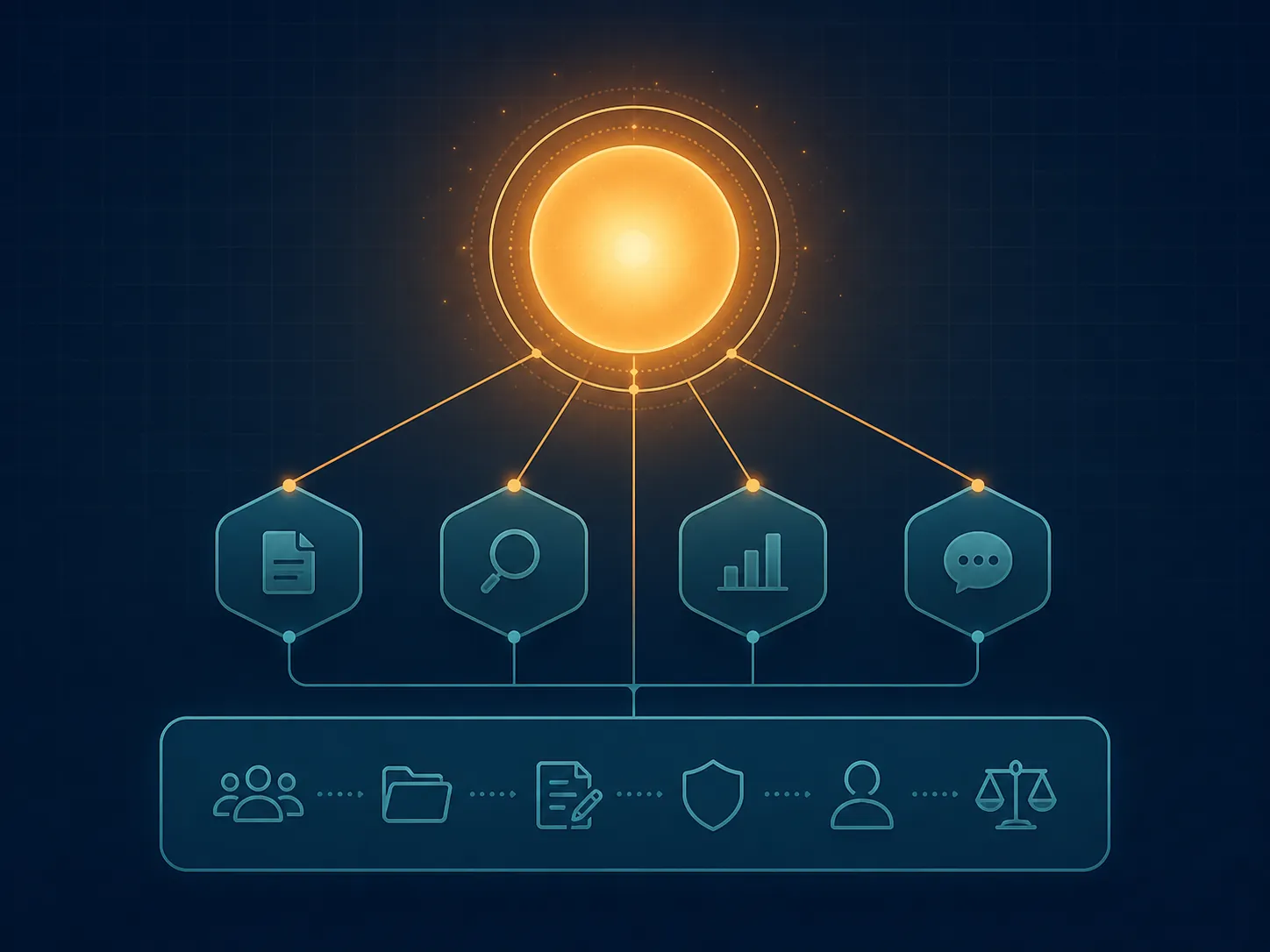
A law firm or legal department usually does not buy Claude in the abstract. It buys a research workflow, drafting assistant, contract-review layer, litigation-prep tool, or knowledge-management interface that may sit on Claude directly or through a legal AI vendor. Legal.io reported in September 2025 that Claude underpinned Harvey, Thomson Reuters CoCounsel, and LexisNexis Protégé. That mapping is material, but it should be re-verified against vendor documentation before any renewal file is signed because multi-model strategies can change quietly between procurement cycles. [1]
| Legal AI surface | Current record to verify | Procurement consequence |
|---|---|---|
| Harvey | Reported as Claude-underpinned in the September 2025 legal-market record. [1] | Review whether the firm’s Harvey workflows depend on a specific Claude family, a vendor-managed model router, or a broader model stack. For a deeper vendor profile, see the internal Harvey tool record. |
| Thomson Reuters CoCounsel | Reported as Claude-underpinned in the same record, subject to re-verification because large legal platforms may shift or diversify model providers. [1] | Ask whether matter work product, research memoranda, or drafting features would behave differently if the underlying model changed. |
| LexisNexis Protégé | Reported as Claude-underpinned in the same record, also subject to vendor-model re-verification. [1] | Separate the legal-content license from the model-dependency question; both may be bundled commercially, but they are different risk surfaces. |
| Claude for Legal or direct Anthropic enterprise use | Direct Claude deployment rather than an application-layer dependency. | Security, retention, privilege, training-use, and model-version answers should come from Anthropic’s commercial terms, not from consumer-facing terms. |
| Freshfields | Freshfields announced a partnership deploying Claude and Cowork across 33 offices with early access to future models. [7] | A large-firm deployment makes Claude a knowledge-work infrastructure issue, not merely a point solution; early access also increases the need for version-specific governance. |
The exposure question is deliberately plain: if Claude access, pricing, model behavior, or enterprise terms changed next quarter, which part of the firm’s actual work would slow down? A tool used by a small innovation group for optional drafting experiments belongs in one file. A tool embedded in research, deposition preparation, due-diligence summaries, client reporting, and knowledge capture belongs in another.
Compute-backed capital changes the contract review
The Google and Amazon structures deserve more attention than the usual venture-capital theater because they connect funding to compute. Google’s reported structure included $10B immediately and $30B contingent on milestones; Amazon’s reported structure included $5B plus up to $20B more tied to commercial milestones. [4] A legal buyer does not need to know every internal milestone to know the procurement issue: capacity, commercial growth, and cloud strategy are no longer background conditions.
That does not make Claude-based legal tools unsafe. It does make the diligence file more specific. If a vendor says it can support firmwide rollout, procurement should ask which model family is being committed, whether capacity is guaranteed or commercially reasonable, what happens during regional outages or provider constraints, and whether the vendor may change the underlying model without notice. The answer may be acceptable. It should not be assumed.
The same point applies to cloud concentration. A buyer that has already studied Amazon’s AI capex and Anthropic’s AWS exposure or Alphabet’s AI investment risk profile should treat those records as upstream context, not as substitutes for the Anthropic-specific question: which provider constraint could reach the legal tool, and what contractual fallback exists if it does?
Model churn shortens the shelf life of approvals
Model cadence is the practical bridge between capital events and legal risk. The Opus 4.8, Fable 5, and Opus 5 sequence shows why a benchmark, security memo, or practice-group approval tied to “Claude” may go stale quickly if it does not identify the model version, evaluation date, and approved use case.
That is not an argument against rapid model release. It is an argument for treating old approvals as dated records. The Fable 5 shutdown record and the site’s legal benchmark coverage are useful only if procurement reads them with dates attached.
How much weight the investment surge deserves
Anthropic’s capital structure should carry the most weight where the firm’s actual workflows are deeply Claude-dependent, the contract lacks model-substitution protections, or the internal approval record is tied to a specific Claude version. In those settings, the renewal file should address access, pricing, version control, cloud concentration, notice rights, and fallback operation before the buyer treats the tool as stable infrastructure.
For lighter use, pilots, or genuinely multi-model deployments, the same capital events are monitoring signals rather than blocking risks. The due-diligence posture is not to applaud the valuation or run from it. It is to ask which clause, renewal assumption, benchmark date, or fallback plan becomes weaker if Anthropic’s compute milestones, enterprise terms, or post-IPO pricing posture change.
Report a correction or tip
Spotted an outdated figure, a misstated fact, or a ruling this tool profile should reflect? Public comments are disabled for this content given the professional cost of a misreported case outcome, penalty amount, or rule text — use the structured correction channel instead.
Report a correction or tip for this record →