
Which Gemini AI Use Cases Are Safe for Legal Work?
Google markets Gemini for legal work across research, drafting, and contract workflows, but reliability varies sharply by task type. This risk-graded use-case map shows which Gemini tasks hold up under independent benchmarks and human verification, and which citation-critical work still fails in ways courts sanction.
- Tool
- Gemini AI
- Benchmark source
- Stanford Law School; Stanford RegLab; Vals AI; Descrybe
- Hallucination rate
- Not measured / undisclosed
- Test methodology
- Legal-query benchmarks measuring hallucinated and misgrounded citations, plus strict all-pass scoring on legal research and MBE-style reasoning tasks.
- Test date
- Jun 1, 2026
Google’s pitch for Gemini AI for legal work use cases is broad: research assistance, drafting, contract support, document review, meeting notes, regulatory scanning, DSAR help, redaction workflows, and connector-based work across legal systems. The useful question is narrower. Which of those tasks let the lawyer check the output against visible sources, and which ask Gemini to supply law from model memory?
That distinction does most of the work. Gemini can be useful when it is summarizing a record, comparing clauses, drafting from supplied facts, or answering questions against connected documents that a reviewer can inspect. It becomes a filing-integrity problem when the output itself is treated as authority: a case citation, a holding, a procedural rule, or a reconciliation of conflicting law.
Google’s own legal positioning now covers both sides of that line. Its Workspace legal materials present Gemini as help for legal research, drafting, client communications, contract review, and administrative work; its Gemini Enterprise for Legal launch materials add legal-specific workflows including contract lifecycle and negotiation support, regulatory horizon scanning, DSAR support, motion-to-seal redaction, NDA drafting, and integrations or connectors involving tools and sources such as Everlaw, RelativityOne, Harvey, iManage, NetDocuments, CourtListener, and Courtroom5.[1][2]

A risk-graded map of Gemini legal use cases
The safest way to read Google’s use-case catalog is not by department label. “Litigation,” “contracts,” and “compliance” each contain both low-risk and high-risk tasks. The cleaner division is source grounding: whether Gemini is working from materials the legal team can see, or whether it is generating legal propositions that must be independently rebuilt from scratch.
| Use case | Typical Gemini task | Risk grade | Why it falls there |
|---|---|---|---|
| Meeting notes and matter administration | Summarize calls, extract action items, draft internal updates | Lower, if reviewed | The source is the meeting transcript, email thread, or matter record. Errors are usually factual or contextual rather than citation defects. |
| Document summarization | Summarize pleadings, productions, policies, contracts, or correspondence | Lower to moderate | The reviewer can compare the output against the document. The danger rises when the summary becomes a legal conclusion. |
| Contract first drafts and clause comparison | Draft NDAs, compare clauses, produce negotiation language | Moderate | Useful as a first pass, but business terms, governing law, fallback positions, and client-specific risk tolerance still need lawyer review. |
| Document Q&A over connected sources | Ask questions of uploaded or connected matter materials | Moderate | Defensible when the answer links back to source text. Not defensible when the answer omits contrary documents or overstates what the record shows. |
| Redaction and DSAR support | Identify sensitive material, organize request responses, support motion-to-seal workflows | Moderate to high | The work can be source-grounded, but privilege, privacy, sealing, and production errors can be expensive even when no citation is involved. |
| Regulatory horizon scanning | Monitor changes, summarize developments, flag potential obligations | High unless source-checked | This is safe only as triage. The final answer must come from the actual regulation, agency material, or controlling authority. |
| Open-ended legal research | Find cases, state rules, distinguish authority, reconcile conflicting holdings | Highest | This is where hallucinated citations, real-but-misused cases, and unsupported holdings create filing and candor problems. |
Google also says Gemini Enterprise for Legal is designed to inherit permissions, avoid training on customer data, and ground work in primary legal authority.[2] Those are important product claims. They are not the same thing as independent proof that a new legal workflow will reliably produce filing-safe citations or holding-level analysis in live matters.
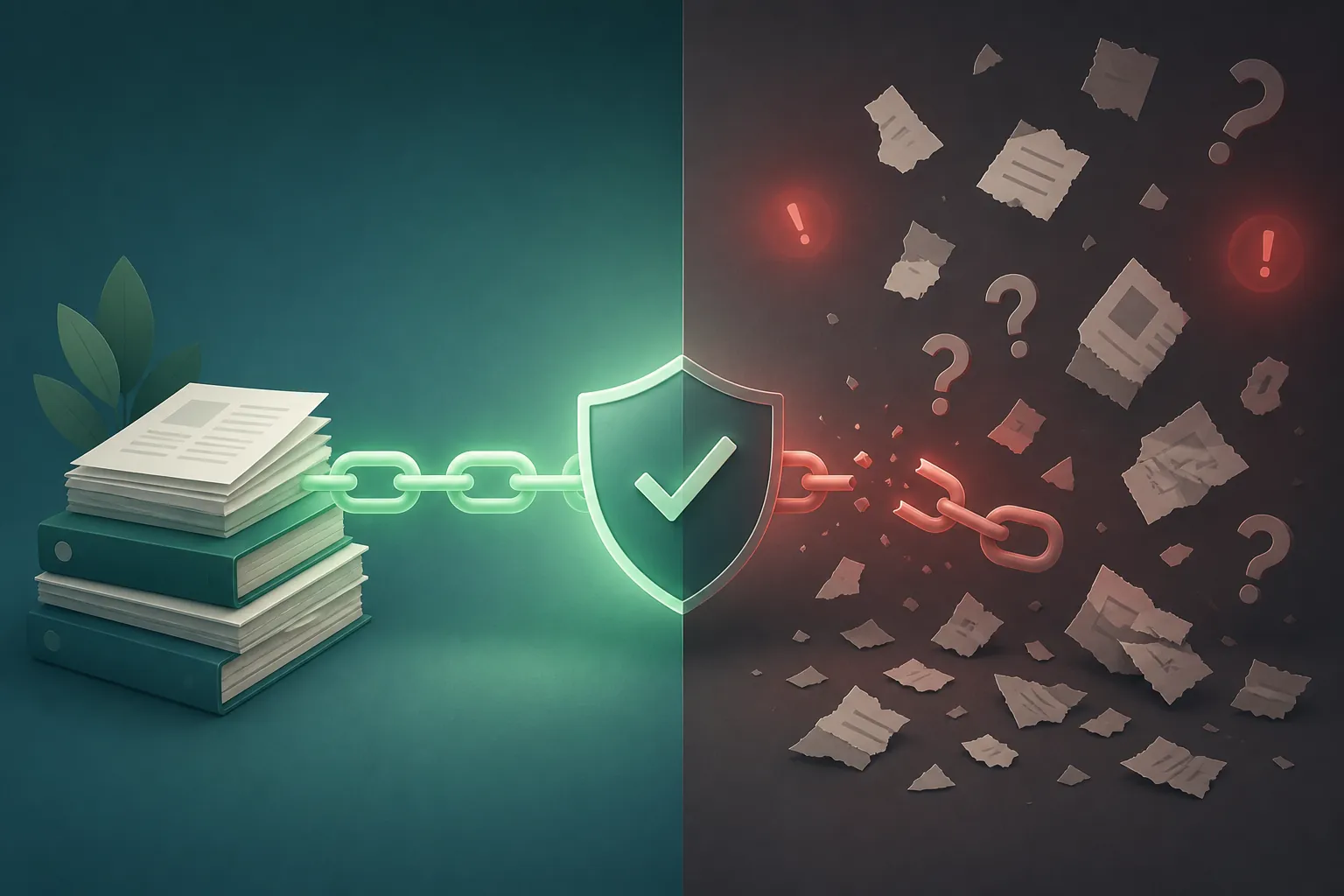
The evidence gets worse as the task becomes citation-critical
The most uncomfortable reliability evidence is not about whether AI can write polished prose. It can. The problem is that legal work often rewards a very different skill: making a statement only when the cited authority actually supports it.
Stanford’s “Hallucinating Law” study tested general-purpose large language models on legal queries and found pervasive legal hallucination. PaLM 2, Google’s predecessor model line to Gemini, hallucinated on 69% to 88% of specific legal queries in that study.[3] That does not prove today’s Gemini behaves the same way on every legal task. It does show why model fluency is a poor proxy for legal reliability, especially where the user asks for cases, holdings, or doctrinal answers without supplying the governing sources.
The more relevant warning came next. Stanford RegLab’s “Hallucination-Free?” study examined leading AI legal research tools that used retrieval-augmented generation, the very category usually offered as the fix for open-ended model hallucination. The tools still hallucinated between 17% and 34% of the time, and the researchers identified a separate failure category: “misgrounded” citations, where the cited source exists but does not support the proposition the tool attaches to it.[4]
Misgrounding is the failure that wastes lawyers’ time in the least theatrical way. A fake case can be caught by citation checking. A real case used for the wrong proposition can survive long enough to infect a memo, a brief, or a partner’s mental model of the issue. Stanford HAI’s coverage of the same legal-model reliability work put the hallucination rate at one in six or more benchmark queries, even for specialized legal AI systems.[5]
That is why “grounded” cannot be used as a magic word. Grounding reduces one class of error, but it does not eliminate the reviewer’s burden. The person checking the answer still has to ask whether the cited material exists, whether it says what the output claims, whether contrary authority was skipped, and whether the result is current.
Vendor-linked scores show progress, but not a release from verification
There is an improvement story, and it should not be ignored. In a Google AI Studio case study with Harvey, Gemini 2.5 Pro Preview scored 85.02% on BigLaw Bench, a benchmark designed around legal reasoning tasks.[6] Harvey later reported that Gemini 3 Pro Public Preview reached 87.9% in early-access evaluations.[7]
Those results matter, but their provenance matters too. Harvey is a Google partner and a participant in Google’s AI Futures Fund, and Harvey’s later evaluation is Harvey’s own early-access reporting.[6][7] Public methodology helps, but vendor-affiliated benchmark performance is not the same as independent evidence that a lawyer can rely on Gemini to produce correct citations in a filed brief.
The independent and semi-independent snapshots are less comforting. Vals AI’s June 2026 Legal Research Bench showed Claude Opus 5 leading at 55.29% strict all-pass, with Gemini snapshots including Gemini 3.7 Flash and Gemini 3.1 Pro Preview 02/26 clustering in the lower half; Vals also reported that reconciling conflicting authority was the hardest failure mode across models.[8] The strict all-pass metric is demanding, and not the same as looser weighted scoring, but legal research is often demanding for good reasons. One missing conflict can be the difference between useful research and cleanup work.
Descrybe’s March 2026 MBE benchmark, reported by LawNext, put Gemini 3 Pro at 184 out of 200, or 92.0%, while also flagging overconfident tone on correct outputs.[9] That benchmark was published around Descrybe’s own system, so it should not be treated as neutral market scoring. Still, the overconfidence point is useful. A model can be right often enough to earn trust in casual review and still be costly when it is wrong in the same confident voice.
For a comparative model-by-model view, see the separate Gemini vs. ChatGPT legal-work safety scorecard. The point here is more basic: the binding constraint is not the leaderboard. It is the verification workflow attached to the task.
Where Gemini is defensible
The defensible Gemini use cases are the ones where a legal team can keep the source close to the output. A transcript summary can be checked against the transcript. A contract comparison can be checked against the two drafts. A privilege-log draft can be sampled against the document set. A DSAR workflow can be audited against the request, the data sources, and the response protocol.
That does not make those tasks harmless. It makes the error surface visible. If Gemini drops a limitation from a contract summary, the reviewer can find it. If it labels a clause as “standard” when it is not standard for that client, the lawyer can revise it. If it drafts a client update with the wrong procedural posture, the matter team can correct it before it leaves the firm.
The workflow should be built around that visibility:
- Keep Gemini’s prompt tied to identified documents, not a general request to “research the law.”
- Require source links, pinpoint references, or document excerpts for answers that summarize matter materials.
- Use the output as a draft or issue spotter, not as an authority file.
- Assign review to someone who understands the legal and factual consequence of the task, not just someone available to proofread.
- Document the verification step for work that may affect a filing, production, client advice, or regulatory response.
This is where Gemini can save time without quietly transferring risk to the last lawyer in the chain. It can shorten the first pass. It cannot be allowed to replace the check.
Where the verification burden becomes the problem
Open-ended legal research is different. If a lawyer asks Gemini to identify controlling authority, distinguish a case, or reconcile conflicting decisions, the reviewer cannot merely compare the answer to a supplied source. The reviewer has to recreate the research path: find the cases, validate the citations, read the relevant passages, check currency, locate contrary authority, and decide whether the model’s synthesis survives.
At that point, Gemini may still be useful for brainstorming search terms, generating a research plan, or identifying issues to test in a legal database. But the output should not become the authority. The authority has to come from the cases, statutes, rules, regulations, or agency materials the lawyer actually verifies.
This is also where connector claims should be handled with care. A tool that can connect to CourtListener or a document-management system may improve access to sources, and permission inheritance may reduce a separate class of confidentiality and access-control risk.[2] None of that proves that the model’s final legal proposition is supported by the best authority. Access to a library is not the same thing as reliable legal analysis.
The court record is not theoretical
The sanction record should be read carefully. It does not show a Gemini-specific wave of lawyer sanctions. The known AI-hallucination court record is dominated by matters involving other tools, and the Gemini-named federal matter identified in Damien Charlotin’s AI Hallucination Cases Database involved a pro se litigant, Booker v. U.S. Bank in the District of Connecticut, where Gemini Pro was identified as producing fabricated case law and the result was an admonishment or warning rather than the kind of lawyer sanction seen in other cases.[10]
That narrower point is enough. The database, updated August 19, 2026, listed 1,934 decisions worldwide and 1,325 in the United States involving AI hallucination issues.[10] Comparable matters in the database include sanctions of $1,000 in TOV Realty, $3,500 in Barteca v. Tacobarn, and $46,511 with a bar referral involving Kleyman Law Group.[10] A legal team does not need a long Gemini-only sanction history before it treats unverified AI-generated authority as a filing risk.
The professional-duty overlay points in the same direction. ABA Formal Opinion 512 frames generative AI use through duties including competence, confidentiality, candor to the tribunal, and supervision.[11] Those duties do not turn on whether the model was impressive in a product demo. They turn on what the lawyer filed, disclosed, supervised, and verified.
For a live example of how a pre-sanction candor and competence problem can develop around AI-assisted citation work, see the site’s discussion of the Bianco ballot AI-citation record. The recurring lesson is dull, but it is the one courts keep enforcing: the lawyer owns the filing.
How to place Gemini in a legal workflow
A sensible Gemini policy does not need to ban the tool or bless it across the board. It should sort work by consequence and source grounding.
| Workflow decision | Appropriate treatment |
|---|---|
| Gemini summarizes or organizes supplied materials | Permit with human review against the source documents. |
| Gemini drafts language from lawyer-provided facts and instructions | Permit as first-pass drafting, with substantive review before use. |
| Gemini extracts facts for production, sealing, privacy, or DSAR work | Permit only with documented quality control and sampling appropriate to the risk. |
| Gemini identifies legal issues or suggests research paths | Permit as brainstorming; rerun the research in authoritative sources. |
| Gemini supplies case citations, holdings, quotations, or rule statements | Do not rely on the output until each authority and proposition has been independently verified. |
| Gemini reconciles conflicting authority | Treat as high-risk analysis requiring lawyer-led research and review. |
The hardest category to police is the middle one: work product that looks administrative but contains legal judgment. A “summary” of a motion can smuggle in a view of which arguments are strongest. A “regulatory update” can imply an obligation. A “contract risk summary” can shift negotiation leverage. Those outputs need review by someone responsible for the legal conclusion, not just a process owner checking formatting.
For filing work, the rule should be stricter. Every citation must be checked. Every quotation must be checked. Every parenthetical must be checked. Every case used for a legal proposition must be read far enough to confirm the proposition and the procedural posture. If that verification makes the AI step slower than ordinary research, the workflow has answered its own question.
This article is for general information and risk analysis, not legal advice. Legal teams should apply their own professional-responsibility rules, court orders, client instructions, confidentiality obligations, and supervisory standards before using Gemini or any other generative AI system on matter work.
The practical verdict is limited but usable. Gemini is acceptable for source-grounded, human-reviewed legal support tasks. It is not safe as an open-ended legal research authority where its answer becomes the citation file. Treat ungrounded outputs as drafts, verify every legal authority, and route high-risk research through a review process built for court, not for a demo.
References
- AI for Legal, Google Workspace
- Introducing Gemini Enterprise for Legal, Google Cloud Blog, Aug. 26, 2026
- Hallucinating Law: Legal Mistakes with Large Language Models are Pervasive, Stanford Law School, Jan. 11, 2024
- Hallucination-Free? Assessing the Reliability of Leading AI Legal Research Tools, Stanford RegLab, May 2024
- AI on Trial: Legal Models Hallucinate in 1 out of 6 or More Benchmarking Queries, Stanford HAI
- Validating Gemini 2.5 Pro Preview's Advanced Legal Reasoning with BigLaw Bench, Google AI Studio, May 16, 2025
- Gemini 3 Pro Public Preview: Results From Early Access Evaluations, Harvey, Nov. 18, 2025
- Legal Research Bench, Vals AI, June 2026
- AI Built For Law Outperforms ChatGPT, Claude And Gemini On Legal Reasoning Benchmark, LawNext, Mar. 15, 2026
- AI Hallucination Cases Database, Damien Charlotin, updated Aug. 19, 2026
- ABA Ethics Opinion on Generative AI Offers Useful Framework, ABA Business Law Today, Oct. 2024
Chronological incident history
No sanction cases have named this tool in the tracked record set to date. This does not imply the tool is safe — see Risk Digest for ongoing monitoring.
← Compare peer toolsReport a correction or tip
Spotted an outdated figure, a misstated fact, or a ruling this tool profile should reflect? Public comments are disabled for this content given the professional cost of a misreported case outcome, penalty amount, or rule text — use the structured correction channel instead.
Report a correction or tip for this record →