
Does Gemini Robotics ER 2 Have Legal Industry Use Cases?
Gemini Robotics ER 2 launched with zero documented legal-industry use cases, and Google's own API docs, model card, and privacy notice list blockers that preclude client work. This evaluation separates the robotics model from the Gemini LLM lines that carry the real legal deployment record, so buyers get an evidence-based risk picture.
- Tool
- Gemini Robotics ER 2
- Benchmark source
- Google DeepMind model card and launch materials (self-reported)
- Hallucination rate
- Not measured / undisclosed
- Test methodology
- Self-reported robotics benchmarks for progress classification and moment finding; no legal-domain testing documented
- Test date
- Jul 30, 2026
As of August 2, 2026, three days after launch, Gemini Robotics ER 2 has no documented legal-industry use case in the materials that matter for a procurement screen: Google’s launch post, the DeepMind model card, and the Gemini API documentation. That is a narrower finding than “Gemini has no legal use cases.” It means the robotics model line under this name has not been documented by Google as a legal tool, while the legal deployments commonly attached to “Gemini” belong to separate Gemini LLM products.
The product being evaluated is not a contract-review assistant or an e-discovery system. Google describes Gemini Robotics ER 2 as an embodied-reasoning vision-language model based on Gemini 3.5 Flash, with a 128k context window, text, image, video, and audio inputs, and text output. It is available in public preview through the Gemini API and Google AI Studio, with private preview access through the Gemini Enterprise Agent Platform.[1]
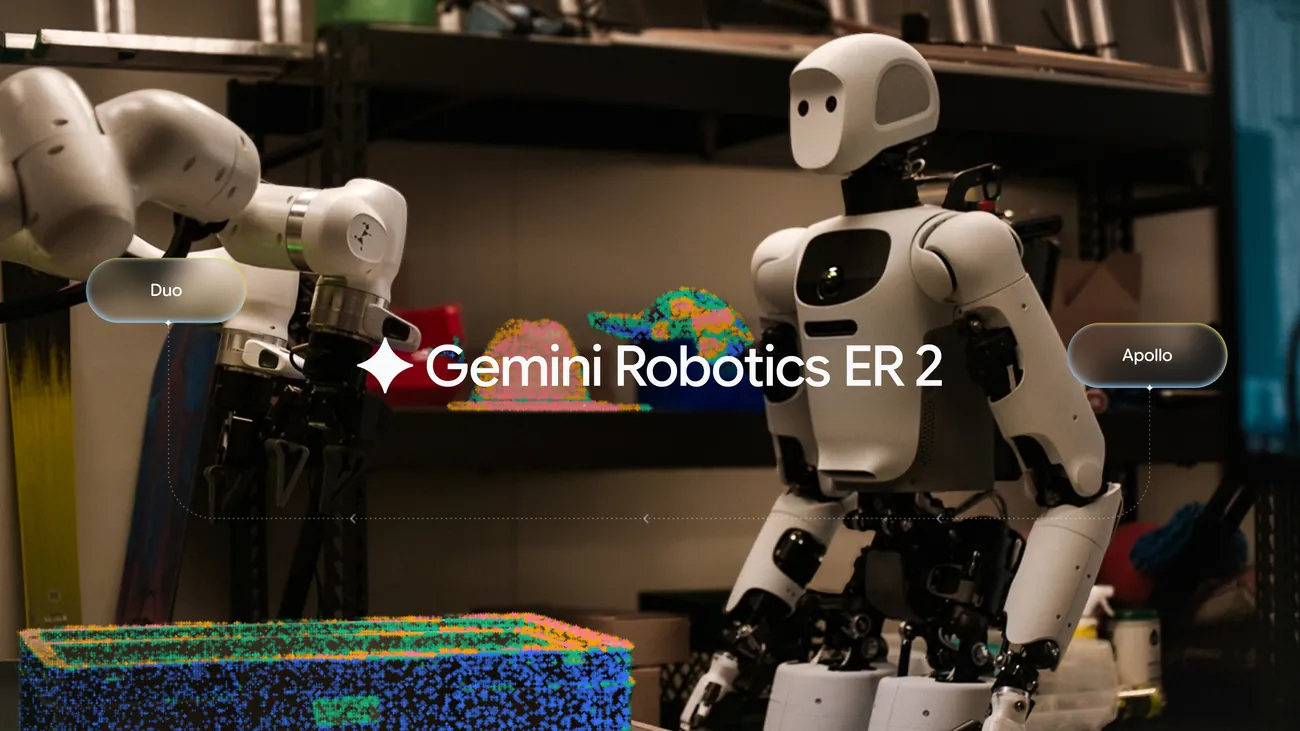
That launch context matters because the search phrase “gemini robotics er 2 legal industry use cases” invites a category mistake. A multimodal model that can observe video and reason over task moments may sound adjacent to litigation support, evidence handling, inspections, or records review. But procurement is not allowed to fill in the missing middle. If the vendor documentation does not show a legal workflow, production terms, privacy handling fit for client material, and legal-domain validation, the legal use case is not documented.
The Three Vendor-Documented Blockers
The first blocker is not an abstract concern about AI. The Gemini API documentation says the model “can occasionally hallucinate.”[2] In legal work, “occasionally” is not a soft word. A single invented date, misread image, misidentified speaker, or false description of a procedural step can move from model output into a memo, privilege log, evidence summary, or client explanation unless someone catches it.
The second blocker is the model card’s deployment boundary. DeepMind says users should use discretion before production or commercial use and prohibits safety-critical applications.[3] A law firm does not need to characterize all legal work as “safety-critical” to see the problem. Client-facing legal workflows are commercial, consequential, and documentable. If a vendor’s own model card places the preview outside ordinary production use without further caution, a buyer should not treat it as ready simply because the Gemini name is familiar.
The third blocker is personal-data handling. The Gemini API privacy notice requires operators to obtain consent before collecting voice or imagery of identifiable persons.[2] That duty is easy to underestimate in robotics and video settings. A client interview, site walk-through, accident-scene recording, body-camera clip, workplace investigation file, or deposition-adjacent video can contain faces, voices, badges, screens, addresses, and bystanders. The consent problem arrives before anyone reaches the more glamorous question of model reasoning.

These are not outside criticisms being projected onto the system. They are procurement-facing constraints from Google’s own documentation stack. Together, they make client-facing legal deployment inappropriate in Q3 2026 unless and until Google supplies legally scoped terms, data-handling commitments, and validation evidence that the current launch materials do not provide.
What the Documentation Shows—and Does Not Show
The launch materials present ER 2 as a robotics reasoning model. The important capabilities are observational: it can take multimodal inputs, reason over robot-relevant scenes, and produce text that can help identify or describe task state.[1] Those capabilities may be impressive engineering. They are not the same thing as legal-domain competence.
The model card does not provide a legal use case. It also does not supply a legal benchmark, a privilege-handling claim, a citation-verification claim, an evidence-authentication claim, or a professional-responsibility framing for law-firm deployment. It instead points readers back to the broader Gemini 3.5 Flash model card for known limitations and acceptable-usage detail, which means base-model risk claims should be checked against that underlying card before anyone imports ER 2 into a legal approval memo.[3]
The API documentation likewise does not convert ER 2 into a legal product. It documents access, usage considerations, privacy obligations, and the hallucination warning. It also notes that Gemini Robotics ER 1.6 is scheduled to shut down at the end of August 2026, a useful reminder that preview-line continuity is itself a procurement issue.[2]
A law-firm knowledge-management lead can admire the system and still decline to route client material through it. The refusal is not a vote against robotics. It is a refusal to let a preview model inherit trust from adjacent Google products that operate under different documentation, different use cases, and different deployment assumptions.
Why “Gemini Legal Use Cases” Search Results Mislead Buyers
Google does have public legal and legal-adjacent generative AI examples under the Gemini umbrella. They are just not Gemini Robotics ER 2 examples. Google Cloud’s real-world use-case list includes Harvey using Gemini 2.5 Pro on Vertex AI, Freshfields’ Dynamic Due Diligence, Altumatim eDiscovery, and Guane’s AURA.[4] Those examples belong in a discussion of Gemini LLM deployment in legal workflows. They do not document a robotics ER 2 deployment.
| Claim a buyer may hear | What the cited material actually supports | Procurement treatment |
|---|---|---|
| “Gemini is already used in legal.” | Google Cloud lists legal or legal-adjacent deployments tied to Gemini LLM products such as Gemini 2.5 Pro on Vertex AI, not Gemini Robotics ER 2.[4] | Attribute the use case to the LLM product line named in the source. |
| “ER 2 can read video, so it could support discovery review.” | Google documents multimodal robotics-reasoning capabilities, but no legal discovery workflow or legal benchmark for ER 2.[1] | Treat discovery use as unsupported unless Google or an independent legal source documents it. |
| “It is in Gemini Enterprise, so enterprise controls solve the issue.” | Google says private preview access is available through the Gemini Enterprise Agent Platform, but the model card and API documentation still contain deployment, hallucination, and consent constraints.[1][2][3] | Do not substitute platform availability for legal readiness. |

This separation is the practical service a buyer needs. A vendor deck can blur “Gemini” into one brand, but a risk review cannot. The question is not whether Google has legal-industry AI activity. It does. The question is whether this robotics model has a documented legal use case. On the current record, it does not.
For broader procurement context, this distinction belongs beside Google-focused analysis such as Alphabet AI investment legal-tech risk and other new-product reliability reviews such as Claude for legal risk. The same rule applies across vendors: product-line identity matters before capability claims are compared.
The Benchmarks Are Robotics Benchmarks, Not Legal Readiness Evidence
Google reports a 57.4% result for progress classification and a 91.3% result for moment finding, with moment finding measured at 0.96 seconds mean absolute distance.[1][3] These are useful numbers for understanding the model’s task-observation profile. They are not legal-reasoning metrics, citation-accuracy metrics, privilege-review metrics, or evidence-authentication metrics.
The progress-classification figure also has a plain arithmetic shadow: if the reported result is 57.4%, then roughly 42.6% of evaluated frames were not classified correctly under that benchmark. That is not a legal error rate and should not be described as one. It is, however, enough to make a legal reviewer pause before imagining the model as a reliable observer of procedural moments or evidentiary events.
The moment-finding result is stronger on its own terms, but those terms remain non-legal. Finding a relevant moment in a robotics task video is not the same as recognizing whether a clip is privileged, whether a recorded person gave consent, whether a chain-of-custody step is legally material, or whether a factual description is safe to put into a filed declaration.
There is also a timing problem. ER 2 launched on July 30, 2026, and this evaluation is dated August 2, 2026. The available ER 2 facts are vendor-published, self-reported, and unaudited for legal-industry use. No independent legal-industry third-party analysis is in the source set.
Why Hallucination Warnings Carry Extra Weight in Law
The hallucination warning in the API documentation would matter even if ER 2 were a text-only assistant. It matters more when the imagined workflow involves video, voice, physical scenes, or evidence-adjacent material, because the reviewer may be checking both factual description and legal significance at the same time.
Legal-domain research gives the warning a concrete backdrop. Stanford HAI and RegLab reported that legal models hallucinated in 1 out of 6 or more benchmarking queries.[5] Spellbook’s 2026 discussion of Gemini for lawyers similarly treats hallucination and verification limits as central constraints on legal use rather than peripheral defects.[6] Those sources are not ER 2 evaluations, and they should not be misused as ER 2 measurements. They explain why a generic hallucination concession is not acceptable as a footnote in legal procurement.
Sanctions reporting points in the same direction, but the numbers should be handled carefully. The AI Consulting Network reported Q1 2026 legal-AI hallucination sanctions exceeding $145,000, including an Oregon record above $110,000, and described more than 1,200 documented cases globally.[7] Before those figures are used as a primary sanctions baseline in a filing-risk memo, they should be reconciled against underlying court orders and any existing internal tracker, such as an AI hallucination benchmark registry.
The safer operational inference is simpler than the sanctions arithmetic: if a model provider says the system can hallucinate, a law firm needs a verification workflow before any output touches advice, filings, client communications, or evidentiary summaries. For filing-adjacent work, that workflow should look closer to a documented AI verification checklist than to an innovation demo.
What Would Change the Answer
A documented legal use case would need more than a prompt example. At minimum, a buyer would need to see the legal workflow named, the data classes described, the responsible human reviewer identified, the privacy and consent path explained, the production or commercial-use terms resolved, and legal-domain performance measured on tasks that resemble the proposed use.
For ER 2 specifically, the missing evidence is easy to list because the current documentation is so new. There is no published law-firm deployment, no court or litigation-support case study, no legal benchmark, no privilege or confidentiality evaluation, no evidence-review validation, and no independent legal-industry assessment in the cited source set.
A hypothetical future use might involve a lawyer asking a system to locate moments in a site-inspection video or summarize visible steps in a recorded process. That remains hypothetical. It should not be converted into a procurement claim until the model’s privacy handling, consent capture, reliability, audit trail, and human-review process are documented for that legal setting.
Procurement Judgment for Q3 2026
Legal buyers should not treat Gemini Robotics ER 2 as a legal tool in Q3 2026. The current record supports a narrower and cleaner conclusion: ER 2 is a newly launched embodied-reasoning robotics model with multimodal input capabilities, public-preview access, self-reported robotics benchmarks, and vendor-documented constraints that block client-facing legal deployment.
If a vendor, internal sponsor, or partner committee cites “Gemini legal use cases,” ask which Gemini product line is being discussed. Harvey, Freshfields Dynamic Due Diligence, Altumatim eDiscovery, and Guane AURA belong to the Gemini LLM deployment record, not to Gemini Robotics ER 2.[4] Until Google or an independent legal-industry source documents an ER 2 legal use case with production terms, privacy handling, and legal-domain benchmark evidence, the legally supportable answer is no.
References
- Introducing Gemini Robotics ER 2, Google, July 30, 2026.
- Gemini Robotics ER — Gemini API documentation, Google AI for Developers.
- Gemini Robotics ER 2 — Model Card, Google DeepMind.
- Real-world gen AI use cases from the world's leading organizations, Google Cloud.
- AI on Trial: Legal Models Hallucinate in 1 out of 6 (or More) Benchmarking Queries, Stanford HAI/RegLab.
- Gemini for Lawyers: What It Can (and Can't) Do in 2026, Spellbook.
- AI Hallucinations Hit Record Sanctions | CRE Legal Risk, The AI Consulting Network.
Chronological incident history
No sanction cases have named this tool in the tracked record set to date. This does not imply the tool is safe — see Risk Digest for ongoing monitoring.
← Compare peer toolsReport a correction or tip
Spotted an outdated figure, a misstated fact, or a ruling this tool profile should reflect? Public comments are disabled for this content given the professional cost of a misreported case outcome, penalty amount, or rule text — use the structured correction channel instead.
Report a correction or tip for this record →