
Who Bears Liability When an AI Chatbot Practices Law? Three Cases That Moved UPL Risk Upstream
This article traces the trajectory of unauthorized practice of law (UPL) liability for AI chatbots through three watershed cases — from attorney sanctions for AI-hallucinated filings to the first lawsuit alleging an AI developer itself committed UPL — and explains what each outcome means for practitioners, firms, and vendors managing their exposure.
- Hallucination rate
- Not measured / undisclosed
The phrase “AI lawyer” does more work in marketing copy than it does in court. An AI chatbot has no bar card, no oath, no trust account, and no legal personhood. That makes the core question awkward before it becomes alarming: if a chatbot gives legal-looking advice, has the chatbot practiced law, or has some human or company used it in a way the law will punish?
By Q3 2026, there is still no clean holding that an AI chatbot itself committed the unauthorized practice of law. What exists is more useful for risk analysis: a sequence of institutional reactions. In Mata v. Avianca, the court sanctioned lawyers who filed AI-generated fake cases. In FTC v. DoNotPay, the regulator targeted a company’s “AI lawyer” claims. In Nippon Life v. OpenAI, a pending complaint asks whether the developer’s product design crossed into legally regulated work. The target keeps moving upstream.
| Case | Institutional move | Who was targeted | What the case does, and does not, establish |
|---|---|---|---|
| Mata v. Avianca | Court sanctions after hallucinated legal citations appeared in a filing | Lawyer-users | Establishes a verification duty for lawyers using generative AI; does not decide that the chatbot practiced law |
| FTC v. DoNotPay | Final consent order over deceptive AI-lawyer marketing | Operator and marketer | Shows regulator willingness to police lawyer-replacement claims; does not require a court to resolve machine UPL |
| Nippon Life v. OpenAI | Pending lawsuit alleging UPL and design-based responsibility | Model developer | Tests an upstream theory against product architecture; no liability has been established |
Mata Made the Lawyer the First Backstop
Mata v. Avianca remains the cleanest starting point because the court did not need to solve the metaphysics of machine lawyering. The lawyers submitted a brief containing non-existent cases generated through ChatGPT, and the Southern District of New York imposed a $5,000 sanction in 2023 after the citations could not be verified.[1]
The lesson was narrow, but it landed hard. A lawyer may use a research tool, a drafting tool, or a summarization tool. The lawyer still signs the filing. The lawyer still owes the court candor. The lawyer still has to know whether cited authority exists. The presence of an AI system in the workflow did not dilute that responsibility; it identified where the verification failure occurred.
That is why Mata is sometimes overstated. It did not hold that ChatGPT committed unauthorized practice of law. It did not create a general rule that AI-assisted legal work is forbidden. It punished a professional failure by licensed attorneys after fabricated material reached the court. For ethics partners, that distinction matters. The court’s patience ended at the filing, not at the first prompt.
The practical consequence was immediate: firms could no longer treat hallucination as a quirky technology defect. A fake citation in a filed document is not a software anecdote. It is a representation to a tribunal. Once that framing took hold, a hallucination audit became less like innovation governance and more like ordinary litigation hygiene.
DoNotPay Showed That “Robot Lawyer” Claims Have Their Own Exposure
FTC v. DoNotPay shifted attention from the lawyer who used a chatbot to the company that sold one. In February 2025, the Federal Trade Commission finalized an order against DoNotPay that prohibited deceptive AI-lawyer claims, imposed $193,000 in monetary relief, and required notice to consumers.[2]
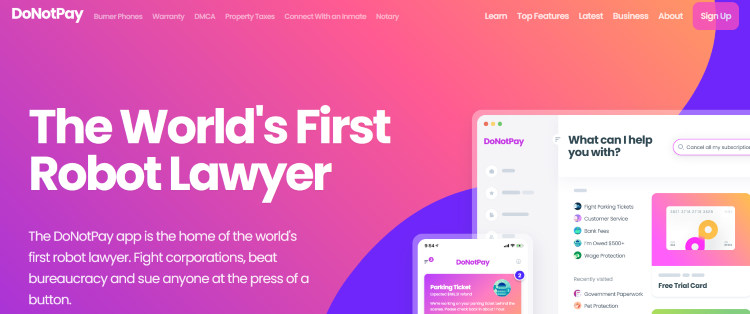
The FTC did not need to prove that an algorithm had become a lawyer. Its enforcement posture was simpler: if a business tells consumers that an automated product can perform like a lawyer, those claims must be substantiated. That is a consumer-protection frame, not a bar-discipline frame, but it reaches some of the same conduct from a different angle.
This matters because UPL risk often arrives dressed as positioning. A tool can be described as document automation, intake triage, legal information retrieval, or lawyer replacement. Those are not just branding choices. They affect who reasonably relies on the output, whether consumers understand the limits of the service, and whether the company has promised a legal function it cannot safely deliver.
DoNotPay therefore sits between Mata and Nippon Life. It does not make the end user disappear. It does not decide whether the underlying software practiced law. But it does make the operator’s claims part of the liability map. A company that packages automation as a substitute for legal judgment should expect regulators to read the package, not just the source code.
Nippon Life Puts the Developer’s Design in the Frame
Nippon Life v. OpenAI is the case that changes the shape of the conversation, precisely because it has not yet resolved anything. Filed on March 4, 2026 in the Northern District of Illinois, it is described in contemporaneous coverage as a first-of-its-kind lawsuit alleging that OpenAI, through ChatGPT, engaged in the unauthorized practice of law.[3]
The complaint reportedly seeks $10.3 million and concerns 44 AI-drafted filings containing fabricated citations.[3] Those are allegations, not findings. They should not be laundered into doctrine by repetition. No court has yet found OpenAI liable on that theory, and the complaint’s existence does not prove that a developer commits UPL whenever a user extracts legal output from a general-purpose model.
Still, the theory is worth taking seriously because it is not just another hallucinated-citation dispute. Commentary from Airdo Werwas and Stanford CodeX analyzes the case as a product-liability-style challenge to “architectural negligence”: the allegation that the system was designed or released in a way that predictably produced tailored legal conclusions for a specific user’s circumstances without adequate controls.[4][5]
That phrase can do too much if used loosely. “Architectural negligence” is not a magic conversion device that turns every bad chatbot answer into unauthorized practice of law. It is a way of asking upstream questions that Mata did not have to ask: What did the developer know the product would do? What guardrails existed around jurisdiction-specific legal advice? Did the interface invite reliance on tailored conclusions? Were users warned away from legal use, or nudged toward it?
The personhood gap sits underneath all of this. A chatbot is not a licensed professional and does not have legal personhood. A corporation does. That gap explains why the claim points toward OpenAI rather than toward the model as an independent legal actor. It also explains why the answer may not fit comfortably into old UPL categories built around nonlawyer humans, document preparers, and referral services.
For procurement lawyers and in-house reviewers, the uncomfortable part is not that Nippon Life guarantees developer liability. It does not. The uncomfortable part is that pleadings have now reached the developer’s design choices. Contractual disclaimers, acceptable-use language, and marketing controls may no longer be enough if the product experience itself encourages users to obtain legal conclusions while routing around professional supervision.
The Sanctions Atmosphere Has Hardened Around Verification Failures
The broader sanctions record supplies the weather around these cases, not the doctrine. EDRM and ComplexDiscovery reported $145,000 in publicly reported AI-related monetary sanctions in Q1 2026, while noting that the figure may miss sealed or unreported orders.[6] Norton Rose Fulbright’s 2026 litigation update also identifies larger sanctions episodes, including Couvrette at $110,000 and Lacey at $31,000.[7]
Those numbers should not be made to prove more than they prove. They do not establish a uniform national rule. They do not show that every judge will treat generative AI use as aggravating. They do show that courts have moved past novelty when fabricated authority reaches a docket. The first time a lawyer blamed a chatbot, the explanation may have sounded unfamiliar. By 2026, the same explanation increasingly sounds like a missing control.
The risk is procedural before it is philosophical. Who checked the citation? Who reviewed the filing? Who approved the tool for litigation use? Who trained the associate, contract lawyer, or pro se support staff? If prompt logs are retained, who can access them, and what happens when they contain client facts? A privilege analysis for AI prompt logs belongs in the same file as the UPL analysis, not in a separate innovation memo.
Supervised Use Is Not the Same Thing as Lawyer Replacement
The litigation arc should not be mistaken for a rule that legal AI is categorically forbidden. The more careful professional-responsibility position is emerging around supervision, disclosure, competence, confidentiality, and the lawyer’s independent judgment. Oregon State Bar Formal Opinion 2026-208, issued in February 2026, is an important counterweight because it permits AI chatbots for client intake under disclosure and supervision requirements rather than treating chatbot involvement as inherently prohibited.
That distinction is operationally useful. Intake triage under lawyer supervision is not the same risk posture as a consumer-facing “robot lawyer” promising legal results. A drafting assistant used inside a firm’s review chain is not the same as an unsupervised system producing filings for a user who believes the machine has supplied legal judgment. The tool category matters less than the role assigned to it.
Engagement-letter language can help when clients should know that AI tools may be used in a matter, but consent language cannot carry the whole load. A client can consent to a supervised technology workflow. A client cannot waive a lawyer’s duty of competence, a court’s demand for accurate citations, or a regulator’s interest in deceptive lawyer-replacement claims.
What Each Actor Now Has to Own
For lawyers, Mata remains the floor. If AI output enters a filing, the lawyer owns the verification. It is not enough to say the answer looked plausible, that the interface sounded confident, or that a junior person handled the prompt. The court sees the signature block.
For firms, the exposed point is workflow design. An acceptable-use policy that merely says “be careful” will not answer the next sanctions motion. The useful policy identifies prohibited use cases, required review steps, approved tools, escalation points, and recordkeeping rules for matters involving confidential information or court submissions.
For marketers and legal tech operators, DoNotPay is the warning label. Claims that a product can replace a lawyer, win legal disputes, generate reliable legal documents, or provide individualized legal outcomes need substantiation commensurate with the promise. The more the sales page sounds like a licensed professional, the less comfort there is in calling the back end “just software.”
For developers, Nippon Life is the unresolved but serious signal. The challenge is not limited to terms of service. It reaches product architecture, interface defaults, refusal behavior, legal-domain tuning, jurisdictional controls, logging, warnings, and the distance between what the product says it is for and what it predictably helps users do.
For in-house counsel buying these tools, vendor diligence should move past the demo. The relevant questions are no longer only whether the model can summarize documents or draft clauses. They include whether the vendor has tested legal hallucination rates, how it handles jurisdiction-specific prompts, whether it permits consumer-facing legal advice deployments, and what evidence exists that safeguards work outside a controlled sales environment.
The Narrow Answer to the UPL Question
So has an AI chatbot been found to commit unauthorized practice of law? On the materials available by Q3 2026, the careful answer is no. Mata sanctioned lawyers for filing hallucinated authority. DoNotPay ended in an FTC consent order over deceptive AI-lawyer claims. Nippon Life alleges that OpenAI crossed the line through product design, but that allegation remains pending.
The better question is where exposure now sits. It still sits downstream with lawyers who use AI output in legal work. It sits with firms that fail to supervise those workflows. It sits with companies that market automation as lawyer replacement. And, increasingly, it may be asserted upstream against developers whose systems are alleged to invite tailored legal conclusions without adequate controls.
That is the real movement. Serious unauthorized practice of law AI chatbot analysis can no longer stop at “lawyers must verify.” That remains true, but it is no longer complete. The liability conversation has moved from the filing lawyer, to the product operator, to the architecture of the model itself.
References
- When Is a Settlement Not a Settlement? AI, ABA Law Technology Today, 2026.
- FTC Finalizes Order with DoNotPay that Prohibits Deceptive AI Lawyer Claims, Imposes Monetary Relief, and Requires Notice to Consumers, Federal Trade Commission, February 2025.
- Can ChatGPT Practice Law? OpenAI Faces First-of-Its-Kind Lawsuit in Illinois, The Indiana Lawyer.
- Did ChatGPT Just Practice Law? The Lawsuit That Could Change AI Forever, Airdo Werwas, March 2026.
- Designed to Cross: Why Nippon Life v. OpenAI Is a Product Liability Case, Stanford Law School, March 7, 2026.
- The AI Sanction Wave: $145K in Q1 Penalties Signals Courts Have Lost Patience with GenAI Filing Failures, EDRM, April 2026.
- AI in Litigation: Update on Gen AI Sanctions in 2026, Norton Rose Fulbright, 2026.
Chronological incident history
No sanction cases have named this tool in the tracked record set to date. This does not imply the tool is safe — see Risk Digest for ongoing monitoring.
← Compare peer toolsReport a correction or tip
Spotted an outdated figure, a misstated fact, or a ruling this tool profile should reflect? Public comments are disabled for this content given the professional cost of a misreported case outcome, penalty amount, or rule text — use the structured correction channel instead.
Report a correction or tip for this record →