
Full profile
For a California uninsured motorist coverage lawyer, the AI question in 2026 is not whether software can draft a clean paragraph. The harder question is whether it can help a firm move a UM/UIM file from scattered medical records and carrier delay into a demand package, arbitration posture, and valuation decision that a lawyer can actually stand behind.
California gives that question some weight. The Insurance Research Council reported a 20.4% uninsured-driver rate for California using 2023 data, which makes UM/UIM work a recurring operating problem rather than an occasional exception file.[1] The same file type also sits inside California-specific constraints: UM/UIM disputes commonly move toward arbitration under Insurance Code section 11580.2, minimum liability coverage changed under SB 1107, and the practical fight often turns on causation, treatment gaps, policy-limit pressure, and whether the medical chronology survives carrier scrutiny.
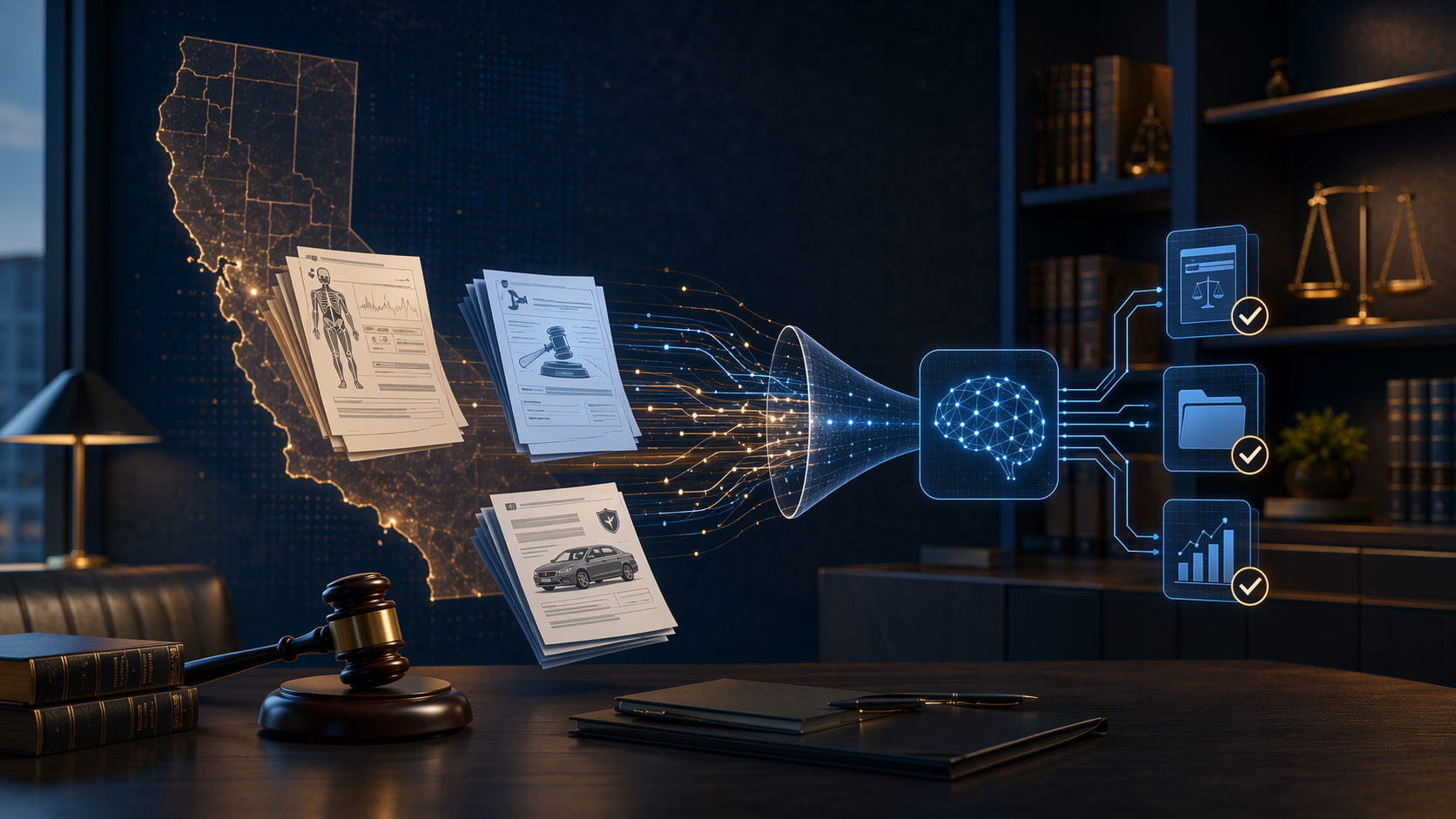
That is why the useful comparison is not ChatGPT versus no ChatGPT. It is point solution versus workflow platform, narrow document acceleration versus case-lifecycle coordination, and vendor output versus attorney-verifiable proof. In UM/UIM practice, the wrong tool does not merely waste a subscription fee. It can create more review work for the same paralegal who was already buried under bills, records, authorizations, follow-ups, and revised demands.
Where UM/UIM Files Actually Get Stuck
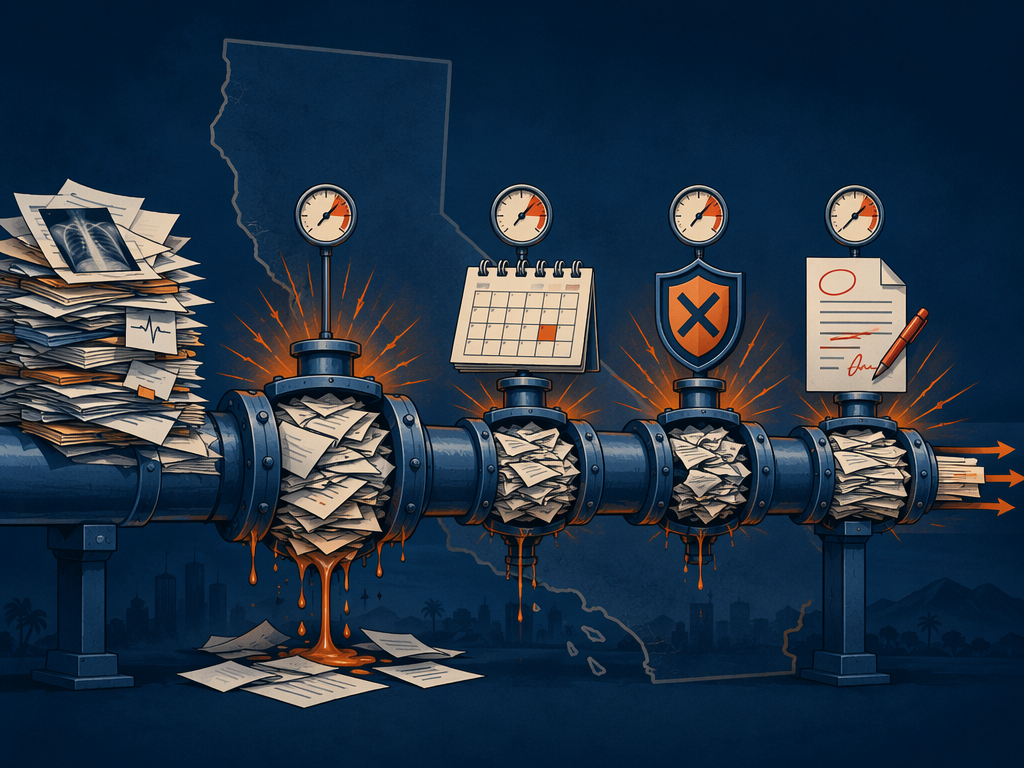
The bottlenecks are familiar because they are repetitive. A UM/UIM claim usually does not fail because the firm cannot generate prose. It slows down because the record is incomplete, the carrier disputes the relationship between the crash and treatment, the client’s damages story is stronger than the raw bills first suggest, or the policy limits create pressure before the firm has a clean proof package.
| UM/UIM bottleneck | Why general-purpose AI struggles | Tool category that may help |
|---|---|---|
| Medical-record volume | Records arrive out of order, with duplicative bills, missing pages, treatment gaps, and inconsistent provider language. | Medical chronology and record-synthesis tools |
| Demand drafting | A plausible letter is not enough; the demand must connect liability, causation, damages, coverage, and policy-limit pressure. | PI-specific demand drafting tools |
| Carrier delay or resistance | The firm needs a defensible escalation posture, not just a faster summary. | Demand platforms, chronology tools, and workflow tracking |
| Arbitration readiness | The output must be checked against the evidentiary record and legal theory before anyone relies on it. | Case-lifecycle platforms or tightly controlled point solutions |
| Staff burnout | The repeated mental load of reviewing, cross-checking, and revising is the real constraint. | Embedded AI tools with review workflows |
Manual demand work is the easiest place to see the pressure. An industry benchmark cited by DemandPro places a single personal-injury demand letter at roughly 8 to 15 hours of paralegal or attorney time when drafted manually.[2] That number matters because it maps directly onto staffing. A small UM/UIM practice may not need an enterprise platform, but it may badly need to recover a day of senior paralegal time from every serious demand package.
The highest-friction hours are rarely the first draft alone. They are the checking hours: matching dates to records, confirming treatment sequences, identifying missing bills, making sure a prior condition is handled honestly, and deciding whether the file is ready for a policy-limit demand or still too thin. AI that speeds only the writing stage can leave the firm with the same factual uncertainty in a prettier format.
The 2026 Tool Market Has Split Into Tiers
The more useful way to sort the 2026 market is by work unit. Some products attack one choke point: demand letters, medical chronology, discovery review, or deposition preparation. Others try to become the operating layer across intake, records, demands, case updates, and litigation tasks. The first group can be easier to adopt and easier to audit. The second group can reduce handoffs, but only if the firm has enough volume and process discipline to justify the platform.
The productivity claims are striking, but they need to be kept in their proper lane. DemandPro cites a Harvard Law and Center on Legal Profession study finding that AI reduced one 16-hour legal task to 3 to 4 minutes, a gain described as exceeding 100x on certain tasks.[2] That is a meaningful signal about potential task acceleration. It is not, by itself, proof that a UM/UIM demand generated faster will settle better, withstand arbitration pressure, or reduce malpractice risk.
EvenUp’s 2026 auto-accident AI guide reports that firms using PI-specific AI were 69% more likely to reach policy limits and could handle more cases with the same staff.[3] That belongs in the demand-quality conversation, especially for policy-limit work. It should still be read as a vendor-reported benchmark, not as a neutral audit of California UM/UIM outcomes across the market.
Clio’s 2025 Legal Trends Report adds a different kind of signal: lawyers using embedded AI tools reported a 25% reduction in cognitive load and higher task completion rates. That is relevant for UM/UIM teams because exhaustion is not abstract. It shows up when a case manager has to reread the same provider records for the third time, or when a lawyer reviews a demand at 8 p.m. and still cannot tell whether the chronology has the missing MRI report.
Demand Drafting Is the First Serious Test
AI Demand Pro and EvenUp sit in the category most directly tied to value presentation: demand drafting. This is where a UM/UIM firm can see immediate leverage if the tool organizes the evidence, identifies damages, drafts a coherent narrative, and gives the lawyer a reviewable structure instead of a generic advocacy letter.[2][3]
The distinction matters. A general model can produce a demand letter that sounds lawyerly. A PI-specific demand tool is supposed to do more: extract treatment dates, connect injuries to the collision facts, surface medical specials, frame noneconomic damages, and support a policy-limit position. In UM/UIM work, the demand is not simply correspondence. It is often the first serious arbitration exhibit in disguise.
For a small California plaintiff firm, a demand tool can be the cleanest starting point if the firm’s real constraint is senior staff time. The adoption test should be narrow: compare the AI-assisted package against the last several manually drafted UM/UIM demands. Did the tool reduce drafting hours without increasing lawyer review time? Did it identify missing records earlier? Did it make the causation theory clearer? Did it preserve the lawyer’s ability to edit tone, damages framing, and legal posture?
For a growing PI firm, demand tools need a second test: repeatability. If five paralegals produce five different styles of demand, software may create consistency. If the platform’s output still requires each lawyer to rebuild the damages story from scratch, the firm has bought a writing assistant rather than a demand workflow.
Medical Chronology Deserves More Attention Than the Draft
Medical chronology is less glamorous than demand drafting and usually more determinative. California Accident Attorneys Blog identifies InPractice as an example of AI use for medical-record chronology in California personal injury claims.[4] The category fits UM/UIM work because the file often turns on what the records say, what they omit, and what sequence they establish.
A useful chronology tool should not merely summarize provider notes. It should help the reviewer see treatment order, date gaps, diagnostic changes, referrals, discharge notes, complaints that persist over time, and records that do not match the claimed injury path. That work is not clerical. It affects valuation, demand timing, expert selection, and arbitration readiness.
The best use case is not blind reliance. It is compression of the first-pass review. A paralegal or case manager can use the chronology to identify what needs human attention: missing pages, inconsistent histories, preexisting conditions, lien questions, and providers whose records require closer reading. The lawyer then reviews the disputed points instead of rereading every page in the same flat sequence.
This is also where general-purpose AI is most likely to disappoint. A model that cannot reliably cite the source page, distinguish a diagnosis from a complaint, or flag uncertainty is dangerous in a UM/UIM setting. The arbitration problem is not that the firm lacks a summary. It is that the firm must prove what the summary says.
Discovery and Deposition Tools Fit Later in the File
Discovery tools such as Everlaw are more natural once the case has moved into a contested posture and the universe of documents has expanded beyond medical records and insurance correspondence.[4] In a UM/UIM arbitration track, that may include prior claims material, coverage communications, expert materials, repair records, recorded statements, or impeachment documents.
The buying decision is different here. A firm should not purchase a full discovery platform because one adjuster is slow or one file has messy medical specials. Discovery AI makes more sense when the firm routinely handles document-heavy disputes, litigated injury matters, or arbitration files where issue tagging, search, and review consistency produce real savings.
Deposition-preparation features belong in the same later-file category. They can help organize witness themes, inconsistent statements, and exhibit references. They do not replace the lawyer’s judgment about which fact matters, how aggressive to be, or whether a medical issue should be handled through testimony, expert review, or settlement pressure.
Lifecycle Platforms Are a Volume Decision
All-in-one platforms such as Eve are positioned as broader lifecycle systems for personal injury firms, connecting more of the case flow rather than solving one document task.[4] This category becomes attractive when the firm’s problem is not one slow demand writer but a pattern of repeated handoffs: intake to records, records to demand, demand to negotiation, negotiation to arbitration prep, and arbitration prep back to missing evidence.
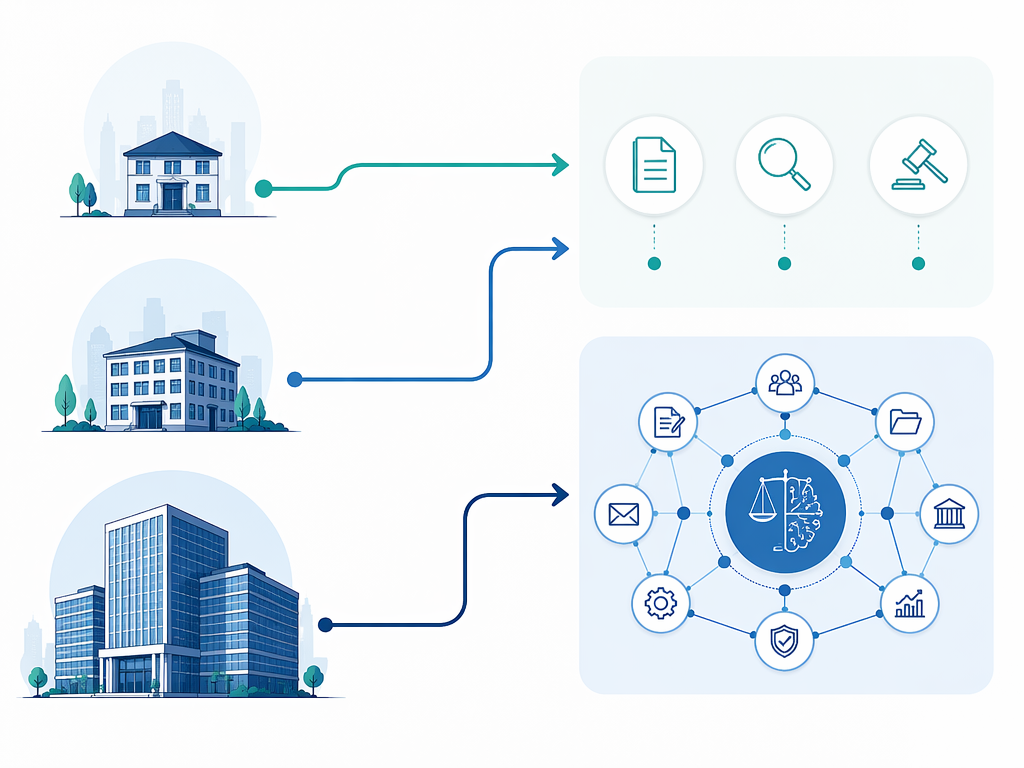
The platform case is strongest for higher-volume operations with standardized procedures. If a firm has enough UM/UIM inventory, enough staff touching each file, and enough recurring delay points, a lifecycle system can reduce duplicated work and improve visibility. If the firm has not standardized its demand criteria, records checklist, authority levels, or arbitration triggers, the same platform can simply digitize inconsistency.
| Firm structure | Likely constraint | Best-fit AI tier | Procurement test |
|---|---|---|---|
| Small plaintiff firm | Senior paralegal or attorney time spent drafting and organizing records | Targeted demand or chronology point solution | Does it reduce hours on real UM/UIM files without adding review burden? |
| Growing PI firm | Inconsistent demand quality and uneven medical-record handling across staff | Demand plus chronology tools, possibly integrated with case management | Does it create repeatable work product while preserving attorney control? |
| Higher-volume operation | Handoffs, status visibility, arbitration readiness, and staff cognitive load | All-in-one lifecycle platform | Does it improve throughput across the file, not just one document? |
| Litigation-heavy UM/UIM practice | Document review, issue tracking, deposition preparation, and arbitration exhibits | Discovery and litigation-support tools | Does the document volume justify the platform and training cost? |
Verification Is Not Optional in California Practice
The adoption controls matter as much as the feature list. ABA Law Practice Today’s 2026 discussion of AI for personal injury and plaintiff firms frames PI-specific evaluation around fit, workflow, and professional responsibility rather than generic automation.[5] That is the correct lens for UM/UIM work because the lawyer remains responsible for factual and legal accuracy even when software drafts, summarizes, or scores the file.
ABA Formal Opinion 512 reinforces the duty to verify AI-assisted work, and California’s 2026 AI guidance points in the same practical direction: lawyers must supervise technology, protect confidentiality, and avoid passing machine output into client or tribunal-facing work without competent review. Because available reporting on the California guidance is secondary, the safer operational point is the narrower one: California firms should treat verification, confidentiality, and supervision as adoption requirements, not optional best practices.
The hallucination problem is no longer theoretical. The ABA has discussed Damien Charlotin’s tracker of known AI hallucination cases, which had reached 1,600 cases in the reporting summarized for 2026.[5] That number should not be used to claim that every legal AI tool is unreliable. It should be used to reject any procurement pitch that cannot explain source citation, record traceability, human review, and error correction.
- Require page-level or record-level source links for medical summaries and chronology entries.
- Test outputs on closed UM/UIM files before using the tool on active demands.
- Separate draft acceleration from final legal judgment in written office procedures.
- Limit access to confidential records based on the vendor’s security, retention, and training-use terms.
- Measure whether attorney review time falls, stays flat, or increases after adoption.
How to Compare Vendors Without Buying the Wrong Category
A California UM/UIM firm should begin with its narrowest recurring constraint. If the team cannot get demands out, start with demand drafting. If demands are delayed because records are disorderly, start with chronology. If cases disappear into status uncertainty after intake, a lifecycle platform may deserve attention. If the firm mostly needs help once matters are already contested, discovery and deposition tools may be the better fit.
The evaluation file should be real, not a demo packet. A vendor can look excellent against clean records, obvious liability, continuous treatment, and a policy-limit fact pattern. The better test is an ugly middle file: uneven treatment, disputed causation, a missing provider bill, a coverage issue, and enough damages to make policy limits plausible but not automatic.
The firm should then score the tool against consequences, not impressions. Did the demand go out sooner? Did the chronology reveal a missing record before the carrier did? Did the lawyer spend less time checking basic dates and more time deciding value? Did the output make arbitration preparation easier? Did the staff actually use the tool after the first week?
There is no need to crown a universal winner. California UM/UIM firms should evaluate AI by whether it improves the bottleneck that constrains their practice, whether its outputs can be verified under professional-responsibility rules and California guidance, and whether the tool tier matches the firm’s staffing model. The real choice is isolated task acceleration, a coordinated PI workflow layer, or a general-purpose substitute for work that remains legally and factually case-specific.
References
- California Uninsured and Underinsured Driver Statistics, Victims Lawyer.
- Top 5 AI Tools for Personal Injury Law Firms in 2026, DemandPro.
- Legal AI Tools for Auto Accident Claims, EvenUp.
- How AI and Technology Are Changing California Personal Injury Claims in 2026, California Accident Attorneys Blog.
- AI for Personal Injury and Plaintiff Firms: What to Look for in 2026, ABA Law Practice Today, 2026.
Comments
Join the discussion with an anonymous comment.